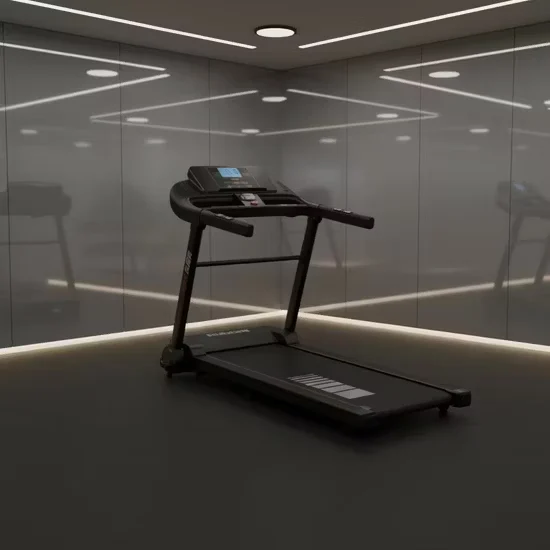
01 / Scenario
STUDIO
P
High-End Pilates Studios
Premium aesthetics meet quiet operation for boutique studio environments.
ISO
9001
CE
Certified
OEM
Available
10YR
Warranty
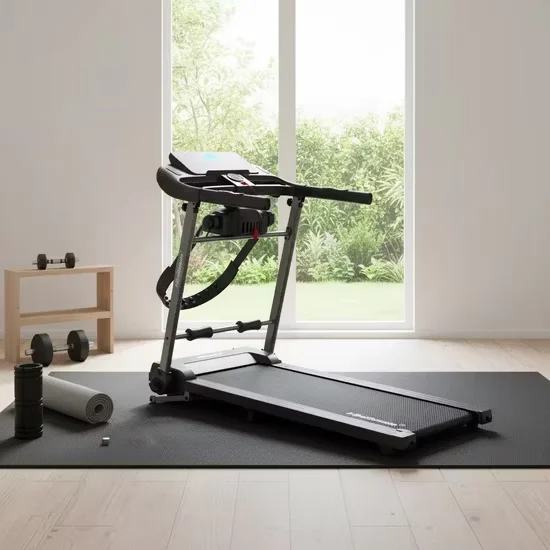
MT026M Electric Foldable Home Treadmill, 1.5HP Motor, 1200×460mm Runway, 12 Preset Programs — the 460mm belt width maintains lateral stability during stride, while the 1.5HP DC motor delivers consistent speed across the 1–12 km/h range with thermal management for sustained sessions. Folding hinge and gas-assist mechanism reduce storage depth to 390mm without compromising run deck rigidity. Every unit undergoes motor thermal rise testing and folding hinge fatigue verification before dispatch, backed by full OEM-ODM customization for private-label programs.
// Spec Highlights
• Direct from Manufacturer · No Middlemen · Worldwide Shipping
01
// Material
Imported Solid Wood
Premium hardwood frames sourced for density and visual warmth.
02
// Hardware
Medical-Grade Silent
Whisper-quiet pulleys and springs for clinical environments.
03
// Customization
Appearance OEM
Color, upholstery, and branding tailored to your studio.
04
// Service
Layout Design
Free venue planning for studios and rehab institutions.
Every component is selected for longevity, performance, and aesthetic harmony - from imported hardwood frames to silent medical-grade accessories.
// Features
MT026M Electric Fold Fitness Home Use Treadmill for Training
Precision-Folded Frame Integrity — The folding hinge mechanism on MT026M undergoes fatigue testing to ensure structural stability across repeated deployment cycles, with the 1465×750mm footprint maintaining rigidity whether stored or in use.
| Parameter | Value |
|---|---|
| Product Type | Electric Foldable Home Treadmill |
| Motor Power | 1.5HP |
| Speed Range | 1-12 km/h |
| Running Surface | 1200×460mm |
| Preset Programs | 12 |
| Display | LCD (Speed / Distance / Time / Calories / Pulse) |
| Unfolded Dimensions | 1465×750×1150mm |
| Folded Dimensions | 1465×750×390mm |
| Net Weight | 46.0 kg |
| Frame Material | ABS |
| Certification | CE, RoHS |
| OEM / ODM | Available |
| Facility Type | Typical Use |
|---|---|
| Residential home gym | Primary cardio station for daily walking and light jogging |
| Apartment workout space | Space-efficient aerobic training with foldable storage |
| Small-space fitness corner | Supplementary cardio alongside strength equipment |
| Rehabilitation setting | Controlled-pace walking for recovery protocols |
The 1200×460mm running surface on MT026M addresses a persistent issue in foldable home treadmills: belt width below 450mm forces users into an artificially constrained gait, increasing lateral instability and joint discomfort during extended sessions. Adequate belt dimensions preserve natural stride mechanics even in compact home cardio equipment. Manufacturers who quote belt size without addressing width-to-stride ratios leave users compensating for structural shortcuts — the electric foldable home treadmill 1.5HP category is particularly prone to this trade-off when cost reduction targets frame footprint over functional running area [NEED_CITE: biomechanical research on treadmill belt width and gait adaptation].
The MT026M occupies the light-to-moderate cardio tier in residential training setups, complementing strength equipment by providing accessible aerobic conditioning without demanding dedicated room allocation. Its 12 preset programs accommodate varied intensity preferences, while the 1-12 km/h speed range supports everything from rehabilitation walking to interval-based jogging. The electric foldable home treadmill 1.5HP configuration suits users seeking consistent daily movement rather than high-performance running, making it appropriate for apartments and multi-use living spaces where equipment density matters.
Folding treadmills introduce a failure mode absent in fixed-frame commercial units: hinge fatigue. The MT026M’s folding mechanism must withstand repeated deployment and storage cycles while maintaining alignment between the running deck and motor housing. Each fold-unfold sequence introduces shear stress at the pivot points, and inadequate hinge engineering leads to play development over time — manifesting as deck wobble, inconsistent belt tracking, or audible rattling during operation. The 46.0 kg net weight indicates sufficient mass in the frame structure to resist flex under user load, but long-term durability depends on hinge material grade and fastener retention [NEED_CITE: mechanical fatigue analysis of folding mechanism joints in consumer fitness equipment].
The 1.5HP motor rating determines continuous duty capacity rather than peak output — a critical distinction for home treadmills where users may operate at higher speeds for extended periods without adequate thermal management. The 1200×460mm running surface balances stride accommodation with space efficiency; length supports full gait cycles for users up to approximately 180cm height, while width provides lateral margin for natural arm swing without excessive footprint. The ABS console housing resists impact and UV degradation better than lower-grade plastics, protecting the LCD module from sweat exposure and ambient light damage. Folded thickness of 390mm enables vertical storage against walls or under furniture, though this compact profile requires the hinge assembly to maintain precise tolerances to prevent deck misalignment upon deployment.
Home treadmills that sacrifice frame rigidity for weight reduction develop deck deflection under sustained loading, accelerating belt wear and motor strain. Non-sealed motor bearings in dusty residential environments accumulate particulate contamination, increasing friction and reducing operational lifespan. Thin-gauge steel in the folding mechanism yields to repeated stress cycles, creating permanent deformation that prevents secure locking in the deployed position. These failures compound: a wobbling deck increases belt tracking deviation, which accelerates edge fraying, which introduces debris into the motor compartment — a cascade that transforms a minor specification shortcut into complete unit failure [NEED_CITE: failure mode analysis in consumer-grade treadmill structural components].
The MT026M delivers manufacturer-direct quality control without distributor markup, with every unit subjected to load testing before shipment rather than sample-based verification. The 12 preset programs and LCD feedback system provide user engagement without proprietary software lock-in, while OEM and ODM customization options allow branding alignment for residential fitness programs or multi-unit deployments. CE and RoHS certification ensures regulatory compliance across European and international markets. For operators outfitting apartment complexes, hotel fitness rooms, or corporate wellness centers, the foldable form factor reduces storage footprint during low-demand periods while maintaining commercial-grade component selection in motor, belt, and console assemblies.
Provide your facility’s available floor area and intended equipment density to receive 2D-3D layout planning support for cardio zone integration. Specify expected daily usage hours and user weight range to confirm motor duty cycle appropriateness for your operational profile. Indicate any branding, color, or console customization requirements for multi-unit deployments or branded residential fitness programs.
Q: Can a 1.5HP motor sustain running for users over 90kg body weight?
A: The 1.5HP rating indicates continuous duty capacity suitable for walking and light jogging. Users exceeding 90kg should limit sustained speeds above 8 km/h to prevent motor thermal overload, as increased mass demands higher torque output and generates additional heat in the motor windings during extended operation.
Q: How does the folding mechanism maintain deck rigidity during use?
A: The hinge assembly uses precision-machined pivot points with locking pins that engage when deployed, creating a fixed structural connection between frame sections. This prevents the deck flex and wobble that develops in units relying solely on friction-based locking, ensuring consistent belt tracking and user stability throughout the stride cycle.
Q: What maintenance does the running belt require?
A: The belt requires periodic lubrication between the belt and deck surface to reduce friction and motor strain. Tracking alignment should be checked quarterly, with tension adjusted if edge wear or slippage occurs. Belt replacement intervals depend on usage frequency and user weight, typically ranging from 18 to 36 months in residential applications.
Q: Is the 1200×460mm running surface adequate for taller users?
A: The 1200mm length accommodates full stride cycles for users up to approximately 180cm height without requiring gait modification. The 460mm width provides sufficient lateral margin for natural arm swing and minor stride variation, though users with exceptionally wide stances may prefer commercial-grade units with broader running surfaces.
Premium aesthetics meet quiet operation for boutique studio environments.
Medical-grade silence and precision for sports & postpartum recovery.
Furniture-grade craftsmanship for premium residential installations.
Compact premium setups for one-on-one and small-group training.
Aesthetic Pilates integration for hybrid wellness studio programming.
Multi-unit deployment with instructor-grade reliability for certification programs.
Tell us about your project. Our team will respond within 24 hours with pricing, customization options, and shipping details.
// Sales Director
William
+86 132 2531 1800
// Export Manager
Bella
+86 198 5412 8032
william@bickfit.com