
01 / Scenario
STUDIO
P
High-End Pilates Studios
Premium aesthetics meet quiet operation for boutique studio environments.
ISO
9001
CE
Certified
OEM
Available
10YR
Warranty
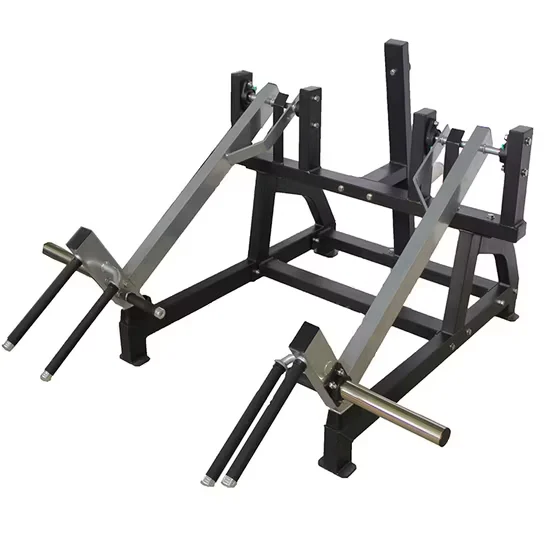
OS-H5043 Commercial Squat High Pull Machine, 1650×1150×1050mm, 99kg Net Weight — built with industrial steel frame construction for sustained compound loading in high-traffic environments. The integrated plate-loaded design combines squat and high pull patterns into a single stable station with customizable frame and cushion finishes. ISO9001 and CE certified manufacturing with full load testing on every unit before shipment.
// Spec Highlights
• Direct from Manufacturer · No Middlemen · Worldwide Shipping
01
// Material
Imported Solid Wood
Premium hardwood frames sourced for density and visual warmth.
02
// Hardware
Medical-Grade Silent
Whisper-quiet pulleys and springs for clinical environments.
03
// Customization
Appearance OEM
Color, upholstery, and branding tailored to your studio.
04
// Service
Layout Design
Free venue planning for studios and rehab institutions.
Every component is selected for longevity, performance, and aesthetic harmony - from imported hardwood frames to silent medical-grade accessories.
// Features
Traced Mill Steel — Every OS-H5043 frame begins with certified Q235 or Q345 coil documentation traceable to the originating steel mill.
| Parameter | Value |
|---|---|
| Designation | OS-H5043 |
| Product Dimensions | 1650×1150×1050mm |
| Net Weight | 99kg |
| Frame Material | Steel |
| Loading Type | Plate Loaded |
| Exercise Part | Back |
| Main Frame Color | Available per customer specification |
| Cushion Color | Available per customer specification |
| Upholstery | Commercial-grade, density options available |
| Powder Coating | Industrial scratch-resistant finish |
| Certification | ISO 9001, CE |
| OEM/ODM | Acceptable |
| Target Demographic | Adult, Unisex |
| Facility Type | Typical Use |
|---|---|
| Commercial gym strength floor | Compound lower-body and pulling station in high-traffic plate loaded zones |
| Hotel and resort fitness center | Durable multi-function trainer accommodating varied guest fitness levels |
| University strength and conditioning room | Integrated squat and high pull movements for athletic development programs |
| CrossFit box functional zone | Heavy compound lifts in high-density training environments |
| Institutional athletic department | Structural training solution for supervised team conditioning sessions |
When a facility orders an integrated trainer labeled "commercial grade" with no supporting steel documentation, what often arrives is a frame that holds up visually but yields under repetitive compound loading — the OS-H5043 commercial squat high pull machine addresses this gap with verifiable structural specifications and transparent material sourcing.
The problem surfaces in the second year. A thin-walled tube on a squat high pull station will not fail during a single heavy set. It fatigues slowly across thousands of loading cycles until the upright or cross-member begins to deflect under loads it previously handled without complaint. [NEED_CITE: EN 957 structural requirements for stationary training equipment] Facility operators notice the shift as subtle frame sway or uneven base contact, then trace it back to tube wall thickness that was never disclosed at the point of purchase. The OS-H5043 frame steel grade is documented from the mill, and the gauge specification is available for verification before the order ships.
The OS-H5043 covers a compound movement plane that bridges lower-body squat patterns and explosive pulling mechanics, targeting the posterior chain, quadriceps, and upper back in a single station. On a commercial strength floor, it complements dedicated hip sleds, iso-lateral row machines, and free weight racks by consolidating two movement patterns into one footprint. The 1650×1150mm base fits standard plate loaded equipment zones without requiring oversized clearance gaps. It accommodates users across a wide height and limb-length range, making it suitable for facilities serving mixed athletic and general fitness populations. The commercial squat high pull machine OS-H5043 serves as a structural anchor point between free weight and selectorized sections.
A squat high pull station endures two distinct loading profiles within every repetition: a compressive static load during the squat descent and an impact load at the transition point where the user accelerates into the pull phase. [NEED_CITE: weld classification and fatigue performance in structural steel] Over a typical commercial usage cycle of eight or more hours daily, these alternating stress patterns concentrate at the junction between the upright and the base cross-member. Weld quality at these nodes determines whether the frame absorbs cyclical loading or develops micro-fractures that propagate over time. The upholstery contact points face parallel wear from repeated grip shifts and body positioning, while the powder coating must resist degradation from sweat acidity and frequent cleaning agents applied by facility maintenance staff.
The 1650×1150×1050mm footprint of the OS-H5043 provides a base-to-height ratio that resists tipping during off-center loading — a critical factor when users perform high pull variations that generate lateral force vectors. Frame tube dimensions and wall thickness determine the deflection threshold before permanent deformation occurs under sustained plate loading. Continuous weld lines distribute stress along the full joint length rather than concentrating it at discrete spot-weld points, which directly extends fatigue life under repetitive commercial use. [NEED_CITE: fatigue behavior of MIG welded steel joints in cyclic loading applications] Industrial-grade powder coating at sufficient thickness prevents micro-chipping at contact zones where plates, shoes, and equipment handles repeatedly strike the frame surface.
A facility that saves on frame gauge upfront pays the difference in maintenance calls and equipment downtime within eighteen to twenty-four months. Thin-walled uprights that bend under sustained heavy loading create liability exposure when deformation occurs mid-use. Spot-welded joints that crack silently compromise structural integrity before visual signs appear to maintenance staff or members. Non-commercial upholstery compresses and splits on a replacement cycle measured in months rather than years, forcing repeated reupholstery contracts. [NEED_CITE: commercial fitness equipment lifecycle cost comparison across construction grades] Underspecified powder coating chips at high-contact zones, exposing bare steel to moisture and accelerating corrosion in humid facility environments.
Every OS-H5043 frame uses steel traceable to its mill origin, with grade documentation available on request. Robotic MIG welding ensures continuous weld penetration at every structural joint, eliminating the spot-weld weak points that plague high-stress junctions. Each unit undergoes individual load testing before leaving the factory floor — not sample-based batch testing. The industrial powder coating is applied at thicknesses designed to withstand direct impact and chemical cleaning without chipping. A ten-year frame warranty reflects confidence in the structural system rather than a marketing gesture. Floor planning support includes 2D and 3D CAD layouts that position the OS-H5043 within your strength zone with correct safety clearances on all sides. OEM customization covers frame color, cushion color, and branding to align with facility identity.
Provide your strength floor dimensions and current equipment list to receive a 2D or 3D layout showing how the OS-H5043 integrates with surrounding stations and traffic flow. Specify your estimated daily user volume so the structural grade and finish options align with your facility’s usage intensity. Confirm the height and limb-length range of your primary user population to verify that the movement geometry accommodates your membership profile. Detail any customization requirements including frame color, cushion color, and logo application to ensure the final specification matches your facility branding standards.
Q: What steel gauge and tube dimensions define a true commercial-grade integrated trainer?
A: Genuine commercial integrated trainers use steel with verifiable wall thickness and tube cross-section specifications, not vague "commercial grade" labels. Request mill-certified documentation showing exact gauge and tube dimensions. The OS-H5043 frame steel is sourced from certified mills with full traceability, and specification sheets are provided before order confirmation so you can evaluate structural adequacy for your facility’s load requirements.
Q: How does continuous MIG welding compare to spot welding under repetitive heavy loading?
A: Continuous MIG welding distributes mechanical stress along the entire joint length, whereas spot welding creates isolated connection points where stress concentrates and fatigue cracks initiate. Under thousands of squat and pull cycles, continuous welds maintain structural integrity significantly longer. Every OS-H5043 frame joint uses robotic MIG welding to ensure uniform penetration and eliminate the weak-point failure mode inherent in spot-welded assemblies.
Q: What load testing should be performed before an integrated trainer ships?
A: Every unit should undergo individual load testing at or beyond its rated capacity, not sample-based testing where one unit represents a production batch. This catches manufacturing variances that could lead to in-service failure. Each OS-H5043 is load tested individually before packaging, with test records maintained per unit to verify structural performance matches engineering specifications.
Q: How should floor spacing be planned around a squat high pull station?
A: Allow sufficient clearance on all sides for safe plate loading, full range of motion, and user entry and exit without interfering with adjacent equipment traffic. The exact spacing depends on the specific station dimensions and surrounding layout. We provide CAD-based floor planning that positions the OS-H5043 within your facility with precise safety clearances calculated from the actual 1650×1150mm footprint.
Q: What is the expected service life of cushions on high-traffic commercial equipment?
A: Cushion lifespan depends on foam density, upholstery material quality, daily usage volume, and maintenance frequency. Low-density foam compresses and loses support within months under heavy commercial use, while higher-density options maintain structural integrity across a meaningfully longer period. The OS-H5043 offers upholstery in selectable density options, and replacement parts remain available to extend total equipment service life without full unit replacement.
Premium aesthetics meet quiet operation for boutique studio environments.
Medical-grade silence and precision for sports & postpartum recovery.
Furniture-grade craftsmanship for premium residential installations.
Compact premium setups for one-on-one and small-group training.
Aesthetic Pilates integration for hybrid wellness studio programming.
Multi-unit deployment with instructor-grade reliability for certification programs.
Tell us about your project. Our team will respond within 24 hours with pricing, customization options, and shipping details.
// Sales Director
William
+86 132 2531 1800
// Export Manager
Bella
+86 198 5412 8032
william@bickfit.com


