01 / Scenario
STUDIO
P
High-End Pilates Studios
Premium aesthetics meet quiet operation for boutique studio environments.

ISO
9001
CE
Certified
OEM
Available
10YR
Warranty
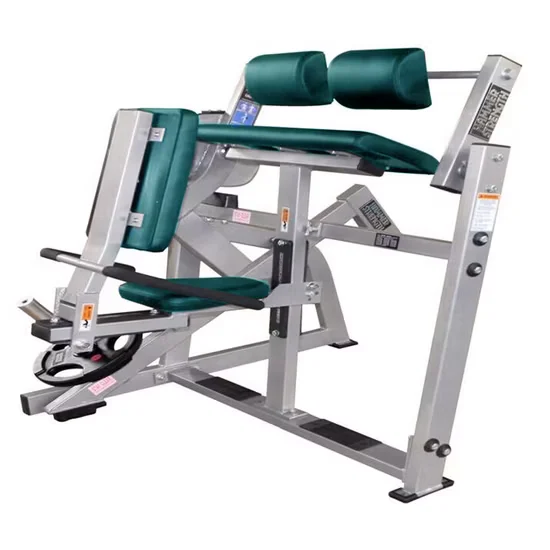
OS-H5017 Plate Loaded ISO-Lateral Horizontal Bench Press, 1700×1400×1200mm, 112kg — built with 3×3 inch frame steel and robotic MIG continuous welding to eliminate spot-weld fatigue under repetitive heavy loading. The iso-lateral independent arm design delivers natural converging biomechanics, reducing joint shear during high-volume chest training. Every unit undergoes full load testing before shipment, backed by a 10-year frame warranty and complimentary floor planning support.
// Spec Highlights
• Direct from Manufacturer · No Middlemen · Worldwide Shipping
01
// Material
Imported Solid Wood
Premium hardwood frames sourced for density and visual warmth.
02
// Hardware
Medical-Grade Silent
Whisper-quiet pulleys and springs for clinical environments.
03
// Customization
Appearance OEM
Color, upholstery, and branding tailored to your studio.
04
// Service
Layout Design
Free venue planning for studios and rehab institutions.
Every component is selected for longevity, performance, and aesthetic harmony - from imported hardwood frames to silent medical-grade accessories.
// Features
11-Gauge Traceable Steel — Q235/Q345 coil-certified 3×3 inch frame tubes resist deformation under heavy plate loaded horizontal bench press training loads.
| Parameter | Value |
|---|---|
| Designation | OS-H5017 |
| Product Type | Plate Loaded Chest Press |
| Frame Steel Gauge | 11-gauge |
| Frame Tube Size | 3×3 inch |
| Steel Grade | Q235 / Q345 industrial steel |
| Welding Type | Robotic MIG continuous weld |
| Loading Type | Plate loaded |
| Product Dimensions | 1700×1400×1200mm |
| Net Weight | 112kg |
| Powder Coating | 200μm scratch-resistant industrial finish |
| Certification | ISO 9001, CE |
| Warranty | 10-year frame warranty |
| Facility Type | Typical Use |
|---|---|
| Commercial gym strength floor | High-traffic chest training zone for general members and serious lifters |
| Hotel and resort fitness center | Professional-grade plate loaded chest press for guest strength training |
| University strength and conditioning room | Heavy loading capacity for athlete off-season chest development |
| CrossFit box functional zone | Supplemental pressing volume for competitive fitness athletes |
| Rehabilitation and performance center | Iso-lateral movement for unilateral strength assessment and return-to-play protocols |
Continuous robotic MIG welding eliminates the fatigue cracks that plague spot-welded plate loaded horizontal bench press frames under repeated heavy loading.
I have personally seen what happens when a gym operator prioritizes a lower price point over welding integrity. A batch of chest press units with spot-welded joints started showing hairline fractures at the main pivot within eight months of daily commercial use. The frames were still sound, but the connection points were failing under cyclic loading — exactly where the welds were discontinuous. Spot welds pass visual inspection easily when the unit is new, but under the repetitive eccentric and concentric forces of a commercial plate loaded horizontal bench press, the stress concentrations at each discrete weld nugget become failure initiation sites [NEED_CITE: weld classification and fatigue performance in structural steel]. Continuous MIG welds distribute that stress along the entire seam, which is why every unit we ship uses robotic arms that never skip a millimeter of the joint line.
The OS-H5017 targets the horizontal pressing plane, engaging the pectoralis major, anterior deltoids, and triceps through an iso-lateral movement path. On a commercial strength floor, this commercial plate loaded horizontal bench press pairs directly with incline and decline pressing stations to cover the full spectrum of chest training angles. The iso-lateral arm design means each side moves independently, accommodating users with bilateral strength imbalances or those returning from unilateral injuries. For facility operators, this unit serves members ranging from beginners learning pressing mechanics to experienced lifters loading multiple plates per horn. The 1700×1400mm footprint fits standard commercial spacing grids, leaving adequate clearance for plate loading and user entry from both sides.
A horizontal bench press in a busy gym endures a punishing stress profile: eccentric deceleration as the user lowers loaded horns, static holds at the bottom position, and explosive concentric drives through the mid-range. Over hundreds of daily repetitions, these load cycles concentrate stress at the main pivot axis and the frame-to-base junction [NEED_CITE: EN 957 structural requirements for stationary training equipment]. The 112kg net weight of this unit provides a stable base that resists lateral shift during asymmetric loading — a common occurrence when users load unevenly or press with unilateral dominance. The 200μm powder coating withstands the combined assault of sweat acidity, commercial cleaning agents, and incidental plate contact at the loading horns. Upholstery compression cycles and grip surface abrasion represent the primary consumable wear points, and replacement pads are available to extend service life without frame-level intervention.
The 11-gauge steel tube specification is not a marketing claim — it is a measurable cross-section thickness that directly determines how much the frame deflects under a fully loaded condition. Thinner tubes, often described vaguely as "commercial grade," will exhibit visible flex when a user presses heavy loads, and that flex translates into energy loss and joint misalignment over time. The Q235 and Q345 steel grades referenced here are mill-certified, meaning the material traceability goes back to the coil it was cut from, not just a supplier invoice. Robotic MIG welding with continuous bead patterns ensures that the weld penetration and heat-affected zone remain consistent across every unit in a production run, eliminating the variability inherent in manual welding. The 200μm powder coating thickness is applied after sandblast preparation, creating a mechanical bond that resists chipping at high-contact areas like the loading horns and adjustment pins. The 3×3 inch tube profile provides a wide moment of inertia, which is the geometric property that resists bending under off-axis loads.
When manufacturers reduce frame wall thickness to save on raw material costs, the immediate effect is a lighter price tag — but the structural consequence appears within the first year of commercial use. Thin-walled tubes deflect under heavy plate loads, and that deflection accelerates wear on pivot bearings and bushings as the alignment shifts under stress. Spot-welded joints that look clean on the showroom floor become crack initiation points after thousands of load cycles, and a weld failure on a loaded chest press is a liability event, not just a maintenance ticket. Unsealed bearings in dusty, humid gym environments develop play and grinding within months, requiring frequent replacement and member complaints. Low-density upholstery foam compresses permanently under daily use, creating an uneven pressing surface and forcing upholstery replacement far sooner than a high-density pad would require. Thin powder coatings chip at contact points, exposing bare steel to oxidation that spreads under the remaining finish [NEED_CITE: powder coating adhesion and corrosion protection standards].
The 11-gauge frame steel on the OS-H5017 is sourced with mill certification traceable to the coil, so you can verify the material grade — not just trust a label. Robotic MIG welding produces continuous weld lines along every structural joint, eliminating the weak points that spot welding introduces at high-stress pivot areas. Every unit undergoes load testing before shipment, not sample-based testing on a production batch, so the machine arriving at your facility has been physically verified under load. The 200μm industrial powder coating is applied over sandblast-prepared surfaces to prevent the chipping and rust streaks that degrade gym aesthetics within months. The 10-year frame warranty reflects confidence in the structural system, not a marketing promise. For facility layout, we provide 2D and 3D CAD planning support that accounts for the 1700×1400mm footprint of this unit plus the safe clearance zones needed for plate loading and user circulation around the station.
Provide your strength floor square footage and current equipment list to receive a 2D or 3D layout that positions the OS-H5017 with correct safety clearances and traffic flow. Specify your average daily member volume so we can confirm the structural grade matches your usage intensity. Indicate the body size range of your target user population to verify the seat and back pad geometry accommodates your membership. If you require custom frame color, branded upholstery, or logo integration on the shroud panels, include those specifications in your inquiry for an OEM configuration quote.
Q: How can I verify the structural difference between commercial and light-commercial plate loaded equipment?
A: Request the specific steel gauge and tube dimensions from the manufacturer, not just a "commercial grade" label. Ask for mill certificates that trace the steel back to its production coil. Check whether welding is continuous robotic MIG or manual spot welding, and whether every unit receives individual load testing before shipment. These verifiable specifications separate genuine commercial equipment from lighter alternatives that look similar in photos but cannot withstand high-traffic daily loading.
Q: How does frame tube gauge affect load capacity and long-term durability?
A: Thicker gauge steel provides a higher deformation threshold under heavy plate loads, meaning the frame resists bending and flexing during use. When a frame deflects repeatedly, that cyclic stress transfers to weld joints and pivot bearings, accelerating fatigue failure at connection points. An 11-gauge tube with a 3×3 inch profile maintains alignment under loads that would visibly bend thinner alternatives, preserving both the structural integrity and the biomechanical accuracy of the pressing movement over years of commercial use.
Q: Should I choose plate loaded or selectorized chest press machines for my facility?
A: Plate loaded units like the OS-H5017 suit environments where users load their own weights and prefer the feel of free-weight resistance curves. Selectorized machines offer faster weight changes and are better for high-turnover circuits or supervised group training. Many commercial gyms stock both: plate loaded in the serious free-weight zone and selectorized in the machine circuit area. Your member profile and floor layout should drive the decision rather than treating them as interchangeable.
Q: How should I plan equipment spacing to ensure safe clearance around this machine?
A: The 1700×1400mm footprint of this unit requires additional clearance on all sides for user entry, plate loading, and emergency egress. Allow a minimum of 800mm behind the loading horns for plate storage and handling, and 600mm on each side for user movement. A 2D CAD layout from the manufacturer can verify that your proposed arrangement meets safety standards and does not create pinch points between adjacent stations or block aisle traffic flow.
Premium aesthetics meet quiet operation for boutique studio environments.
Medical-grade silence and precision for sports & postpartum recovery.
Furniture-grade craftsmanship for premium residential installations.
Compact premium setups for one-on-one and small-group training.
Aesthetic Pilates integration for hybrid wellness studio programming.
Multi-unit deployment with instructor-grade reliability for certification programs.
Tell us about your project. Our team will respond within 24 hours with pricing, customization options, and shipping details.
// Sales Director
William
+86 132 2531 1800
// Export Manager
Bella
+86 198 5412 8032
william@bickfit.com