
01 / Scenario
STUDIO
P
High-End Pilates Studios
Premium aesthetics meet quiet operation for boutique studio environments.
ISO
9001
CE
Certified
OEM
Available
10YR
Warranty
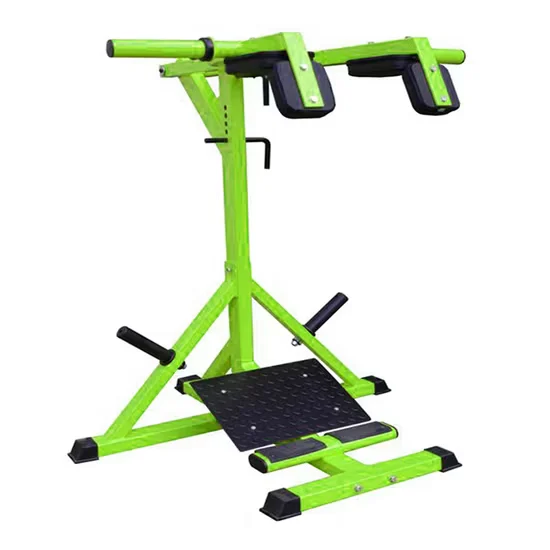
Plate Loaded Stand Calf Raise Machine, 3×3 Inch Frame Tube, 1300×1260×1495mm Dimensions — engineered with robotic MIG continuous welding to eliminate spot-weld fatigue under repetitive heavy loading, sealed industrial bearings ensure long-term pivot precision for high-traffic commercial use. Every unit undergoes individual load testing before shipment, backed by a 10-year frame warranty and complimentary floor planning support.
// Spec Highlights
• Direct from Manufacturer · No Middlemen · Worldwide Shipping
01
// Material
Imported Solid Wood
Premium hardwood frames sourced for density and visual warmth.
02
// Hardware
Medical-Grade Silent
Whisper-quiet pulleys and springs for clinical environments.
03
// Customization
Appearance OEM
Color, upholstery, and branding tailored to your studio.
04
// Service
Layout Design
Free venue planning for studios and rehab institutions.
Every component is selected for longevity, performance, and aesthetic harmony - from imported hardwood frames to silent medical-grade accessories.
// Features
Heavy-Duty Structural Integrity — Every Plate Loaded Stand Calf Raise Machine frame undergoes individual load testing before dispatch, ensuring weld seams and tube junctions handle repetitive heavy plantar flexion forces without deformation.
| Parameter | Value |
|---|---|
| Product Type | Plate Loaded Calf Raise Machine |
| Frame Tube Size | 3×3 inch |
| Frame Steel Gauge | 11-gauge |
| Steel Grade | Q235 / Q345 mill-certified |
| Welding Type | Robotic MIG continuous weld |
| Loading Type | Plate loaded |
| Bearing Type | Sealed industrial bearings |
| Powder Coating | 200μm scratch-resistant |
| Product Dimensions | 1300×1260×1495mm |
| Net Weight | 70kg |
| Certification | ISO 9001, CE |
| Warranty | 10-year frame |
| Facility Type | Typical Use |
|---|---|
| Commercial Gym Strength Floor | Dedicated calf isolation station for high-volume member use |
| University Strength and Conditioning Room | Lower leg development for athletic populations |
| Hotel Fitness Center | Compact heavy-duty station for 24/7 guest access areas |
| Crossfit Box Functional Zone | Accessory movement station for Olympic lifting athletes |
| Rehabilitation and Performance Center | Controlled load progression for Achilles tendon protocols |
Thicker tube walls resist the cyclical bending moment that thins out lesser frames over time.
Many equipment spec sheets simply list "commercial grade" without naming a measurable steel specification. When a standing calf machine sees hundreds of loaded repetitions daily, the shoulder pads transmit vertical force directly into the main uprights. If the tube gauge is marginal, you eventually see lateral sway develop, then visible deformation at the weld junction. A 3×3 inch 11-gauge tube section provides the cross-sectional modulus necessary to absorb this specific loading pattern year after year [NEED_CITE: EN 957 structural requirements for stationary training equipment]. This is exactly why a commercial plate loaded calf raise machine demands verifiable steel documentation rather than vague category labels.
This unit targets the gastrocnemius and soleus through a loaded plantar flexion arc, complementing compound movements performed on squat racks and leg press stations. In a commercial plate loaded calf raise machine configuration, it occupies a defined footprint that allows placement against walls or between functional rigs without disrupting traffic flow. The standing position accommodates users across a wide height range, while the plate-loading horns accept standard Olympic plates already present on the gym floor. It fills a specific isolation gap that free weights alone cannot address with the same stability.
The primary load path runs vertically from the shoulder pads through the upright columns down to the base plate, with an eccentric component introduced by the user’s shifting center of gravity during the heel-drop phase. Each repetition generates an impact impulse as the heel returns to the platform, meaning the welds at the base junction experience cyclical fatigue loading distinct from static holds. Sealed bearings at the pivot points prevent sweat and chalk dust infiltration that degrades rotation quality over time. The shoulder pad contact surfaces face concentrated compression, requiring high-density upholstery that maintains its profile through thousands of daily cycles [NEED_CITE: weld classification and fatigue performance in structural steel].
The 3×3 inch tube dimension is not arbitrary—it establishes a bending resistance that directly correlates to how much lateral play develops after extended use. Continuous robotic MIG welding produces a uniform bead profile along every seam, eliminating the cold joints and incomplete fusion zones typical of manual spot welding on cost-reduced equipment. Sealed industrial bearings at the pivot shaft maintain rotational tolerance regardless of the ambient humidity or chalk accumulation common in busy training environments. The 200μm powder coat, applied over a sandblasted substrate, prevents the contact-point chipping that exposes bare steel to corrosion where users load and unload plates. Together, these specifications define how long the unit remains serviceable before the first major component replacement becomes necessary.
When manufacturers reduce wall thickness to cut shipping weight, the frame may hold initially but begins to develop a perceptible flex under working loads within the first year of commercial service. Spot-welded joints on the shoulder pad brackets eventually crack along the heat-affected zone, creating a liability event rather than a simple maintenance call. Non-sealed bushings require scheduled lubrication that rarely happens in busy gyms, resulting in pivot play that users feel as instability during heavy sets. Thin powder coatings chip at the plate horn contact points, allowing moisture to initiate subsurface corrosion that spreads before it becomes visible.
The 11-gauge steel used in this frame traces back to mill certifications for the specific Q235 or Q345 coil, providing material accountability that generic sourcing cannot match. Robotic MIG welding ensures every unit receives identical continuous weld seams, removing operator variability from the structural equation. Each machine undergoes an individual load test before packing, catching assembly deviations that batch sampling misses. The 200μm powder coating withstands the plate-loading contact and sweat exposure inherent to leg training stations. A 10-year frame warranty reflects confidence in these manufacturing choices. For facilities planning multiple stations, 2D-3D CAD layout support ensures the 1300×1260mm footprint integrates with safe clearance zones around adjacent equipment. OEM color and upholstery customization allows alignment with facility branding requirements.
Provide your strength zone floor area and existing equipment list to receive a 2D-3D layout showing how this unit integrates with safe operational clearances. Specify your expected daily user volume so we can confirm the structural grade matches your traffic pattern. Outline any branding requirements including frame color, cushion color, and logo placement for OEM fulfillment.
Q: How do you verify a calf machine meets actual commercial grade standards?
A: Request the specific frame tube gauge, wall thickness measurement, and mill certification for the steel used. Ask whether welding is continuous robotic MIG or manual spot welds, and confirm each unit receives an individual load test before shipment. Vague terms like "heavy duty" without measurable specifications do not constitute verification.
Q: What determines the load capacity rating on plate loaded calf equipment?
A: The frame tube cross-section, steel grade, and weld integrity collectively establish the structural ceiling. An 11-gauge 3×3 inch tube with continuous welds at all junctions provides a verifiable threshold that supports heavy Olympic plate loading without measurable frame deflection during repetitive use cycles.
Q: Why choose plate loaded over selectorized for standing calf work?
A: Plate loading allows incremental progression using standard gym plates and accommodates very heavy working sets that would require oversized weight stacks in a pin-select design. It also simplifies the mechanism by eliminating cable and pulley systems, reducing the maintenance points in a high-load isolation movement.
Q: How does equipment spacing affect calf station placement?
A: The unit footprint requires additional clearance on the plate-loading side for safe bumper plate handling, plus rear clearance for the user’s heel drop during full range of motion. A facility layout plan accounts for these operational zones to prevent congestion with adjacent stations during peak usage periods.
Q: What maintenance schedule applies to the pivot bearings?
A: Sealed industrial bearings require no scheduled lubrication, unlike open bushings that demand regular greasing. Annual inspection confirms rotational smoothness and checks for any lateral play development. Replacement intervals depend on total usage volume but sealed designs meaningfully extend the service period between interventions.
Premium aesthetics meet quiet operation for boutique studio environments.
Medical-grade silence and precision for sports & postpartum recovery.
Furniture-grade craftsmanship for premium residential installations.
Compact premium setups for one-on-one and small-group training.
Aesthetic Pilates integration for hybrid wellness studio programming.
Multi-unit deployment with instructor-grade reliability for certification programs.
Tell us about your project. Our team will respond within 24 hours with pricing, customization options, and shipping details.
// Sales Director
William
+86 132 2531 1800
// Export Manager
Bella
+86 198 5412 8032
william@bickfit.com


