01 / Scenario
STUDIO
P
High-End Pilates Studios
Premium aesthetics meet quiet operation for boutique studio environments.
ISO
9001
CE
Certified
OEM
Available
10YR
Warranty
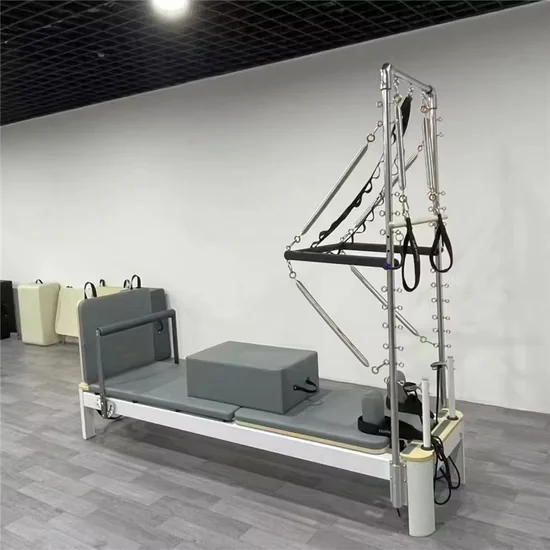
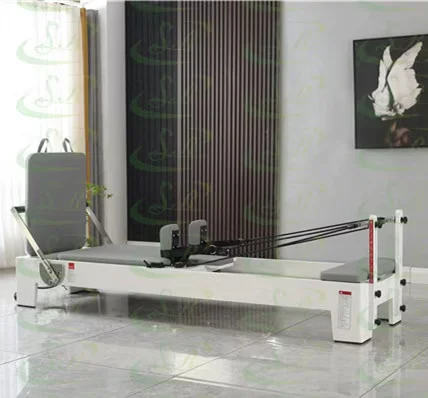
Solid Maple Wood Pilates Reformer with Tower, 2460×730mm, 100kg Net Weight — solid maple frame eliminates delamination risks common in laminated composites under cyclic spring tension; full tower attachment expands exercise repertoire without additional floor space. Ships with long box, jump board, and platform for complete studio setup. Backed by 3-year warranty and factory-direct manufacturing with 17 years of commercial equipment heritage.
// Spec Highlights
• Direct from Manufacturer · No Middlemen · Worldwide Shipping
01
// Material
Imported Solid Wood
Premium hardwood frames sourced for density and visual warmth.
02
// Hardware
Medical-Grade Silent
Whisper-quiet pulleys and springs for clinical environments.
03
// Customization
Appearance OEM
Color, upholstery, and branding tailored to your studio.
04
// Service
Layout Design
Free venue planning for studios and rehab institutions.
Every component is selected for longevity, performance, and aesthetic harmony - from imported hardwood frames to silent medical-grade accessories.
// Features
Mill-Certified Maple Frame — Every solid maple wood pilates reformer with tower is built from kiln-dried timber with moisture content verified before assembly, eliminating the delamination risk inherent in laminated plywood alternatives.
| Parameter | Value |
|---|---|
| Product Type | Pilates Reformer with Tower |
| Frame Material | Solid Maple Wood |
| Product Dimensions | 2460×730×680mm |
| Net Weight | 100kgs |
| Accessory | Long Box / Jump Board / Platform |
| Color | Solid Color |
| Logo | Customized Is Allowed |
| Warranty | 3 Years |
| Facility Type | Typical Use |
|---|---|
| Home Pilates studio | Daily reformer practice with tower-assisted stretching and resistance work |
| Boutique fitness studio | Group or semi-private Pilates sessions requiring durable, aesthetically refined equipment |
| Yoga training studio | Complementary flexibility and core conditioning alongside mat-based classes |
| Rehabilitation and physiotherapy center | Low-impact resistance exercise for post-injury recovery and mobility restoration |
Solid maple wood eliminates the delamination failure mode that plagues composite reformer frames.
Many Pilates reformers in commercial circulation rely on laminated plywood or hollow-core wood composites. These materials hold up initially, but under repeated spring tension cycles — hundreds of compressions per session — the adhesive layers between plies begin to separate. I have seen carriage rails on composite frames develop visible gaps within months of daily studio use, and once delamination starts, the carriage glide path degrades rapidly. A solid maple wood pilates reformer with tower avoids this entirely because the grain structure runs continuously through the frame. There are no glue lines to fail. The density of hard maple also resists the indentation that spring hooks and carriage stops create over time on softer woods [NEED_CITE: wood fatigue behavior under cyclic mechanical loading].
A Pilates reformer with tower occupies a specific functional position: it bridges mat-based bodyweight training and loaded resistance exercise. The reformer carriage trains the sagittal plane — pushing and pulling movements that engage the posterior chain, hip flexors, and deep core stabilizers. The tower attachment extends this into frontal and transverse planes through standing leg work, hanging arm series, and rotational exercises. For a boutique studio, this single solid maple wood pilates reformer with tower replaces the need for several standalone pieces. It fits practitioners ranging from rehabilitation clients needing minimal spring resistance to advanced users loading the full spring configuration, accommodating a broad user profile without requiring equipment swaps.
The carriage rail bears the primary structural load on any reformer. Every rep transfers force through the wheels into the rail surface, and in a commercial setting with multiple sessions daily, that contact zone endures thousands of cycles weekly. Spring tension introduces a secondary stress vector — lateral pull on the carriage that, if the rail surface is uneven or the wheels lack sealed bearings, accelerates wear on both components. The tower attachment adds a third dimension: dynamic exercises like standing presses or hanging pulls generate moment forces at the mounting point. In humid environments, sweat and ambient moisture accelerate degradation of any unsealed metal-to-metal contact, which is why bearing specification and mounting hardware matter as much as the frame timber itself [NEED_CITE: bearing seal performance in high-humidity fitness environments].
The frame material designation "solid maple" carries weight only when paired with moisture content documentation. Kiln-dried maple at an appropriate moisture equilibrium for the destination climate resists warping; air-dried or improperly stored timber can shift dimensionally after delivery, throwing the carriage rail out of parallel alignment. The wheel and bearing system determines glide smoothness and maintenance intervals — sealed bearings prevent dust and moisture ingress that causes play to develop in the carriage travel. Spring configuration and gauge dictate the resistance progression available to users; a reformer with multiple spring weights allows graduated loading without abrupt jumps between difficulty levels. The tower attachment’s structural integration — how it bolts to the frame, the thickness of the mounting plate, the load path back into the base — determines whether standing and hanging exercises can be performed safely at full range.
A reformer built with underspecified hardware reveals its compromises within the first year of commercial use. Non-sealed bearings develop axial play, causing the carriage to wobble on the rail and creating uneven wear tracks that compound over time. Springs that lack documented fatigue testing lose tension unpredictably, making resistance levels unreliable between identical units. Tower attachments mounted with thin plates or insufficient fastener count develop loosening at the joint, which may not be visible until the movement feels unstable during loaded exercises. Low-density upholstery on the carriage and long box compresses within months, exposing the substrate and requiring premature reupholstery. These are not cosmetic concerns — they affect user safety and drive maintenance costs that exceed the initial savings on cheaper hardware [NEED_CITE: maintenance cost comparison sealed versus unsealed bearings in commercial equipment].
Solid maple provides natural rigidity and vibration dampening that composite materials cannot replicate, but the frame is only as reliable as its assembly. Robotic MIG welding applies to the steel components — the tower frame, spring anchors, and hardware mounts — ensuring continuous weld lines without spot-weld weak points. Every unit undergoes load testing before shipment, verifying that the carriage, springs, and tower attachment perform under actual working conditions rather than relying on sample-based quality checks. The powder coating on all metal components provides a 200μm scratch-resistant finish that withstands contact with spring hooks and carriage stops. For studio owners planning a multi-unit layout, we provide 2D-3D CAD support to ensure proper spacing between reformers for safe carriage travel and practitioner movement around each station. OEM customization — including logo engraving on the maple frame and color options for metal hardware — allows brand consistency across a studio’s equipment fleet.
Provide your studio floor plan and session volume to receive a 2D-3D layout showing optimal reformer placement with safe clearance zones. Specify your target user profile — rehabilitation clients, general fitness members, or advanced practitioners — so we can confirm the spring configuration matches your resistance range requirements. Indicate any customization needs including frame engraving, hardware color, or upholstery material selection to align with your studio identity.
Q: How do I verify that a reformer frame is genuinely solid maple rather than laminated?
A: Examine the end grain on the frame rails. Solid maple shows continuous grain running through the full cross-section with no visible layering. Laminated frames display distinct ply lines where separate veneers are bonded together. Request moisture content documentation from the manufacturer, which should specify kiln-drying to an equilibrium level appropriate for your climate zone.
Q: What spring configuration works for a studio serving mixed ability levels?
A: A multi-spring setup with varying gauges provides graduated resistance — lighter springs for rehabilitation and beginner work, heavier springs for advanced conditioning. The spring anchors should allow quick changes between sessions. Verify that each spring weight has documented fatigue testing to ensure consistent tension over extended commercial use.
Q: What exercises does the tower attachment make possible that the reformer alone cannot?
A: The tower enables standing leg presses, hanging arm series, and upright rotational movements that load the body in planes the horizontal carriage cannot address. Structural requirements include a rigid mounting connection to the base frame and sufficient load-bearing capacity to handle dynamic forces during standing and suspended exercises without flex or loosening.
Q: What maintenance schedule should a commercial studio follow for the carriage rail and bearings?
A: Inspect the rail surface monthly for debris and clean with a dry lint-free cloth. Check bearing play by applying lateral pressure to the carriage — any detectable wobble indicates seal compromise or wear. In high-humidity environments, increase inspection frequency, as moisture accelerates degradation of unsealed bearing surfaces significantly.
Premium aesthetics meet quiet operation for boutique studio environments.
Medical-grade silence and precision for sports & postpartum recovery.
Furniture-grade craftsmanship for premium residential installations.
Compact premium setups for one-on-one and small-group training.
Aesthetic Pilates integration for hybrid wellness studio programming.
Multi-unit deployment with instructor-grade reliability for certification programs.
Tell us about your project. Our team will respond within 24 hours with pricing, customization options, and shipping details.
// Sales Director
William
+86 132 2531 1800
// Export Manager
Bella
+86 198 5412 8032
william@bickfit.com