Smith Machine for Senior Living Fitness Rooms Volume Wholesale
Heavier frames do not equal safer equipment for the elderly.
Selecting a Smith machine for senior living fitness rooms volume wholesale requires prioritizing counterbalance systems and restricted travel ranges over heavy-load capacity. Success in bulk procurement depends on customizing specifications to reduce joint stress rather than ordering standard commercial gym configurations.
I started my career welding equipment frames on the factory floor before moving into international trade, spending years installing and servicing fitness facilities across Africa. From high-rise senior apartments in Lagos to assisted living centers in Addis Ababa, I have seen hundreds of Smith machines installed. One specific project in Nigeria stands out as a costly lesson. A developer ordered a batch of machines configured for a standard commercial gym, ignoring the unique biomechanical needs of elderly residents. Upon arrival, we discovered the bar travel was too long and the starting weight was too high for users with limited mobility. The entire shipment had to be modified on-site, replacing guide rails and adjusting counterbalance weights. The profit from that container was entirely consumed by the air freight costs for replacement parts. Since then, my approach to senior housing projects begins with verifying travel limits, minimum resistance, and ergonomic grip heights.
This experience highlights a critical gap in the market. Many facility managers assume that durable, heavy-duty equipment is inherently safe for all users. However, for senior living environments, the definition of durability must include smooth operation and safety constraints that prevent injury. Understanding these nuances is essential when sourcing a Smith machine for senior living fitness rooms volume wholesale.
Why Standard Commercial Smith Machines Fail Seniors?
Standard commercial Smith machines are engineered for strength athletes, not geriatric users, creating significant injury risks due to unrestricted movement and high starting resistance.
The primary failure point in standard equipment is the lack of assistance mechanisms. A typical commercial Smith machine relies on the user to lift the full weight of the bar plus any added plates. For an elderly individual with reduced muscle mass or joint inflammation, even the empty bar can be prohibitive. Furthermore, the glide mechanism in budget commercial units often has higher friction, requiring more force to initiate movement. This jerkiness can destabilize a user with balance issues.
Another critical issue is the range of motion. Standard machines allow the bar to travel from the floor to above head height. For seniors, especially those with shoulder impingement or knee arthritis, this full range is dangerous. Over-extension at the top or bottom of a movement can lead to falls or soft tissue damage. [NEED_CITE: geriatric physical therapy guidelines on safe range of motion]
In contrast, a properly specified unit for senior living includes a counterbalance system. This mechanism offsets the weight of the bar, allowing the user to start with near-zero resistance. The glide is typically sealed and lubricated for life, ensuring smooth, consistent movement regardless of humidity or temperature fluctuations. When evaluating options for a Smith machine for senior living fitness rooms volume wholesale, buyers must look beyond the steel thickness and focus on these functional safety features.
The misconception that heavier frames are better persists among many procurement officers. While structural integrity is important, the smoothness of the glide and the ability to adjust starting weight are far more relevant to user safety and adoption rates in senior communities.
Key Safety Specs for Senior-Friendly Smith Machines?
Prioritize counterbalance systems, limited travel stops, and ergonomic grips to ensure equipment safety for elderly residents.
When specifying equipment for assisted living or independent senior housing, three technical features are non-negotiable. First, the counterbalance ratio must be adjustable. A reduction in effective starting weight allows residents to engage in strength training without strain. Second, travel limiters must be integrated into the design. These mechanical stops restrict the bar’s path to a safe zone, typically avoiding extreme flexion or extension positions. Third, grip ergonomics matter. Knurled metal bars can be harsh on thinning skin; rubber-coated or textured grips provide better comfort and security.
| Feature | Standard Commercial Spec | Senior-Living Optimized Spec |
|---|---|---|
| Starting Resistance | Full bar weight (20kg+) | Near-zero via counterbalance |
| Travel Range | Unrestricted (Floor to Overhead) | Restricted via mechanical limiters |
| Glide Mechanism | Open bushings or basic bearings | Sealed, low-friction linear bearings |
| Safety Stops | Optional or manual pin | Integrated, easy-access limiters |
| Frame Finish | Industrial powder coat | Smooth, easy-clean antimicrobial coating |
[NEED_CITE: International safety standards for fitness equipment regarding user protection]
A case in Addis Ababa illustrates the importance of travel limiters. An assisted living center initially installed machines with full travel ranges. Within weeks, staff reported residents attempting squats that went too deep, causing knee pain. By retrofitting the machines with adjustable stoppers that limited the range to a comfortable 40-60cm window, the facility eliminated these incidents. This adjustment did not require new machines, but it did require a supplier who understood the application. When sourcing a Smith machine for senior living fitness rooms volume wholesale, ensure the manufacturer can provide these customization options as part of the bulk order.
These specifications are not merely comfort features; they are risk mitigation tools. Facility managers must verify that the equipment meets these criteria before finalizing any large-scale purchase.
How to Size Equipment for Senior Living Spaces?
Optimize footprint for accessibility while maintaining safe clearance zones to accommodate mobility aids and staff assistance.
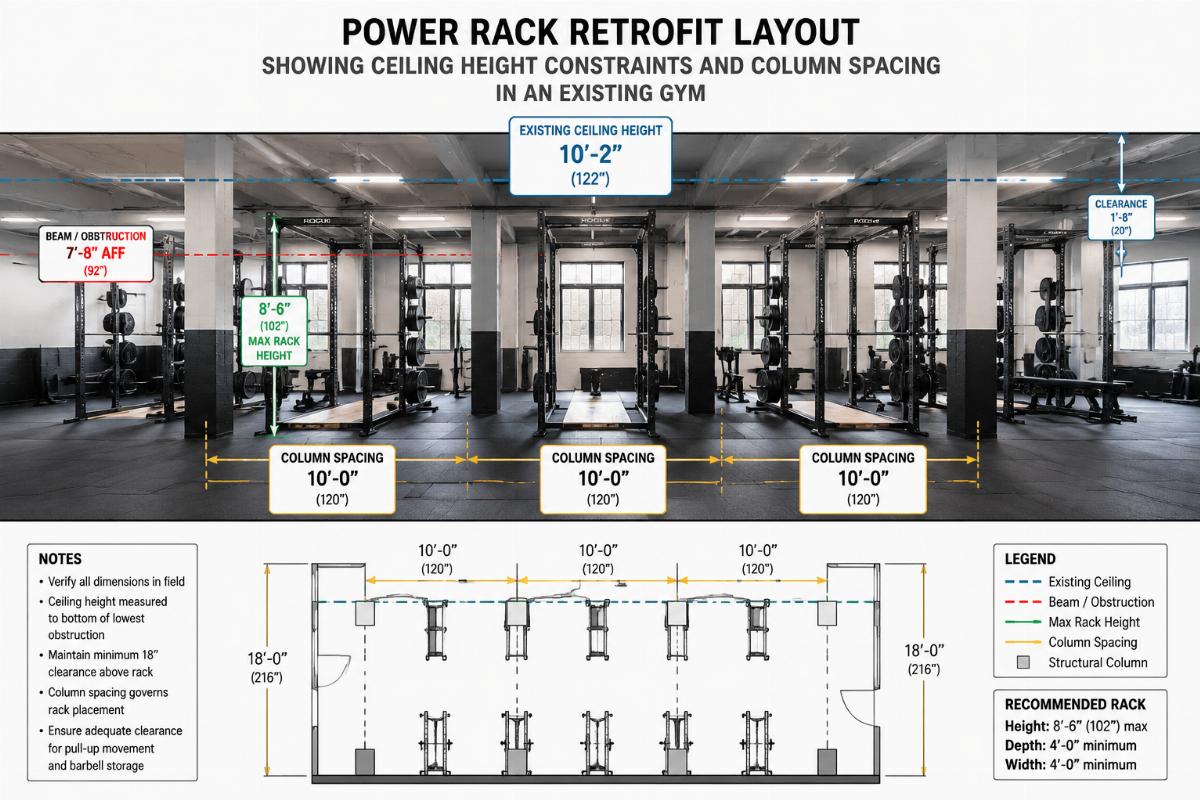
Space planning in senior living facilities differs significantly from commercial gyms. Users may arrive with walkers, canes, or wheelchairs. Therefore, the equipment footprint must allow for ample clearance on all sides. A standard Smith machine might fit tightly in a corner, but in a senior setting, this creates a hazard. Staff need space to assist users, and residents need room to maneuver their mobility devices.
Calculating the required floor space involves more than just the machine dimensions. A safe clearance zone of at least one meter on all sides is recommended. This ensures that if a user loses balance, they have space to recover or be caught by a staff member without hitting adjacent equipment. [NEED_CITE: ADA guidelines for accessible exercise equipment spacing]
In a multi-site retirement community project in South Africa, we consolidated the layout planning for several amenities. By selecting compact yet robust Smith machines with a smaller base footprint, the developer was able to create more spacious workout areas. This improved the perceived value of the amenity and reduced the feeling of clutter, which can be anxiety-inducing for some elderly residents. When negotiating a Smith machine for senior living fitness rooms volume wholesale, ask for detailed CAD drawings to test fit the equipment in your planned layouts.
Efficiency per unit is also a key metric. High-density senior amenities often have limited square footage. Choosing equipment that offers multiple functions or a smaller footprint without sacrificing stability allows for a more versatile fitness room. This approach maximizes the utility of the space while maintaining a safe and welcoming environment.
Wholesale Strategies for Volume Senior Housing Projects?
Bundle customization with consolidated shipping to reduce total project costs and ensure specification consistency across multiple sites.
Procuring fitness equipment for multiple senior living locations presents logistical challenges. Ordering individually for each site leads to higher shipping costs and inconsistent specifications. A strategic approach involves consolidating orders into full container loads. This method significantly reduces logistics costs compared to less-than-container-load shipments.
Customization is another area where volume buying offers advantages. Manufacturers are more willing to adjust counterbalance ratios or add specific safety features when dealing with large orders. In the Lagos project mentioned earlier, the initial failure was due to a lack of customization. Subsequent orders for similar facilities included pre-installed travel limiters and adjusted counterbalance weights, eliminating the need for on-site modifications. This streamlined the installation process and reduced labor costs.
When engaging in a Smith machine for senior living fitness rooms volume wholesale, leverage the volume to negotiate better terms on customization. Request that the manufacturer pre-configure the machines to your specific safety standards before shipping. This ensures that every unit arriving at your various sites is ready for immediate use, reducing the burden on local maintenance teams. Additionally, consolidated shipping allows for better inventory management and coordinated delivery schedules, aligning with construction handover timelines.
Conclusion
Safety and customization define successful equipment procurement for senior living facilities.
Standard commercial specifications are insufficient for elderly users. Prioritizing counterbalance systems, restricted travel ranges, and ergonomic design ensures resident safety and equipment longevity. Volume wholesale strategies should focus on consolidating shipments and bundling customization to optimize costs and consistency.