V-Squat Trainer Manufacturer for College Weight Rooms | Bick OEM Factory Direct
Standard commercial gym specs do not translate to college weight rooms — campus environments demand heavier-duty frames, reinforced packaging, and certified safety compliance that most suppliers overlook.
The right V-Squat Trainer for College Weight Rooms must exceed typical commercial benchmarks in three areas: structural gauge thickness to withstand high-turnover student use, impact-resistant packaging designed for non-professional campus unboxing, and full certification documentation (CE/EN or ASTM) to clear customs and pass institutional audits.
I still remember a full-container shipment we sent to a North American state university a few years back. The V-Squat Trainers were built to standard commercial specs — heavy frames, decent pads, the usual. But the packaging was designed for a professional gym receiving dock with forklifts and loading bays. On the campus end, students and part-time staff moved the crates through narrow corridors, around tight stairwell corners, and up small freight elevators. By the time the machines reached the weight room, nearly every unit had surface scratches and dented side panels. The claims came in fast. That project taught me to always ask one question before finalizing any packaging spec: who is unpacking this, and where is it going? [NEED_CITE: institutional procurement standards for campus fitness facility equipment delivery and handling]

Selecting a V-Squat Trainer for College Weight Rooms is not just about picking a machine — it is about choosing a manufacturer who understands the gap between commercial gym logistics and campus delivery reality.
What Makes a V-Squat Trainer Suitable for College Weight Rooms?
College weight rooms operate under fundamentally different conditions than commercial fitness centers — higher user turnover, less careful handling, and institutional procurement cycles that leave zero room for rework.
The trend across North American and European university athletic departments over the past several years has been toward heavier equipment specifications, driven by liability concerns and the sheer volume of daily users. [NEED_CITE: IHRSA reports on collegiate fitness facility equipment durability requirements] Unlike a commercial gym where members typically receive orientation and staff supervise equipment use, college weight rooms see hundreds of students daily, many of whom are first-time users with no formal training on machine handling.
From my experience working with university athletic directors and campus facility managers, the recurring pain points are consistent: frame welds cracking under repetitive heavy loads, pivot points wearing out prematurely, and upholstery tearing within the first year of intensive use. A V-Squat Trainer for College Weight Rooms needs to account for all of these. The frame must use heavier-gauge steel than what a typical commercial spec calls for. The pivot bearings need to be sealed and rated for continuous daily use. The pads must be high-density foam that resists compression set over extended periods.
I recall a Southeast Asian university project where the procurement team selected a supplier based purely on unit price. The machines arrived without proper CE documentation, and customs held the entire shipment for weeks. By the time the paperwork was sorted, the academic semester had already started, and the weight room sat empty. The hidden cost of that delay — expedited air freight for replacement documents, rescheduled installation crews, and reputational damage with the university administration — dwarfed the initial price savings. [NEED_CITE: import certification compliance requirements for fitness equipment in Southeast Asian markets]

The lesson is straightforward: a V-Squat Trainer for College Weight Rooms is not a commercial machine with a university logo slapped on the side. It is a purpose-built piece of equipment that must account for the realities of campus logistics, student behavior, and institutional procurement standards.
Which Specs Matter Most for Campus Use?
Frame gauge, weight capacity, pad density, and pivot smoothness are the four non-negotiable parameters — and they must be evaluated as a system, not individually.
When campus facility managers review spec sheets, they often focus on a single number — usually the stated weight capacity. But weight capacity alone tells you very little if the frame gauge is too thin, the welds are inconsistent, or the pivot mechanism cannot handle repetitive loading cycles. [NEED_CITE: EN and ASTM safety standards for plate-loaded and selectorized strength equipment structural requirements]
Here is how the critical parameters break down for college environments:
| Parameter | Commercial Gym Baseline | College Weight Room Requirement | Why It Matters |
|---|---|---|---|
| Frame Steel Gauge | Standard commercial grade | Heavier gauge with reinforced weld zones | Students load and unload plates aggressively; frame must resist flex and weld fatigue |
| Weight Capacity | Rated for typical user loads | Rated with extended safety margin | Higher user weight variance and improper loading patterns on campus |
| Pad Density | Standard high-density foam | Premium high-density, compression-resistant foam | Hundreds of daily users; pads must retain shape over extended service life |
| Pivot Mechanism | Standard bearing or bushing | Sealed bearing system rated for continuous use | High-turnover environment demands smooth, maintenance-free pivot action |
| Finish Durability | Standard powder coat | Scratch-resistant, impact-tolerant coating | Frequent contact with plates, shoes, and cleaning chemicals |
A Middle Eastern university gym project we supported illustrates this well. The procurement spec called for a V-Squat Trainer for College Weight Rooms, but the initial supplier submitted units with frame thickness and load ratings designed for boutique studio use — not a campus facility serving an entire athletic department. During the on-site inspection, the university’s technical team flagged the weld quality and frame gauge as insufficient. The entire batch had to be reworked before acceptance. That kind of rework at the destination end is exponentially more expensive than getting the specs right at the factory. [NEED_CITE: institutional gym equipment acceptance inspection criteria for welded steel frame structures]

The takeaway for buyers is to evaluate these parameters as an integrated system. A thick frame with a weak pivot is still a failure point. High-density pads with a flimsy frame still result in premature wear. The V-Squat Trainer for College Weight Rooms must be engineered holistically for the campus environment.
How to Avoid Procurement Pitfalls When Importing from China?
Certification readiness, campus-appropriate packaging, and container consolidation capability are the three factors that separate reliable suppliers from risky ones — and most buyers only discover their importance after something goes wrong.
Importing fitness equipment from China for a college project involves layers of complexity that go far beyond unit price. The first and most common pitfall is certification. Many factories can produce a physically adequate V-Squat Trainer, but lack the proper CE, EN, or ASTM documentation required by the destination country. Without these, customs will hold the shipment — sometimes for weeks — and the buyer bears every day of delay cost. [NEED_CITE: CE marking and EN safety standard compliance requirements for strength training equipment exported to European and North American markets]
The second pitfall is packaging. As I mentioned earlier, packaging designed for a commercial gym receiving dock does not work for a campus delivery scenario. College weight rooms are often located in existing buildings with narrow corridors, small elevators, and non-professional moving crews. The packaging must protect the equipment through a more demanding unboxing and transport chain. This means heavier corner protectors, thicker foam inserts, and crate designs that can be maneuvered by hand in tight spaces.
The third pitfall is container consolidation. College projects rarely involve a single machine. A typical order includes V-Squat Trainers alongside power racks, cable crossovers, free weight stations, plate-loaded machines, and flooring. The supplier must have the capability to consolidate all of this into full containers efficiently — maximizing space utilization while ensuring that heavy items do not damage lighter ones during transit. A supplier who can only ship single-product containers forces the buyer to manage multiple LCL shipments, which increases cost, complexity, and damage risk.

A Latin American university distributor we worked with had previously sourced from a factory that offered the lowest per-unit price. But that factory could not provide CE documentation, used minimal packaging, and had no experience with mixed-container loading. The first shipment arrived with visible damage to several units, and the certification gap delayed the entire project by months. Switching to a manufacturer with full certification support, campus-grade packaging options, and proven container consolidation experience eliminated those problems entirely. The per-unit price was slightly higher, but the total landed cost — including damage claims, delay penalties, and rework — was substantially lower. [NEED_CITE: total cost of ownership analysis for fitness equipment procurement including logistics and compliance factors]
The V-Squat Trainer for College Weight Rooms must be sourced from a manufacturer who understands these procurement realities, not just the product specs.
How to Evaluate a V-Squat Trainer Manufacturer for Your College Project?
OEM flexibility, spare parts availability, warranty terms, and turnkey project experience are the four evaluation criteria that determine whether a manufacturer can deliver on a college-scale order.
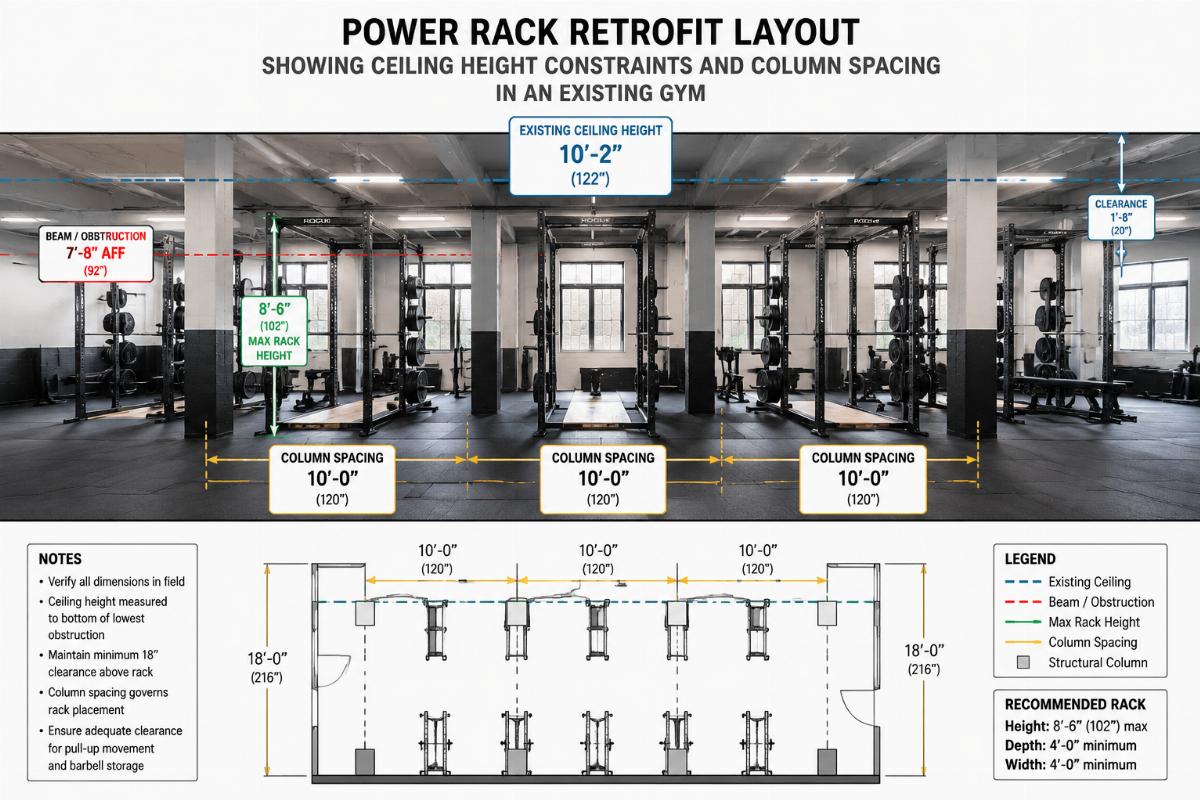
Not every fitness equipment factory is equipped to handle a college weight room project. The ability to produce a single V-Squat Trainer is very different from the ability to deliver a complete campus fitness solution on time, with full documentation, proper packaging, and long-term after-sales support.
OEM flexibility matters because universities often require custom branding — logo placement, color matching to institutional standards, and sometimes even minor design modifications to fit specific spatial constraints. A manufacturer with genuine OEM and ODM capability can accommodate these requests without disrupting production timelines. [NEED_CITE: OEM and ODM service capabilities for commercial fitness equipment manufacturers serving institutional clients]
Spare parts availability is equally critical. College weight rooms operate year-round, and any equipment downtime during a semester creates immediate complaints. The manufacturer must maintain a spare parts inventory — pivot bearings, cable sets, pad replacements, selector pins — and be able to ship them quickly when needed. A factory that sells you the machine but cannot support it with parts is a liability.
Warranty terms reveal a manufacturer’s confidence in their own product. A V-Squat Trainer for College Weight Rooms should come with a meaningful frame warranty, reasonable coverage on wear parts, and clear terms for claim resolution. Manufacturers who offer vague or overly restrictive warranty language are typically signaling that they expect the product to fail under heavy use.
Turnkey project experience is the final differentiator. A manufacturer who has previously delivered complete gym packages — cardio, strength, free weights, flooring, accessories — for universities, hotels, or large commercial facilities understands the coordination challenges involved. They know how to plan container loading, how to sequence production across multiple product categories, and how to ensure that everything arrives together and ready for installation.

When we support a college project, the conversation always starts with the full scope — not just the V-Squat Trainer, but the entire weight room layout. This allows us to plan container consolidation from the beginning, ensure that all products meet the same certification and packaging standards, and provide a single point of accountability for the entire order. That level of coordination is what separates a smooth campus delivery from a procurement nightmare.
Conclusion
A V-Squat Trainer for College Weight Rooms demands more than commercial gym specs — it requires heavier structural engineering, campus-grade packaging, full certification compliance, and a manufacturer with proven turnkey project experience.
Campus environments are unforgiving. High user turnover, rough handling, tight delivery logistics, and strict institutional procurement standards mean that every detail matters — from frame gauge to pad density to crate design. Choosing a manufacturer who understands these realities, and who can deliver a complete, certified, well-packaged solution on time, is the single most important decision in the procurement process.