BP Smith Machine Warranty & After-Sales Guide | What to Expect & How to Claim
Most buyers fixate on warranty duration — the real risk is whether spare parts actually arrive before your gym floor sits idle.
A commercial Smith machine warranty typically covers the frame and structural welds for multiple years, while wear components such as cables, pulleys, and upholstery carry significantly shorter terms. The claim process follows a photo-and-video diagnosis workflow before any parts are dispatched, and the single most common cause of port clearance failure is a mismatch between the CE certificate model number and the commercial invoice.
I still remember a container of Smith machines sitting at Tema port for well over twenty days because the CE paperwork listed a configuration code that didn’t match the actual loadout inside. The demurrage ended up eclipsing the cargo value itself. That kind of loss doesn’t come from a bad product — it comes from a bad document. [NEED_CITE: common documentation mismatches causing port delays in West African customs]
Let me walk you through what the warranty actually covers, how claims work from overseas, which documents keep your cargo moving, and how spare parts logistics are structured for long-term operation.
What Does the BP Smith Machine Warranty Actually Cover?
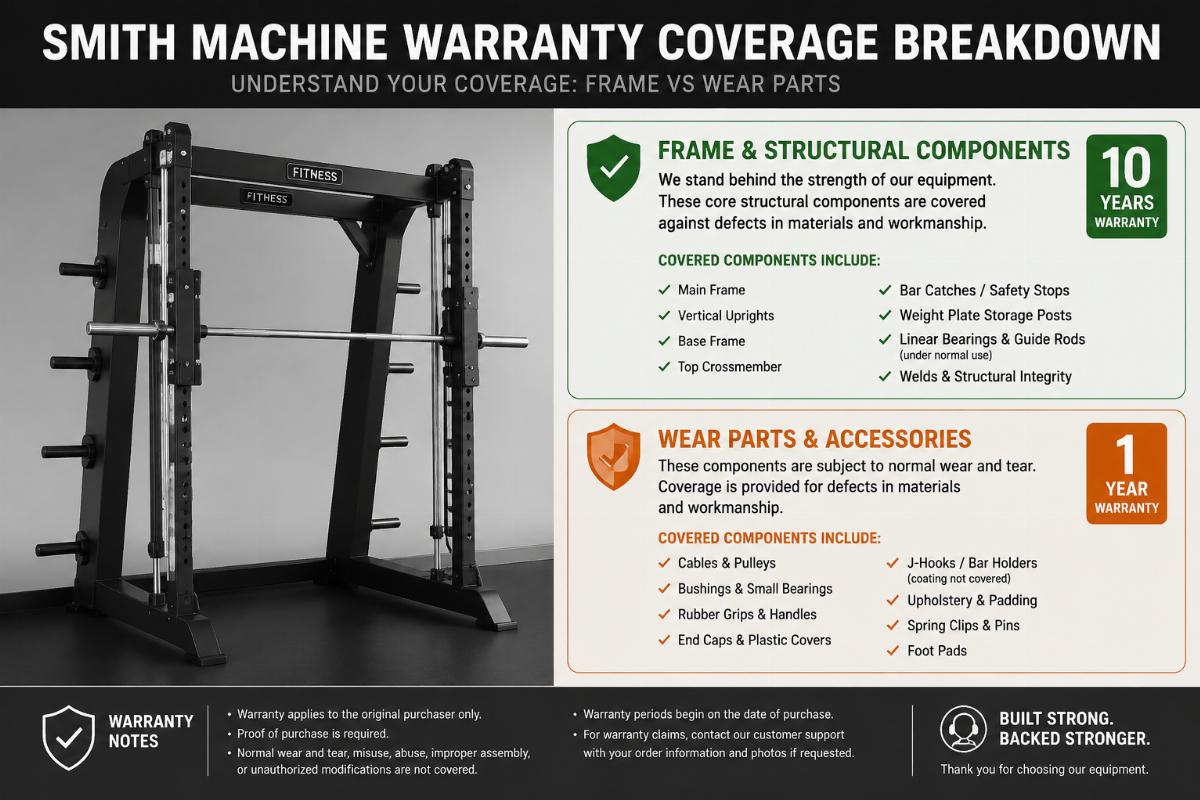
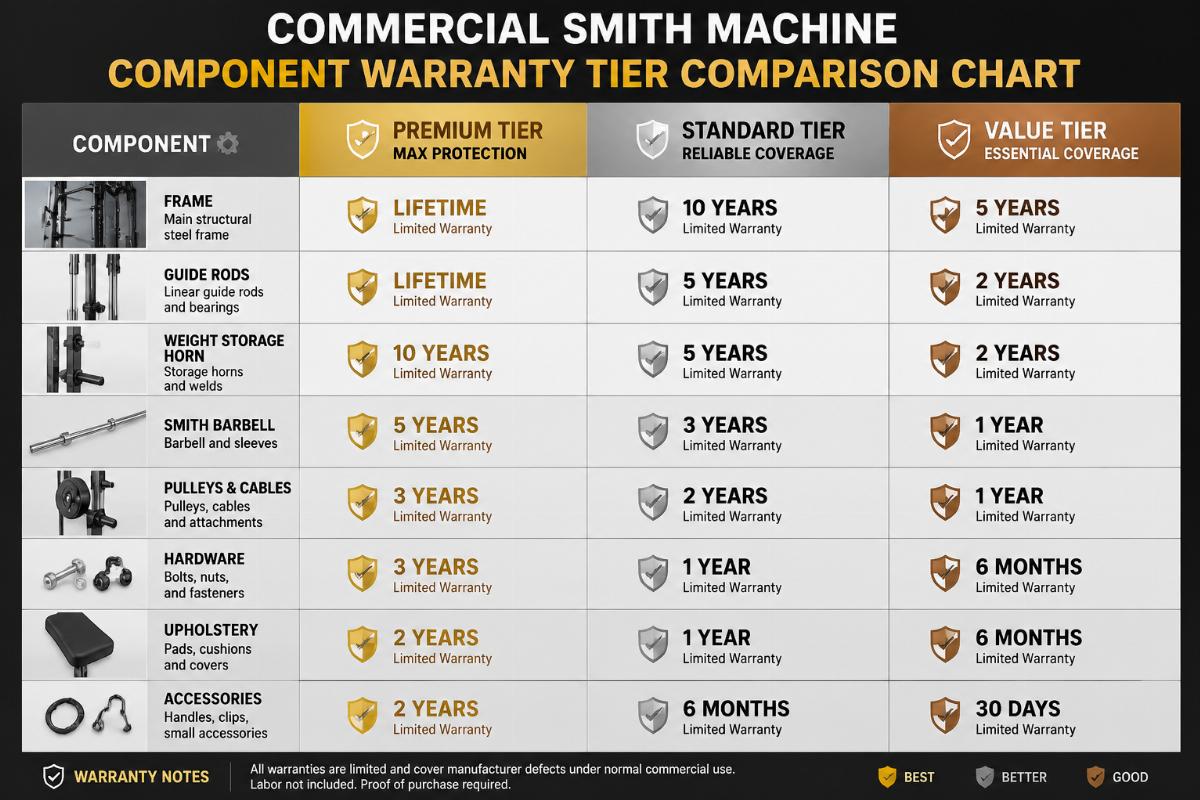
The warranty splits into two tiers: structural components get long-term coverage, while consumable wear parts follow a separate, shorter schedule.
When you import a commercial Smith machine, the first thing to verify is not the headline warranty number but the boundary between "structural" and "wear." Most buyers assume everything under the roof is covered equally — it isn’t. [NEED_CITE: typical warranty tier structure for commercial strength equipment per industry standards]
Here is how the coverage generally breaks down:
| Component Category | Coverage Scope | Typical Term Length |
|---|---|---|
| Frame and structural welds | Full coverage against manufacturing defects | Extended multi-year term |
| Linear bearings and guide rods | Coverage against premature failure | Medium-term coverage |
| Cables, pulleys, and snap hooks | Wear-and-tear exclusion applies | Short-term or consumable classification |
| Upholstery and padding | Normal wear excluded | Short-term coverage |
| Weight plate coatings | Chipping under normal use excluded | Limited coverage |
| Adjustment pins and selectors | Mechanical defect coverage only | Medium-term coverage |
The key takeaway: a frame warranty stretching across years means very little if your cables snap in the first few months and nobody treats them as a priority shipment. [NEED_CITE: failure rate distribution between structural and wear components in commercial gym equipment]
A distributor in South America once placed a full container order of Smith machines for a gym chain. Within the first few months of operation, cable fraying appeared on multiple units. Because the spare parts were consolidated into the original container shipment — a practice we recommend for every bulk order — the replacement cables were already on-site. Downtime was measured in hours, not weeks.
Compare that to a buyer who assumed "warranty" meant "the supplier will ship me anything I need, whenever I need it." When a pulley assembly failed, the replacement had to be air-freighted separately, and the gym floor section sat closed for a noticeable stretch. The warranty was honored — but the logistics gap hurt the end user.
When you negotiate terms, ask specifically: which components are classified as consumables, and what is the lead time for each category? [NEED_CITE: warranty claim response time benchmarks for overseas fitness equipment suppliers]
How Do You File a Warranty Claim From Overseas?
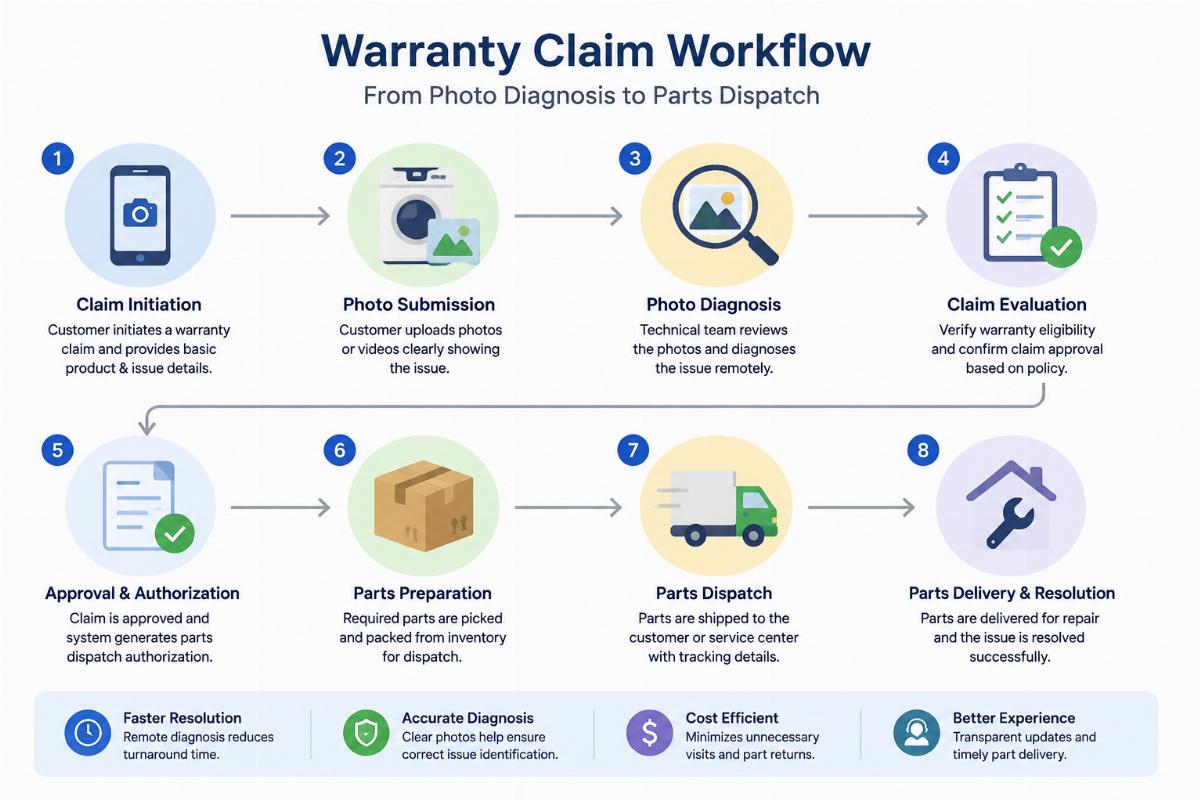
The standard claim workflow is: photographic evidence first, video diagnosis second, parts dispatch third — and the majority of issues are resolved without a technician ever leaving the factory.
Flying a service engineer across continents for a pulley replacement is not economically viable for either side. The process has evolved into a remote-first model, and understanding it saves both parties considerable friction.
Here is the typical sequence:
-
Initial fault documentation — The gym operator photographs the defective component from multiple angles, capturing any visible damage, part numbers engraved on the component, and the overall machine context. [NEED_CITE: recommended photographic evidence standards for equipment warranty claims]
-
Video diagnostic call — A short video session between the on-site technician and the factory’s after-sales team. The factory team walks the local operator through disassembly checks, measures cable tension, inspects pulley grooves, and confirms whether the issue is a manufacturing defect or normal wear.
-
Fault classification — The factory team categorizes the issue as warranty-covered or consumable replacement. This step is where disputes most commonly arise, so having clear documentation from step one is critical.
-
Parts dispatch — For warranty-covered items, the factory prepares replacement components. Depending on urgency, these ship via sea freight consolidation with the next outgoing container or via air freight for critical downtime situations.
-
Remote installation guidance — The factory team provides step-by-step installation instructions via video call or annotated diagrams, guiding the local maintenance person through the swap.
A gym chain operator in the Middle East adopted this workflow across multiple locations. Through repeated video diagnostic sessions, the majority of reported issues were resolved remotely — cable adjustments, pulley realignments, bolt torque corrections — without a single site visit from the factory side. Only a small fraction of cases required physical parts shipment, and even those were resolved within a reasonable turnaround window.
The critical lesson: invest in a competent local maintenance person. The warranty process works smoothly when the person holding the camera knows what a properly routed cable looks like. [NEED_CITE: importance of local technical capability in overseas equipment after-sales support]
What Documentation Prevents Port Clearance Nightmares?
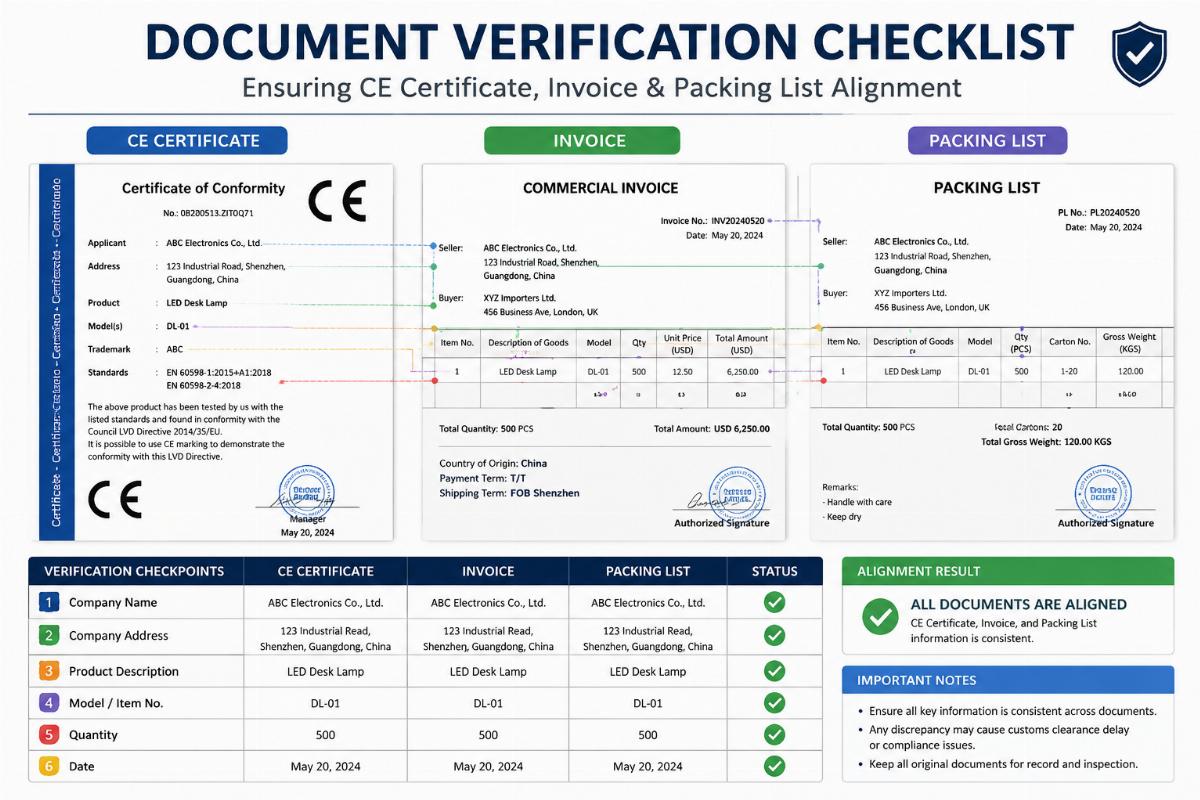
Your CE certificate model number, commercial invoice description, and bill of lading product name must match character for character — a single digit discrepancy can strand your container at the port for weeks.
This is where I have seen the most expensive mistakes in this business, and it has nothing to do with product quality. It is purely a paperwork discipline problem.
Let me go back to that Tema port incident. The CE certificate was issued for a specific model configuration code. The commercial invoice, prepared by a different person at a different stage, listed a slightly different code. The physical machines inside the container were built to the correct specification — but the customs officer comparing documents saw a mismatch and flagged the entire shipment.
The cargo sat. Demurrage accumulated daily. The importer scrambled to get the manufacturer to reissue paperwork, which required verifying the actual production batch against the original test samples. The entire process consumed well over twenty days, and the accumulated port charges ended up representing a significant multiple of what the original cargo was worth. [NEED_CITE: demurrage cost accumulation patterns at West African ports for documentation delays]
The document consistency checklist you need before every shipment:
| Document | Critical Field | Verification Requirement |
|---|---|---|
| CE Certificate | Model number and configuration code | Must exactly match invoice line items |
| Commercial Invoice | Product description and model codes | Must mirror CE certificate precisely |
| Packing List | Item descriptions and quantities | Must align with invoice and bill of lading |
| Bill of Lading | Cargo description | Must be consistent with all supporting documents |
| Certificate of Origin | Product classification | Must correspond to HS codes used elsewhere |
This is not a theoretical risk. Ports across West Africa, parts of South America, and certain Southeast Asian destinations have intensified document scrutiny in recent years. [NEED_CITE: increasing customs documentation verification strictness in emerging market ports]
What we do at the factory stage is build a single-document verification pass before anything leaves the warehouse. The CE certificate model number is pulled up alongside the commercial invoice draft and the packing list, and all three are compared line by line. If there is any deviation — even a suffix letter difference — it gets corrected before the container is sealed.
For buyers placing custom-configured orders, this becomes even more critical. A Smith machine built with a non-standard plate horn or an additional pulley station may carry a different configuration code than the base model. If the CE certificate was issued for the base model and the invoice reflects the custom build, you have a problem waiting to happen.
The solution: request a pre-shipment document review package. Verify every model number, every suffix, every configuration code across all documents before the vessel is loaded. [NEED_CITE: pre-shipment document verification best practices for fitness equipment exports]
How Does Bick Handle Spare Parts for Long-Term Support?
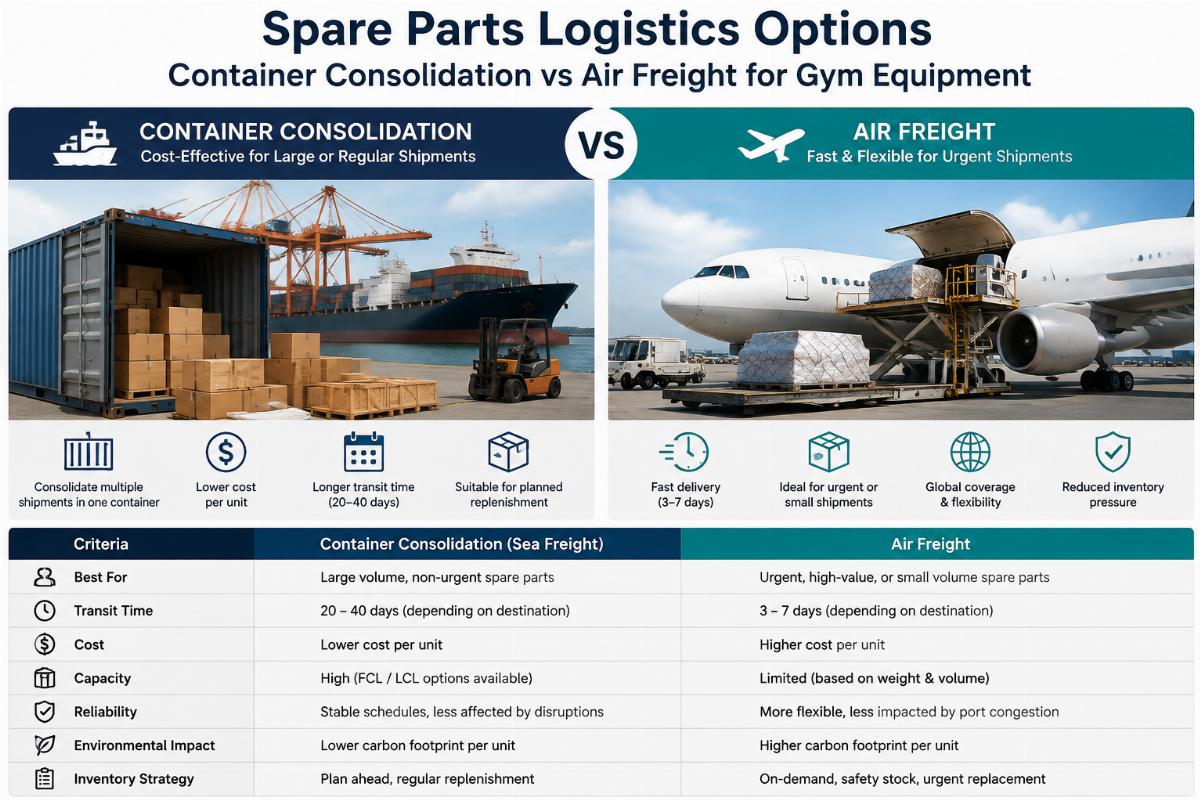
Spare parts can be consolidated into your container order at the time of purchase, or shipped separately by air when urgent — the strategy depends on your order volume and local maintenance capability.
A warranty is only as good as the supply chain behind it. You can have the most generous coverage terms on paper, but if a replacement cable takes months to arrive, your gym floor is still dead.
The practical approach breaks down into two modes:
Consolidated spare parts with the original order. When a distributor or gym chain places a container-level order, we include a calculated spare parts package — typically covering high-wear items like cables, pulley wheels, snap hooks, and adjustment pins. These parts ride in the same container, at marginal additional cost, and are available on day one of operation. For buyers importing across multiple regions, this eliminates the lead-time uncertainty entirely. [NEED_CITE: recommended spare parts inventory ratio for commercial gym equipment importers]
Separate air shipment for urgent needs. When an unexpected failure occurs outside the consolidated spare parts inventory, the alternative is air freight. This is faster but carries higher per-unit logistics cost. The decision depends on how many machines are affected and how critical the downtime is for the end user’s business.
A distributor operating across several countries in the Middle East maintains a regional spare parts buffer. When a specific pulley assembly started showing wear across a batch of units, the regional warehouse had replacement stock ready. The factory shipped additional units by air to replenish the buffer, and the gym locations experienced minimal disruption.
The underlying principle: treat spare parts as inventory planning, not as an afterthought triggered by failure. [NEED_CITE: spare parts inventory management strategies for overseas fitness equipment distributors]
For buyers placing recurring orders, we track which components are most frequently replaced across our export base and can recommend a spare parts mix tailored to your specific machine configuration and usage intensity. This is not a generic list — it reflects actual failure pattern data accumulated across shipments to diverse markets.
Conclusion
A Smith machine warranty is a supply chain commitment, not just a piece of paper — and its real value depends on documentation accuracy, spare parts availability, and remote diagnostic capability.
Know which components your warranty actually covers, keep your CE certificate and commercial invoice in perfect alignment before every shipment, consolidate spare parts with your original container order, and build remote diagnostic capability into your local operations. These four practices separate importers who run smoothly from those who discover expensive problems at the port gate or the gym floor.