
Buy Commercial Gym Equipment for Distributors | Bick OEM Supplier
Lower MOQs do not always mean lower landed cost per unit. When you buy gym equipment for distributors from a Chinese factory, full-container pricing on a single SKU often undercuts the per-unit freight and tariff burden of mixed small-batch orders.
To get true distributor pricing, you typically need to commit to a full container load — usually a 40HQ — of mixed or single-category commercial gym equipment. Below that threshold, you are paying trading-company markups, not factory-direct rates. [NEED_CITE: volume threshold structure for factory-direct pricing in Chinese fitness equipment exports]
I still remember a shipment we sent to Dubai years back. A distributor ordered a full container of plate-loaded machines. Everything looked right on the spec sheet. But somewhere between the welding jig and the packing line, the bolt specs for the seat adjustment rails got swapped. Half the units arrived and the gym owner could not assemble a single station. We ended up air-freighting replacement hardware kits at a cost that ate into our margin for the entire quarter. Since that day, I have treated every hardware list and load-test report like a legal document. When buyers come to me asking how to buy gym equipment for distributors, I walk them through the same checkpoints I use before anything leaves our loading dock in Shandong.
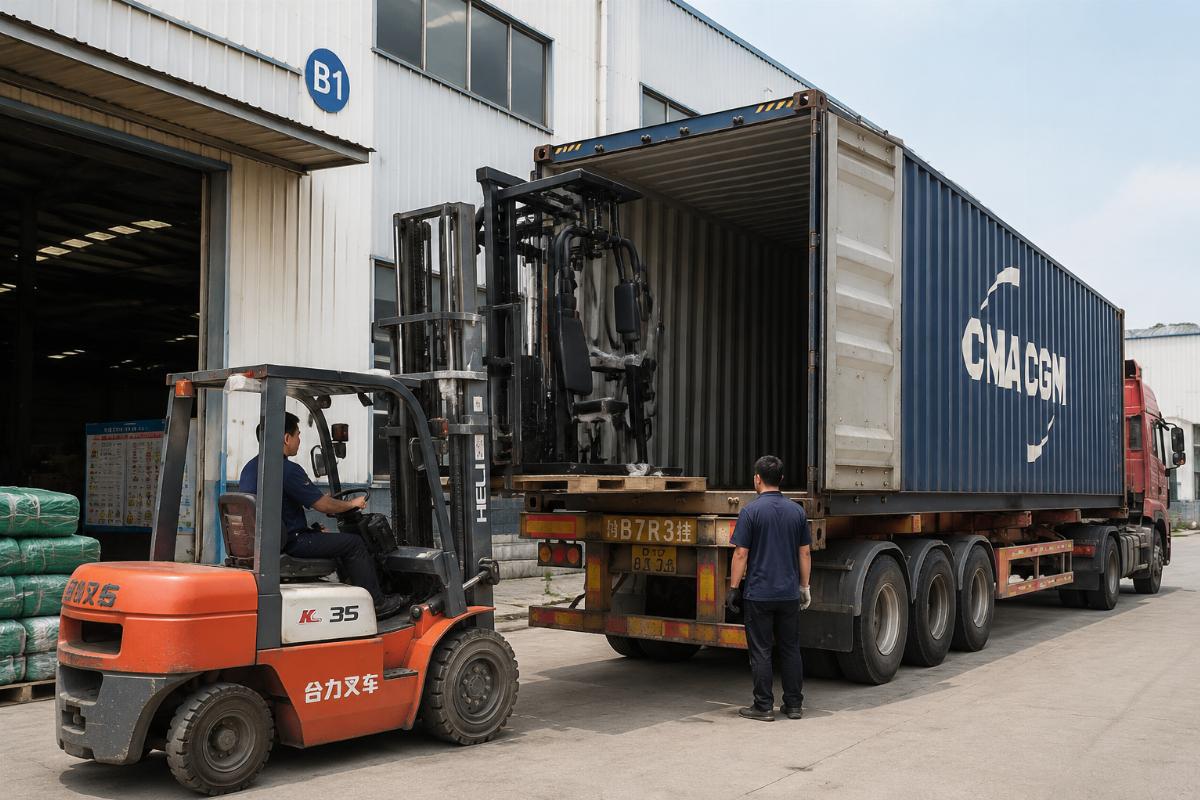
Let me walk you through the real questions distributors need answered — not the brochure promises.
What MOQ Do You Actually Need to Get Distributor Pricing?
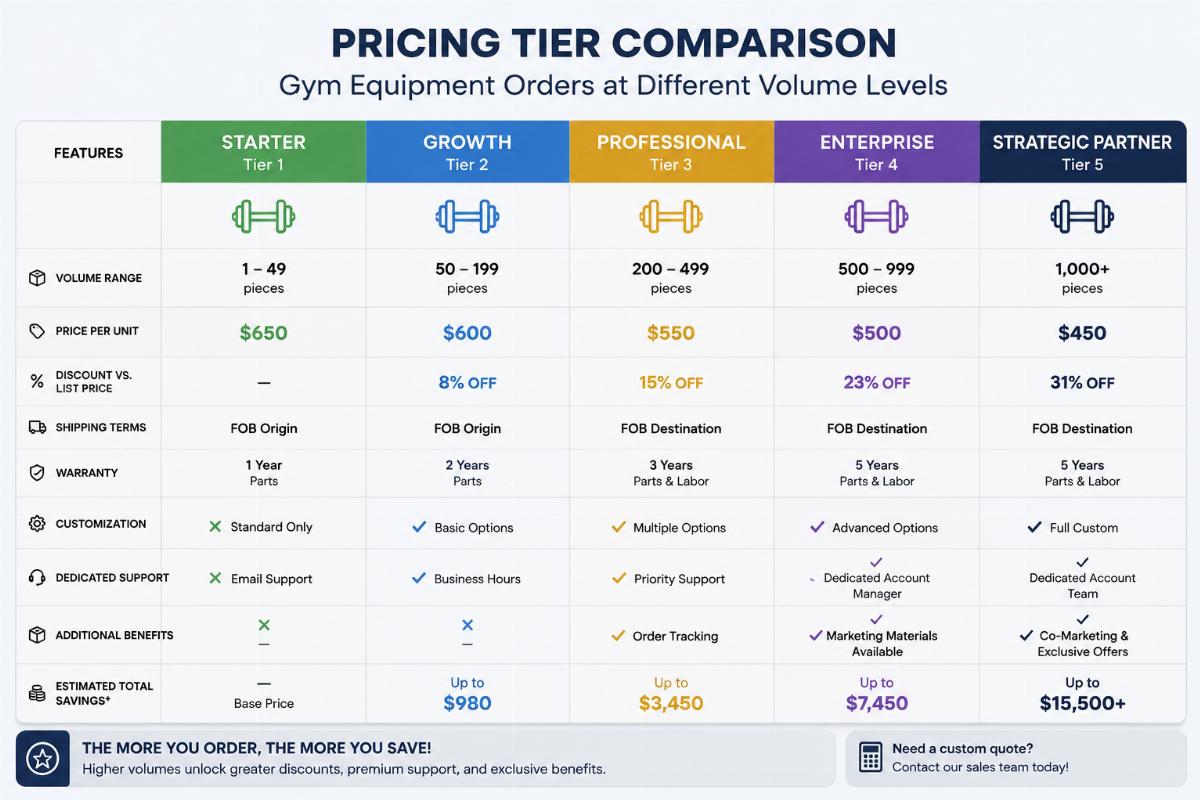
Most distributors assume they can test the market with a few pallets and still get factory-direct pricing. In reality, true distributor pricing kicks in at the container-load level, and the economics often favor committing to a full 40HQ upfront. [NEED_CITE: MOQ and pricing tier structure for commercial fitness equipment exports from China]
Here is how the pricing tiers typically break down when you buy gym equipment for distributors from a Shandong-based manufacturer:
- Single-unit or sample orders: Priced at or near retail. Factories absorb no setup amortization at this level. Useful only for physical inspection before committing.
- LCL (Less than Container Load) orders: You pay per CBM, but the per-unit cost includes handling surcharges, consolidation fees, and often a trading-company margin if you are not buying direct.
- FCL (Full Container Load) orders: This is where factory-direct pricing activates. The per-unit cost drops noticeably because the factory can plan production runs, raw material procurement, and packaging in bulk.
- Multi-container or annual commitment orders: Additional volume discounts, dedicated production scheduling, and priority on OEM tooling slots.
A distributor in West Africa once told me he started with a single 20-foot container of selectorized machines. He expected to reorder in smaller batches once the market responded. What he found was that the per-unit landed cost of his second order — split across two LCL shipments — actually exceeded his first FCL order once freight, customs handling, and local delivery were factored in. He switched back to full containers and negotiated an annual volume agreement instead.
Key risk to watch: Some factories quote attractive per-unit prices for small orders but hide the real cost in packaging, palletization, or documentation fees. Always ask for a landed-cost breakdown, not just an EXW or FOB number. [NEED_CITE: hidden cost components in small-batch fitness equipment imports]
How Does OEM Branding Work for Private-Label Gym Equipment?
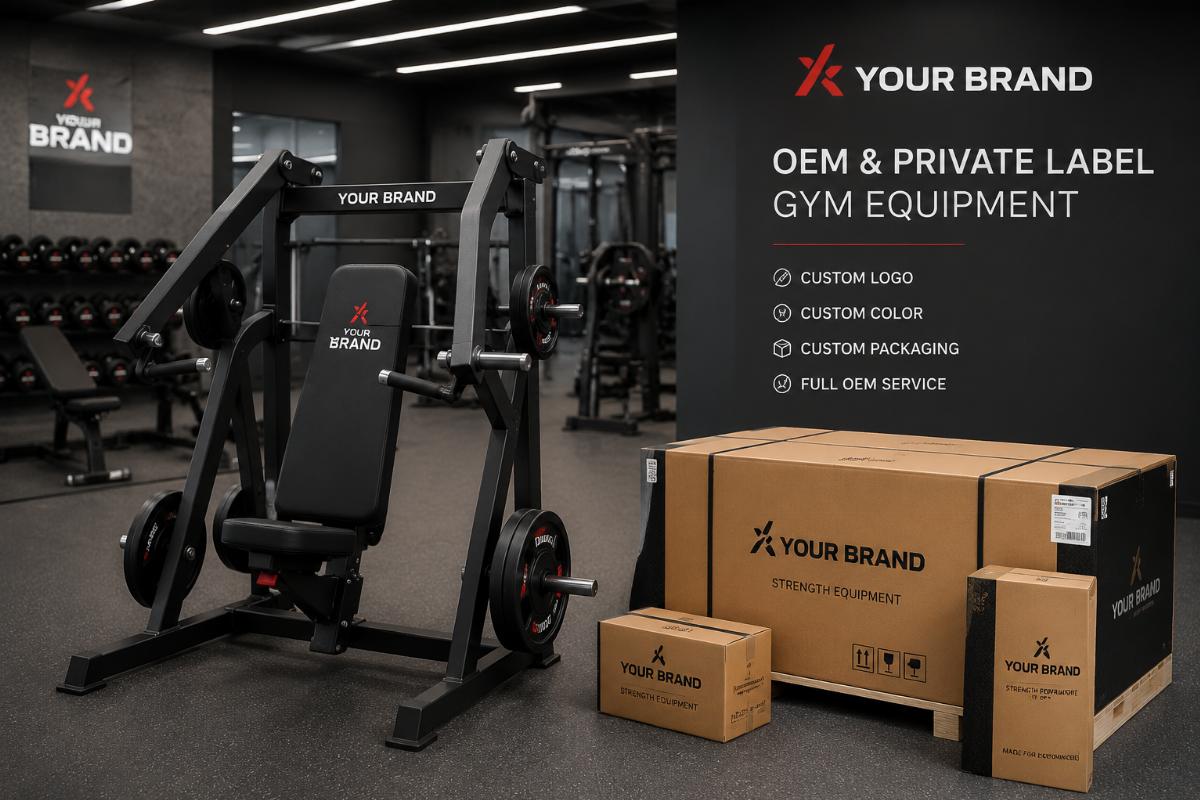
True OEM goes far beyond slapping your logo on a shroud. It includes spec sheet localization, hardware kit customization, packaging design, and manual translation — all of which affect lead time and tooling cost. [NEED_CITE: scope of OEM customization in commercial fitness equipment manufacturing]
When you buy gym equipment for distributors and request private-label branding, here is what the process actually looks like from a factory floor perspective:
- Logo and colorway placement: You provide vector artwork. The factory applies it to machine shrouds, upholstery stitching patterns, and console faceplates. This is the baseline level most buyers expect.
- Spec sheet localization: Your brand’s technical documentation — including weight stack increments, frame dimensions, and adjustment ranges — must match the physical product. Mismatches here create warranty disputes and returns.
- Hardware kit customization: Bolt lengths, wrench sizes, and assembly instructions must match your target market’s standards. Metric versus imperial hardware is a frequent oversight.
- Packaging and manual translation: Retail-ready packaging with your brand’s barcode, handling icons, and multilingual assembly manuals. This is where lead time extends noticeably.
- Tooling and mold modifications: If you want custom seat contours, unique cable routing paths, or proprietary weight stack housings, new molds or jigs are required. Tooling cost is typically amortized over the order volume.
The lead time for a full OEM run — from final spec approval to container loading — usually spans several weeks of production plus additional time for packaging and documentation finalization. A distributor in Southeast Asia learned this the hard way when he assumed a logo swap would take the same timeline as a standard stock order. The delay in manual translation and packaging proofing pushed his shipment back by weeks, missing his regional trade show window entirely.
Critical checkpoint: Before production begins, insist on a pre-production sample with full branding applied — not just a bare machine with a sticker. Verify every detail against your approved spec sheet. [NEED_CITE: pre-production sample verification protocol in OEM fitness equipment orders]
How Do You Verify Specs Before the Container Leaves the Port?
CE certification confirms electrical and mechanical safety compliance — it does not guarantee frame durability, weld integrity, or load-bearing capacity. For that, you need load-test reports, material certificates, and pre-shipment inspection checkpoints. [NEED_CITE: distinction between CE safety compliance and structural durability testing in fitness equipment]
When you buy gym equipment for distributors, the spec sheet is your first line of defense — but it is only as reliable as the verification behind it. Here is the verification sequence I insist on before any container is sealed:
- Steel gauge and frame load capacity correlation: The frame is the skeleton. Verify that the steel tube thickness matches the rated user weight capacity. A frame rated for heavy commercial use must use correspondingly heavier gauge steel. [NEED_CITE: correlation between steel tube gauge thickness and frame load capacity in commercial gym equipment]
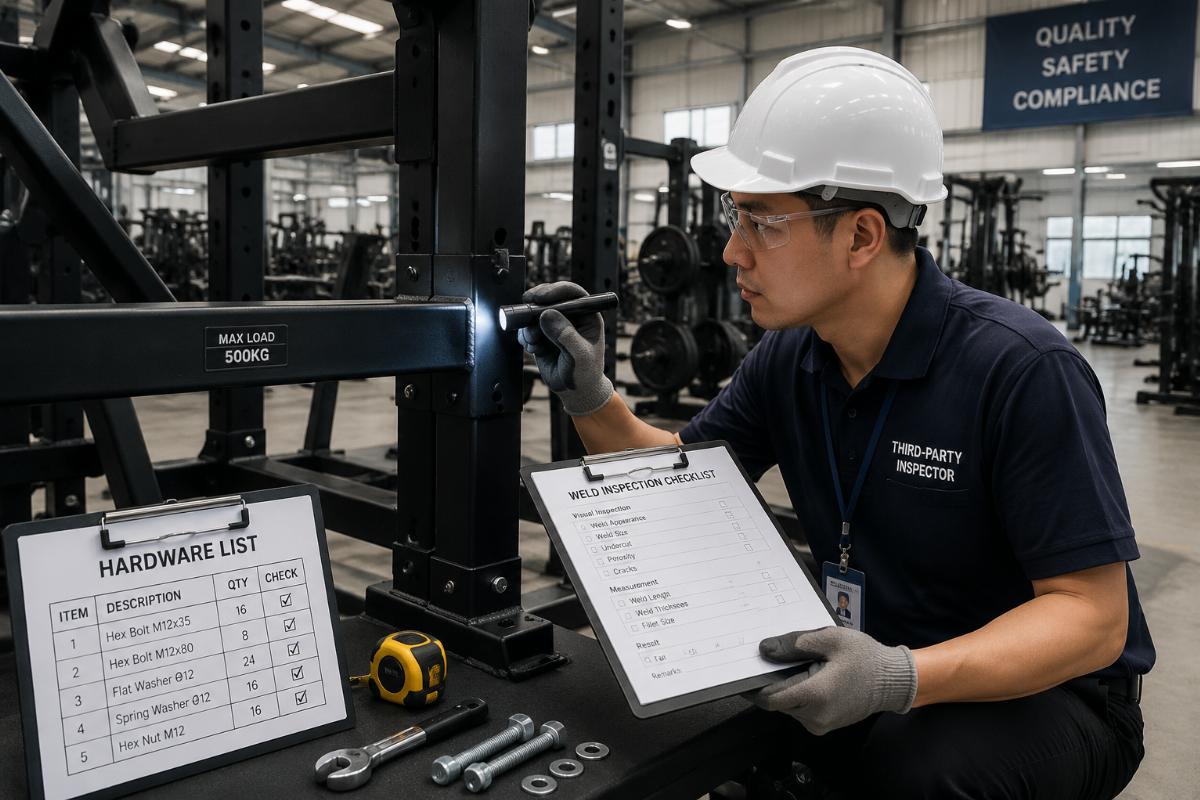
- Weld integrity inspection: Spot-check welds on load-bearing joints. Look for consistent penetration, no porosity, and proper grinding. Poor welds are the leading cause of frame failure under repeated commercial use.
- Hardware list cross-reference: Every bolt, nut, and washer in the assembly kit must match the hardware list on the spec sheet. This is where the Dubai bolt-spec disaster I mentioned earlier could have been caught.
- Load-test reports: Request documented load-test results for each machine category — not just a generic "tested to X kg" statement. The report should specify test duration, load application points, and pass/fail criteria.
- Cable and pulley system verification: For cable crossovers, functional trainers, and plate-loaded machines with cable routing, verify cable diameter, pulley bearing type, and routing smoothness. Cable failure under load is a serious safety risk.
A buyer in the Middle East once received a container of Smith machines where the guide rods were undersized for the rated weight stack. The machines functioned fine during initial assembly, but within months of commercial use, the guide rods bent under repeated heavy loading. The root cause was a spec sheet that listed one rod diameter while the production run used a smaller, cheaper alternative.
Non-negotiable step: Hire a third-party inspection service or send your own representative to the factory for pre-shipment inspection. The cost is a fraction of the expense of handling defective goods overseas. [NEED_CITE: pre-shipment inspection cost versus return/replacement cost ratio in fitness equipment imports]
Can You Mix Cardio and Strength in One Container?
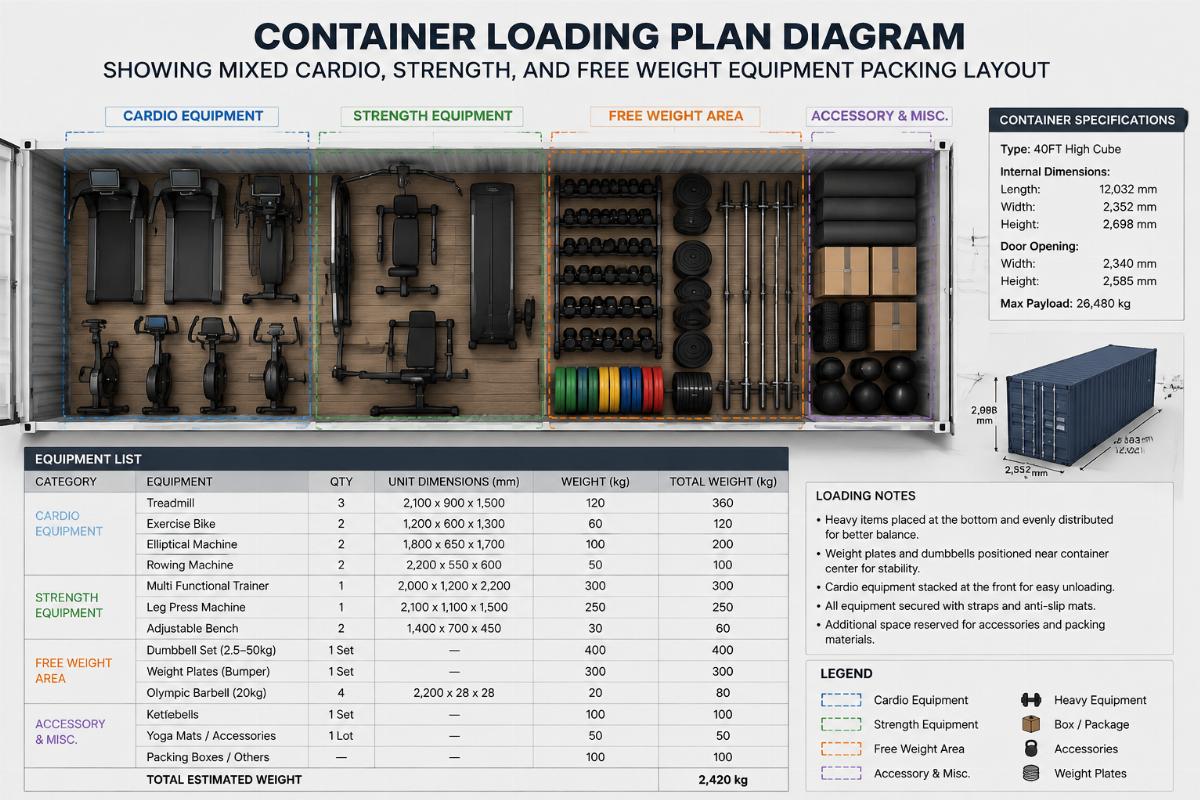
Yes — and for distributors outfitting complete gyms, container consolidation is often the only way to achieve viable per-unit freight costs. The key is understanding CBM (cubic meter) utilization and how different equipment categories pack together. [NEED_CITE: container loading optimization for mixed fitness equipment SKUs]
When you buy gym equipment for distributors, especially those serving the commercial gym, hotel, or apartment development segments, single-category containers rarely make sense. A hotel fitness center needs treadmills, ellipticals, a Smith machine, a set of dumbbells, and flooring — all in one shipment. Here is how consolidation works in practice:
- Plate-loaded and selectorized strength machines: These are the space-efficient workhorses. Their rectangular profiles and stackable components allow dense packing. A 40HQ can hold a substantial number of units when disassembled and nested properly.
- Cardio equipment (treadmills, ellipticals, bikes): These have irregular shapes and cannot be nested as tightly. Treadmills, in particular, consume significant CBM due to their deck length and console height. Plan for cardio to occupy a disproportionate share of container volume relative to unit count.
- Free weights and accessories: Dumbbells, barbells, weight plates, and kettlebells are dense but compact. They fill gaps between larger machines and help maximize weight utilization without consuming excessive CBM.
- Flooring and functional gear: Rubber flooring rolls, battle ropes, plyo boxes, and medicine balls are flexible fillers. They can be packed around irregular shapes and in leftover voids.
The consolidation strategy is to balance CBM volume against container weight capacity. A container can be full by volume long before it hits its weight limit — or vice versa. The goal is to reach both limits as closely as possible to minimize per-unit freight cost.
A distributor in Latin America was initially quoting cardio and strength as separate shipments. When we ran the CBM calculation for a mixed container — combining treadmills, a cable crossover, a full dumbbell set, and flooring — the per-unit freight cost dropped noticeably compared to two separate LCL shipments. He now orders all project-based shipments as consolidated containers.
Practical tip: Request a container loading plan from your supplier before production begins. This document shows exactly how each SKU will be packed, the CBM allocation per item, and the total weight. It prevents surprises at the port. [NEED_CITE: container loading plan documentation standards for mixed fitness equipment shipments]
What After-Sales Support Should a Distributor Expect?
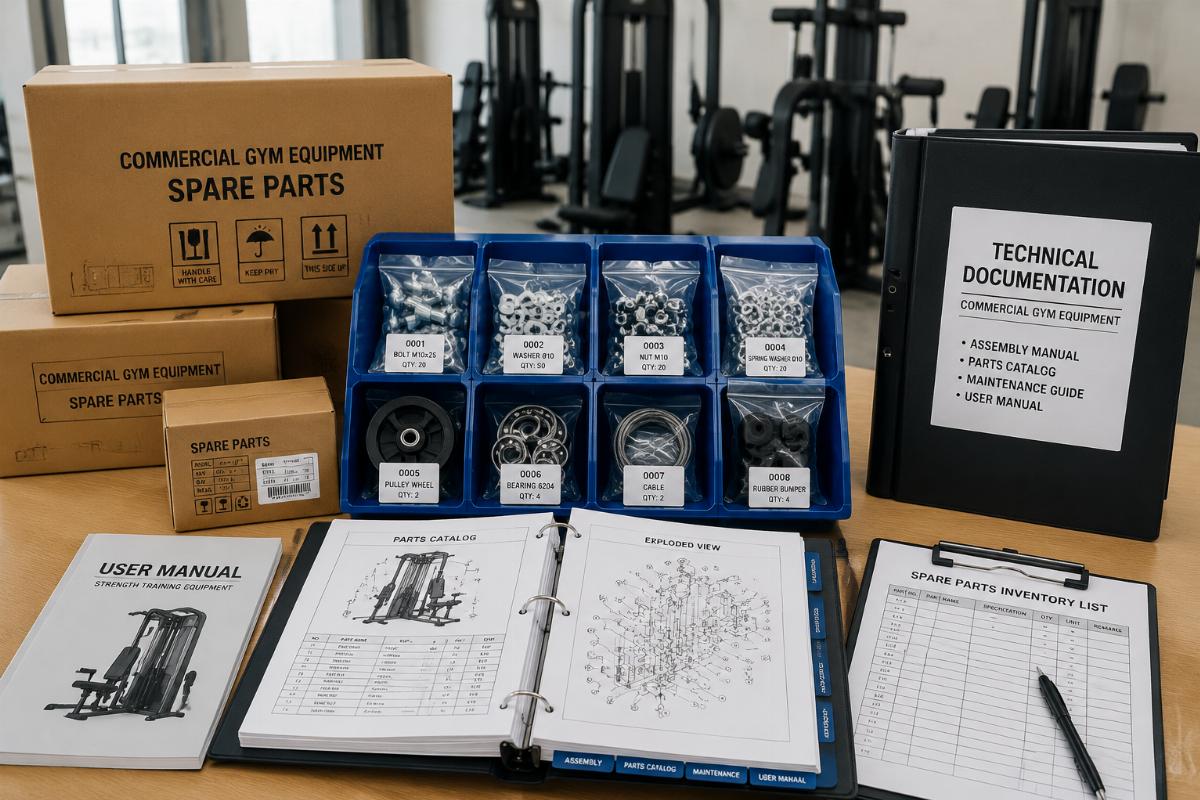
A distributor relationship does not end when the container is delivered. Spare parts availability, warranty claim procedures, and technical documentation support determine whether you can serve your end customers reliably — or whether every minor issue becomes a crisis. [NEED_CITE: after-sales support infrastructure requirements for fitness equipment distributors]
When you buy gym equipment for distributors, the factory’s after-sales commitment is as important as its production capability. Here is what a reliable after-sales framework should include:
- Spare parts supply ratio: A benchmark practice is for the factory to supply spare parts equivalent to a defined percentage of the order value — covering wear items like cables, pulleys, upholstery pads, and adjustment knobs. This ensures you have immediate replacements for the most common failures. [NEED_CITE: industry benchmark for spare parts supply ratio in commercial fitness equipment distribution]
- Warranty terms and claim procedures: Clear documentation of what is covered, what is excluded, and how claims are processed. Does the factory ship replacement parts directly to your end customer, or do you hold local stock? What is the response time for technical queries?
- Technical documentation package: Assembly manuals, maintenance schedules, troubleshooting guides, and exploded parts diagrams — all in the languages your market requires. Missing documentation turns a simple cable replacement into a week-long email exchange.
- Remote technical support: Access to factory engineers for complex issues — guide rod alignment, console error codes, cable routing adjustments. This is especially critical for distributors without in-house technical teams.
A distributor in Eastern Europe once faced a situation where a batch of commercial treadmills developed console error codes after extended use. The factory’s response was to request the units be shipped back to China for diagnosis — obviously impractical. The issue was eventually resolved through a video call with a factory engineer who identified a loose sensor connector. The lesson: remote technical support capability is not a luxury, it is a necessity.
Due diligence question: Before placing your order, ask the factory for references from other distributors in your region. Speak to them directly about their after-sales experience. A factory that hesitates to provide references is signaling something. [NEED_CITE: distributor reference verification process in fitness equipment sourcing]
Conclusion
Buying gym equipment for distributors is a volume game, a spec game, and a relationship game — in that order. Commit to container-load quantities to unlock true factory-direct pricing. Verify every spec before production begins — especially hardware lists and load-test reports. And treat after-sales support as a core selection criterion, not an afterthought. The factories that pass all three tests will become long-term partners. The ones that cut corners will cost you far more than the price difference they promised.


