Commercial Cable Crossover Machine Manufacturer | OEM Factory Direct
Most buyers think force majeure is a legal formality. It is not. It is the single clause that decides who pays when steel prices double, when a port shuts down, or when a container sits in customs for weeks.
A well-structured force majeure clause in a cable crossover manufacturing contract must explicitly cover raw material sourcing disruptions (especially steel and pulley components), container loading delays at origin ports, and destination customs hold-ups—while clearly defining notification timelines, burden of proof, and whether the clause triggers price renegotiation or simply extends delivery windows.
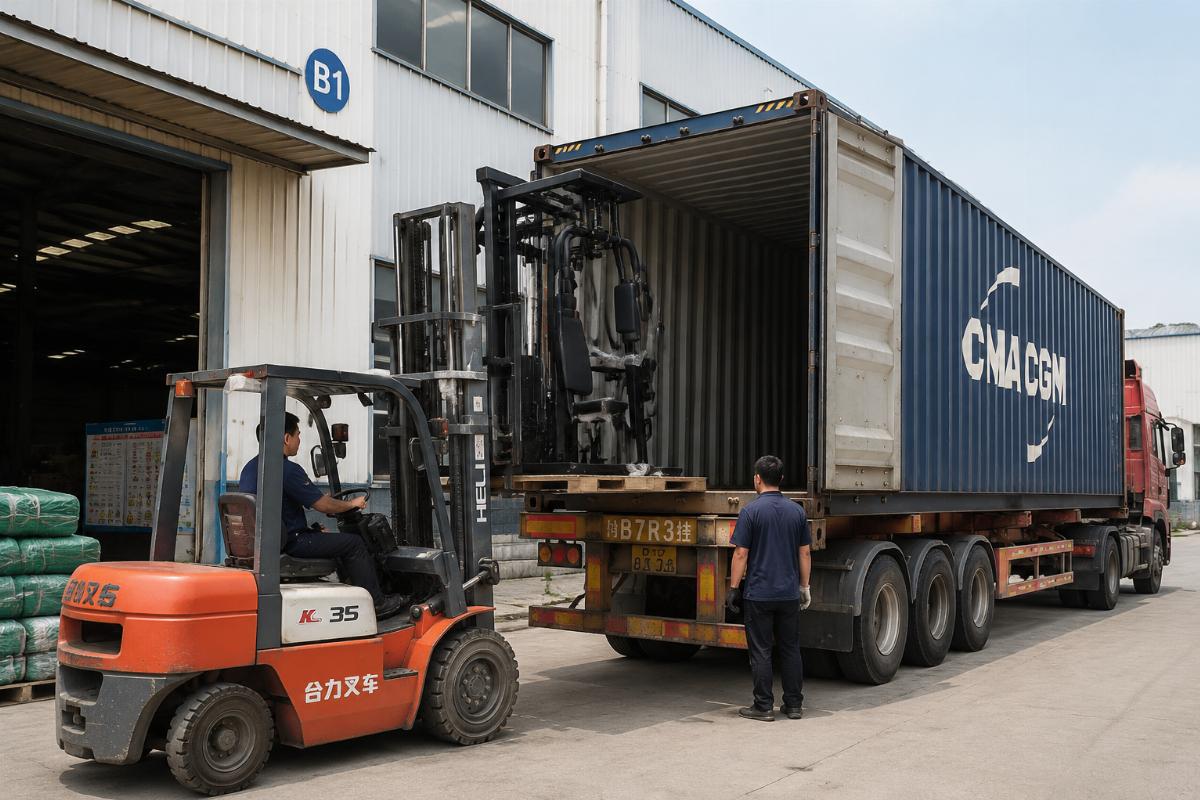
I learned this the hard way. Years ago, I was standing in a Ningbo warehouse watching a full container of cable crossovers being loaded. The buyer—a fitness chain operator in the Middle East—had negotiated a price so low that I kept asking myself where the factory was cutting corners. When that container finally opened at Jeddah, the weight stack brackets were warped, the pulley grooves were unevenly worn, and the entire machine was scrap. The buyer came back to me with one question: "Your cable crossover—how do you fix the brackets in the container, what steel grade do you use, how many grooves are on the pulley?" From that day on, every quotation I send includes a loading diagram and a BOM breakdown. Not because it looks impressive, but because I saw what happens when buyers skip the details.
And the force majeure clause is one of those details that buyers almost always skip—until something goes wrong.
That is why I want to walk through what a force majeure clause actually needs to cover when you are sourcing cable crossovers from a Chinese manufacturer, and where most contracts fall short.
What Exactly Should a Force Majeure Clause Cover in a Cable Crossover Contract?
A force majeure clause in a cable crossover manufacturing contract must address three specific risk categories: raw material supply chain disruption, port and logistics bottlenecks, and regulatory or customs delays at destination.
Generic force majeure language—"acts of God, war, natural disasters"—is useless for fitness equipment procurement. Cable crossovers are heavy, steel-intensive machines. A single commercial-grade unit can weigh several hundred kilograms, and the frame requires cold-rolled steel tubing, precision-machined pulleys, and welded weight stack assemblies. When steel mills adjust production schedules or when environmental inspection campaigns temporarily shut down coating facilities, your cable crossover order is directly affected. [NEED_CITE: impact of environmental inspection campaigns on steel processing facilities in Shandong and Hebei provinces]
Let me break down what each risk category should look like in contract language.
Raw Material Disruptions. Steel is the backbone of any cable crossover. The frame, the weight stack plates, the selectorized pin mechanisms—all depend on consistent steel supply. A proper clause should specify that if the manufacturer’s certified steel supplier cannot deliver due to mill shutdowns, trade restrictions, or raw material shortages, the manufacturer must notify the buyer within a defined window and provide documentary evidence from the supplier. The clause should also state whether the manufacturer is permitted to source alternative materials of equivalent grade, and who bears the cost difference.
Port and Logistics Bottlenecks. I have watched containers sit at Ningbo and Shanghai ports for extended periods during peak shipping seasons. For cable crossovers, which require careful bracing and wooden crate packaging to prevent frame deformation during ocean transit, delayed loading is not just a timing issue—it is a quality issue. If a container is held at the port and exposed to humidity, steel components can develop surface oxidation before they even leave China. The clause must define what constitutes a port disruption, what documentation the manufacturer must provide (port authority notices, carrier delay certificates), and whether the delivery timeline is extended or whether the buyer gains the right to cancel without penalty.
Destination Customs and Regulatory Delays. Different markets have different import requirements. Some countries require pre-shipment inspection certificates, others demand specific CE documentation or local conformity marks. If the cable crossover is held at destination customs because documentation was incomplete or incorrect, who bears the demurrage charges? A well-drafted force majeure clause should distinguish between delays caused by the manufacturer’s documentation failures (which are the manufacturer’s responsibility) and delays caused by sudden regulatory changes in the importing country (which may qualify as force majeure). [NEED_CITE: common documentation requirements for fitness equipment imports into MENA and Southeast Asian markets]
How Should Notification and Evidence Requirements Be Structured?
The notification clause must specify a maximum timeline for the manufacturer to inform the buyer after a force majeure event occurs, define what constitutes acceptable evidence, and clarify whether silence or late notification voids the force majeure claim.
This is where most contracts fail. I have reviewed force majeure clauses that simply say "the affected party shall notify the other party promptly." Promptly means nothing. In one case I handled, a cable crossover shipment was delayed because the manufacturer’s pulley supplier—a subcontracted workshop—shut down for environmental inspection. The manufacturer did not inform the buyer until the original delivery date had already passed. The buyer had already arranged a container, paid freight forwarder booking fees, and scheduled gym opening marketing around the delivery date. The resulting costs were substantial.
Here is what the notification structure should look like:
Timeline. The manufacturer must notify the buyer in writing within a defined number of days after the force majeure event occurs or after the manufacturer becomes aware of its impact on production. This is not optional. Late notification should be explicitly stated as grounds for the buyer to reject the force majeure claim.
Evidence. The manufacturer must provide verifiable documentation. For steel supply disruptions, this means mill shutdown notices or supplier force majeure declarations. For port delays, this means carrier notices or port authority bulletins. Self-signed statements from the manufacturer are not acceptable evidence. [NEED_CITE: international trade standards for force majeure documentation requirements under CISG and ICC guidelines]
Ongoing Updates. Force majeure events do not always resolve quickly. The clause should require the manufacturer to provide periodic updates—at defined intervals—until the situation is resolved or until the buyer exercises any contractual termination rights.
Burden of Proof. The burden of proving that a force majeure event occurred, that it directly impacted the cable crossover production or shipment, and that the manufacturer took reasonable steps to mitigate the impact must rest squarely on the manufacturer. This is standard under most international trade frameworks, but it should be explicitly written into the contract to avoid disputes.
What About Price Adjustments and Contract Termination Rights?
A force majeure clause must clearly state whether the event triggers price renegotiation, delivery extension only, or termination rights—and under what conditions each option applies.
This is the most contentious part of any force majeure negotiation, and for good reason. Steel prices can fluctuate significantly over the production cycle of a cable crossover order. If a force majeure event causes the manufacturer to source alternative steel at higher cost, does the buyer absorb the price increase, does the manufacturer absorb it, or do the parties renegotiate?
Here is how I recommend structuring this:
Delivery Extension as First Remedy. For most force majeure events affecting cable crossover manufacturing—steel supply delays, port congestion, coating facility shutdowns—the appropriate first remedy is a delivery timeline extension. The clause should specify a maximum extension period. If the force majeure event persists beyond that period, the buyer should gain additional rights.
Price Renegotiation Trigger. If the force majeure event causes a material cost increase that exceeds a defined threshold, the clause should allow either party to request price renegotiation. The threshold should be expressed qualitatively—such as "a material and verifiable increase in documented raw material costs"—rather than as a specific percentage, because steel markets are volatile and rigid percentage triggers can become outdated quickly. [NEED_CITE: steel price volatility patterns and their impact on fitness equipment manufacturing cost structures]
Termination Rights. If the force majeure event continues beyond a defined extended period, the buyer should have the right to terminate the contract without penalty and receive a full refund of any deposits paid. This protects the buyer from having capital tied up indefinitely in an order that may never be delivered.
Partial Shipment Provisions. For large cable crossover orders—especially full gym packages that include multiple units and complementary equipment—the clause should address whether partial shipments are permitted during a force majeure situation. If the manufacturer can produce and ship some units but not others, the buyer should have the option to accept partial delivery and adjust the remaining order accordingly.
How Does Force Majeure Interact with Quality and Inspection Obligations?
Force majeure does not excuse the manufacturer from quality obligations. The clause must explicitly state that any alternative materials, modified production processes, or rescheduled inspections resulting from a force majeure event must still meet the original contract specifications.
I cannot emphasize this enough. I have seen manufacturers invoke force majeure due to steel supply disruptions and then substitute lower-grade steel without informing the buyer. The cable crossovers looked the same on the outside, but the weight stack guide rods bent under normal use within months. The buyer had no recourse because the contract did not explicitly protect against this scenario.
The clause must include the following protections:
Material Equivalence. If the manufacturer must source alternative materials due to a force majeure event, those materials must meet or exceed the original specifications in grade, strength, and finish. The buyer should have the right to review and approve any material substitutions before production proceeds.
Inspection Rights. Force majeure delays should not cancel or reduce the buyer’s right to pre-shipment inspection. If the production timeline is extended, the inspection date should be extended accordingly. Third-party inspection reports should remain a contractual requirement. [NEED_CITE: pre-shipment inspection standards and buyer rights under international fitness equipment trade contracts]
Warranty Continuity. The manufacturer’s warranty obligations on the cable crossover—covering frame integrity, pulley function, cable durability, and weight stack mechanism—must remain fully in effect regardless of any force majeure adjustments to delivery timelines. Force majeure extends the delivery window; it does not reset or reduce the warranty period.
Post-Delivery Claims. If a force majeure event causes production shortcuts or material substitutions that result in quality defects discovered after delivery, the buyer retains full rights to file claims under the contract’s quality guarantee and warranty provisions.
Conclusion
A force majeure clause in a cable crossover manufacturing contract is not boilerplate legal language—it is a critical operational safeguard that must address raw material sourcing, port logistics, destination customs, notification timelines, evidence requirements, price adjustment triggers, termination rights, and quality obligations. Buyers who treat this clause as an afterthought are the ones who end up paying for containers that never sail, machines that arrive damaged, or shipments that sit in customs while demurrage charges accumulate. Write the clause with the same precision you apply to your loading diagrams and BOM specifications, and you will avoid the situations that turn profitable orders into expensive lessons.