Commercial Gym Equipment Manufacturer for Colombia Fitness Franchise Buyers
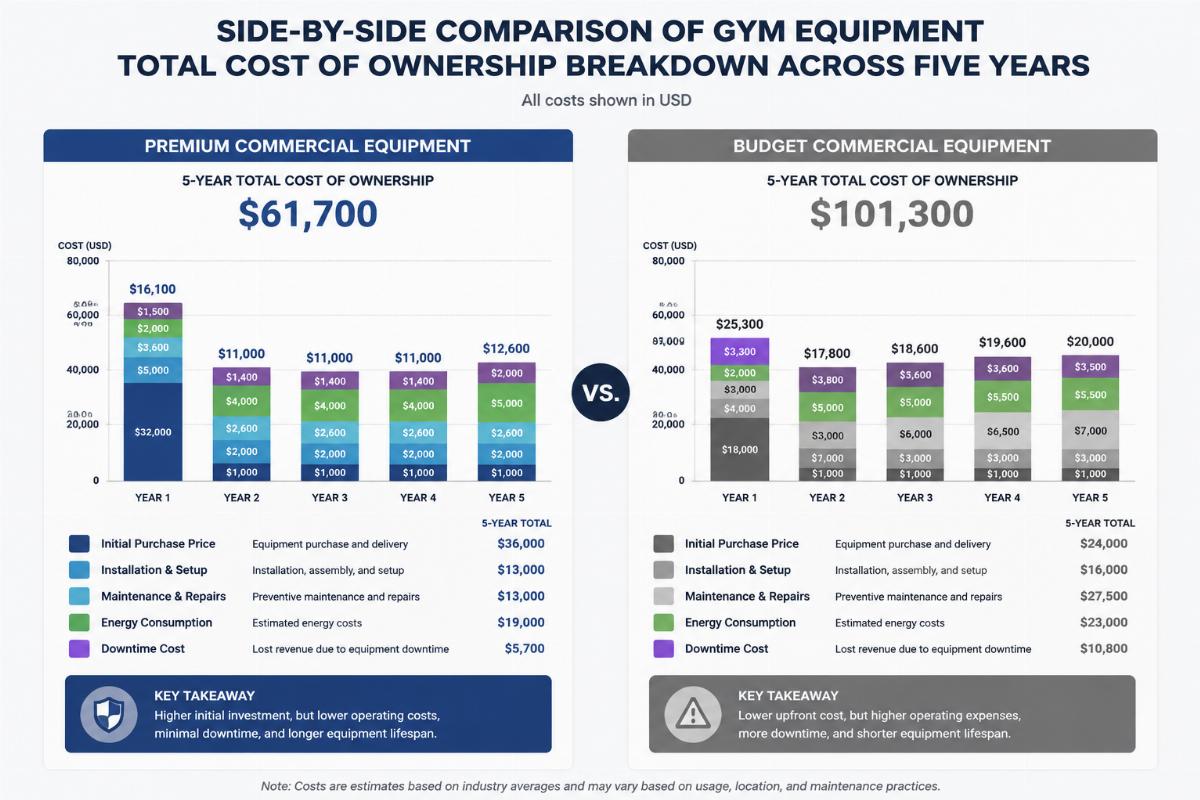
Most buyers chasing PowerLine alternatives in Colombia are solving the wrong problem. The real bottleneck is not the sticker price on a single selectorized machine — it is the spare-parts supply chain that decides whether a franchise stays open or shuts down for weeks every quarter.
For Colombian fitness franchise buyers, the most viable PowerLine fitness equipment alternatives come from factory-direct commercial gym equipment suppliers that combine CE-certified build quality, OEM/ODM branding flexibility, and full-container turnkey delivery — not from chasing mid-tier brand logos through local distributors.
I still remember walking into a franchise gym in Bogotá a few years after it opened. The owner had signed a sizable contract with a well-known North American brand, convinced the logo on the chest plate would attract members. Within months, cable crossover pulleys started squealing, selectorized pin stacks wobbled, and replacement parts had to clear customs from a Miami warehouse. Every shipment took weeks. Machines sat idle. Members complained. The owner eventually stopped counting the downtime cost and just started praying the next container wouldn’t bring more broken welds. That gym is now fully refitted with equipment sourced directly from a Shandong-based commercial gym equipment manufacturer, and the owner tells me his maintenance crew finally sleeps through the night.

The lesson is not that big brands are bad. The lesson is that franchise economics in Latin America punish any supply chain that stretches across multiple borders without local technical backup. Let’s break down what actually matters when you evaluate PowerLine fitness equipment alternatives for the Colombian market.
What Are the Real Costs Behind PowerLine Equipment in Colombia?
The purchase invoice is only the visible tip; spare parts, import duties, and downtime form the submerged mass beneath.
When a Colombian franchise buyer compares PowerLine fitness equipment alternatives, the instinct is to line up unit prices. That instinct is wrong. The true cost structure of imported commercial gym equipment in Colombia includes at least four layers that rarely appear on the first quotation sheet:
| Cost Layer | Typical Behavior | Long-Term Impact |
|---|---|---|
| Base unit price | Highest for branded, lowest for factory-direct | Noticeably influences initial capex |
| Import duty and VAT | Applied on declared value plus freight | Compounds with every reorder |
| Spare parts availability | Branded parts often ship from overseas hubs | Substantially extended lead times |
| Downtime per failure event | Varies by local technician access | Directly erodes member retention |
A franchise operator I worked with in Medellín once calculated that a single month of partial closure — caused by three selectorized machines waiting for replacement cables and pulleys — cost him roughly what an entire container of replacement equipment would have set him back. [NEED_CITE: total cost of ownership model for imported commercial fitness equipment in Latin America]
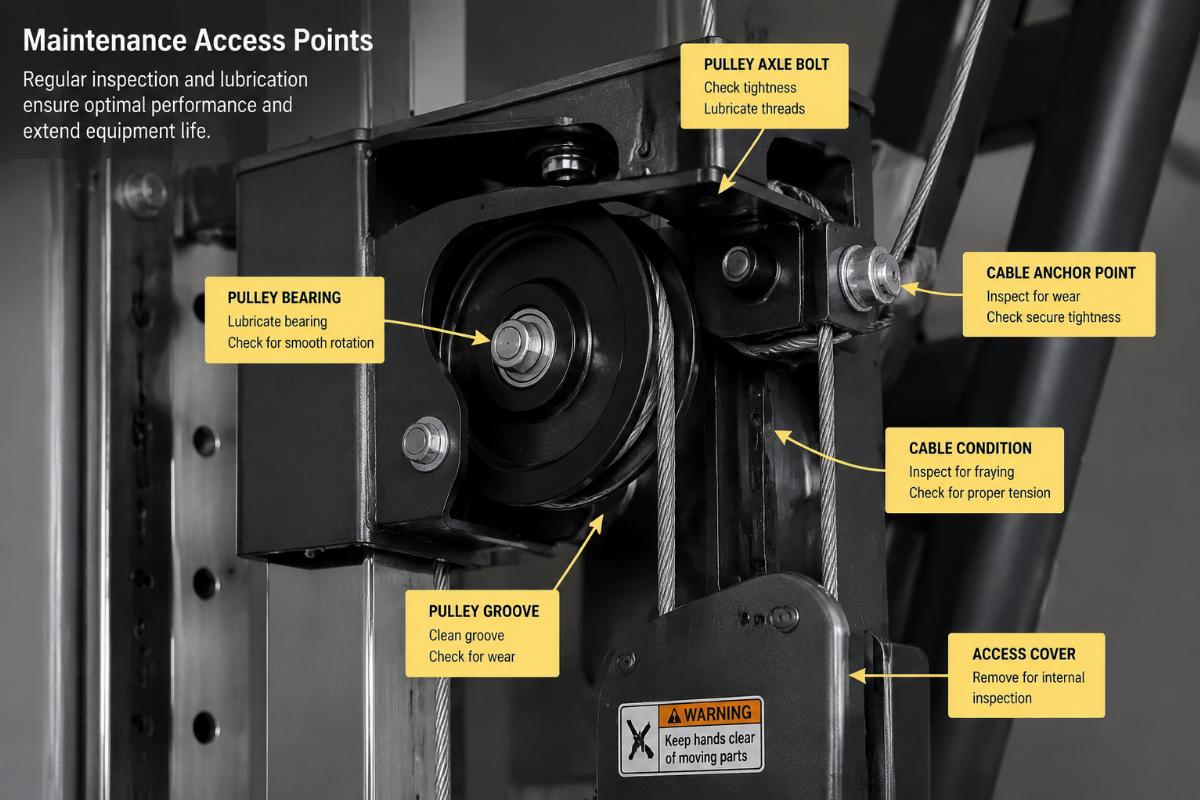
The pattern repeats across the region. Branded equipment often uses proprietary pulley diameters, non-standard cable routing, or custom-molded shrouds. When those parts fail, the local technician cannot improvise. He waits. And waiting in a franchise gym means empty peak hours, refund requests, and social media complaints.
This is why the smartest Colombian buyers are shifting their evaluation criteria away from brand recognition and toward parts interoperability, local technical documentation, and the supplier’s willingness to ship a spare-parts kit inside the original container.
How to Evaluate Commercial Equipment Alternatives for Your Gym?
Durability, parts availability, and turnkey delivery capability form the three non-negotiable axes of evaluation.
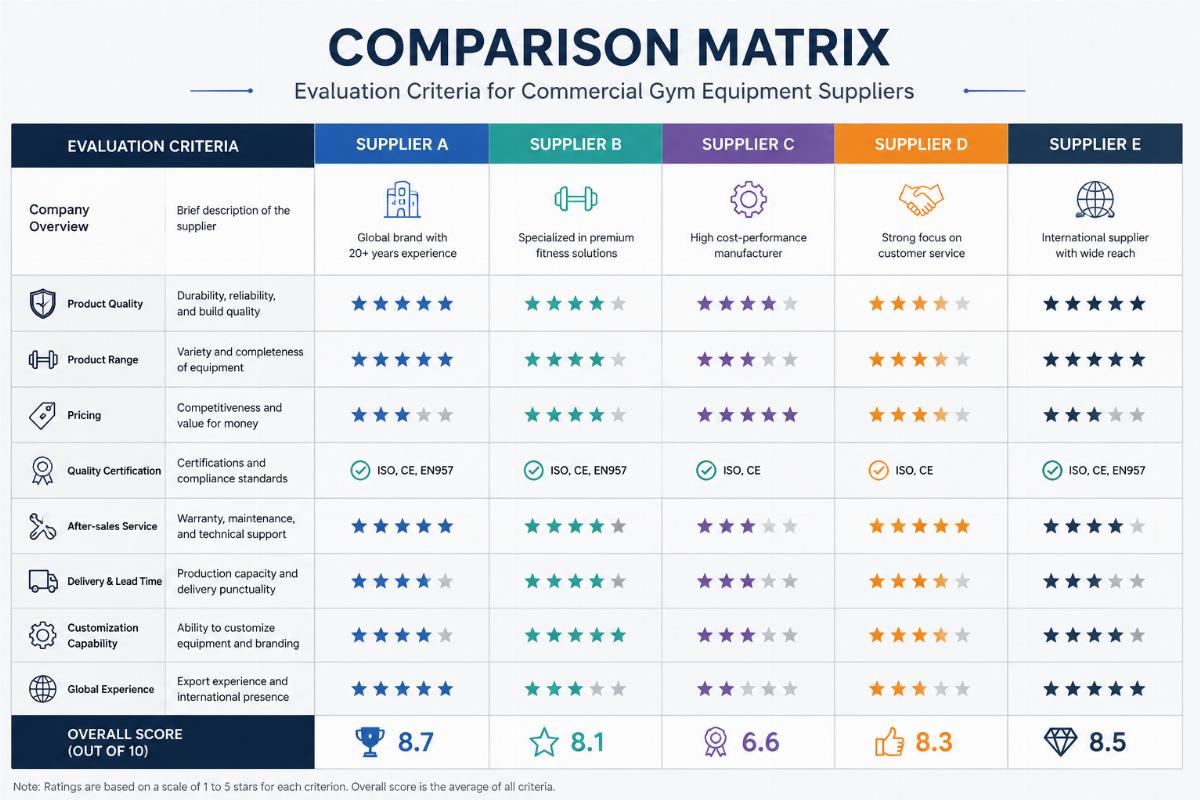
When I sit down with a franchise buyer who is reviewing PowerLine fitness equipment alternatives, I pull out a simple matrix. No brand names on the horizontal axis — just capabilities. The conversation changes immediately once the buyer stops asking "who is cheaper" and starts asking "who can keep my gym running."
| Evaluation Axis | What to Verify | Red Flag |
|---|---|---|
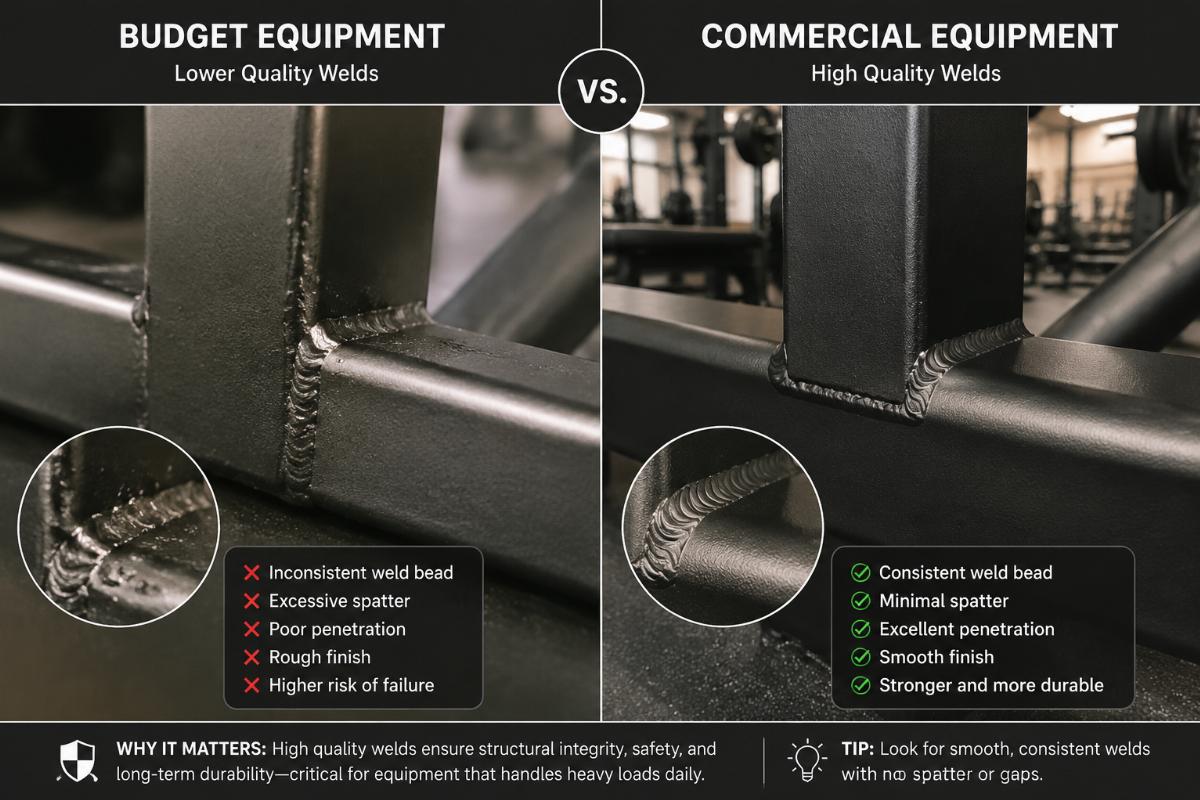
| Frame and weld durability | Steel gauge, welding process, load rating | Self-reported claims without test records |
| Parts commonality | Whether pulleys, cables, and bearings use standard industrial sizes | Proprietary components requiring factory-only sourcing |
| Spare parts lead time | Typical delivery window from order to site | Anything measured in months rather than weeks |
| Turnkey packaging | Whether the supplier can consolidate cardio, strength, and free weights in one container | Single-category suppliers forcing multiple shipments |
| After-sales technical support | Availability of Spanish-language manuals, video guides, and remote troubleshooting | English-only documentation with no local backup |
[NEED_CITE: commercial gym equipment procurement checklist for franchise buyers in emerging markets]
One franchise group in Cali was evaluating two shortlisted suppliers. Supplier A offered a glossy catalog and a recognizable logo but required every replacement part to be ordered through a regional distributor with a minimum order value. Supplier B — a factory-direct commercial gym equipment manufacturer in Shandong — included a spare-parts inventory list inside the initial quotation, with standard SKF-grade bearings and industry-standard cable diameters clearly marked. The Cali group went with Supplier B. Two years in, their maintenance log shows a fraction of the downtime their competitor gym across town experiences.
The takeaway is straightforward: evaluate the supply chain behind the machine, not just the machine itself.
What Should You Look for in a Turnkey Gym Equipment Supplier?
MOQ flexibility, full-container consolidation, and embedded after-sales support separate serious suppliers from catalog shops.
Colombian franchise buyers rarely need one treadmill or a single Smith machine. They need an entire floor plan filled, tested, and commissioned. This is where many PowerLine fitness equipment alternatives fall short — they are built for single-unit retail, not for outfitting a multi-location franchise.
A turnkey-capable commercial gym equipment supplier should demonstrate competence across three operational layers:
First, MOQ flexibility. A franchise rollout may start with a flagship gym requiring a full container, then expand to smaller boutique formats needing partial containers or even LCL shipments. The supplier must handle both without penalizing the buyer on unit cost. [NEED_CITE: MOQ flexibility requirements for fitness franchise equipment procurement]
Second, container consolidation expertise. Shipping cardio, strength, plate-loaded, and free-weight equipment in separate partial containers is a fast track to inflated logistics costs. A competent supplier designs the loading plan upfront, maximizing cubic utilization and ensuring that everything arrives on the same vessel. I have seen franchise buyers save a noticeable portion of their total logistics budget simply by switching from three partial containers to one fully consolidated shipment.
Third, post-delivery technical backbone. The supplier should provide Spanish-language assembly manuals, exploded-parts diagrams, and a direct technical contact — not a generic inbox. When a plate-loaded leg press develops a strange noise at month six, the franchise maintenance manager needs to send a photo and get a diagnostic answer within a day, not a week.
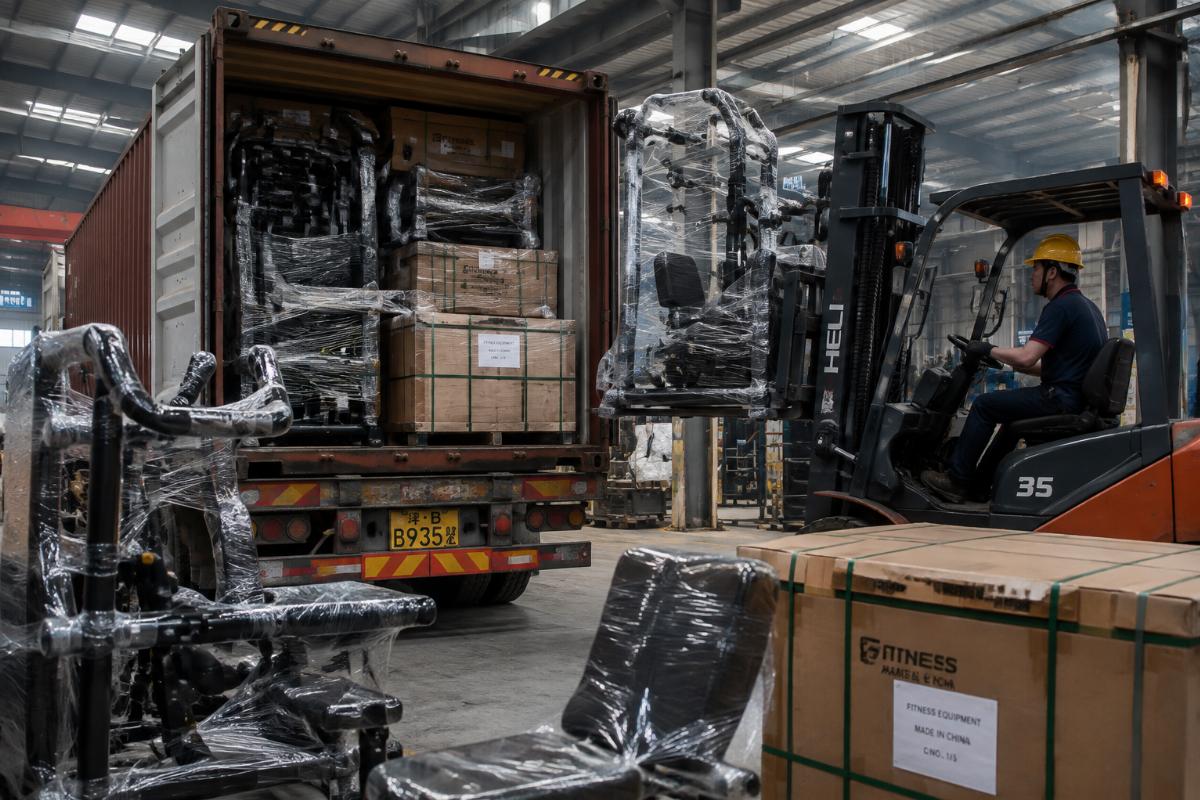
A franchise buyer in Barranquilla recently completed a three-gym rollout using a single Shandong-based commercial gym equipment manufacturer. The entire project — from initial floor-plan consultation to final container delivery — ran on a compressed timeline because the supplier treated the three gyms as one consolidated program rather than three separate orders. The buyer’s internal team spent their time on marketing and member acquisition instead of chasing three different vendors for three different delivery windows.
How Does Factory-Direct Sourcing Compare to Brand Distributors?
Cutting out the intermediary layer reshapes both the cost structure and the responsiveness of the supply chain.
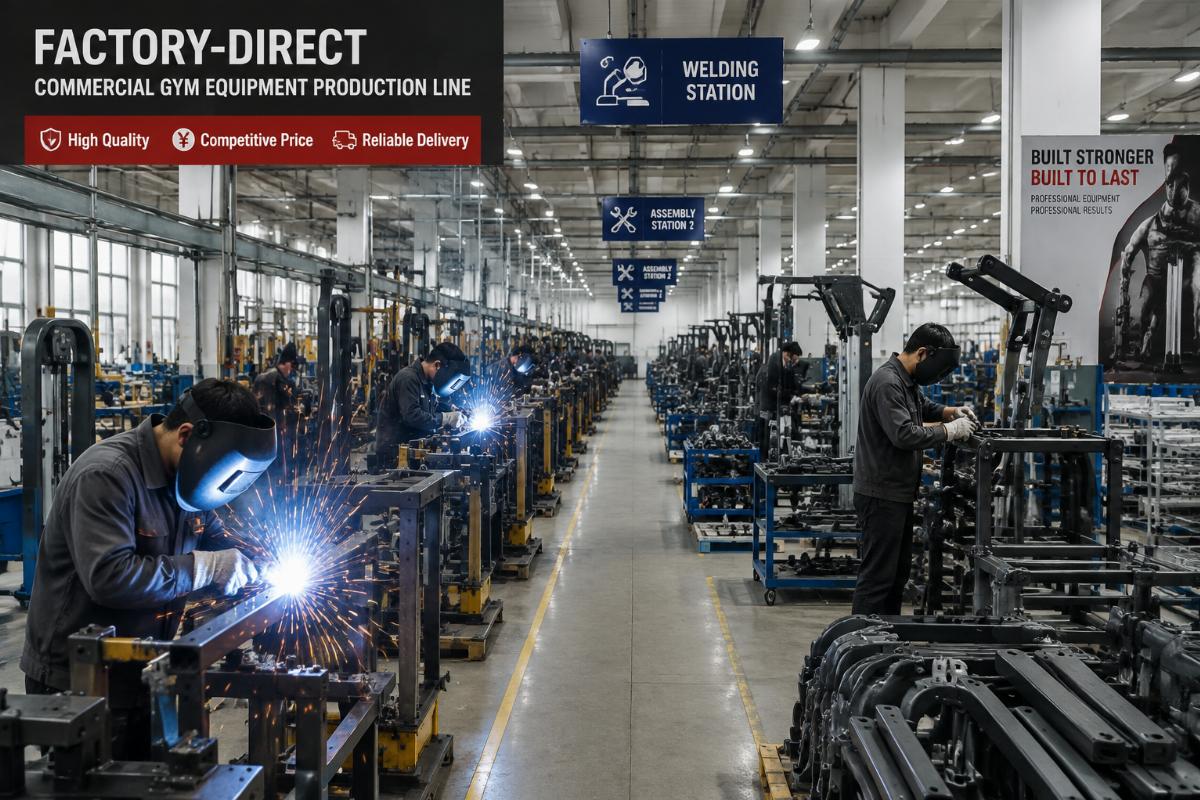
Many Colombian buyers still assume that buying through a branded distributor is the "safe" choice. That assumption was arguably valid a decade ago, before Chinese commercial gym equipment manufacturers achieved CE certification, invested in automated welding cells, and built dedicated export packaging lines. Today, the gap in build quality between a mid-tier branded product and a factory-direct alternative has narrowed to the point where the remaining difference is largely perceptual — driven by logo placement, not engineering.
| Sourcing Channel | Pricing Position | Parts Lead Time | Customization Depth |
|---|---|---|---|
| Branded distributor | Premium | Noticeably extended | Limited to catalog options |
| Factory-direct manufacturer | Substantially lower | Standardized and faster | Full OEM/ODM capability |
[NEED_CITE: factory-direct vs distributor sourcing comparison for commercial fitness equipment]
The pricing gap is the most visible difference. Factory-direct commercial gym equipment typically lands at a fraction of the branded equivalent — even after accounting for ocean freight and Colombian import duties. For a franchise buyer planning to outfit multiple locations, that gap compounds into a mid-six-figure saving over the rollout period.
But the less visible — and ultimately more important — advantage is responsiveness. A factory-direct supplier controls its own production schedule, spare-parts inventory, and shipping documentation. When a franchise buyer needs an emergency replacement seat pad or a custom color-matched frame for a new location, the factory can adjust. A distributor, by contrast, must relay the request upstream, wait for the brand’s approval, and then coordinate logistics through yet another layer.
I have watched franchise buyers in Latin America transition from branded distributors to factory-direct sourcing over a multi-year period. The pattern is consistent: the first container is a test — usually a single gym’s worth of strength equipment. Once the build quality and delivery reliability are confirmed, the buyer expands to cardio, functional training zones, and eventually full turnkey packages. By the third or fourth gym, the buyer’s procurement team has built a direct relationship with the factory’s engineering department, and minor customization requests — such as adjusted seat dimensions for local anthropometry or reinforced frames for higher-traffic locations — are handled routinely.
Conclusion
Brand logos do not keep gym floors running; supply chains do. Colombian fitness franchise buyers evaluating PowerLine fitness equipment alternatives should anchor their decisions on spare-parts availability, turnkey container delivery, and factory-direct technical support — not on catalog prestige. The franchises that thrive in Latin America’s competitive fitness market are the ones that treat equipment procurement as a logistics and maintenance challenge, not a branding exercise.