
Hack Squat Machine Price Guide 2026: China Factory Direct
Most buyers assume the price gap between a $300 and a $700 hack squat machine comes down to steel weight. It doesn’t. The real cost driver sits inside the linear bearing carriage and the guide rail tolerance class.
In 2026, a commercial-grade hack squat machine sourced directly from a Shandong factory typically falls between $300 and $800 FOB, depending on rail system specification, frame tube wall thickness, and bearing precision grade. Entry-level units cut cost by downgrading the guide rail to unbranded bushings and thin-wall tubing, while true commercial models use precision-ground rails with sealed bearings rated for continuous daily use.
I still remember the morning I got a voice message from a hotel GM in Bali. He’d just unboxed a full order of plate-loaded machines, and the hack squat was already a problem. The footplate weld angle was off by a degree or two—barely visible to the eye, but anyone doing a full range of motion could feel the knee tracking wrong. The entire batch had to be re-jigged on-site, and the labor cost ate whatever margin the buyer thought they’d saved on the unit price. That job changed how I read every spec sheet that crosses my desk. [NEED_CITE: weld angle tolerance standards per EN ISO 20957 for plate-loaded strength equipment]

If you’re sourcing for a gym, a hotel fitness floor, or a distribution business, the hack squat machine price guide below breaks down what you’re actually paying for and where the hidden costs live.
What Is the Real Factory-Direct Price Range for a Hack Squat Machine in 2026?
The honest answer is that a usable commercial hack squat machine starts around $300 FOB and climbs to roughly $800 for units built to withstand high-traffic environments. Anything below that range almost always means the manufacturer has substituted critical motion components with non-branded alternatives.
When buyers first open a quotation, the total FOB number is what jumps out. But the useful way to read a hack squat machine price guide is to separate the frame cost from the motion-system cost. The frame—upright posts, base plates, backrest frame—is essentially welded steel. Its cost moves with raw material price and tube wall thickness. The motion system—guide rails, linear bearings, carriage plates, pivot bushings—is where engineering choices create the real price spread. [NEED_CITE: linear bearing precision grade classification per ISO 10285]
A typical cost structure for a mid-range commercial unit looks roughly like this:
| Cost Component | Entry-Level Spec | Commercial-Grade Spec |
|---|---|---|
| Frame tube wall | Thin-wall, unverified | Heavy-wall, verifiable |
| Guide rail type | Sliding bushing | Precision-ground rail |
| Bearing seal | Open or basic seal | Sealed, pre-greased |
| Footplate weld jig | Manual tack | Fixture-controlled |
| Surface pre-treatment | Basic wipe-down | Full phosphating line |
| Load rating claim | Self-reported | Verifiable |
The table tells the story: the steel itself is a small part of the gap. A Southeast Asian hotel chain I worked with once compared two quotes side by side. The cheaper unit looked identical on the outside. Inside the carriage, though, the rails were unbranded, the bearings had visible play, and the grease channels were open to humidity. Within months in a coastal climate, the rails started pitting. The fix—replacing the entire carriage assembly—cost several times what the original price saving had been.
The takeaway from any serious hack squat machine price guide is that the frame is the easy cost to see. The motion system is the cost that comes back to haunt you.
Which Specifications Actually Drive Hack Squat Machine Price?
The two specifications that move the price needle more than any others are guide rail length and bearing precision grade. Everything else—pad thickness, upholstery color, logo placement—is cosmetic by comparison.
Guide rail length determines the usable stroke of the carriage. A longer rail allows a deeper, more anatomically natural squat pattern, which matters for any facility catering to serious lifters. Longer rails require straighter, more precisely ground steel, and that pushes the unit cost up noticeably. [NEED_CITE: guide rail straightness tolerance per ISO 10285 for linear motion systems]
Bearing precision grade is the other major lever. Commercial-grade linear bearings are manufactured to tighter internal clearance specs, which means less lateral play under heavy load. In a hack squat, lateral play translates directly into that uncomfortable side-to-side wobble users feel at the bottom of the movement. The difference between a basic bushing and a sealed precision bearing is not something a casual user notices on the first rep. They notice it on the twentieth rep of the day, and they notice it again six months later when the cheap unit starts knocking.
A practical spec comparison for hack squat machines in the $300–$800 range:
| Parameter | Lower-Range Unit | Mid-Range Unit | Upper-Range Unit |
|---|---|---|---|
| Rail stroke | Short, limited depth | Full commercial depth | Extended stroke |
| Bearing type | Plain bushing | Sealed linear bearing | High-precision sealed |
| Backrest adjustment | Fixed or few positions | Multi-position | Graduated, tool-free |
| Footplate surface | Smooth plate | Textured, angled | Textured, multi-angle |
| Frame construction | Light-gauge | Heavy-gauge | Reinforced heavy-gauge |
One distributor in the Middle East asked me to audit a sample unit that kept drawing warranty claims. The footplate angle was nominally correct, but the carriage binding at the end of the stroke made users unconsciously shift their foot position to compensate. The complaint wasn’t "the machine broke." It was "the machine feels wrong." No amount of re-upholstering fixes that.

This is where a transparent hack squat machine price guide becomes useful for both buyer and manufacturer. When the spec sheet names the rail type and the bearing class, the price starts to make sense. When it doesn’t, the buyer is guessing.
How Do You Spot Hidden Quality Traps in Low-Priced Hack Squat Machines?
The most dangerous defects in a cheap hack squat machine are the ones you cannot see in a product photo: fixture-drift weld angles, uncontrolled rail straightness, and surface treatment that skips the pre-treatment stage entirely.
I’ve developed a short field verification routine over the years, and I run it on every new sample that arrives at the warehouse. It takes a few minutes and has caught problems that would have cost a client dearly once the containers were already on the water.
Step one: empty-stroke smoothness test. Push the carriage through its full range of motion with no plates loaded. A properly aligned rail system glides evenly from top to bottom. Any binding, catching, or gritty spot at a specific point in the stroke means the rail is either bent or the carriage mounting is off. [NEED_CITE: linear motion smoothness testing per ISO 10285]
Step two: full-load lateral play test. Load the machine to its rated capacity and apply side pressure to the carriage. A small amount of movement is normal in any linear system, but noticeable knock or wobble indicates bearing clearance that is too loose for commercial use.
Step three: end-of-stroke transition test. Slowly push the carriage into the very bottom and very top of its travel. A well-built unit transitions smoothly through the end positions. A unit with poor rail straightness or misaligned end stops will produce a hard catch or a metallic knock.
A gym owner in East Africa once sent me a video of a hack squat that failed all three tests within the first week of installation. The rail was visibly bowed. The bearings were dry. The footplate weld showed porosity under close inspection. The unit had been priced attractively, but the replacement carriage alone cost more than the price difference between the cheap unit and a properly specified one.
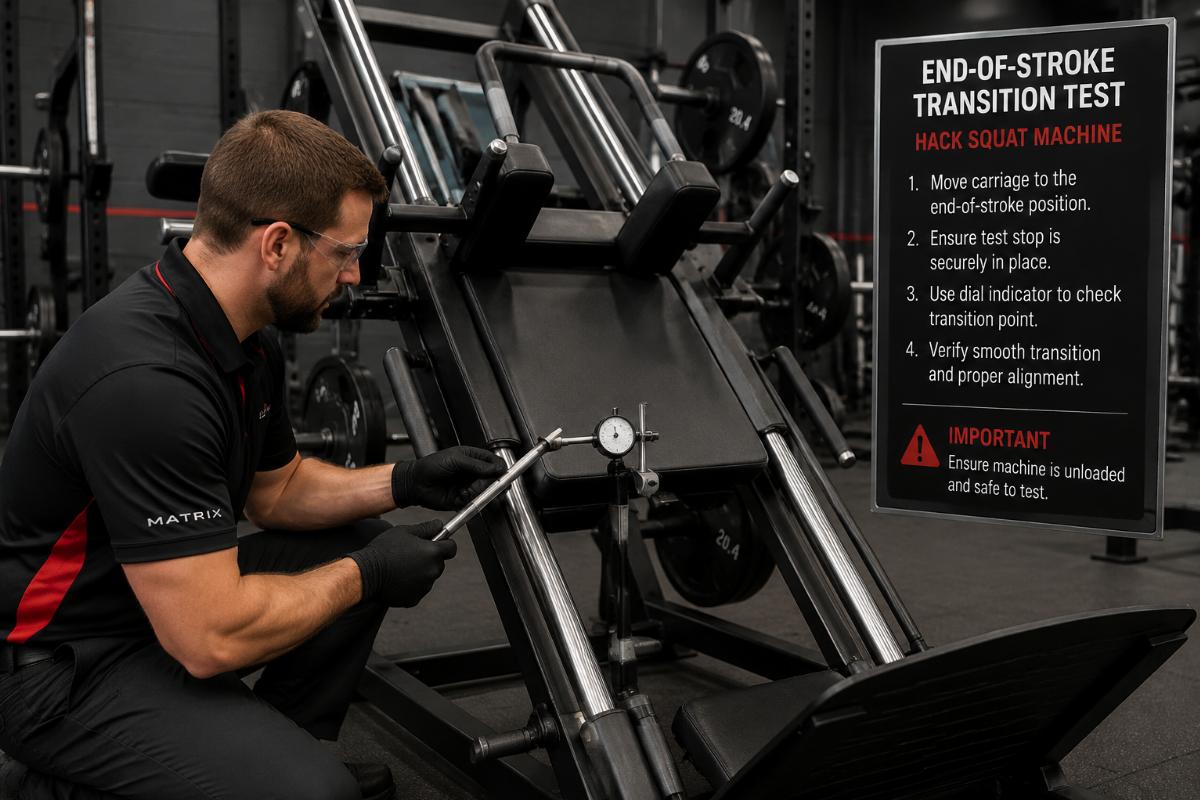
The pattern I see again and again is that the defects hiding in low-priced units are not random. They are the direct result of skipping process steps that add cost but don’t add visual appeal. A proper phosphating line before powder coating adds time and expense. A fixture-controlled welding jig costs more than manual tacking. A batch-tested bearing lot costs more than a mixed bulk bin. The hack squat machine price guide lesson here is simple: if the price looks too good, the process steps that protect long-term reliability are the ones that got cut.
How Can Bulk Buyers and Distributors Optimize Total Landed Cost?
The smartest buyers stop optimizing unit price and start optimizing total cost of ownership, which means factoring in spare parts availability, container utilization, and the flexibility to mix SKUs without paying a penalty.
Ordering a full container of a single hack squat model sounds efficient on paper. In practice, most facilities need a mix of strength equipment, and a single-SKU container leaves money on the table. Manufacturers who offer mixed-container consolidation allow buyers to fill a single container with hack squats, Smith machines, cable crossovers, and free-weight stations, spreading the freight cost across a complete gym fit-out. [NEED_CITE: container consolidation practices in commercial fitness equipment export]
Spare parts availability is the other half of the equation. A hack squat is mechanically simple, but the carriage bearings and rail sections are wear items. A supplier who can ship replacement bearings or a spare rail set within a reasonable lead time turns a potential months-long downtime into a minor maintenance event. A supplier who cannot means the machine sits idle until a whole new unit is ordered.
A distributor in Southeast Asia learned this the hard way. They’d sourced a large batch of hack squats at an excellent unit price from a supplier who had no spare parts program. When bearing wear showed up across the fleet after extended use, the distributor had no option but to source replacement bearings locally at a premium—and the bearings they found didn’t match the rail profile perfectly. The retrofit was messy and expensive.
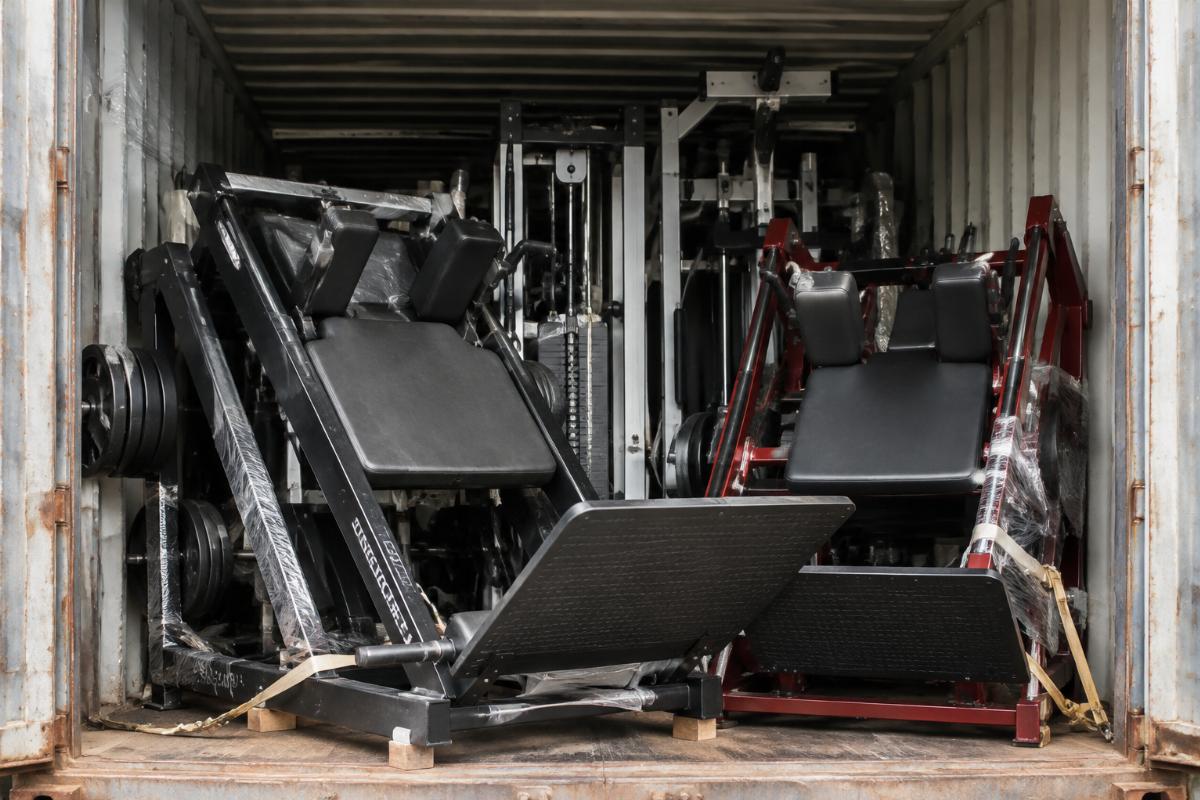
Manufacturers based in Shandong, such as Bick, have structured their export operations around this reality. The product range covers the full strength and cardio spectrum, which makes mixed-container loading straightforward. The commercial-grade construction and CE certification meet the requirements of regulated markets, and the OEM capability lets distributors build their own brand without starting from scratch. The MOQ flexibility means a buyer can test a new market with a small batch before committing to a full container.
The hack squat machine price guide insight for bulk buyers is that the cheapest unit price is rarely the cheapest total cost. Freight efficiency, spare parts access, and the ability to build a long-term supply relationship matter more over a multi-year horizon than a small per-unit saving on the first order.
Conclusion
The hack squat machine price guide lesson of 2026 is that the motion system, not the frame, determines whether a unit will perform or fail in commercial use. Buyers who focus only on the FOB number miss the engineering decisions that separate a machine that lasts from one that becomes a liability. Checking rail type, bearing grade, and weld fixture quality before placing an order is the single most effective way to protect both the investment and the end-user experience.


