Low Row Machine Package for New College Weight Rooms | OEM Factory Direct
Buying a low row machine package for college weight rooms is not about getting the cheapest bulk deal—it is about matching resistance systems and structural specs to student usage patterns, or your maintenance costs will eclipse the equipment price within the first semester.
A proper low row machine package for college weight rooms must be configured around daily student traffic intensity, biomechanical variability across age groups, and on-site maintenance capacity—never copied from a commercial gym spec sheet. [NEED_CITE: institutional fitness equipment failure rate correlation with user profile mismatch] When I was welding power racks on the factory floor in Shandong before moving into export sales, I thought a rowing machine was just a rowing machine. Then I shipped a full order to a public university in Guadalajara, Mexico. The procurement officer gave me a budget number without detailed specs. I quoted standard commercial models. When the containers arrived, the magnetic resistance systems loosened under student-level repetitive use, and the flywheel guards lacked the limit-stop design that high-frequency institutional environments demand. The air freight for replacement parts ended up costing more than the profit on the entire batch. Since that day, whenever a college or institutional buyer asks for a low row machine package, the first question I ask is about the user profile and daily usage frequency.

That mistake reshaped how I approach every institutional order. Let me walk through what actually matters when you are configuring a low row machine package for a college setting.
Why College Weight Rooms Need a Different Rowing Machine Spec Than Commercial Gyms?
The core difference lies in usage frequency and user biomechanics—students row with inconsistent form, higher daily repetition counts, and zero personal accountability for equipment care.
Commercial gym members typically row for structured sessions, often with prior coaching. College students, especially in open-access weight rooms, treat rowing machines as general cardio stations. They pull with asymmetric force, slam handles back without control, and leave machines in locked resistance positions overnight. [NEED_CITE: comparative wear analysis between institutional and commercial fitness equipment usage patterns] The structural frame of a low row machine package for college weight rooms must handle this abuse. Rail carriage systems need reinforced bearing housings. Seat rollers must be industrial-grade nylon rather than standard ABS plastic. The seat track itself requires thicker aluminum extrusion to resist bending under off-axis loading.
I once reviewed a procurement request from a private university in São Paulo, Brazil. Their sports science department needed rowing machines for a teaching lab where students would collect resistance data for biomechanics coursework. The commercial models we normally supply could not output quantifiable resistance values with the precision the curriculum required. We had to switch to a teaching-grade configuration with integrated data interfaces and tighter resistance calibration tolerances. The difference between a training-grade unit and a teaching-grade unit is not about price—it is about whether the machine can serve as a measurement instrument.
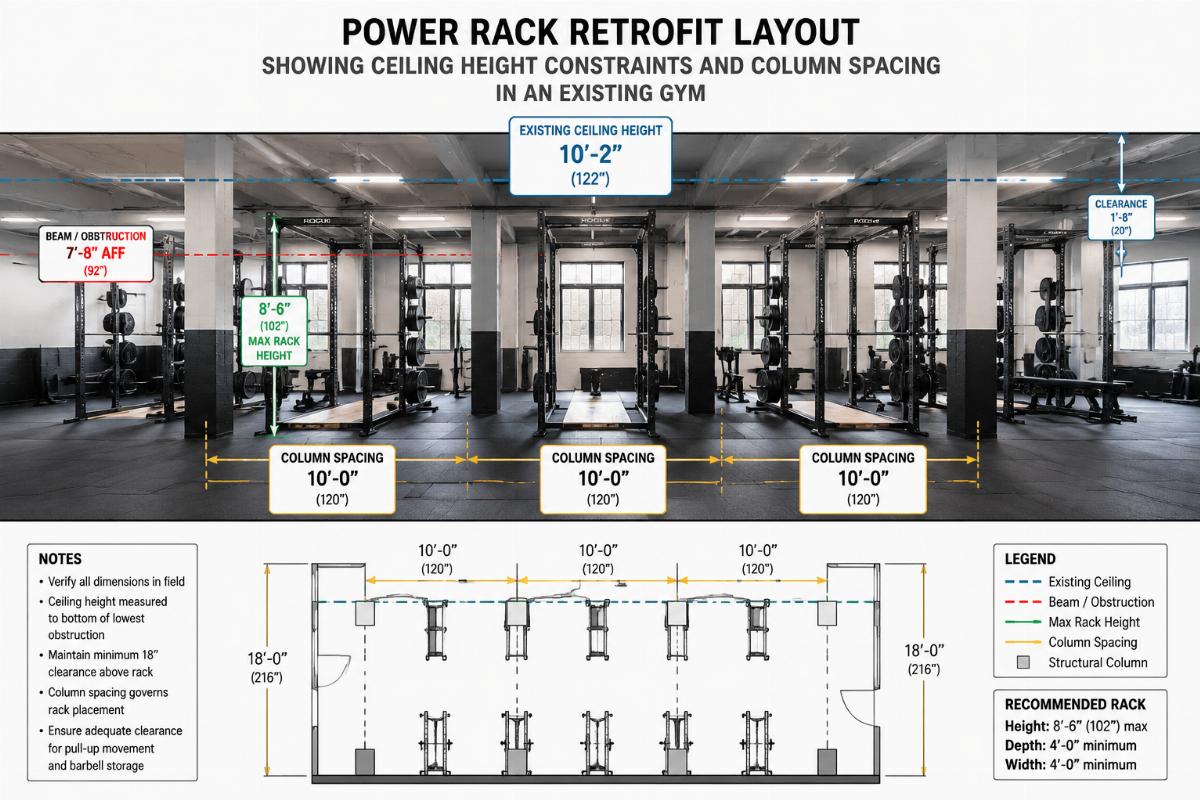
A public university in Santiago, Chile, faced a completely different constraint. Their dormitory fitness corner had extremely limited floor space. The low row machine package for that project had to include compact rowing units paired with interlocking rubber flooring, all consolidated into a single container. The challenge was not the machine itself—it was calculating the exact ratio of equipment footprint to flooring coverage so nothing arrived short.

What Resistance System Works Best for Student Users?
Magnetic resistance suits teaching and controlled training environments; air resistance suits high-intensity athletic conditioning; water resistance is rarely appropriate for institutional bulk orders due to maintenance complexity.
Each resistance type behaves differently under institutional abuse. Magnetic systems use a brake pad mechanism that adjusts eddy current resistance. They are quiet, smooth, and highly consistent—ideal for settings where students need repeatable resistance levels for structured programs. However, the magnetic brake assembly must be mounted with vibration-dampening hardware. Without it, the constant jolting from student use will gradually shift the brake alignment, causing resistance drift. [NEED_CITE: magnetic resistance system durability benchmarks under high-frequency institutional use]
Air resistance systems use a flywheel and fan cage. They are inherently self-regulating—the harder the student pulls, the more resistance the machine generates. This makes them excellent for athletic training programs where competitive output matters. The downside is noise and the need for periodic flywheel bearing inspection. In a college weight room running twelve hours a day, flywheel bearings on air rowers will need replacement cycles noticeably shorter than in a commercial gym with coached users.
Water resistance systems use a paddle spinning in a water tank. They feel the most natural but require water treatment, tank sealing inspections, and potential leak management. For a college facility without dedicated maintenance staff, water rowers create an unacceptable operational burden. I have seen institutional buyers attracted by the aesthetic of water rowers, only to return to magnetic or air systems after the first semester.
| Resistance Type | Noise Level | Maintenance Demand | Resistance Consistency | Suitability for Student Users |
|---|---|---|---|---|
| Magnetic | Noticeably reduced | Standard | Controlled | High for teaching labs |
| Air | Uncontrolled | Substantially extended bearing checks | Robust under variable pull | High for athletic training |
| Water | Noticeably reduced | Vulnerable to neglect | Standard | Low for unsupervised settings |
When configuring a low row machine package for college weight rooms, the resistance type must align with the facility’s primary use case. A university athletics department needs air resistance. A kinesiology teaching lab needs magnetic. A general student recreation center might benefit from a mixed configuration.

How to Structure a Low Row Machine Package for Institutional Buyers?
A complete low row machine package for college weight rooms must include the main units, interlocking flooring, a spare parts inventory, and multilingual documentation—hidden costs live in the accessories, not the machines.
Most institutional buyers focus their budget negotiation on the per-unit price of the rowing machines themselves. This is a fundamental miscalculation. The real cost drivers in an institutional deployment are spare parts availability, flooring protection, and documentation compliance. I have watched buyers celebrate a low machine unit price, only to discover months later that the package did not include replacement cables, seat rollers, or resistance calibration tools—and that sourcing those parts individually from overseas cost several times the original savings.
A properly structured low row machine package for college weight rooms should contain the following components:
- Main rowing units with institutional-grade structural reinforcement
- Interlocking rubber flooring tiles calculated to cover the full operational zone plus a safety perimeter
- A spare parts kit sized for the first year of operation, including cables, handle grips, seat rollers, and resistance adjustment components
- Multilingual operation manuals and safety warning signage matching the local language requirements
- A maintenance schedule document with illustrated replacement procedures
The spare parts kit is non-negotiable. In a college environment, a single broken cable can take a machine out of service for weeks if the replacement must be shipped internationally. Having critical wear components on-site reduces downtime from weeks to hours. [NEED_CITE: institutional equipment downtime cost analysis related to spare parts availability]
The flooring component is equally critical but frequently overlooked. Students drop weights, drag equipment, and generate significant floor impact. Without proper flooring, the subfloor deteriorates, machines become unstable, and liability exposure increases. The flooring area must be calculated based on the machine footprint plus a clearance zone on all sides—not just the machine dimensions alone.

What OEM Requirements Do College Procurement Officers Usually Ask For?
CE certification, multilingual operation manuals, localized safety signage, and a written spare parts supply commitment are non-negotiable acceptance criteria for institutional rowing machine procurement.
OEM branding for institutional orders goes far beyond printing a logo on the frame. College procurement processes are governed by public tender regulations in many countries, and the documentation requirements are stringent. A low row machine package for college weight rooms shipped without proper certification papers will be held at customs. A package without safety signage in the local language will fail the facility inspection. A package without a written commitment to spare parts availability will not pass the procurement committee review.
CE certification is the baseline for any institutional buyer in regions that recognize European standards. The certification must cover the specific model configuration being shipped—not a generic certificate for a different variant. [NEED_CITE: institutional fitness equipment import documentation requirements by region] I have seen entire containers delayed at port because the CE certificate listed a model number that did not match the commercial invoice.
Multilingual manuals are another frequent failure point. Many manufacturers assume an English manual is sufficient. For a public university in Latin America or the Middle East, the facility staff and students need instructions in Spanish or Arabic. The manual must cover operation, basic troubleshooting, and safety warnings. Translating these documents is not optional—it is a contractual requirement in most institutional tenders.
Safety signage must be physically affixed to the machines in the local language. Warning labels about proper usage, weight limits, and maintenance procedures need to be durable, adhesive-backed, and resistant to sweat and cleaning chemicals. If these labels are missing or only in English, the facility inspector will reject the installation.
The spare parts supply commitment is perhaps the most underestimated requirement. Institutional buyers need a written guarantee that replacement parts will be available for a defined period—typically multiple years. This commitment must specify lead times and pricing mechanisms. Without it, the procurement office cannot approve the purchase, because they have no assurance that the machines will remain operational beyond the warranty period.

How to Consolidate a Full Gym Package Into One Container Shipment?
Consolidating a low row machine package for college weight rooms with other strength and cardio equipment into a single container requires advance spatial planning—machine count, flooring area, and accessory volume must be calculated together before loading.
Institutional buyers rarely purchase rowing machines in isolation. A typical college weight room project includes rowing machines alongside Smith machines, power racks, cable crossovers, free weights, and functional training equipment. The challenge is fitting everything into the minimum number of containers to control freight costs. This is where poor planning creates expensive problems.
A low row machine package for college weight rooms must be planned alongside every other piece of equipment in the facility layout. The rowing machines have long, narrow profiles that can be loaded efficiently along container walls. But the flooring tiles, spare parts boxes, and accessory packages consume volume that is not always obvious during initial planning.
The container loading sequence matters. Heavy strength equipment like plate-loaded machines and power racks must go on the bottom. Rowing machines, being relatively light but long, can be stacked or positioned above heavier items if properly secured. Free weights and plates should be distributed to balance the container weight. The flooring tiles can fill gaps between larger items.
I worked on a project where the buyer had finalized the machine list but had not calculated the flooring volume. The rowing machines, strength equipment, and accessories fit perfectly into the planned container. But the flooring tiles—calculated after everything else was packed—required a second partial container. The freight cost for that second container erased the volume discount the buyer had negotiated on the equipment. [NEED_CITE: container consolidation efficiency factors for multi-category fitness equipment shipments]
The solution is to treat the entire gym package as a single spatial problem from day one. The equipment list, flooring area, spare parts inventory, and accessory packages must all be modeled together. Only then can the container count be optimized and the freight cost controlled.

Conclusion
A low row machine package for college weight rooms succeeds or fails based on how well it matches student usage reality, not on the unit price of the machines. Institutional procurement requires resistance system alignment with user profiles, complete accessory and spare parts inclusion, rigorous OEM documentation compliance, and integrated container consolidation planning. The hidden costs of institutional fitness equipment always live in the details that buyers skip during specification.