Plyo Box Set for Strongman Training Facilities in the Dominican Republic – Bulk Wholesale Supplier
Most buyers assume a heavier plyo box is inherently safer, when in reality, bottom grip geometry and center-of-gravity distribution determine stability under high-impact landings.
Sourcing a plyo box set for strongman training facilities in the Dominican Republic requires locking down the correct HS code before production, selecting moisture-resistant materials suited to tropical coastal climates, and specifying height-tier ratios that match functional programming needs. A reliable China-based plyo box set for strongman training supplier can coordinate all three, but only if the buyer provides clear technical and customs parameters upfront.
I remember a shipment we sent to a综合体能馆 in Santo Domingo a few years back — three-tier height combinations, foam-wrapped, nested packaging to maximize container space. The gear arrived on time, but sat in port for weeks because local customs classified the boxes as "wooden furniture" rather than "training equipment." Tariffs doubled overnight. The buyer called almost daily. Since then, I’ve made it a rule: confirm the HS code with the importer’s broker before a single piece of foam is cut. [NEED_CITE: HS code classification differences between plyometric training equipment and wooden furniture in Caribbean import regulations]

Let’s walk through what actually matters when you’re putting together a bulk order for a Caribbean strongman facility.
Why Are Plyo Boxes Essential for Strongman Facilities in the Caribbean?
Plyometric training is non-negotiable in strongman programming, and the plyo box set for strongman training serves as the primary tool for developing explosive power across multiple movement planes.
Functional training demand across Latin America has grown noticeably over the past several years, with CrossFit affiliates and independent strongman gyms expanding their footprint in countries like the Dominican Republic, Puerto Rico, and Colombia. [NEED_CITE: growth trend of functional fitness facilities in Latin America and Caribbean region] In these environments, the plyo box set for strongman training isn’t an accessory — it occupies a significant portion of the free-weight and functional zone, often accounting for a meaningful share of total equipment inventory.
A typical strongman-affiliated gym in Santo Domingo will program box jumps, step-ups, depth drops, and seated jumps across multiple height tiers. The standard configuration involves three heights — low, medium, and high — allowing athletes to progress safely. Most facility owners I’ve worked with allocate roughly one plyo station per eight to twelve active members during peak hours. That ratio keeps wait times manageable and maintains class flow.
What surprises many first-time buyers is that the plyo box set for strongman training must withstand not just vertical impact but lateral shear forces when athletes miss a landing or push off at an angle. This is where cheap construction fails quickly — corner seams split, foam delaminates, and the core structure shifts. [NEED_CITE: dynamic load testing standards for plyometric equipment per ASTM or EN functional training guidelines]
How to Choose the Right Material for Humid Environments?
In tropical coastal climates like the Dominican Republic, foam-wrapped plyo boxes outperform traditional wood in moisture resistance, noise reduction, and long-term maintenance cost — while commercial steel frames serve high-frequency facilities that prioritize structural rigidity.
Here’s the material breakdown I walk every Latin American buyer through:
| Material | Moisture Resistance | Noise Level | Durability Under Heavy Use | Maintenance Demand |
|---|---|---|---|---|
| High-Density Foam (EPE/EVA core, PU or vinyl skin) | Resistant | Noticeably reduced | Robust for commercial use | Minimal |
| Solid Wood (Plywood or hardwood) | Vulnerable | Moderate | Vulnerable in humid conditions | Frequent |
| Steel Frame with padded top | Resistant | Low | Robust | Moderate (fastener checks) |
Wood feels great underfoot and offers that classic gym aesthetic. But in a coastal city where ambient humidity stays elevated year-round, solid wood absorbs moisture, swells, warps, and eventually develops surface mold if not sealed meticulously. I’ve seen wooden boxes in Caribbean facilities last only a fraction of the time they would in a dry continental climate. The maintenance burden — re-sealing, sanding, replacing warped panels — adds up quickly. [NEED_CITE: material degradation rates of wood versus foam-core equipment in tropical humid environments]
Foam-wrapped boxes, by contrast, use a high-density EPE or EVA core encased in PU leather or heavy-duty vinyl. The outer skin resists sweat, salt air, and occasional mopping. The foam core doesn’t absorb water. And the surface is significantly quieter when athletes land — a real advantage in facilities where multiple members are jumping simultaneously.
Steel-frame plyo boxes with padded tops offer maximum structural rigidity and are ideal for facilities running near-continuous class schedules. They’re heavier, which helps with stability, but the padding layer still matters for athlete comfort and noise control.
For a plyo box set for strongman training destined for the Dominican Republic, I generally recommend foam-wrapped as the default for most gym owners, with steel frames reserved for facilities expecting round-the-clock use.

What Specifications Matter for Bulk Wholesale Orders?
When ordering a plyo box set for strongman training in bulk, the critical parameters are height-tier configuration, static and dynamic load ratings, anti-slip base design, and skin material grade — not just unit price.
Many buyers fixate on cost per unit and overlook the specifications that determine whether the equipment survives its first year. Here’s what I focus on during order confirmation:
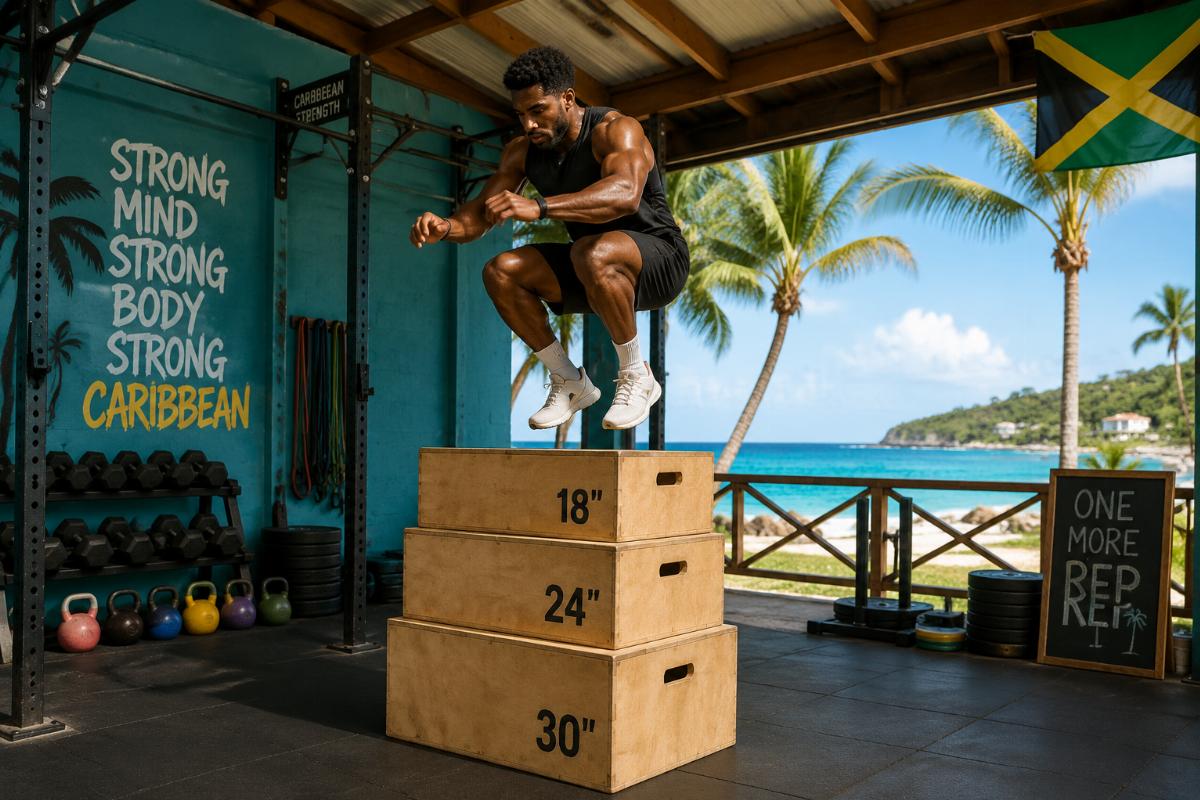
Height Configuration: A proper plyo box set for strongman training should include at least three height tiers. The most common commercial configuration is a low, medium, and high combination — typically in the range of twenty-inch, twenty-four-inch, and thirty-inch heights. Some facilities prefer a five-sided reversible design that offers multiple heights from a single unit, which improves storage efficiency.
Load Rating: Commercial-grade boxes must handle dynamic impact loads well beyond the athlete’s body weight. A static load rating tells you what the box holds at rest; a dynamic load rating tells you what it survives when a heavy athlete lands from a height. [NEED_CITE: dynamic versus static load testing methodology for plyometric training equipment] Look for suppliers who test to recognized standards and can provide documentation.
Anti-Slip Base: This is the detail that separates safe equipment from a liability. Rubberized non-slip feet or a full rubber base plate prevent the box from sliding during aggressive takeoffs and landings. The weight of the box itself contributes to stability, but the friction coefficient of the base material matters more. [NEED_CITE: friction coefficient requirements for plyometric equipment base materials per safety standards]
Skin Material: PU leather and heavy-duty vinyl are the two mainstream options. PU offers better hand feel and breathability; vinyl offers superior resistance to sweat corrosion and easier cleaning. For a high-traffic strongman facility, vinyl or a reinforced PVC blend typically holds up better over time.
Packaging and Container Loading: A competent plyo box set for strongman training supplier will offer nested or knock-down packaging designs that maximize container utilization. Flat-pack or nested configurations can improve loading efficiency substantially compared to fully assembled shipping — meaning fewer containers, lower freight cost per unit, and less damage risk in transit.

How to Avoid Customs Delays When Importing to the Dominican Republic?
Pre-shipment HS code confirmation with the importer’s licensed customs broker is the single most effective step to prevent tariff misclassification and port delays when importing a plyo box set for strongman training to the Dominican Republic.
This is where I’ve seen the most painful — and most preventable — problems.
The Dominican Republic, like many Caribbean and Latin American countries, uses a tariff schedule based on the Harmonized System. The challenge with plyometric equipment is that it doesn’t always fit neatly into one category. A foam-wrapped box with a wood core could be classified as "training equipment" under one heading or "wooden furniture" under another, depending on how the customs reviewer interprets the product’s primary function and material composition. [NEED_CITE: HS code classification guidelines for fitness training equipment versus furniture in Dominican Republic customs tariff schedule]
The tariff difference between these two classifications can be substantial — we’re talking about a multiplier effect on duty, not a marginal percentage shift. And if the goods are held at port, demurrage and storage fees accumulate daily.
Here’s the process I follow with every Caribbean buyer:
- The buyer provides the product specification sheet and photos to their licensed customs broker.
- The broker issues a preliminary classification ruling before production begins.
- If the broker flags ambiguity, we adjust the product description on the commercial invoice to emphasize the training function and technical specifications — not the material composition.
- We provide a pre-shipment sample photo set and packing list that matches the invoice description exactly.
This sounds basic, but you’d be surprised how many suppliers just ship with a generic description and let the buyer figure it out at the port. A reliable plyo box set for strongman training supplier should actively support this pre-classification step, not treat it as the buyer’s problem alone.
One more thing: the Dominican Republic has specific import documentation requirements, including a certificate of origin and, in some cases, a pre-shipment inspection certificate. Confirm these requirements with your broker early — they affect lead time and paperwork preparation.

How Does Bick Support Turnkey Gym Setups in Latin America?
Bick coordinates the full procurement cycle for a plyo box set for strongman training — from material selection and specification confirmation to container loading optimization and export documentation — as part of a broader turnkey gym equipment package.
We don’t just manufacture and ship. We’ve built our export process around the reality that gym owners in markets like the Dominican Republic are often managing their first major equipment import. They need a partner who understands both the product and the logistics chain.
When a buyer comes to us with a functional training zone plan, we start by mapping the equipment list against the available floor space and member capacity. The plyo box set for strongman training is never ordered in isolation — it’s part of a broader functional training package that may include battle ropes, medicine balls, kettlebells, and flooring. Consolidating these items into a single container reduces per-unit freight cost and simplifies customs clearance, since everything ships under one commercial invoice.
Our production facilities in Shandong handle the full range — cardio, strength machines, free weights, and functional training gear — which means we can coordinate mixed-container loads with genuine flexibility. MOQ is not a barrier; we’ve shipped single-unit samples and full facility fit-outs with equal attention to specification accuracy.
For the plyo box set for strongman training specifically, we offer OEM branding, custom height configurations, and skin material selection based on the destination climate. Every order goes through a pre-shipment inspection protocol, and we provide the documentation package — commercial invoice, packing list, certificate of origin — formatted to match the buyer’s customs broker requirements.

Conclusion
A successful plyo box set for strongman training import to the Dominican Republic depends on three pillars: correct customs classification confirmed before production, material selection matched to tropical humidity, and specification rigor on load ratings and anti-slip design. Work with a supplier who treats pre-shipment documentation as a core service, not an afterthought, and the difference shows up at the port — and in the longevity of the equipment on the gym floor.