01 / Scenario
STUDIO
P
High-End Pilates Studios
Premium aesthetics meet quiet operation for boutique studio environments.
ISO
9001
CE
Certified
OEM
Available
10YR
Warranty
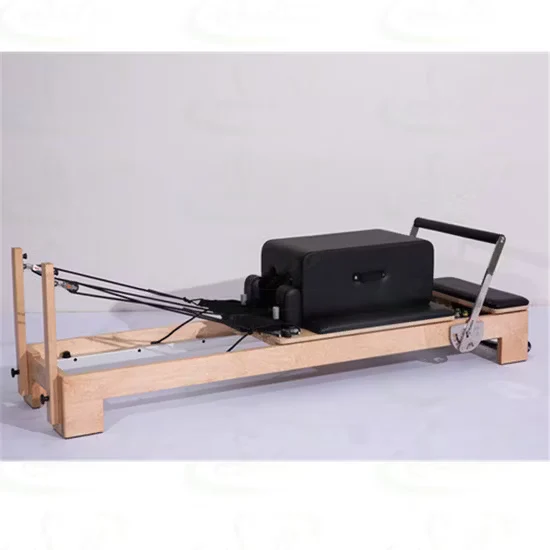
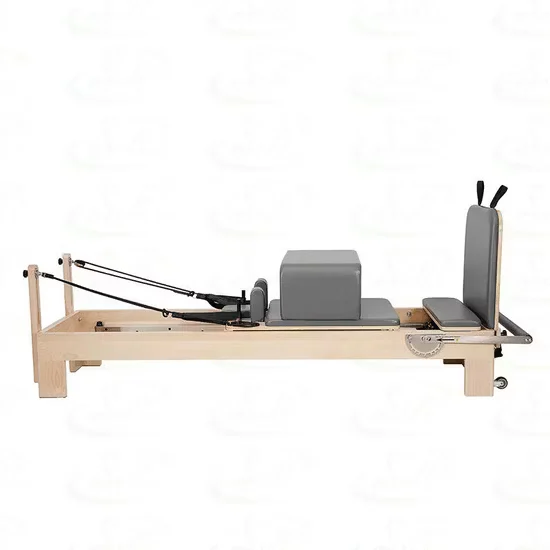
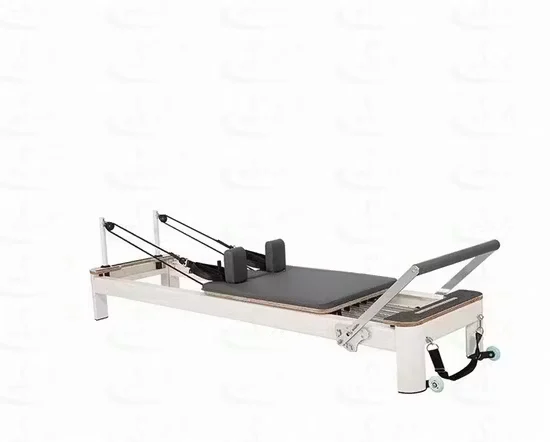
Commercial Aluminum Alloy Pilates Reformer, 2570×730×270mm, 90kg Net Weight — engineered with aluminum alloy frame construction and integrated mounting points for long box, jump board, and platform accessories, delivering rigid carriage alignment under repeated spring tension for high-traffic studio environments. Each unit undergoes carriage load testing before shipment, backed by 3-year warranty coverage and replacement parts availability for springs, wheels, and upholstery.
// Spec Highlights
• Direct from Manufacturer · No Middlemen · Worldwide Shipping
01
// Material
Imported Solid Wood
Premium hardwood frames sourced for density and visual warmth.
02
// Hardware
Medical-Grade Silent
Whisper-quiet pulleys and springs for clinical environments.
03
// Customization
Appearance OEM
Color, upholstery, and branding tailored to your studio.
04
// Service
Layout Design
Free venue planning for studios and rehab institutions.
Every component is selected for longevity, performance, and aesthetic harmony - from imported hardwood frames to silent medical-grade accessories.
// Features
Every Unit Load-Tested Before Shipping — each Commercial Aluminum Alloy Pilates Reformer undergoes full carriage load verification to confirm track alignment and spring response under studio-grade repetition cycles.
| Parameter | Value |
|---|---|
| Product Type | Pilates Reformer |
| Frame Material | Aluminum Alloy |
| Product Dimensions | 2570 × 730 × 270 mm |
| Net Weight | 90 kg |
| Included Accessories | Long Box, Jump Board, Platform |
| Color Options | White (custom colors available on request) |
| Logo | Customized logo application available |
| Target User | Adult, Unisex |
| Warranty | 3 Years |
| Production Capacity | 80 Pieces per Month |
| Facility Type | Typical Use |
|---|---|
| Boutique Pilates Studio | Daily group reformer classes with high-frequency carriage cycling |
| Commercial Fitness Center | Dedicated Pilates room within a larger group training floor plan |
| Rehabilitation and Movement Studio | Low-impact resistance training with controlled spring progression |
| Hotel and Resort Wellness Center | Guest-accessible Pilates sessions with minimal maintenance overhead |
Frame rigidity under spring tension separates commercial reformers from decorative ones.
Many Pilates reformers sold to studios use thin-walled aluminum or unspecified alloy grades that deflect when the carriage is loaded at full spring resistance. Over hundreds of class cycles, that deflection shifts the carriage wheel path, creating a noticeable wobble that members describe as "sticky" or "off-track." The problem rarely shows up in a showroom test — it surfaces after months of eccentric loading when a 75 kg rider pushes against three heavy springs at full extension [NEED_CITE: structural deflection tolerance for aluminum alloy extrusion in fitness equipment]. An alloy frame with verifiable mill certification holds its straightness, keeping the carriage travel smooth long enough that maintenance intervals are measured in years rather than weeks.
The SRY-12 covers the full range of classical and contemporary Pilates repertoire — footwork, mid-back series, long stretch, and advanced jump board sequences — making it a primary station rather than a supplementary piece. In a studio layout, commercial aluminum alloy Pilates reformer units pair naturally with Cadillac and Wunda Chair stations, creating a circuit where members rotate between apparatus without redundant movement patterns. The 2570 mm length accommodates taller users during full-extension strap work, while the 730 mm width leaves enough deck space for lateral exercises without encroaching on adjacent equipment clearance. This sizing suits studios running back-to-back group classes where equipment turnover is constant and member height ranges are wide.
Reformer frames endure a specific fatigue profile: repeated cyclic loading from spring tension and release, combined with lateral shear when riders perform single-leg or asymmetrical movements. Each full-extension rep against heavy springs generates a bending moment concentrated at the rail-to-frame junction [NEED_CITE: cyclic fatigue classification for aluminum alloy structures under repeated bending]. The carriage wheels transmit impact forces into the track every time a jump board sequence lands, and those micro-impacts compound over thousands of class hours. Sealed bearings in the carriage wheel assembly resist contamination from studio dust and sweat residue, whereas open bushings absorb particulate matter and develop play that eventually causes track scoring. The aluminum alloy surface also resists the oxidative degradation that steel frames experience in humid studio environments where cleaning chemicals and perspiration are daily constants.
The dimensional stability of the rail track depends directly on the alloy grade and extrusion profile used in the frame. Higher-grade aluminum alloys maintain tighter tolerances through the extrusion process, producing a rail surface that stays straight under the cyclic bending loads of spring resistance. Welded joints on the frame — particularly where the rail meets the end stops and the leg assemblies — must be continuous rather than tacked, because spot welds on aluminum create heat-affected zones that are more brittle than the surrounding material. The 90 kg net weight of this unit reflects the mass of alloy needed to resist resonance during jump board work; lighter reformers tend to shift or vibrate during plyometric sequences, which forces instructors to reduce exercise intensity. Integrated mounting points for the long box, jump board, and platform eliminate the loosening problem that bolt-on accessories create over hundreds of attachment and removal cycles [NEED_CITE: fastener fatigue in modular fitness equipment assemblies].
A reformer built with underspecified alloy saves money at purchase but creates a predictable cascade of operational costs. Rails that flex under load wear carriage wheels unevenly, requiring premature replacement and generating member complaints about rough travel. Non-sealed wheel bearings pick up dust and hair from studio floors, seizing within months and pulling the reformer out of class rotation for service. Bolt-on accessory brackets loosen under vibration from jump board work, creating rattling noises that degrade the studio experience and eventually stripping the mounting threads so that replacement hardware no longer fits. Frames without adequate alloy mass resonate during dynamic exercises, which is not merely a comfort issue — it signals that the structure is absorbing energy it should be transferring back into the movement path, reducing exercise effectiveness and accelerating material fatigue.
The aluminum alloy frame on this reformer is selected for corrosion resistance in climate-controlled studio environments where humidity and cleaning agents are constant factors. Each unit includes integrated mounting architecture for the long box, jump board, and platform, which means accessory swaps during class transitions do not depend on threaded inserts that degrade over time. Production runs are limited to 80 pieces per month, allowing per-unit carriage load testing rather than batch sampling — a distinction that matters when a single sticky reformer can disrupt an entire group class schedule. The three-year warranty covers structural and mechanical components, and replacement carriage wheels, springs, and upholstery panels are maintained in stock for the product lifecycle. Facility operators planning multi-unit studio layouts receive 2D floor plan support to confirm that the 2570 × 730 mm footprint integrates safely with required clearance zones between stations.
Provide your studio floor dimensions and planned reformer count to receive a 2D-3D layout confirming safe spacing and traffic flow between units. Specify your expected daily class volume so that carriage bearing and spring specifications align with your actual usage intensity. Communicate your member demographic range to verify that the deck length and spring progression accommodate your user base. Color and logo customization options are available to match your studio interior identity.
Q: How do I confirm a Pilates reformer is genuinely commercial-grade rather than light-duty?
A: Request the aluminum alloy mill certificate and verify the extrusion grade. Ask whether carriage load testing is performed per unit or only on samples. Check whether accessory mounting points are integrated into the frame structure or attached with bolt-on brackets. Commercial-grade reformers carry warranty terms that explicitly cover high-frequency studio use, and replacement parts like wheels and springs are stocked for the product lifecycle rather than discontinued after initial sale.
Q: What are the maintenance differences between aluminum alloy and steel reformer frames?
A: Aluminum alloy frames resist corrosion from studio humidity and cleaning chemicals without requiring protective coating touch-ups. Steel frames, particularly those with thin powder coating, develop surface oxidation at contact points where the finish wears through during daily use. Aluminum extrusions also maintain dimensional straightness without the gradual deformation that thin-walled steel tubes experience under repeated spring tension cycles, reducing the frequency of track realignment service calls.
Q: Which accessory configurations should a commercial studio plan for?
A: A long box is essential for seated and supine exercises including rowing and arm work. A jump board enables plyometric cardio sequences that broaden class programming variety. A platform extends the deck for standing balance work. When all three accessories integrate into the frame mounting system rather than requiring separate bolt-on hardware, class transition time decreases and the risk of stripped mounting threads from repeated attachment cycles is eliminated.
Q: What maintenance intervals should I expect for carriage wheels and track under daily studio use?
A: Sealed bearings in carriage wheels typically maintain smooth travel for extended periods under daily group class schedules, provided the studio floor is kept free of dust and hair. Open bushing systems absorb contaminants rapidly and develop lateral play that scores the rail surface. Inspect wheel condition every six months and replace units showing uneven wear patterns before they damage the aluminum track, which is a more costly repair than periodic wheel replacement.
Q: What does warranty coverage typically include for commercial Pilates reformers in high-traffic facilities?
A: A commercial warranty should explicitly cover frame structural integrity, carriage wheel bearings, and spring fatigue under studio-frequency use. Verify that replacement upholstery panels, springs, and carriage wheels are available as stocked parts. Confirm whether the warranty applies to the daily-use intensity of group classes or only to lighter individual use, since many reformer warranties exclude commercial environments unless the purchase documentation specifies facility-grade coverage terms.
Premium aesthetics meet quiet operation for boutique studio environments.
Medical-grade silence and precision for sports & postpartum recovery.
Furniture-grade craftsmanship for premium residential installations.
Compact premium setups for one-on-one and small-group training.
Aesthetic Pilates integration for hybrid wellness studio programming.
Multi-unit deployment with instructor-grade reliability for certification programs.
Tell us about your project. Our team will respond within 24 hours with pricing, customization options, and shipping details.
// Sales Director
William
+86 132 2531 1800
// Export Manager
Bella
+86 198 5412 8032
william@bickfit.com