
01 / Scenario
STUDIO
P
High-End Pilates Studios
Premium aesthetics meet quiet operation for boutique studio environments.
ISO
9001
CE
Certified
OEM
Available
10YR
Warranty
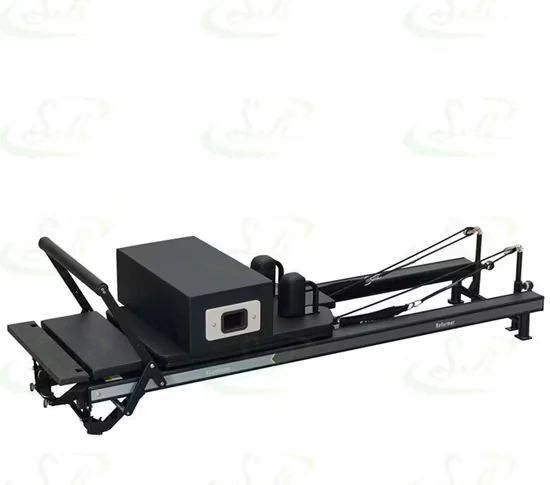
Commercial Pilates Reformer Machine, Aluminum Alloy Rail, 2570×730×890mm — engineered with a reinforced steel frame and sealed carriage bearings for low-friction glide under high-traffic studio use. Includes long box, jump board, and platform for multi-modal programming on a single footprint. Every unit undergoes three-stage load testing before shipment, backed by a 3-year warranty for commercial confidence.
// Spec Highlights
• Direct from Manufacturer · No Middlemen · Worldwide Shipping
01
// Material
Imported Solid Wood
Premium hardwood frames sourced for density and visual warmth.
02
// Hardware
Medical-Grade Silent
Whisper-quiet pulleys and springs for clinical environments.
03
// Customization
Appearance OEM
Color, upholstery, and branding tailored to your studio.
04
// Service
Layout Design
Free venue planning for studios and rehab institutions.
Every component is selected for longevity, performance, and aesthetic harmony - from imported hardwood frames to silent medical-grade accessories.
// Features
Continuous Robotic MIG Welds — every joint on this commercial aluminum alloy pilates reformer machine is laid down in a single uninterrupted pass, eliminating the spot-weld cold joints that crack under cyclic carriage loading.
| Parameter | Value |
|---|---|
| Product Type | Pilates Reformer Machine |
| Model NO. | SRY-27 |
| Product Dimensions | 2570×730×890mm |
| Net Weight | 110kgs |
| Frame Construction | Reinforced steel frame with aluminum alloy carriage rail |
| Carriage System | Sealed bearing wheels on aluminum alloy rail |
| Spring System | Progressive resistance stacking, replaceable springs |
| Included Accessories | Long Box / Jump Board / Platform |
| Upholstery | High-density commercial vinyl, replacement covers available |
| Powder Coating | 200μm scratch-resistant industrial finish |
| Color | Black (custom color available) |
| Logo | Customized |
| Warranty | 3 Years |
| Facility Type | Typical Use |
|---|---|
| Boutique Pilates Studio | High-throughput group classes with rapid accessory changeover between apparatus and mat sequences |
| Rehabilitation & Physical Therapy Center | Controlled low-load resistance progressions for post-injury mobility and stabilization protocols |
| Hotel & Resort Wellness Facility | Intermittent premium-use environment where upholstery appearance retention and frame finish matter |
| Private Home Studio | Multi-modal programming on a single footprint without requiring supplementary apparatus |
| University Athletic Training Room | Supplemental core and stabilizer work integrated into strength and conditioning programming |
A reformer that glides perfectly on day one but develops carriage wobble by month six is a structural failure, not a maintenance issue.
Studio operators often evaluate reformers by pushing the carriage back and forth in a showroom, then sign purchase orders based on that first impression. What they do not see is how the rail alloy holds its surface flatness after thousands of loaded cycles, or whether the carriage bearings are sealed against the chalk dust, sweat, and cleaning chemicals that saturate a working studio environment [NEED_CITE: EN 957 structural requirements for stationary training equipment]. When rail flatness drifts beyond tolerance, the carriage develops lateral play, the wheels begin to track unevenly, and the entire movement feel degrades — usually just outside the warranty window. We have pulled reformers back from boutique studios where thin-wall aluminum extrusions deflected under jump board loads, throwing the pulley alignment off and creating a squeak that no amount of lubrication could fix.
The commercial aluminum alloy pilates reformer machine covers the full spectrum of supine, prone, and seated movement patterns, targeting core stabilizers, hip flexors, glutes, and upper-body pulling chains. In a studio layout, it pairs with the Cadillac or Tower for vertical-plane work and with the Wunda Chair for loaded standing sequences, forming a three-apparatus circuit that accommodates mixed-level classes. The 2570mm length and 730mm width require a minimum 1200mm clearance on each long side for instructor access and safe limb extension. For facilities running six or more units in parallel, consistent footprint dimensions eliminate the uneven spacing that creates trip hazards between stations.
The shoulder box mount and foot bar pivot are the two highest-stress joints on any reformer. During jump board work, the carriage slams into the stop at the end of each return stroke, sending impact loads directly through the shoulder mount welds. If those welds are tack-welded rather than continuously MIG-welded, micro-cracks propagate through the heat-affected zone and the joint eventually develops visible play [NEED_CITE: weld classification and fatigue performance in structural steel]. The foot bar pivot endures eccentric loading every time a client pushes off with one leg, and the pivot pin must resist shear without binding. Sealed bearings in the carriage wheels prevent sweat and studio dust from penetrating the race, which is the primary cause of noise development and increased rolling friction in high-throughput environments. Upholstery contact zones — particularly the headrest and shoulder block edges — compress thousands of times per week, and low-density foam collapses into permanent valleys within months.
The aluminum alloy carriage rail reduces moving mass compared to a steel rail, which translates to less inertia during rapid direction changes and a more responsive feel at the instructor’s cue. However, alloy grade and extrusion profile determine whether the rail surface stays flat or develops wear grooves under sealed bearing pressure over extended use. The reinforced steel frame absorbs the static and impact loads that the rail system cannot, and the frame tube gauge must be sufficient to prevent flex when a heavy client performs loaded footwork at full spring tension. Spring progressive stacking means resistance increases as the spring extends, and the fatigue life of the spring wire determines how many thousands of cycles it survives before losing its rated tension. A 200μm powder coating, applied after sandblast preparation, resists the chipping that occurs at frame contact points where accessories mount and dismount repeatedly.
Thin-wall aluminum extrusions on the carriage rail save material cost upfront but deflect under jump board impact, causing the carriage to track off-center and the wheels to develop flat spots. Spot-welded frame joints pass a visual inspection but fail under the thousands of cyclic loads a busy studio generates each week, and the liability exposure when a joint fails mid-session is not something insurance covers cleanly. Non-sealed carriage bearings absorb moisture and particulate within months, generating noise complaints that force studios to replace entire carriage assemblies rather than simply repacking a bearing. Low-density upholstery foam compresses permanently under daily class throughput, and replacement covers for generic frames are often unavailable, forcing full reupholstery at a cost that exceeds the original savings on the equipment.
The reinforced steel frame uses industrial-grade tube with mill-certified sourcing, and every weld is laid by robotic MIG in a continuous pass so there are no cold joint weak points at the shoulder box or foot bar pivot. Each commercial aluminum alloy pilates reformer machine undergoes a full load test before crating — not a sample-based inspection, but a test on the actual unit that ships to your studio. The 200μm powder coating is applied over a sandblasted surface to prevent the contact-point chipping that exposes bare steel to sweat and cleaning agents. The three-year warranty covers the frame, rail, and spring system, and replacement parts — springs, carriage wheels, upholstery covers — are stocked and available for reorder without extended lead times. We provide 2D and 3D CAD layouts for multi-unit studio floors so that spacing, instructor walkways, and emergency clearance are verified before any equipment is bolted down.
Provide your studio floor dimensions and current or planned apparatus list so we can generate a 2D-3D layout that verifies clearance and traffic flow around each commercial aluminum alloy pilates reformer machine. Specify your average daily class throughput so we can confirm the structural grade matches your usage intensity. Indicate any custom color, logo placement, or upholstery material requirements for brand alignment. For rehabilitation facilities, note the client population’s mobility range so we can verify spring resistance options and accessory compatibility.
Q: How do I tell a commercial-grade reformer from a light-commercial one?
A: Check the rail alloy certification and surface flatness tolerance, the carriage bearing type — sealed bearings last meaningfully longer than bushings in studio environments — and the frame welding method. Continuous MIG welds at the shoulder box and foot bar pivot resist cyclic fatigue, while spot welds develop cracks. Ask for the spring fatigue test data and confirm that replacement springs and upholstery covers are stocked as separate SKUs.
Q: Is an aluminum alloy rail better than steel for studio use?
A: Aluminum alloy reduces carriage weight, which improves responsiveness during quick direction changes in group class choreography. Steel rails handle heavier static loads and resist wear grooving under high-pressure sealed bearings over extended periods. For studios running jump board sequences daily, the rail must be thick enough to resist deflection regardless of material, and surface flatness tolerance is the more critical specification to verify with the manufacturer.
Q: How often do the springs need replacing in a high-traffic studio?
A: Spring replacement intervals depend on daily cycle count and the resistance level most frequently used. Progressive resistance springs lose rated tension gradually rather than failing suddenly, so instructors notice the feel drifting before the spring breaks. Stocking replacement springs on-site avoids class cancellations, and confirming lead times with the manufacturer before purchase ensures continuity. Most studios schedule spring audits quarterly.
Q: Will the long box and jump board fit other brand reformers?
A: Accessory mounting standards vary across manufacturers — pin spacing, slot width, and carriage top dimensions are not universal. Before mixing brands, verify the long box mounting pin diameter against the carriage hole pattern and confirm that the jump board hooks match the frame rail profile. We supply accessory compatibility documentation with each unit so you can cross-reference before ordering supplementary equipment.
Q: What floor clearance do I need between reformers in a group studio?
A: Plan for the 730mm unit width plus a minimum 1200mm walkway on each long side for instructor circulation and safe client limb extension during footwork and long box sequences. At the head and foot ends, allow clearance for the platform and jump board overhang. A 2D CAD layout from the manufacturer verifies that your room dimensions accommodate the target unit count without compressing walkways below safe thresholds.
Premium aesthetics meet quiet operation for boutique studio environments.
Medical-grade silence and precision for sports & postpartum recovery.
Furniture-grade craftsmanship for premium residential installations.
Compact premium setups for one-on-one and small-group training.
Aesthetic Pilates integration for hybrid wellness studio programming.
Multi-unit deployment with instructor-grade reliability for certification programs.
Tell us about your project. Our team will respond within 24 hours with pricing, customization options, and shipping details.
// Sales Director
William
+86 132 2531 1800
// Export Manager
Bella
+86 198 5412 8032
william@bickfit.com


