01 / Scenario
STUDIO
P
High-End Pilates Studios
Premium aesthetics meet quiet operation for boutique studio environments.

ISO
9001
CE
Certified
OEM
Available
10YR
Warranty
11-gauge equivalent structural rigidity, robotic precision assembly, and 10-year engineering heritage backing every unit.
// Spec Highlights
• Direct from Manufacturer · No Middlemen · Worldwide Shipping
01
// Material
Imported Solid Wood
Premium hardwood frames sourced for density and visual warmth.
02
// Hardware
Medical-Grade Silent
Whisper-quiet pulleys and springs for clinical environments.
03
// Customization
Appearance OEM
Color, upholstery, and branding tailored to your studio.
04
// Service
Layout Design
Free venue planning for studios and rehab institutions.
Every component is selected for longevity, performance, and aesthetic harmony - from imported hardwood frames to silent medical-grade accessories.
// Features
Structural Rigidity Under Repetitive Load — Aluminum alloy frame with integrated rail system maintains alignment across years of spring-loaded carriage cycling.
| Parameter | Value |
|---|---|
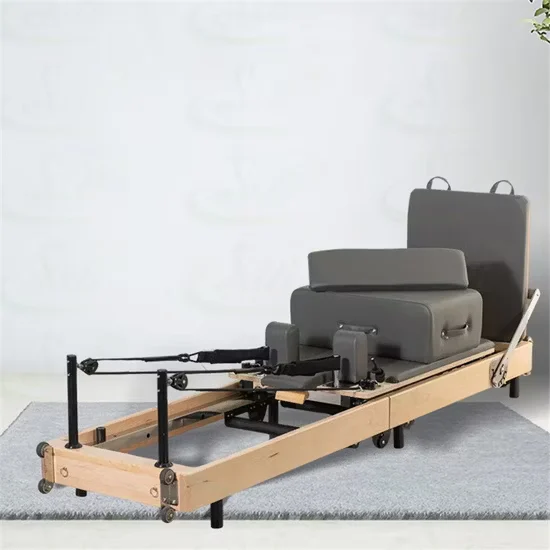
| Product Type | Pilates Reformer Machine |
| Model | SRY-20 |
| Frame Material | Aluminum Alloy |
| Product Dimensions | 2570 × 730 × 350 mm |
| Net Weight | 70 kg |
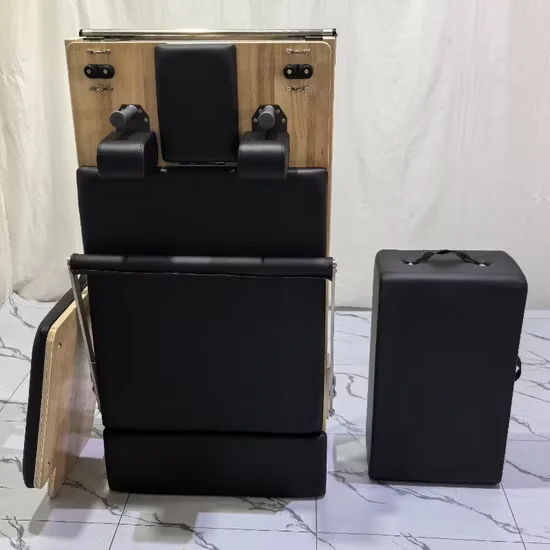
| Included Accessories | Long Box / Jump Board / Platform |
| Custom Logo | Available |
| Warranty | 3 Years |
| Production Capacity | 80 Pieces / Month |
| Facility Type | Typical Use |
|---|---|
| Boutique Pilates Studio | Daily group reformer classes with high carriage cycling frequency |
| Commercial Gym Mind-Body Zone | Integrated Pilates programming alongside strength and cardio floors |
| Rehabilitation and Physiotherapy Center | Controlled resistance movements for post-injury recovery protocols |
| Hotel and Resort Wellness Facility | Guest-accessible Pilates equipment with low maintenance requirements |
| Functional Training Facility | Core stabilization and mobility work complementing rig-based programming |
Aluminum alloy eliminates the corrosion pathway that degrades steel reformer rails in humidity-controlled studios.
Most reformer frames marketed for commercial use rely on thin-wall steel tubes with a powder coat as the sole corrosion barrier. Once that coating chips at the carriage contact points — an inevitability under daily spring tension and wheel travel — bare steel is exposed to ambient moisture. In studios where humidity is managed for occupant comfort, this accelerates surface oxidation along the rail, creating friction irregularities that members describe as a gritty or inconsistent glide. [NEED_CITE: corrosion mechanisms in coated vs. uncoated structural alloys] Aluminum alloy, by contrast, forms a self-passivating oxide layer that does not propagate subsurface, preserving rail straightness and wheel tracking over extended high-traffic use without relying on a coating’s integrity at wear surfaces.
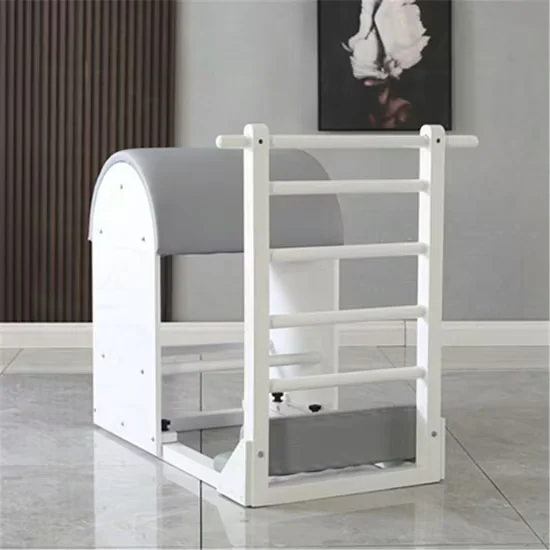
This commercial aluminum alloy pilates reformer machine covers the full spectrum of Pilates repertoire — supine, prone, seated, and standing movements — targeting core stabilizers, hip flexors and extensors, and lower-limb posterior chain through variable spring resistance. In a studio configuration, it pairs with mat zones for warm-up sequences and complements cadillac or chair stations for advanced programming. The 2570 × 730 mm footprint allows side-by-side placement in group class formats, accommodating instructors ranging from petite to above-average height without carriage overhang constraints.
Every reformer stroke imposes a cyclic lateral load on the frame rails, with peak stress occurring at the transition between the carriage’s forward travel limit and spring recoil. In a studio running six to eight group classes daily, individual units accumulate thousands of these cycles weekly. The carriage wheels, rail contact surfaces, and spring anchor points bear the brunt of this fatigue loading. [NEED_CITE: fatigue behavior of aluminum extrusions under cyclic lateral loading] Sweat and cleaning agents introduce chemical exposure at the rail-wheel interface, where any material incompatibility accelerates wear and compromises the smooth glide that defines reformer quality.
The aluminum alloy frame’s value lies in its extrusion profile and wall thickness, which together determine resistance to torsional deflection when the carriage is loaded asymmetrically — a routine occurrence during single-leg work. Rail straightness tolerance directly governs whether the carriage tracks true or develops lateral play over time, and this tolerance is only as reliable as the manufacturing process that holds it. Wheel material and durometer affect both glide feel and rail wear rate; harder wheels reduce rolling resistance but can accelerate surface wear on softer aluminum if the pairing is poorly matched. Spring anchor points must be machined or reinforced to prevent elongation under repeated tension cycles, as any deformation here alters the resistance curve the instructor programmed.
Reformers built with thin-wall steel or low-grade aluminum save cost upfront but shift expense downstream. Steel frames with inadequate coating thickness develop rail surface pitting within the first year in humid environments, requiring rail replacement or machine retirement. Undersized carriage wheels and unsealed bearings develop play that manifests as lateral wobble — a member complaint that triggers early equipment rotation out of active class schedules. Non-standard accessory mounting points mean replacement long boxes or jump boards are unavailable from third-party suppliers, locking the studio into single-vendor dependency or forcing full-unit replacement when one component fails. [NEED_CITE: lifecycle cost comparison of commercial fitness equipment frame materials]
The aluminum alloy construction of this commercial aluminum alloy pilates reformer machine provides corrosion resistance without dependency on surface coatings at the rail interface. The integrated accessory ecosystem — long box, jump board, and platform — mounts to engineered interface points designed for dynamic loading rather than static display. A 3-year warranty framework covers the structural components most likely to reveal manufacturing shortcomings within early high-traffic use. Studios planning multi-unit layouts can request 2D-3D floor planning support to confirm safe carriage extension clearances and instructor circulation paths between stations. Custom logo application allows brand alignment without compromising frame integrity through aftermarket modification.
Provide your studio floor dimensions and planned reformer count to receive a 2D-3D layout confirming safe carriage clearances and instructor access paths. Specify expected daily class volume and member throughput so the frame’s structural grade aligns with your usage profile. Communicate any custom logo or frame color requirements early in the procurement cycle to integrate branding without post-production modification.
Q: How does an aluminum alloy frame compare to steel for commercial Pilates reformers?
A: Aluminum alloy forms a self-passivating oxide layer that resists corrosion without relying on powder coating at wear surfaces. Steel frames depend entirely on coating integrity at carriage rail contact points — once chipped, moisture initiates surface oxidation that degrades glide consistency. Aluminum also reduces overall unit weight, easing repositioning during studio layout changes while maintaining structural rigidity under repetitive spring-loaded carriage movement.
Q: What should I verify about the carriage rail and wheel system before ordering?
A: Request the rail straightness tolerance specification and wheel material data. Rail alignment directly affects whether the carriage tracks true over thousands of cycles, and wheel durometer must be matched to the aluminum rail hardness to prevent accelerated wear on either surface. Ask whether bearings are sealed against sweat and cleaning agent ingress, as unsealed bearings develop lateral play under high-traffic studio conditions.
Q: What spacing do I need between reformers for safe studio operation?
A: Minimum lateral spacing must accommodate full carriage extension plus instructor walking access on at least one side. With the 2570 mm length and carriage travel range, studios typically allocate a clear zone at the head and foot of each unit for jump board and long box exercises. Providing your room dimensions allows generation of a CAD layout confirming all operational clearances and emergency egress paths.
Q: What does the 3-year warranty actually cover in a commercial environment?
A: The warranty framework covers the aluminum alloy frame structure and primary carriage rail assembly under commercial use conditions. Springs, upholstery, and wheels are classified as wear items with shorter expected service intervals. Request the written warranty scope document specifying which components are covered, the conditions that void coverage, and the process for filing structural claims — this prevents disputes when moving parts require scheduled replacement.
Q: Can I customize the reformer to match my studio branding?
A: Custom logo application is available and integrated during production rather than applied post-assembly, ensuring adhesion durability under repeated handling and cleaning. Frame color options and upholstery selection can be coordinated to align with studio interior design. Confirm customization lead times and minimum order requirements when requesting a quotation, as these parameters affect project scheduling for new studio build-outs.
Premium aesthetics meet quiet operation for boutique studio environments.
Medical-grade silence and precision for sports & postpartum recovery.
Furniture-grade craftsmanship for premium residential installations.
Compact premium setups for one-on-one and small-group training.
Aesthetic Pilates integration for hybrid wellness studio programming.
Multi-unit deployment with instructor-grade reliability for certification programs.
Tell us about your project. Our team will respond within 24 hours with pricing, customization options, and shipping details.
// Sales Director
William
+86 132 2531 1800
// Export Manager
Bella
+86 198 5412 8032
william@bickfit.com