01 / Scenario
STUDIO
P
High-End Pilates Studios
Premium aesthetics meet quiet operation for boutique studio environments.

ISO
9001
CE
Certified
OEM
Available
10YR
Warranty
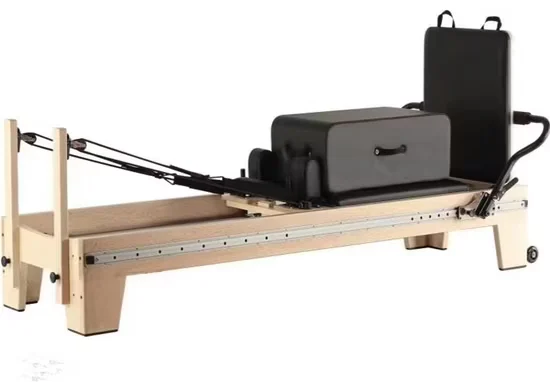
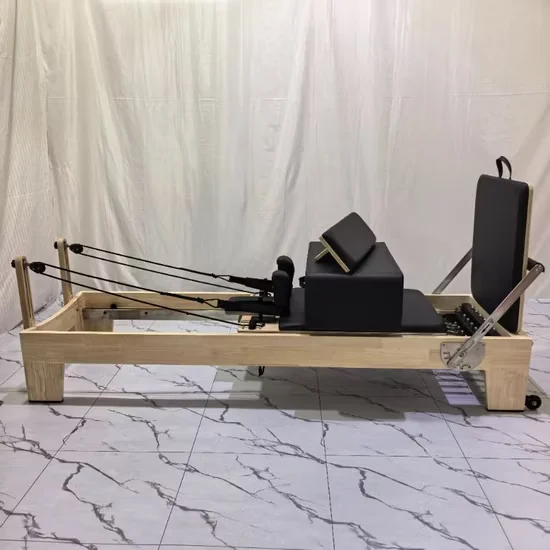
White Aluminum Pilates Reformer Machine, 2570×730×270mm, 90kg Net Weight — corrosion-resistant aluminum frame eliminates rust in humid studio environments while maintaining carriage rigidity under repeated lateral spring tension. Integrated long box, jump board, and platform mounting points support full-spectrum programming without separate equipment. Each unit undergoes carriage load testing and spring calibration verification before shipment.
// Spec Highlights
• Direct from Manufacturer · No Middlemen · Worldwide Shipping
01
// Material
Imported Solid Wood
Premium hardwood frames sourced for density and visual warmth.
02
// Hardware
Medical-Grade Silent
Whisper-quiet pulleys and springs for clinical environments.
03
// Customization
Appearance OEM
Color, upholstery, and branding tailored to your studio.
04
// Service
Layout Design
Free venue planning for studios and rehab institutions.
Every component is selected for longevity, performance, and aesthetic harmony - from imported hardwood frames to silent medical-grade accessories.
// Features
Every Unit Load Tested — each commercial aluminum pilates reformer machine undergoes dynamic carriage loading verification before leaving the factory floor, not just sample-based spot checks.
| Parameter | Value |
|---|---|
| Product Type | Pilates Reformer |
| Frame Material | Aluminum |
| Color | White (custom colors available on request) |
| Accessory | Long Box / Jump Board / Platform |
| Product Dimensions | 2570 × 730 × 270 mm |
| Net Weight | 90 kg |
| Warranty | 3 Years |
| Target User | Adult, Unisex |
| Logo | Customized Is Allowed |
| Transport Package | Standard Wood Case |
| Facility Type | Typical Use |
|---|---|
| Boutique Pilates Studio | Daily group reformer classes with high-traffic carriage cycling |
| Rehabilitation Center | Low-impact controlled-resistance therapy for post-injury patients |
| Hotel Fitness Center | Multi-level guest programming from beginner to advanced |
| Personal Training Facility | One-on-one sessions requiring rapid accessory changeovers |
| Sports Performance Center | Athlete conditioning with jump board plyometric drills |
Aluminum eliminates the rust cycle that destroys steel-frame reformers in sweat-heavy studio conditions.
Most reformers sold as studio-grade use painted or chrome-plated steel frames. In a room where forty-plus people per day generate humidity and sweat aerosol, those finishes degrade at contact points — carriage rail mounts, spring anchor plates, footbar pivot bolts. Once bare steel is exposed, oxidation spreads under the coating. Within a year, the frame shows visible corrosion at every joint [NEED_CITE: corrosion behavior of coated steel in high-humidity fitness environments]. A commercial aluminum pilates reformer machine sidesteps this failure mode entirely because aluminum forms a self-healing oxide layer when exposed to air, meaning surface scratches do not propagate into structural decay.
The reformer addresses the sagittal plane primarily — supine and prone pressing, pulling, and leg work through spring-loaded resistance — with lateral and rotational movements introduced via the long box and platform accessories. In a studio equipment mix, it pairs with Cadillac towers for vertical-plane work and Wunda chairs for seated and standing load paths. Facilities running six to eight group classes daily benefit from its standardized footprint, which allows uniform spacing for instructor sightlines across the room. The unisex carriage length accommodates users from approximately 155 cm to 195 cm without requiring frame extensions.
A reformer carriage endures repeated eccentric loading every time a user decelerates a spring-return movement — the carriage wheels absorb lateral shear against the rail, the spring hooks experience cyclic tension, and the footbar pivot bears compressive force from leg press work. In a commercial studio running forty sessions per week, each station completes thousands of these cycles monthly [NEED_CITE: cyclic fatigue in carriage rail and wheel bearing systems]. The aluminum frame distributes these loads across its full tube cross-section rather than concentrating stress at welded joints, which is a common failure origin in multi-piece steel assemblies. The accessory mounting points — long box rails, jump board brackets — must also tolerate impact loading during plyometric sequences.
The aluminum frame choice affects three performance dimensions: corrosion resistance in humid environments, the weight-to-rigidity ratio that determines whether the carriage tracks true under lateral spring tension, and long-term surface appearance under daily cleaning chemicals. At 90 kg net weight, the frame provides sufficient mass to resist walking or tipping during aggressive jump board work without requiring bolt-down floor anchors. The integrated accessory ecosystem — long box, jump board, and platform — means the mounting interfaces are engineered as part of the original frame design rather than retrofitted, which preserves load distribution across the full rail length. The three-year warranty coverage signals the manufacturer’s confidence in the frame’s fatigue life under commercial duty cycles [NEED_CITE: warranty period correlation with structural fatigue testing in commercial fitness equipment].
Reformers built with thin-gauge aluminum or low-grade steel alloys save money at the point of purchase but introduce downstream costs. Thin frame tubes deflect under maximum spring tension, causing the carriage to bind on the rails and accelerating wheel bearing wear. Non-sealed bearings accumulate dust and sweat residue, developing lateral play that produces grinding noise during class — a distraction that drives member complaints and requires mid-lifecycle bearing replacement [NEED_CITE: sealed versus unsealed bearing maintenance intervals in studio environments]. Frames that rely on spot-welded accessory brackets rather than integrated mounting geometry develop fatigue cracks at the weld perimeter under repeated jump board impact, eventually requiring frame retirement because the bracket cannot be safely re-welded in the field.
The aluminum frame is sourced with mill certification traceable to the production batch, ensuring alloy composition consistency across every unit. Robotic MIG welding produces continuous weld lines at structural joints rather than spot welds that create localized stress risers. Every reformer undergoes individual load testing before packing — the carriage is cycled under maximum rated weight through full range of motion, and spring tension is calibrated and verified at each resistance level. The 200μm industrial powder coating on accessory contact surfaces resists chipping from repeated long box and jump board mounting. The 3-year warranty covers the frame structure, and 2D-3D studio layout CAD support is available to plan safe carriage clearance and instructor walkway spacing around each station.
Share your studio floor area and target class capacity to receive a 2D-3D layout showing reformer placement with safe carriage clearance and instructor circulation paths. Specify your expected daily session volume so we can confirm the structural grade matches your traffic level. Detail any custom color or logo requirements for brand-aligned studio aesthetics.
Q: How do I distinguish a commercial-grade aluminum reformer from a light-commercial model?
A: Check the net weight and frame tube dimensions — commercial units carry more mass to resist deflection under maximum spring tension. Request the aluminum alloy specification and mill certificate to verify the material grade. Inspect whether accessories mount to integrated frame geometry or bolt-on brackets, as integrated mounts distribute impact loads more effectively across the full structure.
Q: What aluminum alloy specifications indicate structural durability for studio use?
A: Ask for the specific alloy designation and temper condition on the mill certificate. Structural aluminum for fitness frames should meet recognized industrial standards for yield and tensile properties. The manufacturer should be able to trace the material batch back to the original production coil, which confirms supply chain control and consistent mechanical properties across units.
Q: How does carriage rail and bearing type affect maintenance in a high-traffic studio?
A: Sealed industrial bearings prevent sweat and dust intrusion that causes premature wear and noise development. Unsealed bearings require frequent cleaning and lubrication, adding labor cost and class disruption. Rail surface finish also matters — precision-machined aluminum rails maintain smooth carriage glide over thousands of cycles, while rough-finished rails accelerate wheel wear and generate particulate debris.
Q: What should I consider for studio floor layout and reformer spacing?
A: Account for the full 2570 mm length plus carriage overhang at maximum extension, lateral clearance for instructor movement between stations, and head-to-head clearance if reformers face each other. Plan accessory storage zones for long boxes and jump boards so they do not obstruct walkways. Request CAD layout support to validate spacing before equipment arrives on site.
Premium aesthetics meet quiet operation for boutique studio environments.
Medical-grade silence and precision for sports & postpartum recovery.
Furniture-grade craftsmanship for premium residential installations.
Compact premium setups for one-on-one and small-group training.
Aesthetic Pilates integration for hybrid wellness studio programming.
Multi-unit deployment with instructor-grade reliability for certification programs.
Tell us about your project. Our team will respond within 24 hours with pricing, customization options, and shipping details.
// Sales Director
William
+86 132 2531 1800
// Export Manager
Bella
+86 198 5412 8032
william@bickfit.com