01 / Scenario
STUDIO
P
High-End Pilates Studios
Premium aesthetics meet quiet operation for boutique studio environments.
ISO
9001
CE
Certified
OEM
Available
10YR
Warranty
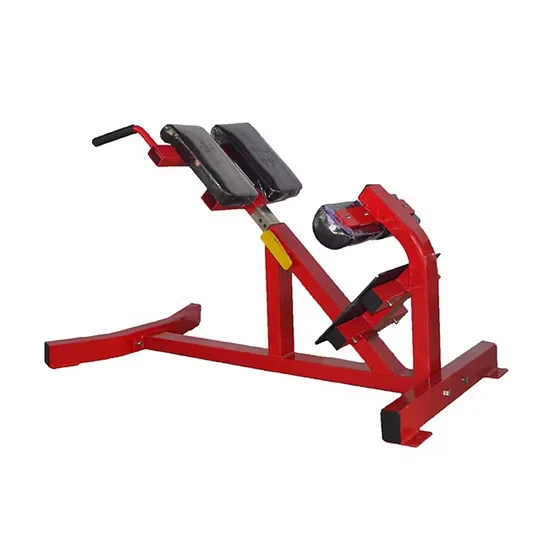
Commercial Back Extension Machine, 1763×1210×1669mm, 42kg Net Weight — engineered with industrial-grade steel frame and precision pivot mechanism for consistent back extension movement in high-traffic environments. Back-focused training station suitable for professional gym and club settings with plate-loaded or bodyweight resistance options. Backed by ISO 9001 and CE certifications, with OEM/ODM customization available for facility-specific requirements. Every unit undergoes three-stage inspection with load testing before shipment, ensuring structural reliability for commercial strength zones.
// Spec Highlights
• Direct from Manufacturer · No Middlemen · Worldwide Shipping
01
// Material
Imported Solid Wood
Premium hardwood frames sourced for density and visual warmth.
02
// Hardware
Medical-Grade Silent
Whisper-quiet pulleys and springs for clinical environments.
03
// Customization
Appearance OEM
Color, upholstery, and branding tailored to your studio.
04
// Service
Layout Design
Free venue planning for studios and rehab institutions.
Every component is selected for longevity, performance, and aesthetic harmony - from imported hardwood frames to silent medical-grade accessories.
// Features
Traceable 11-Gauge Steel — Every commercial back extension machine frame is built from mill-certified Q235 steel with coil-level traceability, ensuring verifiable material integrity from raw stock to finished unit.
| Parameter | Value |
|---|---|
| Product Type | Commercial Back Extension Machine |
| Frame Steel Gauge | 11-gauge, 3×3 inch tube |
| Steel Grade | Q235 industrial steel, mill-certified |
| Welding Type | Robotic MIG continuous weld |
| Loading Type | Bodyweight / Plate Loaded (configurable) |
| Bearing Type | Sealed industrial bearings |
| Powder Coating | 200μm scratch-resistant finish |
| Product Dimensions | 1763×1210×1669mm |
| Certification | ISO 9001:2015, CE |
| OEM/ODM | Available |
| Transport Package | Plywood case |
| Facility Type | Typical Use |
|---|---|
| Commercial gym strength floor | Posterior chain development station in dedicated lumbar zone |
| Hotel fitness center | Compact lower back maintenance for transient guests |
| University athletic facility | Rehabilitation and conditioning for student athletes |
| Community gymnasium | General population lower back strengthening |
Many commercial back extension machines on the market carry vague "commercial grade" labels without verifiable steel specifications, relying on spot welding that appears sound during visual inspection but fractures under repeated dynamic loading — resulting in frame flex, pivot misalignment, and premature structural failure in high-use gym settings.
The difference lies in continuous weld penetration and steel gauge verification.
When a gym operator specifies a commercial back extension machine without demanding mill-certified steel documentation, they inherit hidden risk: thin-wall tubing that deflects under eccentric loading, spot welds that develop micro-cracks after thousands of repetition cycles, and pivot points that drift out of alignment as the frame loses geometric rigidity. These failures rarely announce themselves suddenly — they accumulate through subtle degradation until a maintenance technician discovers hairline fractures at stress concentration points during routine inspection. [NEED_CITE: weld classification and fatigue performance in structural steel]
This commercial back extension machine occupies a specific movement plane — hip extension with spinal stabilization — that complements deadlift platforms, glute-ham developers, and cable systems in a comprehensive posterior chain circuit. The fixed pivot geometry and padded support surface accommodate users across a wide anthropometric range, from rehabilitation clients requiring controlled range-of-motion work to strength athletes performing high-volume endurance sets. Facilities operating 8+ hours daily with mixed membership demographics benefit from the unit’s structural capacity to handle continuous turnover without performance degradation.
Commercial back extension machines endure a distinct loading profile: cyclic eccentric forces concentrated at the pivot axis, combined with lateral shear when users enter or exit the padded support with asymmetric weight distribution. Unlike selectorized equipment where load paths remain predictable, bodyweight and plate-loaded configurations introduce variable force vectors that test weld integrity at frame junctions and bearing retention at pivot points. Sealed bearings resist contamination from gym floor dust and ambient humidity, while the 200μm powder coating withstands repeated contact with cleaning agents and perspiration without exposing bare steel at high-wear contact zones. [NEED_CITE: bearing seal performance in contaminated industrial environments]
The 11-gauge, 3×3 inch frame tube establishes a deformation threshold that resists deflection under dynamic loading — thicker wall stock increases the moment of inertia, meaning the frame maintains geometric stability even when users apply force at extended lever arms. Robotic MIG welding prod*th, eliminating the cold-start and stop-start inconsistencies inherent in manual spot welding where incomplete fusion creates fatigue initiation points. Sealed industrial bearings at the pivot axis prevent contaminant ingress that would otherwise accelerate wear in bushing-style designs, maintaining smooth articulation through thousands of cycles without developing play. The 200μm powder coating, applied over sandblasted substrate, provides corrosion resistance at contact points where users grip the frame or adjust padding — areas where thinner finishes typically chip and expose bare steel within months of commercial use.
Facilities that prioritize initial purchase price over structural specification inherit predictable downstream costs: thin-wall frames that develop visible deflection under repeated loading, requiring replacement rather than repair; spot-welded joints that crack at stress points, creating liability exposure when structural failure occurs during use; non-sealed bearings that develop play within the first year of high-traffic operation, generating maintenance calls and user complaints about equipment feel. Low-density upholstery compresses permanently under daily commercial use, requiring replacement within months rather than years, while inadequate powder coating exposes bare steel at contact points, initiating corrosion that spreads beneath adjacent finish and compromises long-term appearance.
Every commercial back extension machine leaving the facility undergoes individual load testing — not sample-based verification — confirming that weld integrity and frame geometry meet specification before shipment. The 11-gauge steel frame traces back to mill-certified coil stock, providing documentation that satisfies institutional procurement requirements and insurance underwriting standards. Robotic continuous welding eliminates the human variability inherent in manual fabrication, ensuring consistent penetration and fusion across every production unit. The 200μm industrial powder coating, applied after sandblasting preparation, delivers scratch and corrosion resistance validated through commercial environment deployment across 45+ export countries. A 10-year frame warranty reflects confidence in structural longevity, while 2D-3D CAD layout support ensures the commercial back extension machine integrates into strength zone configurations with appropriate safety clearances and traffic flow.
Facility planners should provide strength zone dimensions and equipment adjacency requirements to receive 2D-3D layout recommendations confirming appropriate spacing and safety clearances for the commercial back extension machine. Specify anticipated daily user volume to validate that the 11-gauge frame construction matches operational intensity. Indicate target user anthropometric range to confirm padding dimensions and pivot geometry accommodate your membership profile. Custom requirements including frame color, upholstery specification, and facility branding integration are available through the OEM configuration process.
Q: How do I verify that a commercial back extension machine uses genuine 11-gauge steel rather than thinner material labeled as commercial grade?
A: Request mill-certified steel documentation with traceable coil numbers from the manufacturer. Genuine 11-gauge material comes with test reports specifying chemical composition and mechanical properties. The frame tube should measure 3×3 inch with wall thickness consistent with 11-gauge specification. Reputable manufacturers provide this documentation without hesitation, while suppliers using thinner material typically offer only vague "commercial grade" claims without verifiable certification.
Q: What welding method should I look for to ensure long-term structural durability in high-traffic gym environments?
A: Robotic MIG continuous welding produces consistent penetration along the entire joint length, eliminating the weak points inherent in manual spot welding where incomplete fusion creates fatigue initiation sites. Continuous welds distribute stress evenly across the joint, while spot welds concentrate force at discrete points that can crack under repeated loading. Inspect weld quality at frame junctions — continuous welds show uniform bead appearance without visible gaps or porosity.
Q: How do sealed bearings differ from bushing designs in commercial back extension machines?
A: Sealed bearings prevent contamination ingress from gym floor dust, humidity, and cleaning chemicals, maintaining smooth pivot articulation through thousands of cycles without developing play. Bushing designs rely on lubrication that degrades over time, allowing contaminants to accelerate wear and create looseness at the pivot point. In high-traffic commercial environments operating 8+ hours daily, sealed bearings significantly extend maintenance intervals and preserve consistent movement feel throughout the equipment service life.
Q: What powder coating specification ensures long-term appearance and corrosion resistance at contact points?
A: A 200μm industrial powder coating applied over sandblasted substrate provides scratch and corrosion resistance validated through commercial deployment. The thickness prevents chipping at high-wear contact points where users grip the frame or adjust padding. Thinner coatings typical of cost-reduced manufacturing expose bare steel within months of commercial use, initiating corrosion that spreads beneath adjacent finish. Sandblasting preparation ensures proper adhesion that prevents coating delamination under mechanical stress.
Q: How should I plan equipment spacing when integrating a commercial back extension machine into my strength zone layout?
A: The 1763×1210mm footprint requires minimum 600mm clearance on all sides for safe user entry, exit, and plate loading access. Consider traffic flow patterns — users approaching with plates need unobstructed paths. Position adjacent to complementary posterior chain equipment like glute-ham developers or cable systems, but maintain separation to prevent interference between simultaneous users. Request 2D-3D CAD layout support from the manufacturer to optimize spacing based on your specific floor dimensions and equipment adjacency requirements.
Premium aesthetics meet quiet operation for boutique studio environments.
Medical-grade silence and precision for sports & postpartum recovery.
Furniture-grade craftsmanship for premium residential installations.
Compact premium setups for one-on-one and small-group training.
Aesthetic Pilates integration for hybrid wellness studio programming.
Multi-unit deployment with instructor-grade reliability for certification programs.
Tell us about your project. Our team will respond within 24 hours with pricing, customization options, and shipping details.
// Sales Director
William
+86 132 2531 1800
// Export Manager
Bella
+86 198 5412 8032
william@bickfit.com