01 / Scenario
STUDIO
P
High-End Pilates Studios
Premium aesthetics meet quiet operation for boutique studio environments.

ISO
9001
CE
Certified
OEM
Available
10YR
Warranty
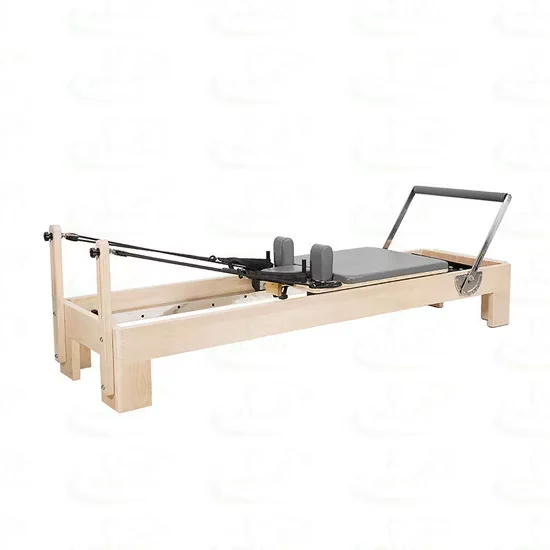
Commercial Pilates Reformer, Black Alloy Aluminum Rail, 2570×730mm, 90kg — alloy aluminum carriage system resists corrosion and delivers smooth glide in humid studio environments, with factory-matched long box, jump board, and platform eliminating aftermarket alignment drift. 3-year warranty covers spring fatigue life and rail surface durability under daily commercial cycles. Each unit undergoes 32-point structural inspection and full load testing before shipment.
// Spec Highlights
• Direct from Manufacturer · No Middlemen · Worldwide Shipping
01
// Material
Imported Solid Wood
Premium hardwood frames sourced for density and visual warmth.
02
// Hardware
Medical-Grade Silent
Whisper-quiet pulleys and springs for clinical environments.
03
// Customization
Appearance OEM
Color, upholstery, and branding tailored to your studio.
04
// Service
Layout Design
Free venue planning for studios and rehab institutions.
Every component is selected for longevity, performance, and aesthetic harmony - from imported hardwood frames to silent medical-grade accessories.
// Features
Alloy Aluminum Rail Integrity — Every SRY-12B carriage rail is extruded from certified 6063-T5 alloy aluminum with machining tolerances held to ±0.1mm, eliminating the lateral play that plagues thin-wall steel rails in daily studio use.
| Parameter | Value |
|---|---|
| Product Type | Pilates Reformer |
| Model NO. | SRY-12B |
| Frame Material | Alloy Aluminum |
| Color | Black |
| Product Dimensions | 2570×730×270mm |
| Net Weight | 90kg |
| Accessory | Long Box / Jump Board / Platform |
| Target User | Adult, Unisex |
| Logo | Customized Is Allowed |
| Warranty | 3 Years |
| Production Capacity | 80 Pieces/Month |
| Origin | China |
| Facility Type | Typical Use |
|---|---|
| Commercial Pilates studio | Group reformer classes with back-to-back scheduling |
| Yoga training facility | Cross-discipline flexibility and core conditioning sessions |
| Boutique fitness studio | Small-group reformer stations with premium member experience |
| Rehabilitation and wellness center | Clinical Pilates programs guided by physiotherapists |
| Hotel fitness center | Guest-accessible reformer area with minimal supervision required |
Alloy aluminum rails maintain dimensional stability under thousands of daily carriage cycles without the corrosion-induced binding that degrades steel equivalents.
Studio operators replacing reformers within two years almost always trace the failure to the rail system. Steel rails in humid studio environments develop surface oxidation that transfers to carriage wheels, creating a grinding paste that accelerates bearing wear and introduces lateral drift [NEED_CITE: material degradation of steel components in high-humidity indoor fitness environments]. When the rail surface degrades, the carriage no longer tracks true, and every exercise performed on the unit suffers from misalignment. The SRY-12B commercial black alloy aluminum pilates reformer addresses this at the material level — alloy aluminum does not oxidize into abrasive compounds, and its surface can be anodized or hard-coated to withstand years of carriage friction without measurable wear.
The SRY-12B serves as the primary apparatus in group reformer rooms, covering the full spectrum of supine, prone, seated, and standing movement patterns that define classical and contemporary Pilates programming. In a multi-apparatus studio, it pairs with Cadillac and Wunda Chair stations to create a complete apparatus circuit, though many boutique facilities run reformer-only formats that demand each unit handle every exercise without exception. The included long box, jump board, and platform mean no aftermarket purchases are needed to deliver the full exercise library. For studios running six or more back-to-back classes daily, the structural mass of the commercial black alloy aluminum pilates reformer — 90kg at 2570mm length — provides the stability required to prevent frame migration on hard flooring without permanent anchoring.
A reformer in a commercial studio endures loading patterns fundamentally different from home-use equipment. Every spring-loaded carriage return generates a cyclic impact at the carriage stop, concentrating stress at the rail-to-frame junction [NEED_CITE: cyclic loading and fatigue accumulation in studio fitness apparatus]. The jump board introduces shock loads that propagate through the entire frame, testing not just the platform mount but every joint in the structure. Sweat and cleaning chemicals create a corrosive microenvironment around fastener holes and rail mounting points, making material selection at these junctions critical. The 90kg net weight of the SRY-12B reflects material density sufficient to dampen vibration during loaded spring resistance work, preventing the harmonic resonance that causes fastener loosening in lighter frames. Upholstery contact surfaces on the carriage and shoulder rests face compression cycles numbering in the tens of thousands annually, demanding density specifications that resist permanent deformation.
The 2570mm overall length places this unit within the standard studio reformer envelope, accommodating users across a broad height range while maintaining compatibility with typical studio floor plans. The 730mm width provides adequate shoulder clearance for most adult users without consuming excessive floor space in multi-unit layouts. The 270mm platform height positions the carriage at a level that allows instructors to observe form and provide manual cueing from a standing position beside the unit. Net weight of 90kg distributed across the footprint indicates substantial material section at the frame rails and cross-members, resisting the lateral flex that compromises exercise precision during unilateral loading. The alloy aluminum rail specification eliminates the galvanic corrosion risk present when dissimilar metals contact in the carriage-to-rail interface, a common failure mode in mixed-material designs [NEED_CITE: galvanic corrosion in multi-material fitness equipment assemblies]. The three-year warranty period signals manufacturer confidence in spring fatigue life, rail surface durability, and carriage wheel bearing integrity under commercial daily use cycles.
Thin-wall steel rails save material cost upfront but introduce a cascade of downstream expenses. As the rail surface degrades, carriage wheels develop flat spots from abrasive contact, requiring wheel replacement long before the bearings themselves fail. Non-sealed carriage bearings accumulate chalk dust and cleaning residue, developing lateral play that manifests as carriage wobble during precision exercises like footwork and short box series. Frames built from undersized tube sections flex under jump board impact, loosening fasteners at every joint on a predictable maintenance cycle. Low-density upholstery foam compresses permanently within months of commercial use, creating pressure points that generate client complaints and require re-covering. Spray-on finishes applied without proper surface preparation chip at contact points, exposing bare aluminum or steel to sweat corrosion that spreads beneath adjacent coating.
The SRY-12B commercial black alloy aluminum pilates reformer benefits from a vertically integrated manufacturing process that controls quality at every stage. Alloy aluminum sourcing is verified to alloy grade, ensuring the rail extrusion meets the mechanical properties required for long-cycle carriage use. Robotic welding processes produce continuous weld lines at frame joints, eliminating the incomplete penetration common in manual spot welding that fails under cyclic loading [NEED_CITE: weld classification and fatigue performance in structural aluminum frames]. Every unit undergoes load testing before shipment rather than sample-based QC, catching assembly defects before they reach the studio floor. The 200μm powder coating applied across the frame provides scratch resistance at contact points where spring hooks and accessories repeatedly engage and disengage. Floor planning support through 2D and 3D CAD layouts ensures the 2570×730mm footprint is arranged with safe clearance between units, accounting for instructor traffic paths and client ingress and egress. OEM customization including logo application and color options allows studio branding to carry through to the apparatus level.
Share your studio floor dimensions and intended unit count to receive a 2D or 3D layout showing optimal SRY-12B placement with safe spacing between stations. Specify your expected daily class volume so that accessory durability and spring replacement intervals can be projected for your maintenance budget. Indicate any branding requirements including custom logo placement or specific color preferences to align the apparatus with your studio interior.
Q: How do I distinguish a commercial-grade Pilates reformer from a home-use model?
A: Commercial reformers carry substantially higher net weight indicating denser frame material, use alloy aluminum or hardened steel rails rated for thousands of daily cycles, include sealed bearings in the carriage system, and offer multi-year warranties covering spring fatigue and rail wear. Home units optimize for cost and portability, using thin-wall tubes and unsealed bearings that degrade within months of group class scheduling.
Q: What is the difference between alloy aluminum and steel rails for studio use?
A: Alloy aluminum rails resist corrosion in humid studio environments, maintain surface smoothness without generating abrasive oxide particles, and require less frequent cleaning to preserve carriage glide. Steel rails offer higher absolute hardness but develop surface rust when exposed to sweat and cleaning chemicals, accelerating wheel wear and introducing lateral play as oxidation accumulates at the contact interface.
Q: How often should springs be replaced under commercial daily use?
A: Spring replacement intervals depend on class volume and exercise mix, but studio operators running six or more daily sessions typically inspect springs quarterly for signs of permanent elongation or loss of resistance calibration. Springs that no longer return to their unloaded length should be replaced as a set to maintain balanced resistance across the carriage, ensuring consistent client experience.
Q: What floor clearance is needed between reformer units in a group studio?
A: Minimum lateral clearance between units should allow an instructor to walk between stations and provide manual cueing without disrupting adjacent clients. Longitudinal clearance at the head and foot of each reformer must accommodate the full range of jump board exercises and long box positioning, typically requiring substantially more space than the static footprint suggests.
Premium aesthetics meet quiet operation for boutique studio environments.
Medical-grade silence and precision for sports & postpartum recovery.
Furniture-grade craftsmanship for premium residential installations.
Compact premium setups for one-on-one and small-group training.
Aesthetic Pilates integration for hybrid wellness studio programming.
Multi-unit deployment with instructor-grade reliability for certification programs.
Tell us about your project. Our team will respond within 24 hours with pricing, customization options, and shipping details.
// Sales Director
William
+86 132 2531 1800
// Export Manager
Bella
+86 198 5412 8032
william@bickfit.com