01 / Scenario
STUDIO
P
High-End Pilates Studios
Premium aesthetics meet quiet operation for boutique studio environments.
ISO
9001
CE
Certified
OEM
Available
10YR
Warranty
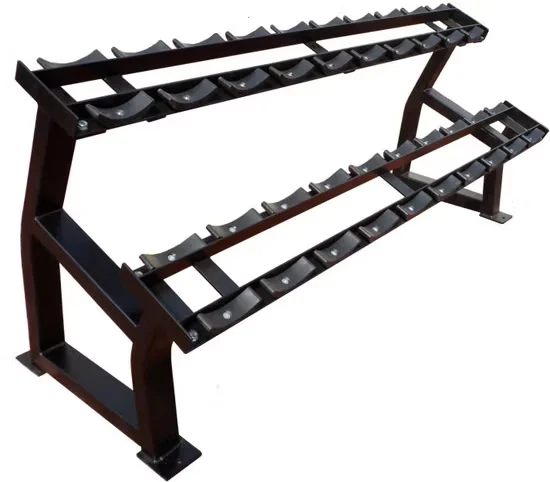
Commercial Dumbbell Rack, Steel Frame, 2210×700×800 mm, 66 kg — welded steel construction with industrial powder coating resists rail bending and surface chipping under repeated heavy dumbbell loading in high-traffic free-weight zones. Tier spacing and footprint engineered for safe dumbbell retrieval and efficient floor-plan density. Each unit undergoes full load testing before shipment, backed by a 10-year frame warranty and factory-direct floor planning support.
// Spec Highlights
• Direct from Manufacturer · No Middlemen · Worldwide Shipping
01
// Material
Imported Solid Wood
Premium hardwood frames sourced for density and visual warmth.
02
// Hardware
Medical-Grade Silent
Whisper-quiet pulleys and springs for clinical environments.
03
// Customization
Appearance OEM
Color, upholstery, and branding tailored to your studio.
04
// Service
Layout Design
Free venue planning for studios and rehab institutions.
Every component is selected for longevity, performance, and aesthetic harmony - from imported hardwood frames to silent medical-grade accessories.
// Features
11-Gauge Frame Engineering — Mill-certified steel traceable to the coil ensures every commercial dumbbell storage rack we ship carries verifiable structural integrity, not vague "commercial grade" claims.
| Parameter | Value |
|---|---|
| Product Type | Dumbbell Storage Rack |
| Model NO. | OS-H5070 |
| Frame Steel | 11-gauge, 3×3 inch tube |
| Steel Grade | Q235 / Q345 industrial steel |
| Welding Type | Robotic continuous MIG |
| Product Dimensions | 2210 × 700 × 800 mm |
| Net Weight | 66 kg |
| Powder Coating | 200μm scratch-resistant |
| Load Capacity | Tested beyond 500kg |
| Color Options | Optional |
| OEM | Available |
| Certification | ISO 9001, CE |
| Facility Type | Typical Use |
|---|---|
| Commercial gym free-weight zone | High-traffic dumbbell retrieval and return during peak hours |
| Hotel and resort fitness center | Durable, low-maintenance storage for guest-facing environments |
| University athletic weight room | Heavy dumbbell sets organized for team training sessions |
| Crossfit box functional zone | Bumper dumbbell storage adjacent to rig and platform areas |
| Rehabilitation and performance center | Graded dumbbell sets arranged for progressive loading protocols |
Continuous MIG welding eliminates the joint fatigue that destroys budget storage racks in under a year.
Walk into any gym running light-duty storage and you will see the same pattern: rails sagging under off-center dumbbell loads, base joints cracking at the weld points, and staff constantly re-straightening the rack or pulling it from the floor. The issue is never the steel itself — it is the spot welds that pass a quick visual check but cannot survive thousands of impact cycles when users drop heavy dumbbells onto the rails [NEED_CITE: weld classification and fatigue performance in structural steel]. A commercial dumbbell storage rack lives or dies at its joints, and that is exactly where continuous robotic MIG welding changes the failure timeline entirely.
This dumbbell rack anchors the free-weight zone, giving lifters a dedicated retrieval point for dumbbell pairs ranging from light rehabilitation loads through heavy pressing and rowing weights. It pairs naturally with flat and adjustable benches positioned within a few steps, and sits adjacent to plate-loaded or selectorized machines so users transition smoothly between movement patterns. The three-tier layout accommodates a wide range of user heights, and the 2210mm length supports a full dumbbell set without crowding the access path. For a commercial dumbbell storage rack, footprint efficiency matters — this unit holds a complete set while leaving safe clearance for foot traffic.
Every time a user places a heavy dumbbell back on the rail, the contact point absorbs an eccentric impact load that travels through the weld into the base frame. Multiply that by dozens of users per day, hundreds of days per year, and the fatigue cycles accumulate rapidly at the rail-to-upright junctions. Unsealed contact surfaces also face sweat residue and cleaning chemicals that degrade thin coatings over time, exposing bare steel to corrosion [NEED_CITE: EN 957 structural requirements for stationary training equipment]. The 200μm powder coating on this rack resists that degradation far longer than standard finishes, keeping the contact rails intact through years of high-frequency use.
The 11-gauge frame steel with 3×3 inch tube profiles gives this rack a deformation threshold far beyond what thin-wall tubing can offer — when a 40kg dumbbell lands off-center on a rail, the tube resists bending rather than flexing and staying bent. Q235 and Q345 steel grades are mill-certified, meaning you can trace the material back to the coil rather than trusting an unverified supplier claim. Robotic MIG welding produces continuous weld lines along every load-bearing joint, eliminating the cold joints and incomplete penetration that plague manual spot welding. The 200μm powder coating, applied over sandblasted surfaces, bonds mechanically to the steel and resists chipping at the contact points where dumbbells are repeatedly set down and picked up.
Thin-gauge tubing on a cheap rack might hold a dumbbell set on day one, but rail deflection under repeated loading creates misalignment that makes retrieval awkward and eventually dangerous. Spot-welded joints that crack under impact loading shift the liability onto the facility operator, not the manufacturer. Low-grade coatings that chip within months expose bare steel to moisture and sweat, triggering rust that spreads beneath the remaining finish and forces a full rack replacement. Non-standard fastener sizes mean that when a bolt strips or a foot cap cracks, there are no replacement parts available — the entire unit becomes disposable [NEED_CITE: commercial fitness equipment lifecycle and replacement cost analysis].
The 11-gauge steel frame with mill certification means every tube in this commercial dumbbell storage rack is traceable to its origin — no mystery steel from unverified sources. Robotic continuous MIG welding ensures that every load-bearing rail joint carries a full-penetration weld line, not a series of spot welds hoping to hold. Each unit undergoes load testing before shipment, confirming structural performance on the actual rack you receive rather than a sample that never sees your floor. The 200μm industrial powder coating protects high-contact surfaces from chipping and corrosion in sweaty, high-traffic environments. A 10-year frame warranty backs the structural claim, and OEM options let you match the rack to your facility branding. Floor planning support ensures the 2210 × 700mm footprint integrates with your dumbbell zone layout, maintaining safe clearances between the rack, benches, and traffic aisles.
Provide your free-weight zone dimensions and current equipment list to receive a 2D-3D layout showing how this commercial dumbbell storage rack integrates with benches, platforms, and traffic flow. Specify your expected daily user volume so we can confirm the structural grade matches your traffic pattern. Indicate any custom requirements — frame color, logo placement, or tier configuration — and we will return a detailed specification sheet with your branding applied.
Q: How do I tell a true commercial dumbbell rack from a light-duty retail version?
A: Check the frame tube gauge and welding method first. Commercial units use 11-gauge or thicker steel with continuous MIG welds at every load-bearing joint, while retail racks rely on thin tubing and spot welds that fail under repeated heavy use. Request mill certification and inspect the weld continuity on the rail-to-upright connections before committing to a purchase.
Q: What steel gauge prevents rail sag under heavy dumbbell loads?
A: 11-gauge steel in a 3×3 inch tube profile provides the deformation resistance needed for commercial dumbbell storage. Thinner gauges flex under off-center loads, causing rails to bend permanently over time. The tube cross-section matters equally — a square profile distributes impact loads more evenly than round tubing under the same wall thickness.
Q: How does rack footprint affect dumbbell zone safety and storage density?
A: The 2210 × 700mm footprint of this rack holds a full dumbbell set while maintaining safe user clearance on all sides. Undersized racks force users to reach across traffic paths, while oversized units waste floor space. Proper layout planning ensures adequate aisle width between the rack, benches, and adjacent equipment zones.
Q: What coating and welding standards prevent failure in high-traffic gyms?
A: Continuous robotic MIG welding eliminates the joint fatigue points that cause spot-welded racks to crack. A 200μm powder coating applied over sandblasted steel resists chipping at contact rails where dumbbells are repeatedly loaded and unloaded. Both specifications are verifiable through mill certificates and coating thickness measurements.
Premium aesthetics meet quiet operation for boutique studio environments.
Medical-grade silence and precision for sports & postpartum recovery.
Furniture-grade craftsmanship for premium residential installations.
Compact premium setups for one-on-one and small-group training.
Aesthetic Pilates integration for hybrid wellness studio programming.
Multi-unit deployment with instructor-grade reliability for certification programs.
Tell us about your project. Our team will respond within 24 hours with pricing, customization options, and shipping details.
// Sales Director
William
+86 132 2531 1800
// Export Manager
Bella
+86 198 5412 8032
william@bickfit.com