
01 / Scenario
STUDIO
P
High-End Pilates Studios
Premium aesthetics meet quiet operation for boutique studio environments.
ISO
9001
CE
Certified
OEM
Available
10YR
Warranty
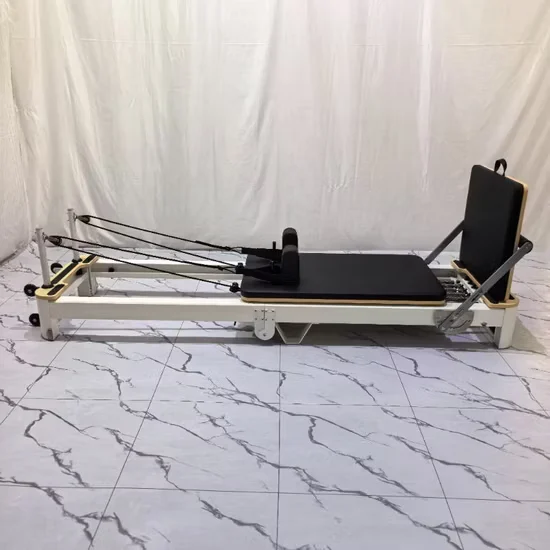
Foldable Aluminium Pilates Reformer, 2570×730mm Frame, 90kg Net Weight — engineered with aluminium alloy construction for corrosion resistance and dimensional stability under repetitive spring-loaded cycles. Includes long box, jump board, and platform accessories with 3-year warranty coverage. Every unit undergoes full load testing and carriage rail tolerance verification before studio deployment.
// Spec Highlights
• Direct from Manufacturer · No Middlemen · Worldwide Shipping
01
// Material
Imported Solid Wood
Premium hardwood frames sourced for density and visual warmth.
02
// Hardware
Medical-Grade Silent
Whisper-quiet pulleys and springs for clinical environments.
03
// Customization
Appearance OEM
Color, upholstery, and branding tailored to your studio.
04
// Service
Layout Design
Free venue planning for studios and rehab institutions.
Every component is selected for longevity, performance, and aesthetic harmony - from imported hardwood frames to silent medical-grade accessories.
// Features
Foldable Frame Integrity — Hinge mechanisms load-tested under cyclic folding to prevent joint deformation in studio environments.
| Parameter | Value |
|---|---|
| Product Type | Pilates Reformer |
| Frame Material | Aluminium Alloy |
| Model NO. | SRY-12A |
| Product Dimensions | 2570×730×270mm |
| Net Weight | 90kg |
| Foldable Mechanism | Yes, engineered hinge joints |
| Color Options | White, or customized finishes available |
| Accessories Included | Long Box / Jump Board / Platform |
| Warranty | 3 Years |
| Facility Type | Typical Use |
|---|---|
| Commercial Pilates Studio | High-turnover group classes requiring rapid equipment reconfiguration |
| Rehabilitation & Physical Therapy Center | Adjustable resistance profiles for progressive patient recovery protocols |
| Boutique Wellness Studio | Multi-purpose floor plans where equipment must be stored between sessions |
| Hotel & Resort Fitness Room | Space-conscious luxury fitness environments with diverse guest usage |
Articulation points bear concentrated shear stress that thin-walled aluminium cannot sustain under repeated folding cycles.
Most folding Pilates reformers prioritize portability over structural longevity, using undersized hinge pins and unreinforced joint plates. Within months of daily studio use, the pivot holes elongate from elliptical deformation, introducing lateral play that compromises carriage alignment and creates unsafe wobble during loaded exercises. A commercial foldable aluminium Pilates reformer must address these stress concentrations at the design phase, not as an afterthought. [NEED_CITE: fatigue performance in aluminium alloy hinge mechanisms]
This reformer addresses the full sagittal and transverse plane repertoire—footwork, leg circles, spinal articulation, and lateral flexion sequences—making it a primary workhorse in studio layouts. It complements Cadillac and Wunda Chair stations by providing the foundational spring-resistance platform from which most classical and contemporary Pilates programming originates. The foldable footprint serves high-density boutique studios where floor space must convert between group class configurations and private session layouts. Users ranging from petite rehabilitation clients to athletic builds find the carriage travel and spring tension range accommodates their resistance requirements.
The reformer endures complex loading: static body weight during holds, dynamic impact during jump board exercises, and eccentric tension during controlled returns. High-traffic studios cycling eight or more classes daily subject the carriage wheels, spring attachment points, and folding hinge pins to thousands of extension-flexion cycles annually. Aluminium alloy resists corrosion in humid studio environments but demands adequate wall thickness at joint interfaces to prevent crack propagation. The wheel bearings must maintain tolerance under off-center loads during unilateral exercises, and the spring anchors must resist deformation at their mounting plates. [NEED_CITE: bearing specification requirements for cyclic lateral loading]
Aluminium alloy composition determines the balance between corrosion resistance and structural rigidity under spring tension cycles. Thin-wall tubes reduce weight but sacrifice dimensional stability, leading to rail warping that binds carriage travel. The carriage rail straightness tolerance directly affects smoothness—deviations cause wheel chatter and premature bearing wear. Spring tension calibration must remain consistent across the full resistance range, with progressive calibration matching studio programming needs. The folding mechanism requires hinge pins rated for shear loads exceeding maximum user weight plus dynamic jump board forces, with wear-resistant bushings at articulation points to prevent metal-on-metal galling.
Weight reduction through thinner aluminium walls creates immediate shipping savings but manifests as rail deflection under loaded carriage travel. Non-reinforced hinge plates crack at stress concentrations, rendering the folding feature inoperable and creating liability exposure. Unsealed bearings in the carriage wheels attract dust and sweat residue, developing play within the first year and requiring frequent replacement. Low-density upholstery compresses permanently under daily use, losing the support surface needed for precise spinal articulation work. Non-standard hardware in the folding mechanism means replacement parts become unavailable when the original supplier discontinues the model. [NEED_CITE: comparative maintenance costs of sealed versus unsealed bearing systems]
The aluminium alloy frame provides corrosion resistance essential for studios where humidity and sweat exposure are constant, while the foldable design addresses the reality that boutique wellness facilities must maximize floor utility across different class formats. Each unit undergoes structural verification at the hinge points and rail mounting interfaces before shipment. The 3-year warranty reflects confidence in the fatigue performance of the joint engineering. Custom color and logo options allow studio operators to maintain brand consistency across equipment arrays.
Provide your studio floor dimensions and planned class capacity to receive 2D layout recommendations for optimal reformer spacing and storage configuration. Specify your average daily class turnover and user profile to confirm the structural specification matches your usage intensity. Indicate any color, logo, or upholstery customization requirements to align equipment appearance with your facility branding.
Q: How do I verify commercial-grade construction in aluminium Pilates reformers versus light-duty home models?
A: Request aluminium alloy grade documentation and wall thickness specifications at critical stress points. Commercial units specify sealed bearings, reinforced hinge plates, and spring tension calibration reports. Home models often omit these details because they are not engineered for daily multi-user cycling. Ask for fatigue cycle test data on the folding mechanism to confirm it withstands studio-frequency repositioning.
Q: What frame material specifications determine long-term rail straightness and carriage smoothness?
A: Rail straightness tolerance depends on alloy composition, wall thickness, and mounting interface design. Thin-walled aluminium deflects under loaded carriage travel, creating binding and wheel chatter. Commercial specifications include dimensional stability data under cyclic spring loading. Verify that the carriage wheels use sealed bearings rated for lateral loads during unilateral exercises, as unsealed types develop play rapidly in studio environments.
Q: How do foldable mechanisms maintain structural integrity under repeated use?
A: The hinge pins must be sized for shear loads exceeding maximum user weight plus dynamic forces from jump board work. Wear-resistant bushings at articulation points prevent metal-on-metal contact that elongates pivot holes. Commercial designs undergo cyclic folding fatigue testing to verify joint integrity. Units lacking this documentation typically develop lateral play within months of daily studio repositioning.
Q: What are spring tension maintenance and replacement intervals in high-traffic studio environments?
A: Springs lose calibration consistency over thousands of extension-flexion cycles, affecting resistance accuracy. Commercial studios should verify tension profiles semi-annually and plan replacement based on usage intensity rather than waiting for visible deformation. Progressive resistance calibration must remain consistent across the full range to support diverse programming. Document replacement intervals based on your specific class volume.
Q: Are the jump board and platform accessories compatible with the foldable frame’s load capacity?
A: Jump board use generates impact forces exceeding static body weight, requiring the frame and folding joints to handle dynamic loading. Verify that the accessory mounting points are reinforced and that the foldable mechanism remains locked and stable during jump exercises. Commercial specifications include load testing with accessories attached to confirm structural integrity under these higher-stress conditions.
Premium aesthetics meet quiet operation for boutique studio environments.
Medical-grade silence and precision for sports & postpartum recovery.
Furniture-grade craftsmanship for premium residential installations.
Compact premium setups for one-on-one and small-group training.
Aesthetic Pilates integration for hybrid wellness studio programming.
Multi-unit deployment with instructor-grade reliability for certification programs.
Tell us about your project. Our team will respond within 24 hours with pricing, customization options, and shipping details.
// Sales Director
William
+86 132 2531 1800
// Export Manager
Bella
+86 198 5412 8032
william@bickfit.com


