01 / Scenario
STUDIO
P
High-End Pilates Studios
Premium aesthetics meet quiet operation for boutique studio environments.

ISO
9001
CE
Certified
OEM
Available
10YR
Warranty
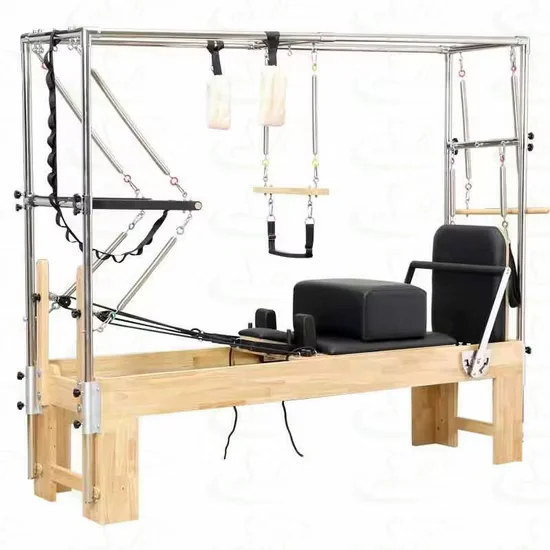
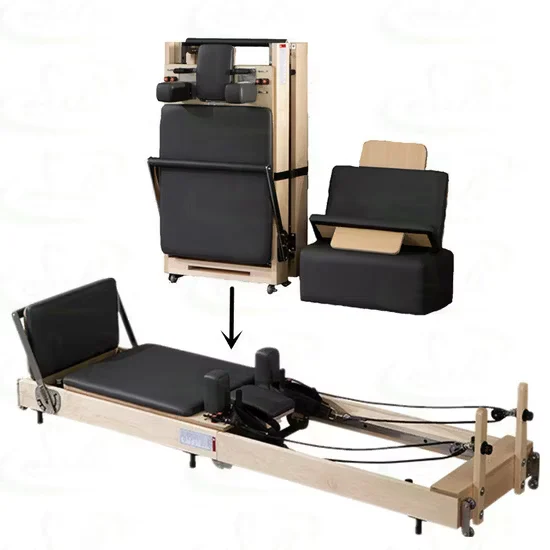
Folding Pilates Reformer Machine, 2400×600×350mm, 100kg Net Weight — solid wood bed construction resists warping under cyclic carriage travel, paired with a reinforced folding hinge for stable storage transitions in high-traffic studio environments. Includes long box, jump board, and platform accessories for full-spectrum training without additional procurement. Every unit undergoes load testing before shipment, backed by a 3-year warranty and customizable logo options for brand alignment.
// Spec Highlights
• Direct from Manufacturer · No Middlemen · Worldwide Shipping
01
// Material
Imported Solid Wood
Premium hardwood frames sourced for density and visual warmth.
02
// Hardware
Medical-Grade Silent
Whisper-quiet pulleys and springs for clinical environments.
03
// Customization
Appearance OEM
Color, upholstery, and branding tailored to your studio.
04
// Service
Layout Design
Free venue planning for studios and rehab institutions.
Every component is selected for longevity, performance, and aesthetic harmony - from imported hardwood frames to silent medical-grade accessories.
// Features
Every Fold Cycle Stress-Tested — Each Folding Pilates Reformer Machine undergoes full load verification at hinge points and carriage travel before leaving the production floor, ensuring structural repeatability across high-frequency studio environments.
| Parameter | Value |
|---|---|
| Product Type | Pilates Reformer Machine |
| Product Dimensions | 2400×600×350mm |
| Net Weight | 100kgs |
| Bed Construction | Solid wood carriage bed |
| Folding Mechanism | Reinforced hinge with locking engagement |
| Included Accessories | Long Box / Jump Board / Platform |
| Color | Solid color options available |
| Logo | Customized logo application available |
| Warranty | 3 Years |
| Production Capacity | 80 Pieces/Month |
| Transport Package | Standard Wood Case |
| User Profile | Adult, Unisex |
| Facility Type | Typical Use |
|---|---|
| Pilates studio | Daily group and private reformer sessions with frequent fold-store cycles between classes |
| Rehabilitation center | Controlled spring-resistance therapy with stable carriage travel for patient recovery protocols |
| Boutique fitness studio | Multi-format class rotations requiring rapid equipment reconfiguration and floor space recovery |
| Hotel wellness facility | Guest-access reformer training with durable finish resisting humidity and varied usage patterns |
| Home studio | Space-constrained personal training environments where folding storage preserves usable floor area |
Solid wood resists the cyclic warping that destroys laminated plywood beds under repeated carriage travel and humidity exposure.
Most reformer beds in commercial circulation use thin plywood or MDF-core laminates marketed as studio grade. In humid environments — especially coastal cities or basement-level studios — these composite boards absorb moisture unevenly, creating a concave or convex warp across the carriage track [NEED_CITE: dimensional stability of engineered wood vs solid timber under cyclic humidity]. Once the bed surface deviates from flat, the carriage wheels develop lateral play, spring tension becomes asymmetric, and the user feels drift during footwork and long stretch sequences. Facility operators typically discover the problem when clients complain of uneven resistance side-to-side, but by then the bed has already compromised the alignment of the entire spring and pulley system.
The Folding Pilates Reformer Machine addresses the full sagittal and frontal plane repertoire — footwork, short box series, long stretch, coordination, and jump board plyometrics — within a single footprint. In a studio layout, it pairs with cadillac or tower units for advanced spinal articulation work and with mat zones for warm-up and cool-down flow. The folding capability lets operators recover floor space between class blocks, making it viable for facilities running four or more class rotations per day where the same square meter must serve reformer, mat, and functional movement formats. User body types from petite to tall-frame are accommodated through the standard carriage travel length and adjustable spring anchor points.
Every fold-unfold cycle concentrates stress at the hinge pin and the surrounding wood-to-metal fastener points. In a studio running six classes daily with two fold cycles per class, the hinge endures thousands of articulation events per year. Static load during exercises — particularly standing series and jump board landings — transmits impact through the carriage wheels into the bed rails and ultimately into the fold joint [NEED_CITE: fatigue loading patterns in folding fitness equipment frames]. The spring system adds eccentric tension that pulls the carriage against the stopper block at high velocity during return strokes, creating repeated shock at the rail termination. Upholstery contact points on the headrest and shoulder blocks accumulate sweat and cleaner residue, accelerating surface degradation if the material density is insufficient for commercial-frequency contact.
The 2400mm overall length provides a carriage travel distance sufficient for full-extension exercises by users of above-average height, while the 600mm width keeps the footprint compatible with side-by-side reformer placement in group class grids. Solid wood bed construction, as opposed to plywood-core alternatives, maintains dimensional flatness across seasonal humidity swings — meaning the carriage wheels stay tracked and the spring pull remains symmetric throughout the bed’s lifespan. The reinforced folding hinge with locking engagement addresses the most common failure point on foldable reformers: lateral wobble developing at the joint after repeated articulation cycles. A 100kg net weight indicates substantial material mass in the frame and bed, contributing to stability during dynamic jump board work where lighter units tend to walk across the floor. The included long box, jump board, and platform eliminate the need for separate accessory procurement, ensuring mounting interface compatibility from day one.
A folding reformer with a light-gauge hinge pin will develop lateral play within months of studio-frequency use, manifesting as carriage wobble that instructors cannot correct through spring adjustment. Thin plywood beds that warp under humidity force operators into premature bed replacement — a procedure that requires full disassembly, recalibration of the spring anchor points, and downtime that removes the unit from revenue-generating class schedules [NEED_CITE: lifecycle cost comparison of solid timber vs composite bed materials]. Non-replaceable upholstery on shoulder blocks and headrests means that when the vinyl splits from daily cleaner exposure, the entire pad must be discarded rather than re-covered. Units shipped without standardized accessory mounting interfaces leave operators unable to source compatible jump boards or long boxes from alternative suppliers once the original manufacturer discontinues the model.
The 11-gauge steel frame philosophy from our commercial strength line extends to how we evaluate hinge hardware and load-bearing joints on every Folding Pilates Reformer Machine we produce. Robotic MIG welding protocols adapted for the reformer’s metal-to-wood fastener points eliminate the spot-weld shortcuts that cause joint separation under cyclic folding. Each unit undergoes load testing at the hinge, carriage stop, and spring anchor before shipment — not sample-based batch testing, but individual unit verification. The industrial-grade powder coating process, applied at meaningful thickness, protects exposed metal surfaces from sweat corrosion and cleaner chemical attack common in high-traffic studio environments. A 3-year warranty on the structural frame and fold mechanism reflects confidence built on traceable material sourcing and repeatable assembly verification.
Provide your studio floor dimensions and target class capacity to receive a 2D-3D layout showing reformer spacing with safe fold-unfold clearance zones. Specify your average daily class count and expected fold cycles per unit to confirm the hinge and locking mechanism match your operational intensity. Share your client demographic body-type range so we verify carriage travel and spring configuration cover the full user spectrum. Indicate any color, logo, or upholstery customization requirements early in the specification conversation to align production scheduling with your facility opening or renovation timeline.
Q: How do I distinguish a commercial-grade folding reformer from a light-commercial unit?
A: Examine the hinge mechanism first — commercial units use through-bolted steel hinge pins with positive locking engagement, while light-commercial models often rely on riveted or thin-gauge pivot points. Check the bed material: solid wood maintains flatness under humidity cycling, whereas plywood-core beds warp and cause carriage drift. Weight is also informative; units under 80kg typically sacrifice frame mass to cut cost, reducing stability during jump board exercises.
Q: Why does the carriage bed material matter for long-term studio operation?
A: The bed surface is the reference plane for all carriage travel and spring tension. Solid wood maintains dimensional stability across seasonal humidity changes, keeping the carriage wheels tracked and the resistance symmetric. Plywood or MDF-core beds absorb moisture unevenly, warping into a concave or convex profile that causes lateral carriage drift and forces instructors to compensate with asymmetric spring setups — masking a structural problem with a training workaround.
Q: What should I inspect on the folding mechanism during routine maintenance?
A: Check the hinge pin for any lateral play by attempting to wobble the folded section side-to-side when locked in the open position. Verify the locking latch engages with a positive click and holds under moderate downward pressure on the bed end. Inspect fasteners connecting the hinge bracket to the wood bed for any signs of pull-through or cracking in the surrounding timber. Address any looseness immediately before returning the unit to class rotation.
Q: How often do springs need replacement in a commercial studio environment?
A: Spring lifespan depends on class volume and exercise selection — studios running heavy jump board programming will cycle springs through more fatigue events than those focused on controlled rehabilitation work. Inspect springs quarterly for visible gap inconsistency along the coil length, which indicates permanent stretch. Maintain a replacement spring inventory matched to your unit count so that a fatigued spring can be swapped without removing the reformer from the schedule for extended periods.
Q: Are accessories like jump boards and long boxes cross-compatible between reformer brands?
A: Mounting interface dimensions and attachment methods vary across manufacturers, meaning a jump board from one brand rarely fits the rail profile of another without adapter hardware. Procuring the accessory set matched to your reformer model ensures the mounting brackets align correctly and the load transfer during dynamic exercises — particularly jump board plyometrics — does not stress unintended attachment points. Confirm compatibility with your supplier before ordering replacement or additional accessories separately.
Premium aesthetics meet quiet operation for boutique studio environments.
Medical-grade silence and precision for sports & postpartum recovery.
Furniture-grade craftsmanship for premium residential installations.
Compact premium setups for one-on-one and small-group training.
Aesthetic Pilates integration for hybrid wellness studio programming.
Multi-unit deployment with instructor-grade reliability for certification programs.
Tell us about your project. Our team will respond within 24 hours with pricing, customization options, and shipping details.
// Sales Director
William
+86 132 2531 1800
// Export Manager
Bella
+86 198 5412 8032
william@bickfit.com