
01 / Scenario
STUDIO
P
High-End Pilates Studios
Premium aesthetics meet quiet operation for boutique studio environments.
ISO
9001
CE
Certified
OEM
Available
10YR
Warranty
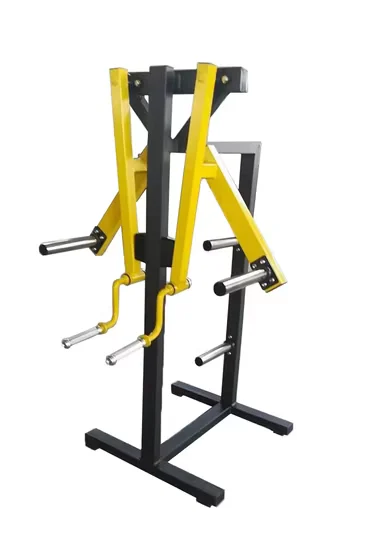
Commercial Selectorized Shoulder Raise Machine, Pin-Select Loading, 145kg Net Weight — constructed with industrial steel tubing and sealed bearings to eliminate play under repetitive lateral loads. Precision-machined guide rods prevent weight stack binding during off-center use. Each unit undergoes full load testing before shipment, backed by a 10-year frame warranty for high-traffic commercial environments.
// Spec Highlights
• Direct from Manufacturer · No Middlemen · Worldwide Shipping
01
// Material
Imported Solid Wood
Premium hardwood frames sourced for density and visual warmth.
02
// Hardware
Medical-Grade Silent
Whisper-quiet pulleys and springs for clinical environments.
03
// Customization
Appearance OEM
Color, upholstery, and branding tailored to your studio.
04
// Service
Layout Design
Free venue planning for studios and rehab institutions.
Every component is selected for longevity, performance, and aesthetic harmony - from imported hardwood frames to silent medical-grade accessories.
// Features
Mill-Certified Steel Traceability — every coil of 11-gauge Q235 structural tubing used in this shoulder raise is traceable back to the rolling mill, so you know exactly what is carrying the load.
| Parameter | Value |
|---|---|
| Product Type | Selectorized Shoulder Raise Machine |
| Frame Steel Gauge | 11-gauge, 3×3 inch tube |
| Steel Grade | Q235 and Q345 industrial steel, mill-certified |
| Welding Type | Robotic MIG, continuous weld lines |
| Weight Stack | Pin-select up to 150 kg |
| Loading Type | Pin select |
| Bearing Type | Sealed industrial bearings |
| Pulley System | Aircraft-cable with precision-machined sheaves |
| Powder Coating | Sandblast plus 200 μm scratch-resistant finish |
| Net Weight | 145 kg |
| Upholstery | Available in standard or high-density options |
| Color Options | Optional |
| Certification | ISO 9001, CE |
| OEM | Available |
| Facility Type | Typical Use |
|---|---|
| Commercial gym strength floor | Primary isolation station in the selectorized machine row |
| Hotel fitness center | Compact footprint for limited-space strength zones |
| University strength and conditioning room | Deltoid development station for athletic programs |
| Rehabilitation and performance center | Controlled single-joint loading for return-to-play protocols |
The bearing seat is where cost-cutting shows up before anything else. When I first started pulling selectorized shoulder machines apart after FIBO, the pattern was unmistakable: unsealed bushings packed with grease that washed out within months under sweat and cleaning chemicals, leaving visible play in the pivot arm. A commercial selectorized shoulder raise machine sees hundreds of repetitions daily across dozens of users, and every off-axis rep sends lateral force into that pivot point. Once the bearing develops play, the movement path drifts, users feel grinding, and the machine earns a reputation for being broken long before the frame is compromised. [NEED_CITE: bearing service life under lateral cyclic loading in fitness equipment]
This machine targets the medial and anterior deltoids through a controlled lateral raise arc, filling the isolation gap between overhead pressing stations and cable crossover systems. On a commercial gym strength floor, it pairs naturally with a chest press and lat pulldown to complete the upper-body selectorized circuit. The footprint suits medium-to-high-traffic facilities where members rotate through stations without long waits. The adjustable seat and pad range accommodates users from the fifth to the ninety-fifth percentile in torso length, which covers the vast majority of commercial membership bases. A commercial selectorized shoulder raise machine in this configuration anchors the isolation end of the strength zone.
The lateral raise motion generates eccentric loading at the top of the arc, where the moment arm is longest and the pivot bearing carries peak shear force. Each repetition cycles the weld joint between the pivot arm and the main upright through tension and compression, making continuous MIG weld lines essential to prevent crack initiation at the toe of the weld. The sealed bearings here resist grit infiltration from chalk dust and cleaning aerosols that accumulate in high-traffic environments. Grip contact points on the lever arm endure repeated friction and sweat exposure, which is why powder coating thickness at these zones must exceed typical decorative standards. [NEED_CITE: fatigue crack propagation at welded joints under cyclic eccentric loading]
The 11-gauge, 3×3 inch steel tubing provides a section modulus that resists lateral deflection when users push against the padded arm at maximum stack load. Q235 and Q345 mill-certified steel ensures the yield behavior is predictable and documented rather than assumed from generic commercial-grade claims. Robotic MIG welding with continuous beads eliminates the cold joints and incomplete fusion that plague hand-welded frames produced at speed. The aircraft-cable pulley system uses sheaves sized to keep cable bend radius within fatigue limits, preventing strand breakage that causes sudden stack drops. Guide rods are precision-machined to maintain clearance under off-center loading, so the weight stack tracks without binding when users apply uneven force through the lever arm.
Thinner gauge tubing may pass a static load test but deflects noticeably under dynamic use, making the machine feel unstable and driving members toward free weights instead. Spot-welded pivot joints that look acceptable at the factory can propagate cracks under thousands of daily repetitions, creating a liability exposure no gym operator wants to manage. Non-sealed bushings require scheduled lubrication that rarely happens on busy gym floors, leading to premature replacement and member complaints within the first year. Powder coating applied below 200 μm chips at grip contact points, exposing bare steel to sweat corrosion that accelerates visible aging of the equipment. [NEED_CITE: comparative maintenance cost of sealed bearings versus bushings in commercial fitness environments]
The 11-gauge frame with coil-traceable Q235 steel means the shoulder raise pivot arm resists the lateral deflection that makes lighter machines feel unreliable under load. Robotic continuous MIG welding at the pivot joint and base gussets prevents the crack initiation that ends the service life of spot-welded competitors. Every unit undergoes load testing before shipment, so the weight stack and guide rods are verified under actual working conditions rather than assumed from sample inspection. The 200 μm powder coating at grip and pad contact zones withstands daily friction without exposing substrate steel. A ten-year frame warranty and 2D-3D floor planning CAD support mean this commercial selectorized shoulder raise machine is positioned with correct safety clearances from adjacent stations in your layout.
Provide your strength zone square footage and existing machine list to receive a 2D-3D floor plan showing where this shoulder raise fits with correct clearances. Specify expected daily user volume so we can confirm the structural grade matches your traffic profile. Share your target member demographic so we verify the seat and pad adjustment range covers your population. Indicate any color, logo, or upholstery customization requirements for OEM branding alignment.
Q: How do I tell commercial-grade selectorized equipment from light-commercial?
A: Request the frame steel gauge and tube dimensions in writing. True commercial equipment specifies 11-gauge or thicker tubing with mill certification, sealed bearings at every pivot, and load testing on each unit before shipment. Light-commercial frames often use thinner gauge steel, bushings instead of bearings, and sample-based quality checks that miss unit-level defects.
Q: Why do sealed bearings matter more than bushings for gym shoulder machines?
A: Sealed bearings prevent sweat, chalk dust, and cleaning chemicals from entering the pivot mechanism. Bushings rely on surface lubrication that degrades quickly in commercial environments, developing lateral play that changes the movement path and generates user complaints. Sealed bearings maintain alignment over years of high-traffic use without scheduled maintenance interventions.
Q: What powder coating thickness should I expect on commercial strength equipment?
A: Industrial-grade commercial equipment typically carries a 200 μm powder coating applied over sandblasted steel. This thickness resists chipping at high-contact grip points and pad mounting zones where daily friction and sweat exposure concentrate. Thinner decorative coatings expose bare steel within the first year, triggering visible corrosion that degrades the appearance of your entire strength floor.
Q: How do weight stack guide rods affect performance on a selectorized machine?
A: Precision-machined guide rods maintain consistent clearance between the stack and the rod surface, preventing binding when users apply off-center force through the lever arm. Poorly finished or undersized rods cause the stack to stick mid-travel, creating an uneven resistance feel that members notice immediately and associate with low-quality equipment.
Premium aesthetics meet quiet operation for boutique studio environments.
Medical-grade silence and precision for sports & postpartum recovery.
Furniture-grade craftsmanship for premium residential installations.
Compact premium setups for one-on-one and small-group training.
Aesthetic Pilates integration for hybrid wellness studio programming.
Multi-unit deployment with instructor-grade reliability for certification programs.
Tell us about your project. Our team will respond within 24 hours with pricing, customization options, and shipping details.
// Sales Director
William
+86 132 2531 1800
// Export Manager
Bella
+86 198 5412 8032
william@bickfit.com


