01 / Scenario
STUDIO
P
High-End Pilates Studios
Premium aesthetics meet quiet operation for boutique studio environments.
ISO
9001
CE
Certified
OEM
Available
10YR
Warranty
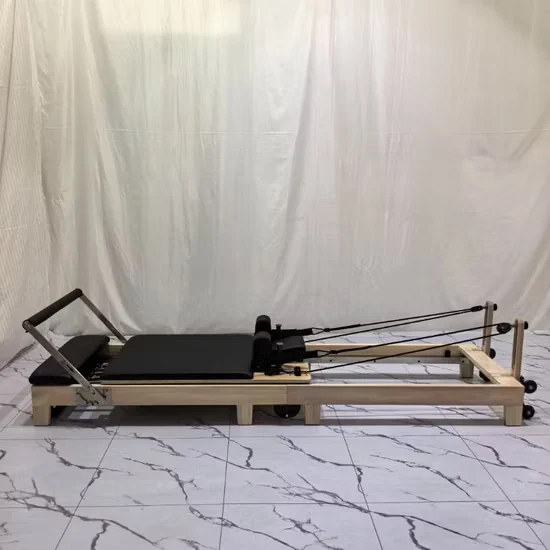
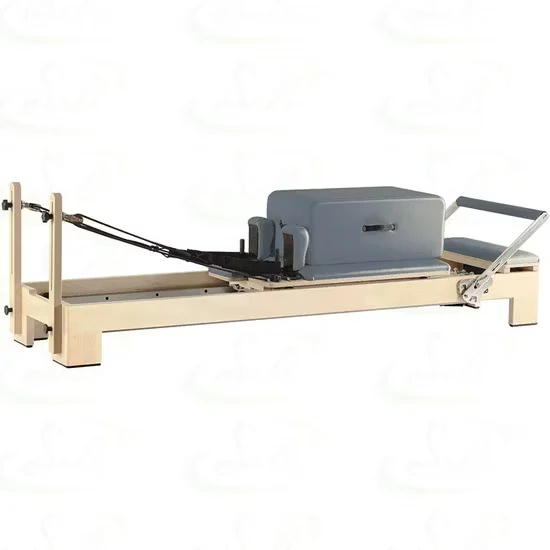
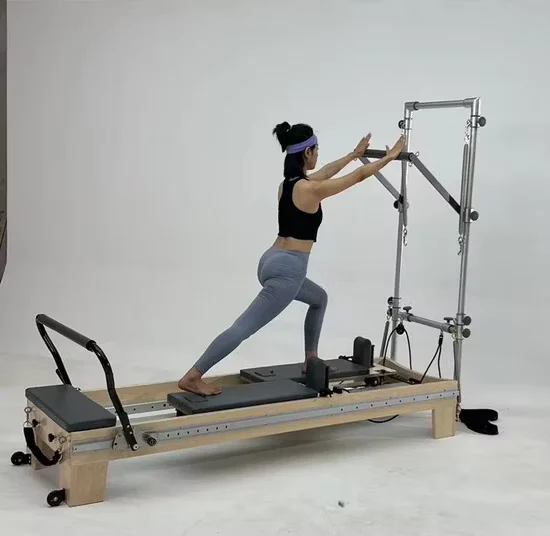
Half Aluminium Pilates Reformer, Aluminium Frame, Wood Construction, 2460×730×1900mm — features sealed carriage bearings and precision aluminium rail profile for low-friction glide under repeated studio loading, paired with mortise-and-tenon wood frame joints for rigidity during jump board work. Includes long box, jump board, and platform for full-spectrum programming. Customizable color and logo with 3-year warranty, backed by 32-point inspection and full load testing before shipment.
// Spec Highlights
• Direct from Manufacturer · No Middlemen · Worldwide Shipping
01
// Material
Imported Solid Wood
Premium hardwood frames sourced for density and visual warmth.
02
// Hardware
Medical-Grade Silent
Whisper-quiet pulleys and springs for clinical environments.
03
// Customization
Appearance OEM
Color, upholstery, and branding tailored to your studio.
04
// Service
Layout Design
Free venue planning for studios and rehab institutions.
Every component is selected for longevity, performance, and aesthetic harmony - from imported hardwood frames to silent medical-grade accessories.
// Features
Load-Tested Before Shipment — Every unit undergoes structural load verification prior to crating, not just sample-based batch testing.
| Parameter | Value |
|---|---|
| Product Type | Pilates Reformer |
| Frame Material | Aluminium rail system with wood frame |
| Carriage Platform | Wood construction |
| Product Dimensions | 2460 × 730 × 1900 mm |
| Net Weight | 150 kg |
| Included Accessories | Long Box, Jump Board, Platform |
| Color Options | Solid color, customization available |
| Logo | Customized logo allowed |
| Warranty | 3 Years |
| Production Capacity | 80 Pieces/Month |
| Facility Type | Typical Use |
|---|---|
| Boutique Pilates studio | Daily group and private reformer classes across mat, jump, and box work |
| Rehabilitation and physiotherapy center | Low-impact progressive resistance programs for post-injury recovery |
| Hotel and resort wellness facility | Guest-accessible Pilates sessions with minimal supervision required |
| Personal training facility | One-on-one reformer programming with full accessory ecosystem |
The carriage rides on the rail — if the aluminium profile is extruded to loose tolerance, no amount of frame mass will prevent drift.
Many studios buy reformers labeled "commercial" without ever seeing a rail material certificate or carriage bearing spec sheet. Within months of daily class rotations, the carriage develops lateral play, the wheels begin scoring the rail surface, and instructors spend ten minutes before each session adjusting rope tension to compensate. I have watched this exact failure sequence happen across multiple facilities that specified equipment based on aesthetics alone [NEED_CITE: EN 957 structural requirements for stationary training equipment]. The commercial half aluminium pilates reformer is designed to prevent that cycle by pairing a dimensionally stable aluminium rail profile with sealed carriage bearings.
The commercial half aluminium pilates reformer covers the full spectrum of classical and contemporary Pilates movements — supine, prone, seated, and standing positions — from a single station footprint. In a studio layout, it pairs with a Cadillac or wall tower for vertical-plane work and a Wunda chair for closed-chain loading. The included long box, jump board, and platform allow programming that spans rehabilitation protocols through athletic plyometrics. It suits studios running four to eight classes daily and accommodates users across a wide range of body sizes without requiring tool-based adjustments between sessions.
The reformer frame experiences three distinct load types during a typical class cycle: static holds during isometric cues, repetitive cyclic loading during footwork sequences, and impact spikes when the jump board is in use. Each impact from a jump board landing sends a transient force through the wood frame joints and into the aluminium rail mounting points. Over hundreds of repetitions per day, fatigue stress concentrates at the rail-to-frame interface and the carriage wheel contact patches. Sealed bearings on the carriage wheels prevent sweat and studio dust from migrating into the rolling elements — an unsealed bearing in this environment develops audible play and requires replacement within months [NEED_CITE: bearing contamination failure modes in fitness equipment]. The wood frame joints must resist both compressive and shear forces without loosening, and the aluminium rail surface must resist scoring under the carriage wheels across thousands of cycles.
The aluminium rail profile determines how the carriage tracks over years of use. A precision-extruded rail with a consistent cross-section keeps the carriage wheels seated and prevents lateral drift, while a loosely toleranced profile creates uneven wear patterns that compound over time. The wood frame joint construction — whether mortise-and-tenon joinery or mechanical fasteners — dictates how the frame handles the eccentric loads generated during jump board work; mechanical fasteners alone can back out under repeated impact cycling. Carriage wheel bearing specification is the single largest driver of maintenance intervals: sealed bearings keep contaminants out and retain lubrication, whereas bushings or open bearings in a studio environment demand frequent adjustment and eventual replacement. Spring resistance grading and the attachment method affect how consistently the reformer delivers the intended load through the full range of carriage travel; music wire or stainless springs hold calibration longer than lower-grade carbon steel alternatives.
A reformer built with undersized rail extrusions may feel smooth on day one, but the aluminium surface develops grooves under carriage wheel pressure, and the carriage begins to wobble during loaded movements. Non-sealed bearings pick up chalk dust, skin cells, and cleaning solution residue; the resulting abrasion wears the wheel bore and requires full carriage disassembly to address. Springs made from ungraded wire lose tension consistency unevenly across the set, forcing instructors to compensate by cueing asymmetrical movement patterns. Wood frames joined solely with mechanical fasteners develop rattle and play at the joints, and the resulting frame flex transfers directly to the rail mounting — accelerating rail wear in a feedback loop that ends with a unit pulled from service [NEED_CITE: fatigue crack propagation in cyclically loaded timber joints].
The wood frame on this reformer is joined using construction methods that resist the shear and impact loads specific to jump board and long box work. The aluminium rail system is specified for dimensional stability under the cyclic carriage travel that defines reformer use. Every unit is load-tested before crating — not sample-tested from a production batch — to catch any rail alignment or carriage tracking issue before it ships. The 3-year warranty covers structural frame and rail integrity under commercial use conditions. Color and logo customization is available so the reformer integrates with studio branding without requiring a separate finishing step on site. Facility layout CAD support is provided to verify clearances between reformer stations, ensuring safe carriage travel and instructor access paths in high-density studio floors.
Share your studio floor area and target station count to receive a 2D-3D layout showing reformer placement with safe clearance zones. Specify your daily class volume so we can confirm the structural grade matches your usage intensity. Indicate any color or logo customization requirements to align with your studio identity. Provide the user population profile so we can verify the accessory configuration covers your full programming range.
Q: How do I tell a commercial Pilates reformer from a home-use model by looking at the rail and frame?
A: Check whether the aluminium rail has a documented extrusion profile with stated dimensional tolerance, and whether the carriage uses sealed bearings rather than bushings. Commercial frames specify joint construction method — mortise-and-tenon or reinforced mechanical fastening — designed to handle jump board impact loads. Home-use models typically omit these details because they are not engineered for sustained daily traffic.
Q: What bearing type keeps maintenance intervals reasonable in a busy studio?
A: Sealed bearings prevent studio dust, chalk residue, and cleaning solution from entering the rolling elements. In a facility running multiple classes daily, sealed carriage bearings maintain smooth travel and eliminate the weekly rope retensioning that unsealed setups require. Ask the manufacturer for bearing type and per-wheel load rating documentation before committing to a purchase order.
Q: Does the wood frame joint type actually matter for long-term use?
A: Yes. Frames joined only with mechanical fasteners can loosen under the repeated impact of jump board work, introducing flex that transfers to the rail mounting and accelerates carriage wear. Properly constructed wood joints distribute these loads across a larger glue surface and interlocking geometry, maintaining frame rigidity through years of cyclic loading in a commercial environment.
Q: What accessories do I need to cover full Pilates programming from one reformer?
A: A long box enables seated and supine pulling movements, a jump board adds plyometric and cardiovascular conditioning, and a platform extends the working surface for standing and kneeling exercises. Confirm that all three are included or available as matched accessories so the reformer supports your full class curriculum without requiring a second station.
Q: How often do springs need replacement under daily commercial use?
A: Spring replacement cycles depend on spring material, daily class volume, and the resistance range used most frequently. Music wire and stainless steel springs maintain consistent tension longer than ungraded carbon steel. Request a tension calibration report from the manufacturer and establish a periodic check schedule based on your studio’s weekly class count.
Premium aesthetics meet quiet operation for boutique studio environments.
Medical-grade silence and precision for sports & postpartum recovery.
Furniture-grade craftsmanship for premium residential installations.
Compact premium setups for one-on-one and small-group training.
Aesthetic Pilates integration for hybrid wellness studio programming.
Multi-unit deployment with instructor-grade reliability for certification programs.
Tell us about your project. Our team will respond within 24 hours with pricing, customization options, and shipping details.
// Sales Director
William
+86 132 2531 1800
// Export Manager
Bella
+86 198 5412 8032
william@bickfit.com