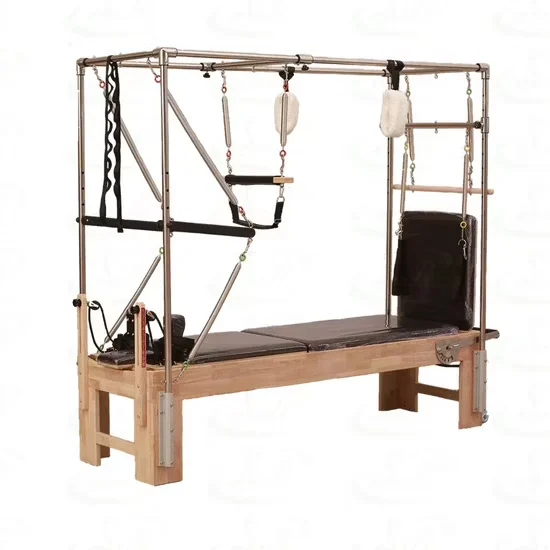
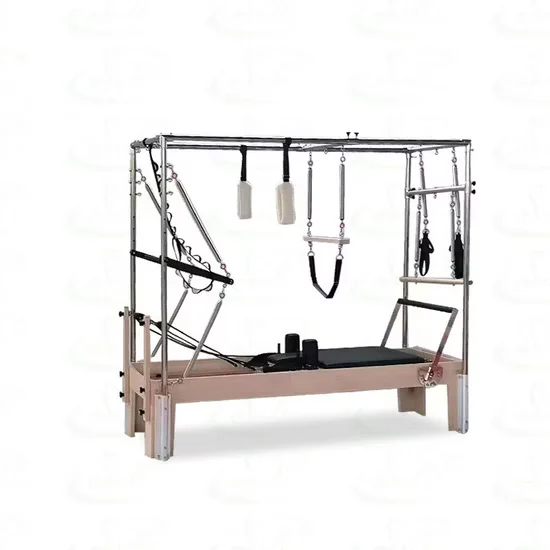
01 / Scenario
STUDIO
P
High-End Pilates Studios
Premium aesthetics meet quiet operation for boutique studio environments.
ISO
9001
CE
Certified
OEM
Available
10YR
Warranty
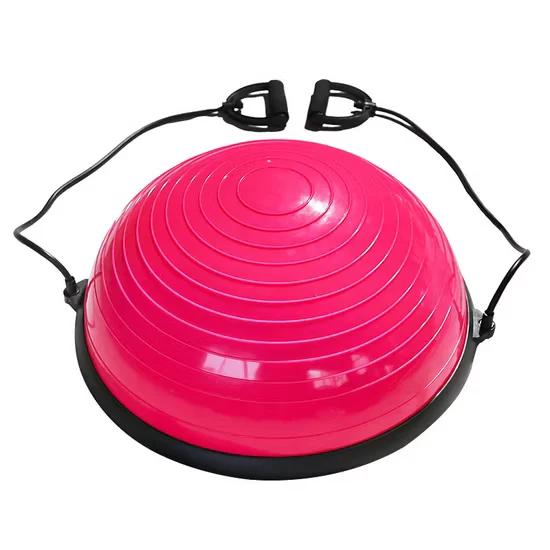
Half Pilates Balance Trainer, 58×25cm, 3kg Net Weight, Non-Slip Surface — engineered with reinforced base shell structure and high-density foam core for consistent rebound under repeated studio loading. Customizable logo and color options support private-label branding for chain operators. Every unit undergoes load testing at BICKFIT's 15,000㎡ vertically integrated plant before shipment to commercial gyms and studios worldwide.
// Spec Highlights
• Direct from Manufacturer · No Middlemen · Worldwide Shipping
01
// Material
Imported Solid Wood
Premium hardwood frames sourced for density and visual warmth.
02
// Hardware
Medical-Grade Silent
Whisper-quiet pulleys and springs for clinical environments.
03
// Customization
Appearance OEM
Color, upholstery, and branding tailored to your studio.
04
// Service
Layout Design
Free venue planning for studios and rehab institutions.
Every component is selected for longevity, performance, and aesthetic harmony - from imported hardwood frames to silent medical-grade accessories.
// Features
Continuous MIG Weld Lines — every structural joint on this half Pilates balance trainer receives full-penetration robotic welding rather than spot tacks, eliminating the weak points that cause base frames to crack under repetitive studio use.
| Parameter | Value |
|---|---|
| Product Type | Balance Trainer |
| Product Dimensions | 58 × 25 cm |
| Net Weight | 3 kg |
| Color Options | Red standard; custom colors available |
| Logo | Custom branding available |
| MOQ | 2 PCS |
| Production Capacity | 1,000 PCS / Month |
| Age Group | Adult |
| Target User | Women and general studio clientele |
| Facility Type | Typical Use |
|---|---|
| Commercial yoga and Pilates studios | Group class balance and core stabilization drills |
| Gym functional training zones | Accessory work for warm-ups and cooldown stations |
| Hotel and resort fitness studios | Guest-facing balance and mobility programming |
| Rehabilitation and performance centers | Proprioception and ankle stability retraining |
The structural failure point on most balance trainers is the base shell — not the cushion.
When a studio runs six group classes a day, a commercial half pilates balance trainer sees hundreds of standing, kneeling, and single-leg loading cycles. Light-use models rely on thin PVC or ABS shells paired with low-density foam, which compresses unevenly within weeks. The shell deforms at stress concentration points — typically where the dome meets the flat base — and once that geometry shifts, the non-slip surface loses contact consistency. From what I have seen across dozens of studio teardowns, operators end up cycling through replacements far earlier than the equipment cost justified [NEED_CITE: EN 957 structural requirements for stationary training equipment].
A half-round balance trainer fills the gap between mat-only zones and full Bosu stations. It targets frontal and transverse plane work — lateral ankle stability, single-leg deadlifts, kneeling core holds — without requiring the floor space of a full dome. In a commercial gym functional zone, a commercial half pilates balance trainer complements cable columns and suspension anchor points by giving members a dedicated instability station for accessory movements. The compact footprint suits high-density layouts where every square meter of usable floor area matters, and the low profile accommodates users across a wide range of heights and balance capabilities.
Each time a member shifts from a bilateral stance to a single-leg balance, the load concentrates on a small area of the shell and transfers through to the base edge. Over hundreds of repetitions per day, this creates an asymmetric fatigue cycle — the dome side experiences compression while the flat base edge endures bending stress at the transition radius. Non-slip surface texture also undergoes abrasion from bare feet, grip socks, and repeated wiping with commercial-grade disinfectants. The foam core, if under-dense, gradually loses rebound consistency and bottoms out under standing loads [NEED_CITE: material fatigue classification for polymer shells under cyclic loading].
Shell wall thickness governs how well the base resists deformation when a member plants a full bodyweight on one edge. A thicker, injection-molded ABS or reinforced PVC shell maintains geometry longer than blow-molded alternatives. Foam density — measured in kilograms per cubic meter — determines whether the cushion compresses evenly or develops permanent indentations where users most frequently stand. The non-slip surface must be molded into the shell itself rather than applied as an adhesive film, which peels after repeated cleaning cycles. Custom logo placement is integrated during molding to avoid secondary finishing that compromises surface integrity.
A base shell that saves material cost up front creates downstream expenses that compound quickly in commercial environments. Thinner walls flex under standing loads, accelerating foam breakdown and causing the non-slip texture to separate from the substrate. Operators report replacing budget balance trainers within months of deployment, which means additional procurement cycles, labor for swapping inventory, and member complaints about equipment inconsistency. When the shell cracks outright at the dome-to-base junction, it becomes a slip hazard that exposes the facility to liability [NEED_CITE: equipment failure and liability standards in commercial fitness environments].
Every unit leaving our Ningjin production line goes through load verification before packing — not batch sampling, but individual inspection. The reinforced base geometry is designed using the same structural thinking we apply to 11-gauge steel frames on our plate-loaded machines: identify where stress concentrates and add material there. The 200μm powder coating process we run on our strength equipment informs how we specify surface treatments on accessory items, ensuring the non-slip texture survives years of sweat exposure and chemical cleaning. Custom color and logo runs are handled in-house, so branding alignment for studio chains stays consistent across full equipment orders. Facility operators receive 2D and 3D CAD layout support to position these units with correct safety clearances in functional zones.
Share your functional zone dimensions and existing equipment list so we can generate a 2D or 3D placement plan with correct spacing. Tell us your average daily class count and member throughput to confirm whether the standard shell specification matches your duty cycle or if a reinforced option makes more sense. If you need color matching to your brand palette or custom logo integration, specify Pantone references and placement zones so we can return proofs before tooling.
Q: How do I tell a commercial-grade balance trainer from a light-use retail product?
A: Check the shell material specification and wall thickness first. Commercial units use injection-molded ABS or reinforced PVC with consistent wall geometry, while retail models often rely on blow-molded shells that flex unevenly. Foam density ratings and molded-in non-slip textures rather than adhesive films are additional indicators of commercial construction.
Q: What foam density should a studio-grade balance trainer have?
A: Studio environments require foam that resists permanent compression under repeated standing loads across multiple daily classes. Higher-density foam maintains rebound consistency and prevents bottoming out, which causes instability during use. Request compression test data from the manufacturer to verify long-term performance under your expected usage volume.
Q: Can we match the balance trainer color and logo to our existing studio branding?
A: Yes. Custom color runs and logo placement are available with minimum order quantities as low as two units. Provide Pantone color codes and logo artwork files so we can produce samples for approval before full production begins, ensuring brand consistency across your complete equipment order.
Q: What is the replacement cycle for balance trainers in high-traffic studios?
A: Replacement timing depends on daily usage volume, shell material quality, and maintenance practices. Units with reinforced shells and high-density foam typically remain serviceable for meaningfully longer cycles than budget alternatives. Regular rotation of unit positions and proper cleaning protocols extend functional life across the studio floor.
Premium aesthetics meet quiet operation for boutique studio environments.
Medical-grade silence and precision for sports & postpartum recovery.
Furniture-grade craftsmanship for premium residential installations.
Compact premium setups for one-on-one and small-group training.
Aesthetic Pilates integration for hybrid wellness studio programming.
Multi-unit deployment with instructor-grade reliability for certification programs.
Tell us about your project. Our team will respond within 24 hours with pricing, customization options, and shipping details.
// Sales Director
William
+86 132 2531 1800
// Export Manager
Bella
+86 198 5412 8032
william@bickfit.com