01 / Scenario
STUDIO
P
High-End Pilates Studios
Premium aesthetics meet quiet operation for boutique studio environments.
ISO
9001
CE
Certified
OEM
Available
10YR
Warranty
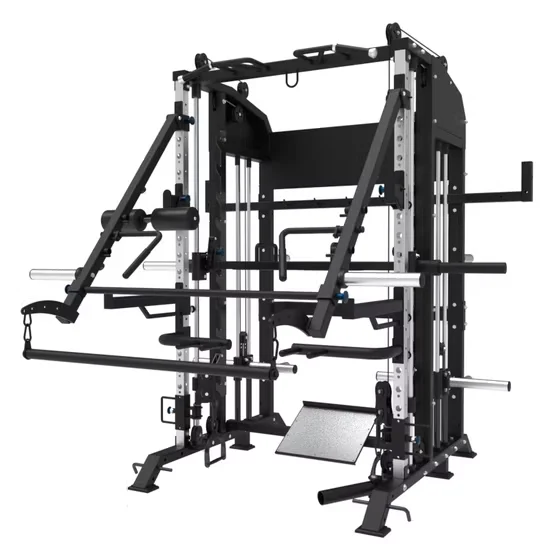
Commercial Multi-Function Smith Machine Cable Crossover Power Rack, 3×3 inch Frame, 3mm Tube Thickness — engineered with 3mm steel tubing and integrated cable crossover system to handle multi-directional loading from Smith bar, cable stacks, and rack exercises within a single footprint. Customizable cushion colors available for facility branding. 10-year frame warranty with factory-direct floor planning support.
// Spec Highlights
• Direct from Manufacturer · No Middlemen · Worldwide Shipping
01
// Material
Imported Solid Wood
Premium hardwood frames sourced for density and visual warmth.
02
// Hardware
Medical-Grade Silent
Whisper-quiet pulleys and springs for clinical environments.
03
// Customization
Appearance OEM
Color, upholstery, and branding tailored to your studio.
04
// Service
Layout Design
Free venue planning for studios and rehab institutions.
Every component is selected for longevity, performance, and aesthetic harmony - from imported hardwood frames to silent medical-grade accessories.
// Features
Continuous MIG Welds — robotic welding eliminates spot-weld weak points across the integrated Smith, cable crossover, and power rack frame.
| Parameter | Value |
|---|---|
| Product Type | Commercial Multi-Function Smith Machine Cable Crossover Power Rack |
| Frame Tube Size | 3×3 inch |
| Tube Thickness | 3 mm |
| Steel Grade | Q235 / Q345 industrial steel |
| Welding Type | Robotic MIG, continuous welds |
| Product Dimensions | 1700 × 2000 × 2270 mm |
| Net Weight | 240 kg |
| Exercise Part | Leg / Arm / Shoulder |
| Upholstery | Customizable (Yellow, Black, Orange, Pink, etc.) |
| Powder Coating | 200 μm scratch-resistant |
| Certification | CE |
| Application | Commercial gymnasium, Home gym |
| Assembly State | Disassembled shipping |
| Spare Parts | Provided |
| Gym Chart | Provided |
| OEM / ODM | Available |
| Facility Type | Typical Use |
|---|---|
| Commercial gym strength floor | Primary multi-station for members combining barbell, cable, and rack movements |
| Boutique fitness studio | Space-efficient all-in-one station replacing three separate units |
| University strength and conditioning room | High-traffic versatile platform for diverse athletic programs |
| Hotel fitness center | Compact footprint serving varied guest workout preferences |
| Home gym | Comprehensive strength training without dedicating floor area to single-purpose equipment |
A commercial multi-function smith machine cable crossover power rack must resist multi-directional loading without frame deflection that shifts bar path or cable alignment.
When a single footprint absorbs Smith machine bar loads, cable stack tension, and rack pull forces simultaneously, thin-wall tubing flexes at junction points — the Smith bar drifts off vertical travel, cable pulleys misalign, and J-cup contact points develop play. Operators quoting "commercial grade" steel without specifying gauge or wall thickness leave buyers unable to verify whether the frame survives six months of peak-hour use. [NEED_CITE: structural tubing gauge requirements for multi-axis loaded fitness equipment]
This commercial multi-function smith machine cable crossover power rack occupies the central strength zone where barbell pressing, cable isolation, and free-weight squatting converge. It covers sagittal and frontal plane movements across lower body, upper body pushing and pulling, and shoulder articulation. In facility layouts, it complements plate-loaded isolation machines and dedicated cardio lines by consolidating compound movement capacity. The unit suits facilities running 8+ hours of daily traffic where members rotate through barbell, cable, and rack modalities within a single station footprint.
The frame absorbs static loads from Smith machine barbell work, eccentric impact from rack-based squats, and asymmetric cable tension during unilateral movements. Weld junctions where the Smith rail mounts meet the upright frame experience concentrated cyclic stress during high-repetition commercial use. Linear bearings on the Smith bar track encounter dust and chalk accumulation from daily barbell work, demanding sealed designs to prevent premature wear. Upholstery contact points on any integrated bench or seat endure sweat exposure and repeated compression across hundreds of daily users. The 200 μm powder coating must resist chipping at grip contact zones and cable guide points where hardware interfaces with the frame. [NEED_CITE: weld classification and fatigue performance in structural steel under cyclic loading]
The 3×3 inch tube with 3 mm wall thickness establishes the baseline rigidity threshold — larger cross-sections resist bending moment under off-center Smith machine loading, while wall thickness determines whether the tube buckles or holds shape. Robotic MIG continuous welding distributes stress along the full joint length rather than concentrating it at discrete spot-weld points, reducing fatigue crack initiation under repetitive loading. Sealed bearings on the Smith bar linear track prevent chalk and sweat intrusion that degrades unsealed bushings within months of commercial traffic. The 200 μm powder coating applied after sandblast pre-treatment provides thickness sufficient to resist impact chipping at plate loading horns and cable attachment points — thin coatings expose bare steel at contact zones within the first year.
Frames built with unspecified "commercial" tubing often use thin-wall sections that visibly deflect under 200 kg Smith machine loads, shifting bar path and creating unsafe travel. Spot-welded joints pass visual inspection but crack under cyclic loading, creating structural failure liability in high-traffic facilities. Unsealed bearings develop play within months, requiring full replacement rather than simple service. Low-density upholstery compresses permanently under daily use, forcing replacement cycles that disrupt operations. Thin powder coating chips at contact points, exposing bare steel to sweat corrosion that spreads beneath adjacent coating — the entire frame requires refinishing rather than touch-up.
The 3×3 inch, 3 mm wall frame uses mill-certified Q235/Q345 steel with traceability to the original coil — procurement teams can verify material origin rather than accepting unmarked tubing. Robotic MIG continuous welding eliminates the spot-weld failure mode that creates warranty claims and member safety incidents. Every unit undergoes load testing before shipment, not sample-based inspection, confirming structural integrity at the individual machine level. The 200 μm industrial powder coating resists chipping and corrosion at high-contact zones across years of commercial traffic. The 1700 × 2000 × 2270 mm footprint allows 2D-3D CAD planning to position this commercial multi-function smith machine cable crossover power rack with proper clearance around Smith bar travel and cable arc zones, preventing unsafe adjacency to other equipment or walls. OEM customization supports facility branding through upholstery color selection without compromising commercial-grade material specifications.
Provide your strength zone dimensions and equipment list to receive 2D-3D CAD layout planning showing clearance zones around this commercial multi-function smith machine cable crossover power rack. Specify daily user volume to confirm whether the structural grade matches your traffic density. Indicate target user body size range to verify adjustment compatibility. Note upholstery color preferences and branding requirements for OEM customization options.
Q: How does frame tube size affect stability when combining Smith machine and cable crossover functions?
A: The 3×3 inch tube with 3 mm wall thickness provides cross-sectional rigidity that resists bending moment from multi-directional loading. When Smith machine bar loads and cable tension act simultaneously on the same frame, larger tube dimensions prevent deflection that would shift bar travel path or misalign cable pulleys. Thin-wall tubing on competing units visibly flexes under combined loading, compromising movement accuracy and long-term structural integrity.
Q: What maintenance does the Smith machine linear bearing system require in high-traffic commercial use?
A: Sealed bearings on the Smith bar track prevent chalk dust and sweat intrusion that degrades unsealed bushings within months. Quarterly inspection checks for smooth bar travel without binding or play. The sealed design eliminates routine lubrication requirements that unsealed systems demand. If bearing replacement becomes necessary after extended service life, spare parts availability ensures component-level repair rather than full assembly replacement.
Q: How does continuous robotic MIG welding differ from spot welding for multi-function equipment frames?
A: Robotic MIG welding creates continuous weld beads along full joint lengths, distributing cyclic stress evenly across the connection. Spot welding concentrates stress at discrete points that become fatigue crack initiation sites under repetitive loading from Smith machine, cable, and rack movements. Continuous welds eliminate the failure mode where joints pass visual inspection but crack under months of commercial traffic, reducing structural liability and warranty claims.
Q: What clearance requirements exist around the Smith machine bar path and cable crossover arc?
A: The 1700 × 2000 × 2270 mm footprint requires additional clearance beyond the frame dimensions for safe operation. Smith machine bar travel needs unobstructed vertical path for full range of motion without contacting adjacent equipment or walls. Cable crossover arc requires clearance for pulley movement and user positioning during unilateral exercises. 2D-3D CAD layout planning confirms proper spacing before installation to prevent unsafe adjacency.
Q: Can upholstery colors be customized to match facility branding without affecting durability?
A: Customizable upholstery options include Yellow, Black, Orange, Pink, and other colors to support facility branding integration. Color selection does not compromise commercial-grade material specifications or durability performance. The underlying foam density and vinyl construction maintain resistance to compression and sweat exposure regardless of color choice. Spare parts availability ensures replacement components match original specifications throughout equipment service life.
Premium aesthetics meet quiet operation for boutique studio environments.
Medical-grade silence and precision for sports & postpartum recovery.
Furniture-grade craftsmanship for premium residential installations.
Compact premium setups for one-on-one and small-group training.
Aesthetic Pilates integration for hybrid wellness studio programming.
Multi-unit deployment with instructor-grade reliability for certification programs.
Tell us about your project. Our team will respond within 24 hours with pricing, customization options, and shipping details.
// Sales Director
William
+86 132 2531 1800
// Export Manager
Bella
+86 198 5412 8032
william@bickfit.com