01 / Scenario
STUDIO
P
High-End Pilates Studios
Premium aesthetics meet quiet operation for boutique studio environments.
ISO
9001
CE
Certified
OEM
Available
10YR
Warranty
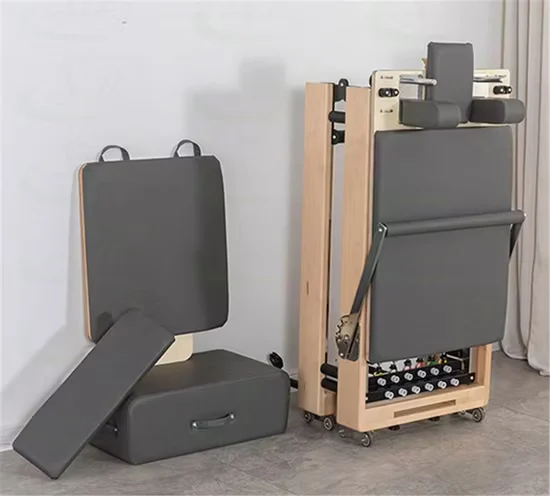
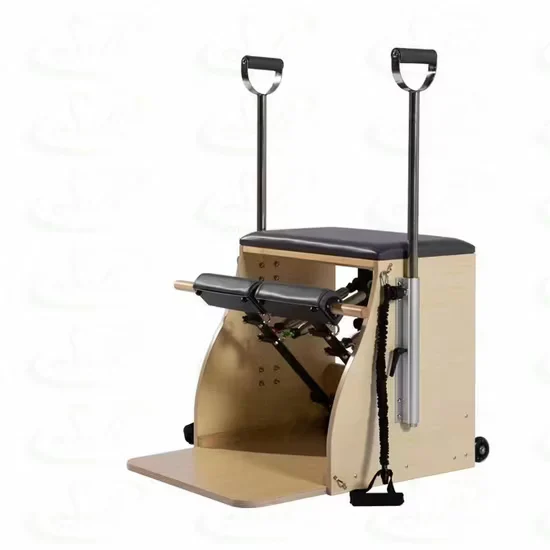
Pilates Wunda Chair, 800×620×1100mm, 45kg, Wooden Base with Aluminum Handles — solid hardwood construction paired with corrosion-resistant aluminum handles ensures structural rigidity under repetitive studio loading; included long box, jump board, and platform expand a single footprint into a multi-modal training station. Every unit undergoes load testing and 3-year warranty coverage on base structure, handles, and accessory attachment points.
// Spec Highlights
• Direct from Manufacturer · No Middlemen · Worldwide Shipping
01
// Material
Imported Solid Wood
Premium hardwood frames sourced for density and visual warmth.
02
// Hardware
Medical-Grade Silent
Whisper-quiet pulleys and springs for clinical environments.
03
// Customization
Appearance OEM
Color, upholstery, and branding tailored to your studio.
04
// Service
Layout Design
Free venue planning for studios and rehab institutions.
Every component is selected for longevity, performance, and aesthetic harmony - from imported hardwood frames to silent medical-grade accessories.
// Features
Traced Solid Wood Joinery — every Wunda Chair base is built from verified hardwood with dowel-reinforced joints, not particle-core laminates that flex under repetitive studio loading.
| Parameter | Value |
|---|---|
| Product Type | Pilates Wunda Chair |
| Product Dimensions | 800 × 620 × 1100 mm |
| Net Weight | 45 kg |
| Base Material | Solid Wooden Base |
| Handle Material | Aluminum Handles |
| Included Accessories | Long Box / Jump Board / Platform |
| Color Options | Solid Color, custom color available on request |
| Logo | Customized Logo Allowed |
| Warranty | 3 Years |
| Target User | Adult, Unisex |
| Facility Type | Typical Use |
|---|---|
| Pilates Studio | Group Wunda Chair classes with accessory rotations across long box, jump board, and platform |
| Rehabilitation and Physical Therapy Center | Low-impact resistance training for lower-limb and core recovery protocols |
| Boutique Fitness Studio | Hybrid Pilates-barre programming incorporating standing balance and spring-loaded presses |
| Hotel Wellness Facility | Compact footprint station for guest use between reformer sessions |
| Home Pilates Setup | Multi-modal single-footprint station replacing multiple dedicated apparatus pieces |
A commercial Pilates combo Wunda chair wooden base aluminum handles lives or dies at the connection point between the base and the handle uprights.
In studios running back-to-back classes, the handle uprights absorb lateral torque every time a client pushes through a standing press or controls an eccentric return on the jump board. When manufacturers use thin-wall aluminum tubing bolted into particle-core laminate bases, the fastener holes elongate within months. The handle develops play, the accessory attachment points drift out of alignment, and the entire unit wobbles during standing exercises. We saw this exact failure pattern on an earlier production run where cost-reduced aluminum tubing was paired with an insufficiently dense base — the connection zone cracked under cyclic loading and the batch was recalled [NEED_CITE: structural fatigue at wood-metal interface joints in fitness apparatus]. That recall reshaped how we specify every Wunda Chair that leaves the floor.
The Wunda Chair targets sagittal and frontal plane movements: seated and standing presses, hamstring curls, lateral balance work, and plyometric jumps against spring resistance. In a studio layout, it complements reformers by providing vertical-load resistance that reformers cannot deliver, and it pairs with Cadillac towers for clients progressing from supine to upright loading patterns. The 800 × 620 mm footprint allows high-density placement in group class grids while maintaining safe lateral clearance. The commercial Pilates combo Wunda chair wooden base aluminum handles accommodates users across a wide height range because the accessory ecosystem — long box for seated work, platform for standing balance, jump board for plyometric loading — shifts the working height without requiring mechanical adjustment of the base itself.
The dominant stress on this apparatus is not static weight but repetitive eccentric-deceleration loading: a client driving the pedal down and then resisting its return generates lateral shear at the handle uprights thousands of times per class day. The solid wooden base resists racking deformation far better than engineered composites, but the critical zone remains the fastener interface where aluminum handles meet wood. Sweat absorption and cleaning chemicals gradually degrade any exposed wood grain around these joints, which is why base sealing and hardware isolation matter as much as the species of timber itself [NEED_CITE: moisture ingress and fastener loosening in wood-frame fitness equipment]. The aluminum handles resist corrosion from grip sweat and studio cleaning agents without relying on a plated coating that can flake away over time.
The base material designation is the first line of defense against premature failure: solid hardwood with dowel or mortise-and-tenon joinery distributes pedal-reaction forces across a broader grain area than screw-only assembly into engineered board. Aluminum handle specification matters beyond weight savings — the alloy must maintain dimensional stability under lateral loading without relying on wall thickness alone. The accessory attachment interface determines long-term class programming flexibility: precision-machined slots for the long box, jump board, and platform prevent play from developing at connection points and eliminate the need for instructors to re-tighten hardware between classes. The 45 kg net weight provides a stable center of gravity during standing exercises and jump board work without requiring floor anchoring, which preserves studio layout flexibility. Powder-coated or anodized aluminum surfaces resist pitting from chloride-based cleaning agents commonly used in high-humidity studio environments.
A lighter base may reduce shipping expense but shifts the center of gravity upward, making standing press exercises feel unstable for heavier users. Particle-core laminate bases absorb ambient moisture in humid studio environments and swell around fastener holes, accelerating handle wobble. Non-anodized aluminum handles develop surface oxidation that transfers onto client palms and degrades grip friction over time. Accessories that rely on friction-fit tolerances rather than machined slots gradually loosen, forcing studio operators to pull units out of rotation for hardware maintenance — a commercial Pilates combo Wunda chair wooden base aluminum handles that spends days on the maintenance bench is a sunk cost generating no class revenue [NEED_CITE: lifecycle cost of accessory interface maintenance in group exercise apparatus].
The solid hardwood base is sourced with species and grade certification traceable to the mill, not purchased as generic engineered board. Aluminum handle components carry alloy specification documentation verifying material composition. Every accessory attachment point — long box slot, jump board bracket, platform mount — is tolerance-checked against the base unit before packaging, so no studio receives a chair whose accessories do not seat cleanly. The 200 μm industrial powder coating process applied across our metalwork extends to all aluminum contact hardware, ensuring sweat and chemical resistance consistent with the rest of our commercial line. A three-year warranty covers the base structure, handle uprights, and accessory attachment points — not just the frame. Our floor planning support includes 2D-3D CAD layouts that calculate safe spacing between Wunda Chairs and adjacent reformers based on your studio dimensions and class capacity targets. OEM private label and custom color options are available for operators building a branded apparatus fleet.
Provide your studio floor area and current apparatus list so we can generate a 2D-3D layout showing Wunda Chair placement relative to reformers and Cadillac units. Specify your average daily class volume and client throughput so we can confirm the base density and handle alloy match your usage intensity. Share your branding requirements — custom color, logo placement, and upholstery options — for a coordinated apparatus fleet. Tell us your target user demographic so we can verify the accessory configuration covers the full range of programming your instructors plan to deliver.
Q: How do I tell a commercial-grade Wunda Chair from a light-commercial or home-use model?
A: Check the base material specification first — commercial units use solid hardwood with dowel or mortise-and-tenon joinery, while light-commercial models often use particle-core laminate with screw-only assembly. Handle material matters equally: commercial-grade aluminum handles carry alloy certification and resist corrosion without plated coatings. Net weight is a reliable proxy; units below a certain mass lack the stability needed for standing and jump board exercises in group class settings.
Q: What wood species and joinery methods indicate long-term structural integrity?
A: Dense hardwoods with tight grain structure resist fastener pull-out and moisture absorption better than softwoods or engineered composites. Dowel-reinforced or mortise-and-tenon joints distribute cyclic loads across a wider grain area than screws alone, which concentrate stress at single points. Ask the manufacturer for species certification and joinery documentation rather than accepting generic "solid wood" claims that may include laminated veneer over particle core.
Q: How does accessory compatibility affect long-term usability and programming flexibility?
A: A Wunda Chair whose long box, jump board, and platform interface precisely with machined slots stays in class rotation without maintenance interruptions. When accessories rely on approximate friction fits, they develop play over time and require hardware adjustments between classes. Confirm that replacement accessories are available from the manufacturer and that interface dimensions are documented so third-party attachments do not void warranty coverage on the connection points.
Q: What maintenance does a wooden base and aluminum handle combination require in a humid studio?
A: Wipe aluminum handles after high-use periods with pH-neutral cleaner to prevent salt buildup from grip sweat. Inspect the wood-to-handle fastener zone quarterly for any sign of moisture ingress or grain swelling around bolt holes. Apply a studio-safe wood sealant to the base annually, focusing on the areas immediately surrounding hardware penetrations. Keep ambient humidity within the wood species tolerance range specified by the manufacturer.
Q: How much floor space should I plan between Wunda Chairs and adjacent reformers?
A: Allow enough lateral clearance for an instructor to walk between stations during a group class and for clients to mount and dismount safely during standing exercises. The exact spacing depends on your class size, the accessory configuration in use, and whether clients move between apparatus mid-class. Request a 2D-3D CAD layout with your specific studio dimensions so the spacing accounts for your actual programming flow rather than generic minimums.
Premium aesthetics meet quiet operation for boutique studio environments.
Medical-grade silence and precision for sports & postpartum recovery.
Furniture-grade craftsmanship for premium residential installations.
Compact premium setups for one-on-one and small-group training.
Aesthetic Pilates integration for hybrid wellness studio programming.
Multi-unit deployment with instructor-grade reliability for certification programs.
Tell us about your project. Our team will respond within 24 hours with pricing, customization options, and shipping details.
// Sales Director
William
+86 132 2531 1800
// Export Manager
Bella
+86 198 5412 8032
william@bickfit.com