01 / Scenario
STUDIO
P
High-End Pilates Studios
Premium aesthetics meet quiet operation for boutique studio environments.
ISO
9001
CE
Certified
OEM
Available
10YR
Warranty
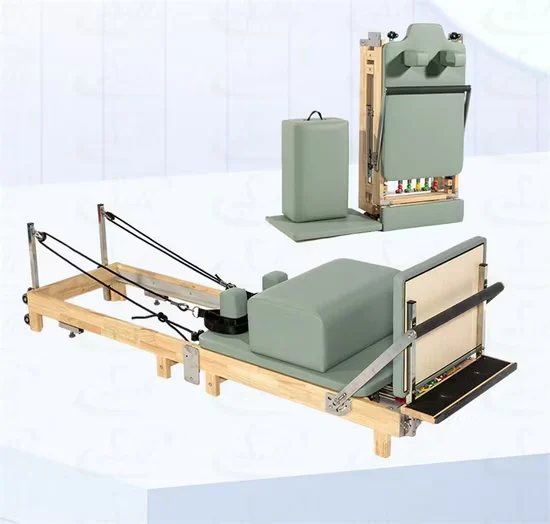
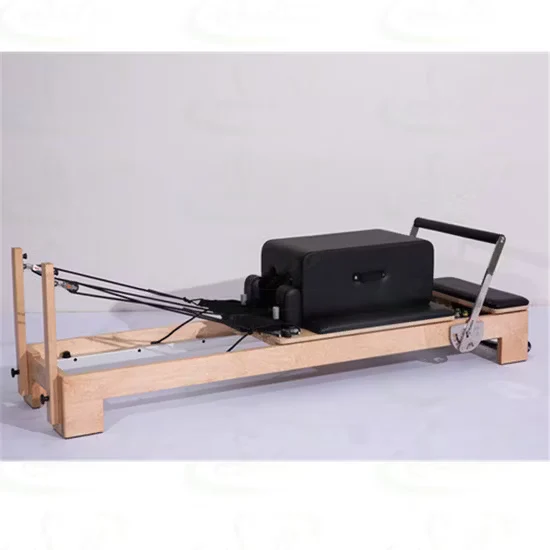
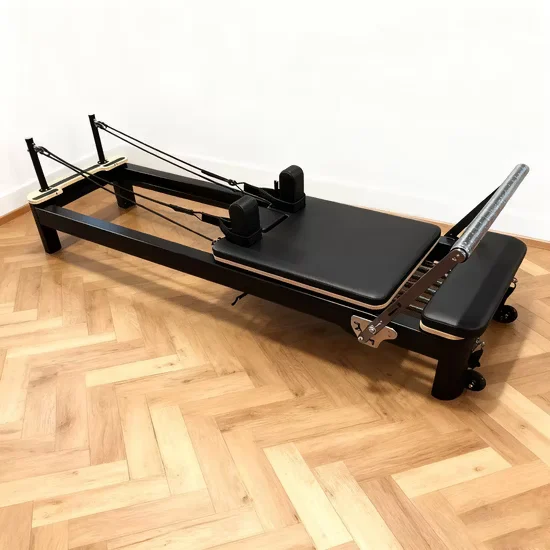
Commercial Pilates Reformer Machine, Solid Wood Frame, 200kg Net Weight — engineered with precision-machined carriage rails and reinforced sliding mechanism for consistent glide across full range of motion in high-traffic studio environments. Available in solid color finish with customizable logo options and 3-year warranty coverage. Each unit undergoes 32-point inspection and 100% load testing before shipment to ensure structural integrity under continuous commercial use.
// Spec Highlights
• Direct from Manufacturer · No Middlemen · Worldwide Shipping
01
// Material
Imported Solid Wood
Premium hardwood frames sourced for density and visual warmth.
02
// Hardware
Medical-Grade Silent
Whisper-quiet pulleys and springs for clinical environments.
03
// Customization
Appearance OEM
Color, upholstery, and branding tailored to your studio.
04
// Service
Layout Design
Free venue planning for studios and rehab institutions.
Every component is selected for longevity, performance, and aesthetic harmony - from imported hardwood frames to silent medical-grade accessories.
// Features
Frame Rigidity — Solid wood construction verified by species certification, preventing the warping and delamination that plague composite frames in humid studio environments.
| Parameter | Value |
|---|---|
| Product Type | Pilates Reformer |
| Frame Material | Solid Wood |
| Frame Finish | Solid Color |
| Product Dimensions | 240×55.7×52 cm / 257×81×52 cm |
| Net Weight | 200 kg |
| Warranty | 3 Years |
| Customization | Logo application available |
| Production Capacity | 80 Pieces/Month |
| Facility Type | Typical Use |
|---|---|
| Commercial Pilates Studio | Group reformer classes and private instruction sessions |
| Hotel and Resort Wellness Center | Mind-body room programming for guest fitness |
| Rehabilitation and Physiotherapy Clinic | Controlled resistance therapy for injury recovery |
| Boutique Group Training Studio | Small-group functional movement classes |
Rail straightness and wood stability define the glide life of every commercial wood pilates reformer machine on the studio floor.
Most reformers labeled "commercial grade" ship with laminated plywood frames or hollow aluminum rails that look acceptable on day one. Within months of daily studio rotations, humidity cycles and repeated eccentric loading cause the substrate to warp, the carriage develops lateral play, and instructors start hearing the grinding noise mid-class. The downtime compounds — a single binding carriage pulls the reformer off the schedule, and replacement rails rarely match the original mounting geometry [NEED_CITE: material dimensional stability standards for fitness equipment frames]. This commercial wood pilates reformer machine addresses that failure point with solid wood framing and a reinforced carriage rail system designed to hold tolerance through continuous use.
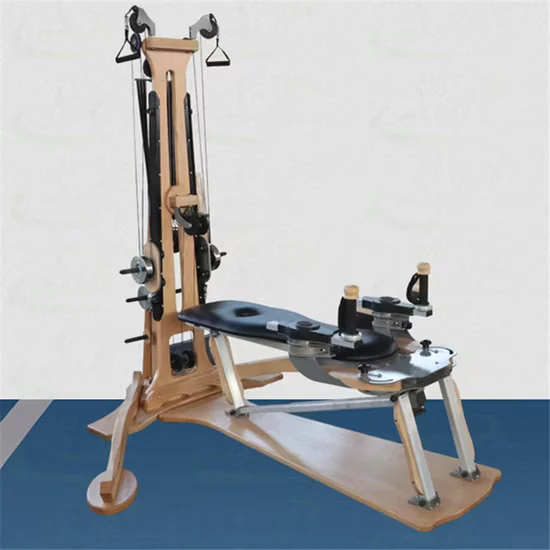
The reformer anchors the resistance-based movement plane in any Pilates or mind-body zone, targeting core stabilization, hip and shoulder mobility, and lower-body eccentric control. In a multi-apparatus studio layout, it pairs with the Cadillac for supine progressions and the Wunda Chair for standing balance work. This commercial wood pilates reformer machine suits high-density boutique studios running back-to-back group classes, and its footprint accommodates the instructor circulation corridors required for cueing and hands-on correction across varied user body types.
Every repetition on a reformer generates eccentric deceleration forces that travel through the carriage wheels, into the rail, and down into the frame joints. In a studio running six classes daily, each station accumulates thousands of these load cycles per week, concentrating fatigue at the rail mounting points and the head-to-foot joint connections. The spring attachment hardware endures constant tension fluctuation and exposure to sweat aerosol, making corrosion resistance a structural concern rather than a cosmetic one. Upholstery contact zones on the shoulder rest and foot bar compress under user weight and degrade with repeated cleaning chemicals [NEED_CITE: fatigue loading patterns in cyclic-use fitness apparatus].
Solid hardwood framing resists the moisture-driven expansion and contraction that causes laminated plywood to delaminate at the glue lines over seasonal humidity shifts. Rail machining tolerance directly determines carriage glide quality — a rail surface finished to consistent flatness prevents the micro-binding that users feel as stuttering through the eccentric phase of footwork. Spring configuration with multiple tension options allows instructors to scale resistance for rehabilitation clients and advanced practitioners on the same unit. The frame dimensions at 257×81×52 cm provide the carriage travel length necessary for full-range leg press and long spine movements without end-stop impact.
Switching from solid wood to laminated composite reduces initial procurement cost but introduces predictable failure modes. Veneered particle board frames absorb ambient moisture at cut edges, swelling and losing fastener grip within the first year of studio operation. Undersized carriage wheels on thin rails develop flat spots under static parking loads, creating the bump that riders feel at the same point in every stroke. Non-standard spring fittings mean replacement parts must come from the original supplier on their timeline, turning a simple maintenance task into weeks of station downtime [NEED_CITE: comparative lifecycle costs of composite versus solid timber equipment frames].
Solid wood frame sourcing with verifiable species documentation ensures the material performs predictably across the humidity range found in commercial HVAC environments. The reinforced carriage rail system is machined to hold straightness tolerance under repeated eccentric loading, not just under a static test weight. Every unit undergoes load verification before shipment, catching rail alignment issues that would otherwise surface during the first week of client use. The 200μm industrial coating on hardware components resists sweat and cleaning chemical degradation. Three-year warranty coverage reflects the fatigue cycle expectations for this commercial wood pilates reformer machine in studio-duty service. OEM customization including logo application supports brand consistency across franchise studio rollouts, and 2D-3D floor planning assistance ensures safe instructor clearance between multi-reformer installations.
Provide your mind-body room dimensions and target station count to receive a 2D-3D layout with safe instructor circulation corridors between each commercial wood pilates reformer machine. Specify daily class frequency and average user profile so the spring configuration and padding density match your actual load profile. Confirm branding requirements early — logo placement and frame color options are locked in before the finishing stage.
Q: How do you confirm solid wood construction versus laminated composite on a reformer frame?
A: Request the wood species certificate and mill grade documentation from the manufacturer. Solid hardwood shows continuous grain through cross-sections at joint points, while laminated or veneered composites reveal layered substrates. A core sample from a non-visible frame section provides definitive verification before committing to a bulk studio order.
Q: What rail tolerance and carriage load define commercial-grade reformer performance?
A: Commercial-grade rails must hold straightness within tight machining tolerance across the full travel length, verified per unit before shipment. The carriage should support loads well above maximum user weight without lateral play or binding at the end stops. Ask for the per-unit carriage load test record rather than relying on a sample-based specification sheet.
Q: What are the spring replacement intervals and tension options for different studio populations?
A: Spring lifespan depends on class frequency, user weight distribution, and exposure to sweat and cleaning agents. Studios running six or more daily sessions typically see earlier fatigue in high-tension springs. Multiple tension options allow instructors to scale resistance for rehabilitation clients and advanced practitioners on the same reformer without hardware swaps.
Q: What spacing and clearance requirements apply to multi-reformer studio installations?
A: Each reformer needs lateral clearance on both sides for instructor circulation and hands-on cueing during group classes. Head-to-wall and foot-to-wall clearance must account for full carriage travel plus user limb extension. Request a CAD layout that maps your exact room dimensions against the reformer footprint to eliminate unusable gaps and unsafe pinch points.
Q: How durable is the padding under daily commercial use, and is reupholstery available?
A: Padding density determines how quickly shoulder rests and headrests compress under repeated client use in a busy studio. High-density foam retains support through thousands of compression cycles but eventually requires replacement. Confirm that replacement padding and upholstery materials are available as standalone spare parts from the manufacturer before purchasing.
Premium aesthetics meet quiet operation for boutique studio environments.
Medical-grade silence and precision for sports & postpartum recovery.
Furniture-grade craftsmanship for premium residential installations.
Compact premium setups for one-on-one and small-group training.
Aesthetic Pilates integration for hybrid wellness studio programming.
Multi-unit deployment with instructor-grade reliability for certification programs.
Tell us about your project. Our team will respond within 24 hours with pricing, customization options, and shipping details.
// Sales Director
William
+86 132 2531 1800
// Export Manager
Bella
+86 198 5412 8032
william@bickfit.com