01 / Scenario
STUDIO
P
High-End Pilates Studios
Premium aesthetics meet quiet operation for boutique studio environments.
ISO
9001
CE
Certified
OEM
Available
10YR
Warranty
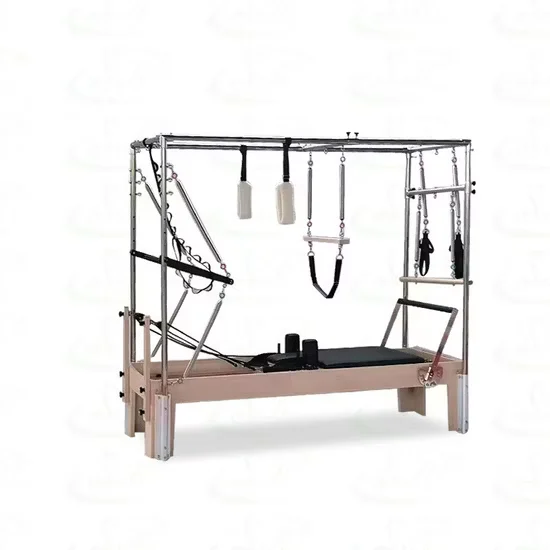
Pilates Cadillac with Trapeze Tower, Solid Wood Frame, 2400×770×2160mm — engineered with a solid wood base and reinforced tower joints to resist warping under continuous spring tension cycles, featuring sealed pulleys and modular attachment points for long box, jump board, and platform. Backed by 150kg net weight stability and a 3-year warranty for commercial studio environments. Every unit undergoes 32-point inspection and full dynamic load testing before dispatch.
// Spec Highlights
• Direct from Manufacturer · No Middlemen · Worldwide Shipping
01
// Material
Imported Solid Wood
Premium hardwood frames sourced for density and visual warmth.
02
// Hardware
Medical-Grade Silent
Whisper-quiet pulleys and springs for clinical environments.
03
// Customization
Appearance OEM
Color, upholstery, and branding tailored to your studio.
04
// Service
Layout Design
Free venue planning for studios and rehab institutions.
Every component is selected for longevity, performance, and aesthetic harmony - from imported hardwood frames to silent medical-grade accessories.
// Features
Solid Wood Core — A commercial Pilates Cadillac with trapeze tower built on a solid wood frame to resist warping under years of daily spring tension cycles.
| Parameter | Value |
|---|---|
| Product Type | Pilates Cadillac |
| Frame Material | Solid Wood |
| Product Dimensions | 2400 × 770 × 2160 mm |
| Net Weight | 150 kg |
| Color Options | Solid color finishes available |
| Included Accessories | Long Box / Jump Board / Platform |
| Warranty | 3 Years |
| Customization | Logo and finish customization available |
| Facility Type | Typical Use |
|---|---|
| Commercial Pilates studio | Full apparatus repertoire including trapeze tower and spring-based conditioning |
| Rehabilitation and conditioning center | Controlled resistance work for physical therapy and post-injury programming |
| Boutique fitness facility | Small-group and private Pilates sessions with full Cadillac exercise library |
| Commercial gym functional zone | Dedicated apparatus area complementing mat and reformer programming |
A tower that shifts even slightly throws every overhead exercise off its intended path.
The trapeze tower on a Cadillac is not a decorative cage — it anchors springs, pulleys, and suspension bars that users rely on for controlled overhead and hanging movements. When the frame underneath flexes or the tower-to-base joint loosens, pulley alignment drifts. I have seen non-sealed bearings develop play within months under high-frequency spring loading, and a misaligned cable under tension is not a maintenance nuisance — it is a liability event [NEED_CITE: EN 957 structural requirements for stationary training equipment]. This commercial Pilates Cadillac with trapeze tower uses a solid wood frame with reinforced tower joints, so the structure holds its geometry session after session without the drift you get from hollow steel or composite panels.
The Cadillac occupies the deep end of a Pilates studio layout. It covers supine, prone, seated, and suspended movement planes, engaging core stabilizers, hip flexors, shoulder girdle, and spinal articulation through spring-loaded resistance. It complements reformers by providing a fixed-platform environment where exercises that require a stable base — leg springs, arm springs, and trapeze bar work — can be performed without the carriage movement variable. It fits studios running private and semi-private sessions where clients cycle through multiple apparatus stations. The 2400 × 770 mm footprint demands dedicated clearance on all sides, so it anchors a zone rather than filling a gap between machines.
Every spring attachment and release loads the frame in alternating tension and compression. In a busy studio running eight or more sessions daily, that translates to thousands of load cycles per week concentrated at the tower base and the spring anchor points along the rails. Wood frames handle this differently than steel — solid wood absorbs and distributes cyclic stress along the grain rather than concentrating it at weld points, but only if the frame is genuinely solid stock and not veneer over particleboard. The tower joints bear the highest stress during overhead trapeze bar exercises where a user’s full body weight creates eccentric loading on the uprights [NEED_CITE: fatigue performance in cyclically loaded structural joints]. Pulleys and bearings at the tower top accumulate dust and fiber debris, so sealed units are the only option that holds up past the first year.
The frame material claim of "solid wood" requires verification — composite cores with wood veneer skins will compress and delaminate at spring anchor points under commercial use. Joint construction method determines whether the tower survives dynamic loading; bolted-through joints with metal reinforcement plates outperform adhesive-only or dowel-only connections. The included long box, jump board, and platform must lock into attachment points that resist loosening — locking pins or through-bolts, not friction-fit sleeves. Spring grade matters because cheap extension springs lose tension calibration unevenly, meaning left-side and right-side resistance drift apart over time. The 150 kg net weight suggests substantial frame mass, which correlates with stability during dynamic exercises like jump board work. The 2160 mm tower height accommodates full overhead reach for taller users without the top bar becoming a head-clearance issue.
A hollow steel or composite frame saves weight and cost upfront, but under daily spring tension cycles, thin-gauge steel can fatigue at weld points and composite panels compress at anchor sites. Non-sealed bearings accumulate chalk dust and skin oils, developing axial play that causes pulley wobble and uneven cable wear. Once a pulley runs off-center, it eats through cables and creates unpredictable resistance changes mid-exercise. Low-density upholstery on the platform and long box compresses and splits within months of commercial use, requiring replacement that takes the station offline. Thin powder coating or lacquer finishes on wood frames chip at contact points where accessories lock in, exposing raw material to moisture and sweat [NEED_CITE: coating durability standards for commercial fitness equipment surfaces].
The solid wood frame resists the warping and joint creep that hollow alternatives develop under constant spring tension. The reinforced tower-to-base joint design keeps the trapeze tower plumb under eccentric loading from suspended exercises. Sealed pulley bearings maintain smooth cable travel in dusty studio environments without quarterly teardown maintenance. The long box, jump board, and platform use secure locking attachment points rather than friction-fit sleeves that loosen with repeated mounting and removal. The 2400 × 770 mm footprint is mapped in 2D and 3D CAD layouts alongside other apparatus to ensure safe clearance on all sides. OEM customization for studio branding is available without compromising structural specifications.
Provide your studio floor dimensions and current apparatus list to receive a 2D or 3D layout placing this commercial Pilates Cadillac with trapeze tower alongside reformers and chairs with verified safety clearances. Specify your average daily session volume so we can confirm the structural grade matches your traffic. Indicate any finish, color, or logo customization requirements for studio branding alignment.
Q: How do I tell a commercial-grade Pilates Cadillac from a light-commercial or home model?
A: Check the frame material — commercial units use solid wood or heavy-gauge steel, not composite panels or thin tubing. Look at the tower joint construction; bolted metal-reinforced joints outperform dowel or adhesive-only connections. Verify the pulleys use sealed bearings and that springs are graded for thousands of tension cycles. Commercial units include per-unit load testing documentation.
Q: Solid wood versus steel frame — which holds up better in a commercial Pilates studio?
A: Solid wood frames resist the cyclic spring tension loads well and absorb vibration along the grain, reducing stress concentration at joints. Steel frames can work if the gauge is sufficient and welds are continuous, but thin-gauge steel fatigues at connection points. Wood requires climate-controlled environments to prevent moisture-related warping. The choice depends on your studio’s humidity control and maintenance capacity.
Q: Which accessories are essential for a commercial studio Cadillac setup?
A: A long box for seated and supine exercises, a jump board for plyometric spring work, and a platform extender for taller clients cover the core exercise library. Trapeze bar, roll-down bar, and spring set with varied resistance levels are standard. Push-through bar and safety chains round out the configuration for full repertoire programming in private and semi-private sessions.
Q: How often do springs and pulleys need replacement under high-traffic use?
A: Springs in commercial studios typically require tension calibration checks every six months and full replacement when they show uneven extension or audible fatigue. Sealed pulley bearings last significantly longer than unsealed ones because they resist dust and oil ingress. Plan for annual bearing inspection and cable replacement when fraying appears at contact points.
Premium aesthetics meet quiet operation for boutique studio environments.
Medical-grade silence and precision for sports & postpartum recovery.
Furniture-grade craftsmanship for premium residential installations.
Compact premium setups for one-on-one and small-group training.
Aesthetic Pilates integration for hybrid wellness studio programming.
Multi-unit deployment with instructor-grade reliability for certification programs.
Tell us about your project. Our team will respond within 24 hours with pricing, customization options, and shipping details.
// Sales Director
William
+86 132 2531 1800
// Export Manager
Bella
+86 198 5412 8032
william@bickfit.com