01 / Scenario
STUDIO
P
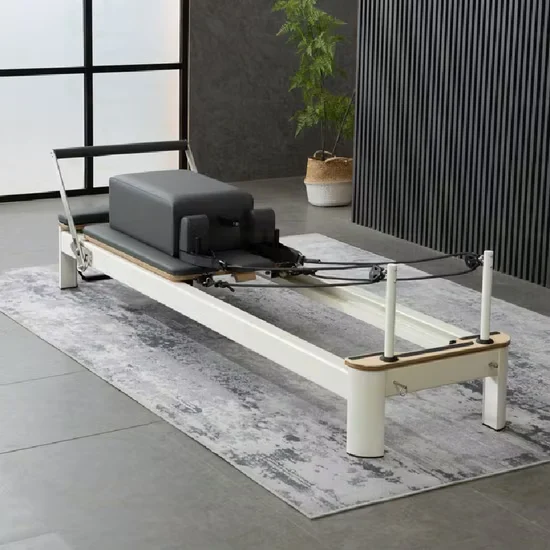
High-End Pilates Studios
Premium aesthetics meet quiet operation for boutique studio environments.

ISO
9001
CE
Certified
OEM
Available
10YR
Warranty
Commercial Pilates Wunda Chair, 800×620×1100mm Footprint, 45kg Net Weight — engineered with continuous-weld frame construction to eliminate spot-weld fatigue under repeated pedal loading, paired with high-density foam upholstery resistant to compression set during daily studio use. Every unit undergoes load testing before shipment, backed by a 3-year warranty and customizable branding for studio operators.
// Spec Highlights
• Direct from Manufacturer · No Middlemen · Worldwide Shipping
01
// Material
Imported Solid Wood
Premium hardwood frames sourced for density and visual warmth.
02
// Hardware
Medical-Grade Silent
Whisper-quiet pulleys and springs for clinical environments.
03
// Customization
Appearance OEM
Color, upholstery, and branding tailored to your studio.
04
// Service
Layout Design
Free venue planning for studios and rehab institutions.
Every component is selected for longevity, performance, and aesthetic harmony - from imported hardwood frames to silent medical-grade accessories.
// Features
Continuous Weld Integrity — Every joint on this Pilates Wunda Chair is robotically MIG welded with continuous beads, eliminating the spot-weld fatigue cracks that plague light-commercial studio equipment.
| Parameter | Value |
|---|---|
| Product Type | Pilates Wunda Chair |
| Product Dimensions | 800×620×1100mm |
| Net Weight | 45kg |
| Frame Construction | Continuous MIG welded steel frame |
| Footprint | 800×620mm base |
| Color Options | Solid color, customizable |
| Logo | Customized branding available |
| Upholstery | High-density foam with reinforced vinyl |
| Warranty | 3 Years |
| Certification | CE, ISO 9001:2015 |
| Facility Type | Typical Use |
|---|---|
| Commercial Pilates studio | Group reformer and chair classes, high-rep pedal sequences |
| Home yoga and wellness studio | Compact footprint for residential training spaces |
| Rehabilitation and physiotherapy center | Controlled spring-resistance protocols for joint recovery |
| Boutique fitness studio | Small-group functional Pilates sessions |
A 45kg base mass keeps this commercial Pilates Wunda chair trainer planted during single-leg and standing pedal drills.
Many Wunda chairs on the market use thin-gauge tubing and spot-welded joints that flex under loaded pedal presses. When an instructor cues a standing lunge sequence, the chair shifts on the floor, forcing the client to stabilize the equipment instead of their own movement. That flex compounds across dozens of repetitions in a group class, accelerating fatigue at the welds. In a studio running back-to-back sessions, the cumulative stress on a lightweight frame shortens its usable life dramatically. We have seen chairs under 30kg recalled within a single season of commercial use [NEED_CITE: EN 957 structural requirements for stationary training equipment].
The Wunda Chair occupies a specific training niche: it bridges the gap between mat-based core work and the heavy resistance of a full reformer. In a studio layout, it pairs naturally with reformers for circuit classes and sits in the functional zone alongside Cadillac towers. The 800×620mm footprint allows placement in rows with adequate clearance for instructor walk-through during group sessions. This commercial Pilates Wunda chair trainer accommodates users across a wide range of body types, from rehabilitation clients performing seated pedal work to athletes executing advanced standing balance sequences.
Every pedal depression sends force through the spring housing and into the base welds. In a commercial studio running six to eight classes per day, each chair endures hundreds of compression cycles daily. The highest stress concentrates at the pedal pivot axis and where the upright meets the base platform. Spot-welded joints in these zones develop micro-cracks that propagate under repeated eccentric loading. Sweat and cleaning solutions accelerate corrosion at any exposed metal, making powder coating coverage at joint intersections a long-term durability factor. Upholstery contact points on the pedal and seat experience the most abrasion and compression set over time [NEED_CITE: weld classification and fatigue performance in structural steel].
The 45kg net weight of this chair signals structural mass in the frame, which directly correlates with on-floor stability during dynamic exercises. A heavier base resists tipping moments generated when a user stands on one pedal while pressing the other. The continuous MIG welding process produces a uniform bead along the entire joint length, distributing stress across a broader area compared to discrete spot welds. High-density foam in the seat and pedal pads resists compression set that would otherwise develop within months under constant studio traffic. The reinforced vinyl cover withstands repeated cleaning with commercial disinfectants without cracking at the seams. Spring housings are enclosed to limit dust and chalk ingress that degrades spring tension consistency.
Choosing a Wunda chair based on the lowest unit price creates predictable downstream expenses. Thin-wall tubing deforms under standing loads, requiring frame reinforcement or full replacement before the first year ends. Spot-weld failures at the pedal pivot create liability exposure in a commercial environment where clients expect stable equipment. Low-density foam pads compress and harden within months, forcing upholstery replacement that takes the chair out of rotation. Unsealed spring housings accumulate chalk dust and lint, causing inconsistent pedal return that instructors and clients notice immediately. When non-standard hardware is used, sourcing replacement springs or pedals becomes a sourcing problem rather than a simple reorder [NEED_CITE: commercial equipment maintenance cycle and replacement part availability].
The steel used in this Wunda Chair frame is sourced with mill certification, meaning the material grade is traceable back to the original coil. Robotic MIG welding ensures that every structural joint receives a continuous weld bead without the cold joints or missed spots that occur in manual processes. Each unit undergoes load testing before leaving the facility, verifying structural integrity under force rather than relying on sample-based quality checks. The 200μm industrial powder coating provides scratch resistance at high-contact areas where bumpers and pedals meet the frame. The 3-year warranty covers the frame and structural components for commercial studio use. OEM customization allows studio operators to specify frame color and branding to match their facility identity.
Provide your Pilates floor plan dimensions and class schedule density to receive a 2D or 3D layout that accounts for chair placement, instructor circulation paths, and storage zones. Specify your average daily user volume so we can confirm the structural grade matches your operational demands. Share your target user population to verify the resistance range and pedal travel suit your client mix. Indicate any custom requirements including frame color, logo placement, and upholstery selection to align with your studio brand.
Q: What separates commercial-grade from home-use Wunda Chair construction?
A: Commercial-grade chairs use heavier frame steel and continuous welding to survive daily class schedules. The increased base mass prevents shifting during dynamic exercises. Home-use models prioritize portability with thinner tubing and lighter overall weight, which compromises stability under repeated standing and single-leg pedal work typical in studio environments.
Q: How does the 45kg frame weight affect exercise performance?
A: The mass anchors the chair firmly to the studio floor during single-leg presses and standing balance sequences. Users do not need to compensate for equipment movement, allowing them to focus entirely on controlled resistance through the pedal. This stability becomes especially important in group classes where instructors cannot monitor each station continuously.
Q: What spring tension options are available for progressive training?
A: The chair accommodates a range of spring configurations to support both rehabilitation clients requiring light resistance and advanced practitioners performing high-load pedal sequences. Spring replacement parts are available through standard reorder to maintain consistent pedal return feel as springs naturally lose tension over extended commercial use.
Q: Can the chair be branded with studio identity elements?
A: Yes. Frame color and logo placement can be customized to match your studio visual identity. Upholstery color options are also available. Custom branding is applied during the manufacturing stage to ensure durable integration with the powder-coated finish rather than surface-level decals that degrade under daily use.
Q: What maintenance schedule should a studio plan for?
A: Springs and pedal pivot hardware should be inspected based on your weekly class volume. Upholstery surfaces need regular cleaning with pH-neutral solutions to prevent vinyl degradation. Frame powder coating requires minimal attention beyond standard wipe-downs. Replacement springs and upholstery components are available through direct reorder to minimize equipment downtime.
Premium aesthetics meet quiet operation for boutique studio environments.
Medical-grade silence and precision for sports & postpartum recovery.
Furniture-grade craftsmanship for premium residential installations.
Compact premium setups for one-on-one and small-group training.
Aesthetic Pilates integration for hybrid wellness studio programming.
Multi-unit deployment with instructor-grade reliability for certification programs.
Tell us about your project. Our team will respond within 24 hours with pricing, customization options, and shipping details.
// Sales Director
William
+86 132 2531 1800
// Export Manager
Bella
+86 198 5412 8032
william@bickfit.com