01 / Scenario
STUDIO
P
High-End Pilates Studios
Premium aesthetics meet quiet operation for boutique studio environments.
ISO
9001
CE
Certified
OEM
Available
10YR
Warranty
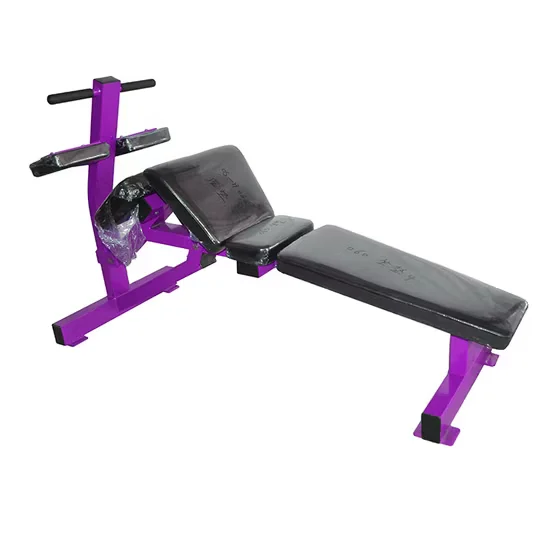
Plate Loaded Abdominal Board, 1670×600×790mm, 60kg Net Weight — built with industrial steel frame and robotic MIG continuous welding to eliminate spot-weld fatigue under repetitive core loading. Frame and cushion colors available per customer requirements. Backed by 10-year frame warranty and factory-direct floor planning for safe commercial gym spacing.
// Spec Highlights
• Direct from Manufacturer · No Middlemen · Worldwide Shipping
01
// Material
Imported Solid Wood
Premium hardwood frames sourced for density and visual warmth.
02
// Hardware
Medical-Grade Silent
Whisper-quiet pulleys and springs for clinical environments.
03
// Customization
Appearance OEM
Color, upholstery, and branding tailored to your studio.
04
// Service
Layout Design
Free venue planning for studios and rehab institutions.
Every component is selected for longevity, performance, and aesthetic harmony - from imported hardwood frames to silent medical-grade accessories.
// Features
Traceable Steel — Every 11-gauge tube in this Plate Loaded Abdominal Board traces back to its original mill coil certificate, not a vague "commercial grade" label.
| Parameter | Value |
|---|---|
| Product Type | Plate Loaded Abdominal Trainer |
| Frame Steel | 11-gauge, 3×3 inch tube |
| Steel Grade | Q235 / Q345 industrial steel, mill-certified |
| Welding Type | Robotic MIG continuous weld, no spot welds |
| Loading Type | Plate loaded |
| Product Dimensions | 1670×600×790 mm |
| Net Weight | 60 kg |
| Powder Coating | 200μm scratch-resistant, sandblasted pre-treatment |
| Upholstery | Available in standard or high-density commercial options |
| Frame Color | Customizable per customer specification |
| Cushion Color | Customizable per customer specification |
| Certification | ISO 9001, CE |
| OEM / ODM | Acceptable |
| Facility Type | Typical Use |
|---|---|
| Commercial gym strength floor | Dedicated core training station between plate-loaded press and pull rows |
| Hotel and resort fitness center | Compact abdominal trainer that fits tight floor plans without sacrificing load capacity |
| University strength and conditioning room | High-cycle core work for athletic teams during off-season and in-season programs |
| CrossFit box functional zone | Supplemental weighted abdominal work adjacent to rigs and free weight platforms |
| Rehabilitation and performance center | Controlled spinal flexion loading for late-stage return-to-play protocols |
Sealed industrial bearings prevent the wobble that turns a core machine into a liability.
Most plate loaded abdominal boards on the market use unsealed bushings or open bearings at the pivot point. In a high-traffic commercial gym, sweat, chalk dust, and repeated off-axis loading grind those components into play within months. The result is a rocking motion path that forces the user’s lumbar spine out of alignment during weighted sit-ups — exactly the kind of failure that generates incident reports. [NEED_CITE: bearing sealing standards for commercial fitness equipment under cyclic loading] This commercial plate loaded abdominal board uses sealed industrial bearings at every pivot, rated for continuous heavy-load cycles without developing lateral play.
This Plate Loaded Abdominal Trainer targets the rectus abdominis and obliques through a controlled spinal flexion arc under external plate loading. On a commercial strength floor, it sits naturally between heavy compound stations — a lifter finishes a set of squats or deadlifts, then moves to targeted core work without crossing the facility. The 1670×600 mm footprint means it occupies less than one square meter of usable floor area, which matters when every gap between stations either serves traffic flow or wastes rent. It accommodates users across a broad height range because the pivot axis aligns with the natural hip crease regardless of torso length. The commercial plate loaded abdominal board fills a gap that selectorized machines often miss: progressive overload for core musculature using the same plates already on the floor.
An abdominal board endures a specific fatigue profile: the user loads plates, reclines, and drives through hundreds of flexion-extension cycles per session, with peak bending moment concentrated at the pivot bracket weld zone. Each repetition sends an eccentric load pulse through the frame as the carriage decelerates at the bottom of the arc. Over thousands of daily cycles across multiple users, that stress concentrates at the junction where the pivot arm meets the base upright — the exact location where spot-welded joints develop microfractures first. [NEED_CITE: fatigue failure modes in cyclically loaded fitness equipment frames] The continuous robotic MIG weld on this unit eliminates the cold-joint and undercut vulnerabilities that manual spot welding introduces at high-stress nodes. The 200μm powder coating, applied over sandblasted steel, resists the chipping that exposes bare metal to sweat-borne chlorides and cleaning agents.
The 11-gauge steel tube in this frame corresponds to a wall thickness that resists bending deformation under the combined load of a heavy user plus externally loaded plates. Thinner tubes — 12 or 14 gauge — may pass a static load test but deflect noticeably when a 100 kg user adds two 20 kg plates and drives through a rapid set. The 3×3 inch cross-section provides a moment of inertia that keeps the base upright stable even during aggressive, off-tempo repetitions. Robotic MIG welding produces a continuous bead with consistent penetration depth, which means the weld’s fatigue life tracks predictably against the parent metal rather than failing at an unpredictable weak point. Q235 and Q345 steel grades are standard structural alloys with documented yield and tensile properties — not proprietary blends with unverifiable claims. [NEED_CITE: structural steel grade classifications and mechanical property verification] Every unit is load-tested before crating, which catches manufacturing variances that sampling inspections miss.
A frame built from thinner gauge tube saves material cost upfront but begins to deflect permanently after months of heavy commercial use, eventually requiring full replacement rather than repair. Spot-welded pivot brackets may hold through the warranty period but develop hairline cracks that propagate unpredictably — a failure mode that carries real liability exposure for gym operators. Unsealed bearings demand scheduled maintenance intervals; skip them and the pivot develops play that makes the machine feel unsafe, driving members to avoid it. Low-density upholstery compresses permanently within weeks of high-frequency use, forcing reupholstery costs that exceed the savings from cheaper initial spec. Thin powder coating chips at plate contact points and grip zones, exposing bare steel to oxidation that spreads under the remaining finish.
The 11-gauge frame with traceable mill certification means the steel in this commercial plate loaded abdominal board can be verified to its source coil — a data point that matters when insurance auditors ask what is on the floor. Robotic continuous MIG welding at the pivot junction and base upright removes the human variability that causes weld defects in hand-built units. Every single unit undergoes load testing before shipment, catching frame deflection or bearing play that a sampling QC protocol would let through. The 200μm powder coating applied after sandblast pre-treatment holds up against plate impacts, grip friction, and daily chemical cleaning without chipping to bare metal. The 10-year frame warranty reflects confidence in the structural assembly, not a prorated schedule that shifts risk to the buyer. 2D and 3D CAD layout support ensures this machine is placed with correct safety clearances — the 1670×600 mm footprint plus required user clearance zone is mapped before anything ships. OEM color and branding customization lets operators match existing floor aesthetics without sacrificing the structural specification underneath.
Provide your strength floor dimensions and current equipment list to receive a 2D or 3D CAD layout showing this Plate Loaded Abdominal Trainer positioned with correct safety clearances and traffic flow integration. Specify your average daily user volume so we can confirm the structural grade matches your traffic density. Share your target member demographic height and weight range to verify the pivot geometry accommodates your population. Indicate any custom frame color, cushion color, or logo requirements so we can align the finish schedule with your delivery timeline.
Q: How do I verify that the frame steel is genuinely 11-gauge and not a thinner gauge marketed as commercial grade?
A: Every production batch of this Plate Loaded Abdominal Trainer is accompanied by a mill certificate that traces the Q235 or Q345 steel back to its source coil, including gauge thickness and mechanical properties. You can cross-reference the certificate against the delivered frame using caliper measurement at any exposed tube end. Vague labels like "commercial grade" without traceable documentation are the primary indicator of unspecified steel sourcing.
Q: What is the difference between continuous MIG welding and spot welding on the pivot bracket?
A: Continuous MIG welding produces an unbroken bead along the entire joint, distributing cyclic stress evenly across the full weld length. Spot welding creates discrete fusion points with unwelded gaps between them — those gaps become stress concentrators where fatigue cracks initiate under repeated abdominal loading cycles. On a plate loaded abdominal board subjected to hundreds of daily repetitions, continuous welding provides a meaningfully longer structural service life before any joint maintenance is required.
Q: How does the upholstery selection affect long-term replacement costs in a commercial environment?
A: Standard-density foam compresses permanently under daily commercial use, creating visible depressions that members find uncomfortable and that require full reupholstery within a relatively short period. High-density commercial foam maintains its shape and support profile across a far longer cycle count, reducing both replacement frequency and the labor cost of removing the machine from the floor for servicing. We offer both options and can recommend the appropriate density based on your stated daily traffic volume.
Q: What floor planning considerations apply when placing this abdominal board in a strength training zone?
A: The 1670×600 mm footprint must be supplemented with a minimum user clearance zone on the loading side and the entry/exit side to allow safe plate handling and movement. Our 2D and 3D CAD layout service maps this unit relative to adjacent stations so that plate traffic paths do not cross through active lifting zones. Proper placement also ensures the unit sits on a level floor section, which is critical for pivot bearing alignment and long-term frame stability.
Q: Can the frame and cushion colors be matched to existing equipment from other manufacturers?
A: Yes. Both the frame powder coating color and the cushion vinyl color are fully customizable to your specification. We work from RAL or Pantone color references for the 200μm powder coat finish, and cushion covers can be matched to your current upholstery palette. OEM branding and logo application on the frame or shroud are also available as part of the production run.
Premium aesthetics meet quiet operation for boutique studio environments.
Medical-grade silence and precision for sports & postpartum recovery.
Furniture-grade craftsmanship for premium residential installations.
Compact premium setups for one-on-one and small-group training.
Aesthetic Pilates integration for hybrid wellness studio programming.
Multi-unit deployment with instructor-grade reliability for certification programs.
Tell us about your project. Our team will respond within 24 hours with pricing, customization options, and shipping details.
// Sales Director
William
+86 132 2531 1800
// Export Manager
Bella
+86 198 5412 8032
william@bickfit.com