
01 / Scenario
STUDIO
P
High-End Pilates Studios
Premium aesthetics meet quiet operation for boutique studio environments.
ISO
9001
CE
Certified
OEM
Available
10YR
Warranty
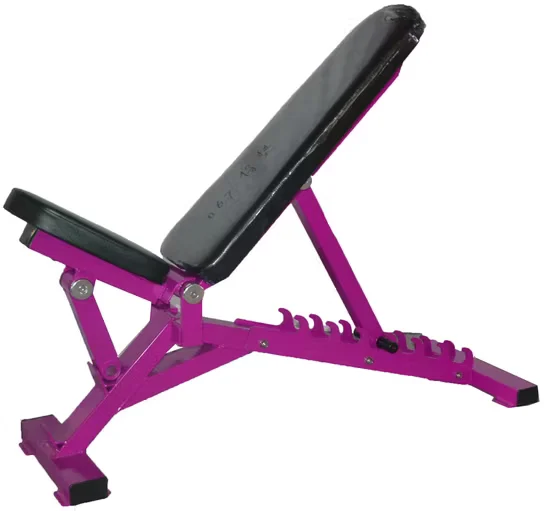
Plate Loaded Adjustable Bench, 1673×706×1390mm, Incline/Flat/Decline Positions — engineered with steel frame construction and multi-position backrest adjustment for high-traffic commercial environments. Backrest and seat pad linkage ensures stable locking across all angles, with upholstery built for daily heavy-use replacement cycles. Every unit undergoes load testing before shipment, backed by a 10-year frame warranty and full floor planning support.
// Spec Highlights
• Direct from Manufacturer · No Middlemen · Worldwide Shipping
01
// Material
Imported Solid Wood
Premium hardwood frames sourced for density and visual warmth.
02
// Hardware
Medical-Grade Silent
Whisper-quiet pulleys and springs for clinical environments.
03
// Customization
Appearance OEM
Color, upholstery, and branding tailored to your studio.
04
// Service
Layout Design
Free venue planning for studios and rehab institutions.
Every component is selected for longevity, performance, and aesthetic harmony - from imported hardwood frames to silent medical-grade accessories.
// Features
Steel Traceability — every coil of 11-gauge tubing for this commercial plate loaded adjustable bench carries a mill certificate back to the heat number, so you can verify the exact grade of steel supporting your athletes.
| Parameter | Value |
|---|---|
| Product Type | Adjustable Bench |
| Frame Steel Gauge | 11-gauge |
| Frame Tube Size | 3×3 inch |
| Steel Grade | Q235 / Q345 industrial steel, mill-certified |
| Welding Type | Robotic MIG continuous weld |
| Adjustment Positions | Incline / Flat / Decline |
| Loading Type | Plate Loaded |
| Upholstery | Standard or high-density options, color customizable |
| Powder Coating | 200μm scratch-resistant, sandblast pre-treated |
| Product Dimensions | 1673 × 706 × 1390 mm |
| Certification | ISO 9001:2015, CE |
| OEM/ODM | Acceptable |
| Main Frame Color | According to customer requirements |
| Cushion Color | According to customer requirements |
| Warranty | 10-year frame |
| Facility Type | Typical Use |
|---|---|
| Commercial gym strength floor | Dumbbell pressing, incline flyes, seated shoulder work in free weight zones |
| Hotel and resort fitness center | Multi-angle training for guests in compact footprint layouts |
| University strength and conditioning room | High-frequency bench and press variations for athletic programs |
| CrossFit box functional zone | Accessory strength work between WOD stations |
| Rehabilitation and performance center | Controlled incline and decline positioning for graded loading protocols |
A commercial plate loaded adjustable bench that lists only "commercial-grade steel" without specifying gauge or tube dimensions is asking you to trust marketing copy instead of engineering data. When a lifter loads 140kg on an incline press, the backrest bracket and main upright experience combined bending and shear stress that thin-wall tubing simply cannot manage over thousands of cycles.
We use 11-gauge steel in a 3×3 inch tube profile for this bench because the wall thickness and cross-sectional area together determine how much the frame deflects under load before reaching its elastic limit. Spot welds at the adjustment ladder and backrest hinge are the first points to show fatigue cracking in benches built with lighter gauge material — we have pulled units from the field where spot-welded joints failed within the first year of high-traffic rotation [NEED_CITE: weld classification and fatigue performance in structural steel]. Continuous robotic MIG welds distribute stress along the entire joint length rather than concentrating it at discrete points.
This commercial plate loaded adjustable bench anchors the free weight and dumbbell zone, covering incline, flat, and decline pressing as well as seated rowing and shoulder work. It pairs directly with plate-loaded chest press units and dumbbell racks to create a complete upper-body training station without requiring athletes to move across the floor between sets.
The multi-position backrest serves users ranging from recreational lifters to competitive powerlifters performing accessory work. In facilities running eight or more hours of daily traffic, the adjustment mechanism and frame joints see more cycle fatigue than almost any other single station on the floor.
Every time a user drops into a decline position or shifts weight during a heavy incline press, the backrest hinge pin and ladder bracket absorb an eccentric impact load that compounds over hundreds of daily repetitions. The adjustment ladder shoulders both static load from the user and dynamic shock from plate loading and unloading, making weld integrity at those joints a safety-critical concern.
Upholstery contact points experience compression cycling that crushes low-density foam within months, while sweat and cleaning chemicals attack powder coating at every hand-contact and bolt-head location. Sealed hardware and a 200μm coating thickness keep corrosion from starting at these high-wear interfaces [NEED_CITE: EN 957 structural requirements for stationary training equipment].
The 11-gauge wall thickness combined with the 3×3 inch square tube profile gives the main upright a moment of inertia that resists lateral sway when a user shifts off-center during single-arm dumbbell work. Thinner rectangular tubing of the same weight rating will deflect noticeably under the same eccentric load, creating a feel of instability that experienced lifters immediately reject.
Robotic MIG welding produces a continuous bead along the backrest hinge and ladder mount rather than a series of discrete spot welds. Under repeated adjustment cycles, spot welds develop micro-cracks at the edge of each nugget — the crack propagates through the heat-affected zone until the joint separates. A continuous weld eliminates those stress concentration points entirely.
The adjustment ladder uses a positive-lock pin mechanism rather than a friction-based system, ensuring the backrest cannot slip under load regardless of user weight or pressing angle. Upholstery is available in standard or high-density foam options, with commercial-grade vinyl rated for daily cleaning with disinfectant solutions without delamination.
Benches built with 14-gauge or lighter tubing will show visible frame deflection during heavy incline sets within the first quarter of commercial use. That flex transfers cyclic stress directly into the weld joints at the backrest hinge and base connections.
Spot-welded adjustment ladders develop play as individual weld nuggets crack under repeated angle changes, eventually allowing the backrest to slip during a set — a failure mode that creates serious injury liability. Low-density foam padding compresses permanently within months, requiring full upholstery replacement that takes the bench off the floor and adds recurring parts cost. Thin powder coating chips at bolt heads and contact edges, exposing bare steel to sweat-induced corrosion that spreads beneath adjacent coating.
The 11-gauge steel sourcing is traceable to the mill coil, so every frame section can be verified against material certificates rather than relying on supplier claims. Robotic MIG continuous welding on the backrest hinge, ladder mount, and base connections eliminates the spot-weld fatigue failures that dominate warranty claims on competitor benches.
Every unit undergoes individual load testing before crating — not sample-based batch inspection — so the bench arriving at your facility has been verified under stress. The 200μm powder coating over sandblast preparation keeps the frame intact through years of cleaning chemical exposure and plate contact. A 10-year frame warranty backs the structural spec, and 2D-3D CAD layout support ensures this bench is positioned with correct safety clearance from adjacent dumbbell racks and plate-loaded stations. OEM color and upholstery customization allows full brand alignment without compromising the structural platform.
Provide your total free weight zone square footage and current equipment list to receive a 2D-3D layout showing this bench positioned with correct safety clearances relative to dumbbell racks, plate trees, and adjacent pressing stations. Specify your expected daily user volume so we can confirm the structural grade matches your traffic pattern. Submit frame color, cushion color, and logo requirements early in the order cycle to align production with your facility branding.
Q: How do I verify that an adjustable bench meets true commercial-grade structural standards?
A: Request the specific steel gauge, tube dimensions, and mill material certificates rather than accepting a generic "commercial-grade" label. Confirm the welding method — continuous MIG welds at hinge and ladder joints significantly outperform spot welds under repeated adjustment cycling. Ask whether each unit is individually load tested before shipment or whether testing is sample-based only.
Q: How does frame tube size affect stability during heavy incline pressing?
A: A 3×3 inch square tube with 11-gauge walls provides a higher moment of inertia than narrower or thinner profiles, meaning the frame resists lateral deflection when a user presses off-center or performs single-arm work. That rigidity keeps the backrest tracking straight under load and prevents the hinge mechanism from binding during angle adjustments under weight.
Q: What are the differences between pin-lock and friction-based backrest adjustment mechanisms?
A: A positive pin-lock system engages discrete holes in the adjustment ladder, giving a mechanical lock that cannot slip regardless of user weight or pressing angle. Friction-based or pop-pin systems rely on clamping force that degrades as wear accumulates, eventually allowing the backrest to drift under load — an unacceptable risk in any environment where heavy external loading is routine.
Q: How often does commercial upholstery need replacement on a high-traffic adjustable bench?
A: In facilities running eight or more hours daily, standard-density foam typically shows permanent compression within twelve to eighteen months, requiring pad replacement. High-density foam options extend that interval meaningfully. Availability of replacement pads from the original manufacturer matters — generic replacements often fit poorly and shift during use, creating both a comfort and safety concern.
Premium aesthetics meet quiet operation for boutique studio environments.
Medical-grade silence and precision for sports & postpartum recovery.
Furniture-grade craftsmanship for premium residential installations.
Compact premium setups for one-on-one and small-group training.
Aesthetic Pilates integration for hybrid wellness studio programming.
Multi-unit deployment with instructor-grade reliability for certification programs.
Tell us about your project. Our team will respond within 24 hours with pricing, customization options, and shipping details.
// Sales Director
William
+86 132 2531 1800
// Export Manager
Bella
+86 198 5412 8032
william@bickfit.com


