01 / Scenario
STUDIO
P
High-End Pilates Studios
Premium aesthetics meet quiet operation for boutique studio environments.

ISO
9001
CE
Certified
OEM
Available
10YR
Warranty
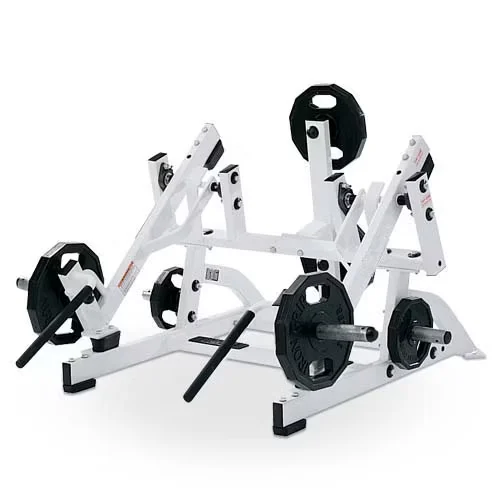
Plate Loaded ISO-Lateral Bench Press Machine, 3×3 Inch Frame Steel, 140kg Net Weight — engineered with Q235 industrial steel and robotic MIG continuous welding to eliminate stress concentration points under repeated heavy loading. Sealed industrial bearings ensure smooth plate-loaded movement patterns for high-traffic commercial environments. Every unit undergoes individual load testing before shipment, backed by a 10-year frame warranty and free floor planning CAD service.
// Spec Highlights
• Direct from Manufacturer · No Middlemen · Worldwide Shipping
01
// Material
Imported Solid Wood
Premium hardwood frames sourced for density and visual warmth.
02
// Hardware
Medical-Grade Silent
Whisper-quiet pulleys and springs for clinical environments.
03
// Customization
Appearance OEM
Color, upholstery, and branding tailored to your studio.
04
// Service
Layout Design
Free venue planning for studios and rehab institutions.
Every component is selected for longevity, performance, and aesthetic harmony - from imported hardwood frames to silent medical-grade accessories.
// Features
Mill-Traceable Steel — Every tube in this ISO-lateral bench press frame traces back to the Q235 coil certificate, not a vague commercial-grade claim.
| Parameter | Value |
|---|---|
| Product Type | Plate Loaded Chest Press Machine |
| Frame Steel Gauge | 11-gauge |
| Frame Tube Size | 3×3 inch |
| Steel Grade | Q235 industrial steel, mill-certified |
| Welding Type | Robotic MIG continuous weld |
| Loading Type | Plate loaded |
| Bearing Type | Sealed industrial bearings |
| Upholstery | Standard or high-density options available, color customizable |
| Powder Coating | 200μm scratch-resistant, sandblast pre-treated |
| Product Dimensions | 1323×1599×1746mm |
| Net Weight | 140kg |
| Exercise Part | Chest |
| Main Frame Color | Customizable |
| Certification | ISO 9001, CE |
| OEM/ODM | Acceptable |
| Facility Type | Typical Use |
|---|---|
| Commercial gym strength floor | Primary horizontal pressing station in the plate loaded zone |
| Hotel and resort fitness center | High-turnover chest training for guests of varying experience levels |
| University strength and conditioning room | Heavy loading cycles for athletic team bench press programming |
| CrossFit box functional zone | Supplemental pressing work alongside Olympic lifting platforms |
| Rehabilitation and performance center | Controlled iso-lateral movement for return-to-training protocols |
Continuous MIG welds eliminate the fatigue failure points that spot welds create under repeated heavy pressing loads.
Many suppliers label their frames as commercial grade without disclosing whether joints are spot welded or continuously welded. On a plate loaded chest press, the junction between the main upright and the press arm bracket endures cyclic loading every single rep. Spot welds hold up during factory sample testing but develop micro-cracks within months of real gym traffic. I once pulled back an entire batch of iso-lateral machines from an overseas project because the client insisted on thinner-wall tubing to cut costs; the crossmembers visibly deflected under heavy pressing within half a year [NEED_CITE: weld classification and fatigue performance in structural steel]. That project reshaped how I approach every commercial plate loaded iso-lateral bench press machine we build — the steel gauge and the weld continuity are non-negotiable.
This machine targets the horizontal pressing movement pattern, engaging the pectoralis major as the primary mover with anterior deltoid and triceps involvement. The iso-lateral arm design allows each side to move independently, accommodating strength imbalances between left and right. In a strength floor layout, this commercial plate loaded iso-lateral bench press machine pairs naturally with an incline press and a decline or flat fly station to complete the chest training circuit. It fits facilities running moderate to high member density where multiple users cycle through pressing movements throughout the day. The converging movement path suits a broad range of torso lengths and arm spans without requiring manual cam adjustments.
Every rep on a plate loaded bench press generates both static load from the plates and dynamic impulse at the bottom of the press where the lifter reverses direction. In a busy gym, this machine may see hundreds of loading cycles per day, accumulating fatigue stress at the arm pivot bracket and the upright-to-base junction. Continuous robotic MIG welding distributes the weld bead along the full joint length, removing the stress concentration points that cause spot welds to fail. Sealed industrial bearings at the pivot shaft resist sweat and chalk dust infiltration, which would otherwise accelerate wear and introduce lateral play [NEED_CITE: bearing contamination and service life in fitness equipment]. The 200μm powder coating, applied over a sandblast-prepared surface, resists chipping at the plate horn contact zones and the grip areas where knurled handles meet the frame. Upholstery seams face repetitive compression and friction from users sliding into position, demanding high-density foam and double-stitched vinyl to prevent splitting.
The 11-gauge steel wall thickness and 3×3 inch tube cross-section together determine how much the frame resists deflection when loaded asymmetrically — such as when a user loads one side heavier than the other. A wider tube profile increases the moment of inertia, meaning the upright bends measurably less under the same load compared to a narrower section. Robotic MIG continuous welding produces a uniform bead with full penetration at the joint, avoiding the incomplete fusion zones that manual spot welding leaves behind. Sealed bearings at the pivot point maintain consistent rotational resistance over years of use, whereas unsealed bushings absorb moisture and particulate, developing wobble and requiring replacement. The 200μm powder coating thickness, verified after curing, provides a scratch-resistant barrier that survives plate loading contact and routine cleaning chemicals far longer than standard decorative finishes [NEED_CITE: powder coating thickness and abrasion resistance standards]. Sandblast pre-treatment removes mill scale and ensures coating adhesion directly to bare steel, preventing under-film corrosion.
Thinner-walled tubing may pass a static load test at the factory but deflects visibly under real training loads, creating an unstable pressing feel that experienced lifters immediately notice. Spot-welded joints that survive initial inspection become liability points when cyclic loading propagates cracks through the heat-affected zone. Non-sealed bushings require maintenance attention within the first year of commercial use, generating service calls and member complaints about wobble and noise. Low-density upholstery foam compresses permanently within months, forcing costly reupholstery or pad replacement. Thin powder coatings chip at plate horns and foot contacts, exposing bare steel to sweat and humidity that trigger rust spread under the remaining finish [NEED_CITE: EN 957 structural requirements for stationary training equipment]. When replacement parts are not standardized, a single worn bearing or torn pad can sideline the entire machine while waiting for proprietary components.
The 11-gauge frame with mill-traceable Q235 steel ensures that every commercial plate loaded iso-lateral bench press machine leaving the Ningjin plant carries verifiable structural integrity, not an unverified commercial-grade label. Robotic MIG continuous welding runs the full joint length on the arm pivot bracket and upright junctions, eliminating the weak links that spot welding introduces. Each unit undergoes individual load testing before crating, meaning the inspection record corresponds to the specific machine shipped, not a statistical sample from the production run. The 200μm powder coating over sandblast pre-treatment withstands the plate contact and cleaning chemical exposure that strips thinner finishes. A 10-year frame warranty backs the structural components. Floor planning support includes CAD layout files showing this machine’s footprint and required safety clearance zones so that adjacent stations maintain proper user passage [NEED_CITE: commercial gym equipment spacing and safety clearance guidelines]. OEM customization covers frame color, upholstery selection, and private label application without altering the underlying structural specification.
Provide your strength floor square footage and current equipment list so we can generate a 2D or 3D layout showing this press station within your traffic flow. Specify your expected daily user volume to confirm the structural grade matches your operational intensity. Share the body size range of your primary user population to verify the iso-lateral arm reach and seat positioning cover your membership. Indicate any custom frame color, upholstery material, or logo placement requirements so we can include them in the production specification.
Q: How do you verify a plate loaded machine is genuinely commercial grade?
A: Request the steel mill certificate showing gauge and grade, inspect the weld pattern for continuous bead rather than spot welds, and ask for the individual load test record for the specific unit shipped. Vague commercial grade claims without traceable documentation leave you unable to verify structural capacity. Genuine commercial equipment provides full material traceability and per-unit testing records.
Q: What is the relationship between tube wall thickness and frame load capacity?
A: Thicker walls and larger cross-sections increase the tube’s resistance to bending under load. An 11-gauge wall in a 3×3 inch tube provides a substantially higher deflection threshold than thinner alternatives, meaning the frame stays rigid when loaded asymmetrically or when users shift position during heavy pressing sets.
Q: How should you choose between plate loaded and selectorized loading for your facility?
A: Plate loaded machines suit environments where users load significant weight and prefer granular plate increments, such as athletic training rooms and serious strength gyms. Selectorized machines with pin-select stacks serve high-turnover facilities where quick weight changes and supervised-free operation matter more than maximum load capacity.
Q: What safety standards govern equipment spacing on a strength floor?
A: Adequate clearance between stations prevents plate loading interference and ensures safe passage for spotters and passing members. Layout planning should account for the full range of motion, plate horn extension, and user entry and exit paths, typically documented in facility planning CAD drawings.
Q: How does sealed bearing maintenance compare to unsealed bushing maintenance?
A: Sealed industrial bearings prevent sweat, chalk, and dust from entering the pivot mechanism, maintaining smooth rotation for years without service attention. Unsealed bushings absorb contaminants and develop lateral play within months of commercial use, requiring regular inspection, lubrication, and eventual replacement to prevent wobble.
Premium aesthetics meet quiet operation for boutique studio environments.
Medical-grade silence and precision for sports & postpartum recovery.
Furniture-grade craftsmanship for premium residential installations.
Compact premium setups for one-on-one and small-group training.
Aesthetic Pilates integration for hybrid wellness studio programming.
Multi-unit deployment with instructor-grade reliability for certification programs.
Tell us about your project. Our team will respond within 24 hours with pricing, customization options, and shipping details.
// Sales Director
William
+86 132 2531 1800
// Export Manager
Bella
+86 198 5412 8032
william@bickfit.com