01 / Scenario
STUDIO
P
High-End Pilates Studios
Premium aesthetics meet quiet operation for boutique studio environments.
ISO
9001
CE
Certified
OEM
Available
10YR
Warranty
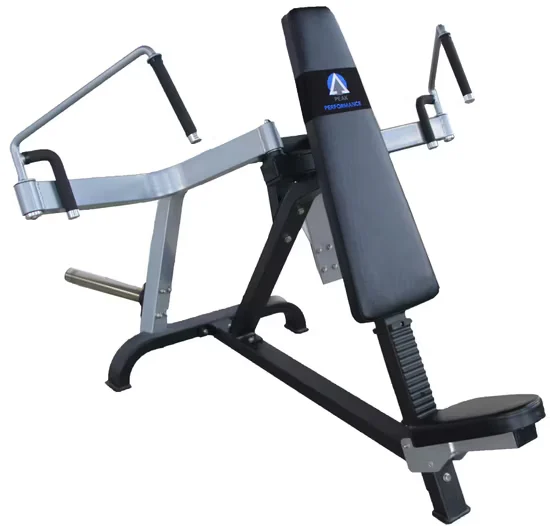
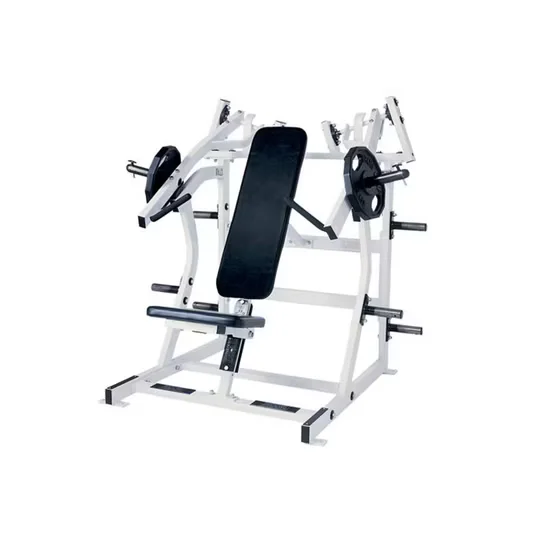
Commercial ISO-Lateral Incline Press, 3×3 inch Frame Tube, 137kg Net Weight — plate loaded chest station engineered with robotic MIG continuous welding and sealed industrial bearings for smooth convergence under heavy commercial use. 200μm powder coating with sandblast pre-treatment resists chipping at contact points across high-traffic environments. Every unit undergoes individual load testing before shipment, backed by a 10-year frame warranty and factory-direct floor planning support.
// Spec Highlights
• Direct from Manufacturer · No Middlemen · Worldwide Shipping
01
// Material
Imported Solid Wood
Premium hardwood frames sourced for density and visual warmth.
02
// Hardware
Medical-Grade Silent
Whisper-quiet pulleys and springs for clinical environments.
03
// Customization
Appearance OEM
Color, upholstery, and branding tailored to your studio.
04
// Service
Layout Design
Free venue planning for studios and rehab institutions.
Every component is selected for longevity, performance, and aesthetic harmony - from imported hardwood frames to silent medical-grade accessories.
// Features
Traceable 11-Gauge Steel — Every frame tube on this commercial plate loaded iso-lateral incline press traces back to the Q345 mill coil, eliminating the vague "commercial-grade" claims that leave gym operators guessing about real load thresholds.
| Parameter | Value |
|---|---|
| Product Type | Plate Loaded Incline Chest Press |
| Frame Tube Size | 3×3 inch |
| Frame Steel Gauge | 11-gauge |
| Steel Grade | Q235 and Q345 industrial steel, mill-certified |
| Welding Type | Robotic MIG continuous weld |
| Loading Type | Plate loaded |
| Bearing Type | Sealed industrial bearings |
| Exercise Part | Chest |
| Product Dimensions | 1500×1350×1650mm |
| Net Weight | 137kg |
| Powder Coating | 200μm scratch-resistant, sandblast pre-treated |
| Color Options | Optional |
| Upholstery | Available in standard or high-density options |
| Certification | ISO 9001, CE |
| OEM | Available |
| Facility Type | Typical Use |
|---|---|
| Commercial gym strength floor | Primary incline pressing station in plate loaded zones |
| University strength and conditioning room | Athletic development programs requiring iso-lateral convergence |
| Hotel fitness center | Durable, low-maintenance chest station for varied user profiles |
| Crossfit box functional zone | Heavy pressing accessory work alongside barbell programming |
| Rehabilitation and performance center | Controlled unilateral chest loading for return-to-play protocols |
Wall thickness determines whether the cross-member bends or holds its geometry when users load uneven plates on each side.
Operators routinely encounter incline presses marketed as "commercial-grade" with no verifiable steel gauge on the frame tubing. When a user loads four plates on one side and two on the other, thinner tubes twist at the weld joints, shifting the convergence axis and changing the pressing path mid-set. Spot welds at the seat-to-frame junction pass visual inspection on day one, then propagate micro-cracks under repeated off-center loading. The commercial plate loaded iso-lateral incline press addresses these failure modes with 11-gauge steel tubing cut to ±0.1mm tolerance by 6kW fiber lasers, ensuring every mating surface seats flush before welding begins. [NEED_CITE: weld classification and fatigue performance in structural steel]
This station targets the upper pectoral and anterior deltoid complex through a converging iso-lateral path, filling the gap between flat bench work and overhead pressing in a complete chest station lineup. It pairs logically with a flat iso-lateral press and a decline station to cover the full pressing plane without redundant movement patterns. The commercial plate loaded iso-lateral incline press suits facilities running moderate-to-high daily traffic where plate loaded stations outlast selectorized alternatives under heavy use. The frame geometry and seat angle accommodate users across a broad anthropometric range, and the iso-lateral arm design allows unilateral loading for athletes recovering from shoulder imbalances.
Each pressing repetition drives eccentric force through the pivot bearings and into the main cross-tube weld, creating a predictable fatigue cycle at the arm-to-frame connection point. In high-traffic commercial environments, this junction endures hundreds of load-unload events daily, with the highest stress concentrated where the pivot bolt passes through the frame ear. Sealed industrial bearings resist sweat and chalk contamination that accelerates wear in open bushing designs, maintaining smooth arm convergence through extended use intervals. The powder coating at sleeve contact zones faces repeated impact from plate loading, making the 200μm sandblast-pre-treated finish critical for preventing bare steel exposure. [NEED_CITE: EN 957 structural requirements for stationary training equipment]
The 3×3 inch tube cross-section provides the moment of inertia needed to resist bending when plates hang off-center from the load horns, a geometry advantage over smaller rectangular tubes that deflect visibly under heavy loads. Robotic MIG continuous welding produce*h, eliminating the cold-start inconsistencies that plague manual spot welding at critical frame junctions. Sealed bearings at the pivot points maintain rotational tolerance without the periodic lubrication that open bushings demand in humid gym environments. The sandblast pre-treatment before powder coating removes mill scale and creates mechanical adhesion, so the 200μm finish resists chipping at the contact points where plates and collars strike the frame during loading.
Thinner wall tubing deflects measurably when a user loads heavy plates asymmetrically, shifting the pressing path and placing uneven stress on the shoulder joint over repeated sessions. Spot welds at structural junctions may hold during factory testing but develop fatigue cracks within months of commercial traffic, creating liability exposure for facility operators who skip frame inspection. Non-sealed bearings absorb sweat and chalk dust into the race, developing play that users feel as wobble in the pressing arms and that maintenance staff must address through unplanned downtime. Low-density upholstery compresses past its recovery threshold within the first year of heavy use, splitting at the seams and requiring complete pad replacement rather than simple surface repair.
The 11-gauge frame steel arrives with mill certification traceable to the originating coil, so operators can verify the material specification matches what was quoted. Robotic MIG continuous welding on every structural joint means the weld line you inspect at delivery is the same weld line performing under load years later. Every unit undergoes individual load testing before crating, not sample-based batch testing that assumes uniformity across a production run. The 200μm industrial powder coating withstands daily cleaning chemicals and sweat exposure without blistering at high-contact zones. A 10-year frame warranty backs the structural claim with contractual commitment. Floor planning CAD support ensures the 1500×1350mm footprint integrates into your strength zone layout with verified safety clearances on all sides.
Share your strength floor square footage and planned equipment list to receive a 2D or 3D layout showing how this station integrates with your existing or planned pressing lineup. Specify your average daily member traffic to confirm the structural grade matches your usage intensity. Provide your target user demographic height and weight ranges so we can verify seat geometry and arm convergence fit your population. Note any custom requirements including frame color, logo placement, or upholstery material preference for OEM fulfillment.
Q: How do I distinguish true commercial-grade plate loaded equipment from light-commercial alternatives?
A: Request verifiable steel gauge documentation rather than accepting "commercial-grade" as a label. True commercial frames use 11-gauge or thicker tubing with mill certificates traceable to the coil, continuous MIG welding on all structural joints, and sealed bearings at every pivot point. Ask whether load testing is performed on every unit or only on production samples, as sample-based testing misses individual weld variations.
Q: What impact does frame tube size have on load capacity and long-term structural integrity?
A: The 3×3 inch tube cross-section provides higher resistance to bending under off-center plate loads compared to smaller rectangular profiles. This geometry maintains the pressing path alignment through years of heavy asymmetric loading, preventing the gradual frame twist that shifts convergence patterns and changes the movement feel users experience over the equipment lifespan.
Q: Should I choose plate loaded or selectorized incline presses for a high-traffic facility?
A: Plate loaded stations generally outlast selectorized alternatives in high-traffic environments because they eliminate weight stack guide rods, cable systems, and selector pins — all components that develop play or bind under heavy daily use. The trade-off is that users handle plates manually, which suits strength-focused facilities but may not fit environments where rapid weight changes between users are required.
Q: What spacing and clearance do I need around an iso-lateral incline press station?
A: Plan for plate loading clearance on both sides of the frame plus user entry and exit paths. The 1500×1350mm footprint must be supplemented with lateral space for loading and unloading plates safely without striking adjacent equipment or walls. Request CAD layout files to verify clearances against your specific floor plan before finalizing station placement.
Q: What maintenance intervals should I expect for sealed bearings in a commercial environment?
A: Sealed industrial bearings at pivot points require visual inspection quarterly for any signs of lateral play or contamination ingress. Unlike open bushings that need periodic lubrication, sealed units run maintenance-free until wear indicators appear, at which point the bearing cartridge is replaced as a single unit rather than rebuilt. [NEED_CITE: bearing service life under cyclic loading in fitness equipment]
Premium aesthetics meet quiet operation for boutique studio environments.
Medical-grade silence and precision for sports & postpartum recovery.
Furniture-grade craftsmanship for premium residential installations.
Compact premium setups for one-on-one and small-group training.
Aesthetic Pilates integration for hybrid wellness studio programming.
Multi-unit deployment with instructor-grade reliability for certification programs.
Tell us about your project. Our team will respond within 24 hours with pricing, customization options, and shipping details.
// Sales Director
William
+86 132 2531 1800
// Export Manager
Bella
+86 198 5412 8032
william@bickfit.com