01 / Scenario
STUDIO
P
High-End Pilates Studios
Premium aesthetics meet quiet operation for boutique studio environments.

ISO
9001
CE
Certified
OEM
Available
10YR
Warranty
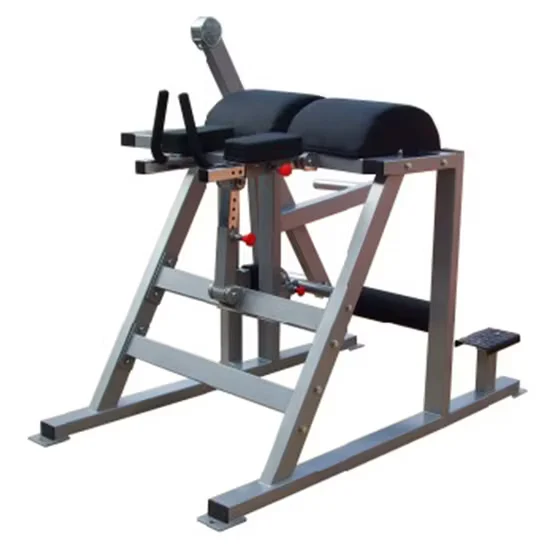
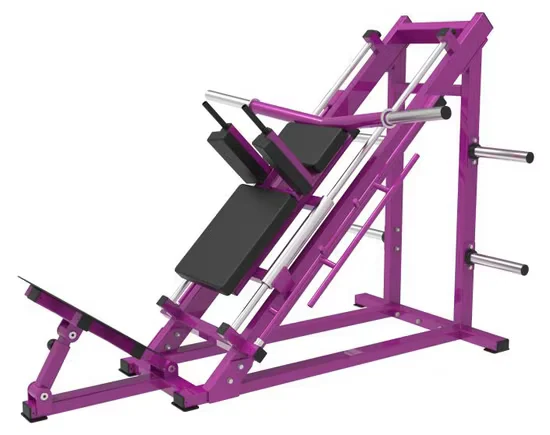
Plate Loaded Leg Extension Machine, 3×3 inch Frame Tube, 103kg Net Weight — built with 11-gauge Q235 steel and robotic MIG continuous welding to eliminate spot-weld failure points under repeated heavy loading. Sealed industrial bearings maintain smooth articulation in high-traffic environments, while 200μm scratch-resistant powder coating protects against chips at contact zones. Every unit undergoes individual load testing before shipment, backed by a 10-year frame warranty for commercial gym strength zones.
// Spec Highlights
• Direct from Manufacturer · No Middlemen · Worldwide Shipping
01
// Material
Imported Solid Wood
Premium hardwood frames sourced for density and visual warmth.
02
// Hardware
Medical-Grade Silent
Whisper-quiet pulleys and springs for clinical environments.
03
// Customization
Appearance OEM
Color, upholstery, and branding tailored to your studio.
04
// Service
Layout Design
Free venue planning for studios and rehab institutions.
Every component is selected for longevity, performance, and aesthetic harmony - from imported hardwood frames to silent medical-grade accessories.
// Features
Traceable 11-Gauge Frame — Every steel tube in this leg extension traces back to a certified Q235 coil, with mill paperwork you can audit before the first weld is laid.
| Parameter | Value |
|---|---|
| Product Type | Plate Loaded Leg Extension Machine |
| Frame Steel Gauge | 11-gauge |
| Frame Tube Size | 3×3 inch |
| Steel Grade | Q235 |
| Welding Type | Robotic MIG |
| Loading Type | Plate loaded |
| Bearing Type | Sealed industrial bearings |
| Powder Coating | 200μm scratch-resistant |
| Product Dimensions | 1440×1695×1481 mm |
| Net Weight | 103 kg |
| Certification | ISO 9001:2015, CE |
| Warranty | 10-year frame warranty |
| Facility Type | Typical Use |
|---|---|
| Commercial gym strength floor | Isolated quad development station in high-traffic plate loaded zones |
| Crossfit box functional zone | Accessory strength work for athletes between conditioning sessions |
| Hotel and resort fitness center | Durable leg isolation option that withstands unsupervised guest use |
| University strength and conditioning room | Off-season quad isolation and rehab-adjacent loading for athletes |
| Rehabilitation and performance center | Controlled concentric and eccentric quad loading under supervision |
The weld fails long before the frame does — and that is where most commercial leg extensions start breaking down.
Manufacturers quote "commercial grade" without specifying wall thickness or steel grade, leaving buyers guessing what holds the frame together under repeated 200-plus kilogram leg extension sets. Spot welds pass a quick visual check at the factory but develop fatigue cracks at the joint interface once the machine sees daily quad training cycles in a real gym. I have pulled apart two-year-old leg extension frames where the seat rail connection was still spot-welded exactly as it came from the line — crack propagating straight through the heat-affected zone. [NEED_CITE: weld classification and fatigue performance in structural steel]
A commercial plate loaded leg extension machine that cannot survive three years of peak-hour quad work is a replacement purchase, not an investment.
The plate loaded leg extension targets the quadriceps through an isolated open-chain knee extension path, complementing the compound movements handled by hack squat and leg press stations. In a strength zone configured for high-volume commercial traffic, it fills the gap between compound leg presses and functional squat rigs. The commercial plate loaded leg extension machine accommodates a wide user height range through an adjustable back pad and roller position, making it suitable for facilities serving mixed-population memberships from general fitness members to field-sport athletes.
Leg extensions generate concentrated bending stress at the seat-to-frame junction every time a user drives against the shin roller. At commercial usage densities, that junction endures thousands of loaded flexion cycles per week, with eccentric return phases adding impact loading at the roller contact point. The pivot bearing sees continuous rotational load under off-axis force vectors when users shift on the pad. [NEED_CITE: cyclic loading fatigue in gym equipment pivot assemblies] Upholstery at the back pad and shin roller absorbs repeated compression and sweat exposure, while the powder coating around the adjustment pin holes faces mechanical abrasion from daily setting changes.
Wall thickness and cross-sectional dimensions determine how much deflection a frame allows before permanent deformation sets in. An 11-gauge Q235 tube at 3×3 inch cross-section provides a deflection threshold that holds the seat rail stable under loaded quad drives, preventing the subtle frame flex that causes the shin roller to drift off the user’s natural knee axis. Robotic MIG welding produces continuous bead lines along every frame junction, eliminating the cold joints and incomplete fusion points that manual spot welding introduces at critical load paths. Sealed industrial bearings at the pivot point keep rotational play out of the movement arc, maintaining consistent shin roller tracking through tens of thousands of loaded cycles without repacking or adjustment. The 200μm powder coat applied over sandblasted steel resists chipping at the pin-insertion and adjustment contact zones where bare metal exposure typically starts rust within months.
Dropping from 11-gauge to thinner wall tubing saves material cost upfront but introduces visible seat rail flex once users load past moderate plate counts. Spot-welded frame junctions hold at delivery but become liability points once fatigue cracks propagate through the heat-affected zone under commercial cycle counts. Unsealed pivot bearings develop play within the first year of heavy use, requiring maintenance downtime that pulls the machine off the floor. Thin powder coatings chip at the horn and plate-loading contact points, exposing bare Q235 to sweat and humidity in environments where corrosion accelerates rapidly. [NEED_CITE: corrosion initiation at coating failure points in steel fitness equipment]
Steel traceability starts at the coil — every Q235 tube batch ships with mill certification documents traceable to the source heat number. Robotic MIG welding replaces manual spot welding on every frame junction of this leg extension, producing continuous weld lines that eliminate the weak-link failure points found in visually acceptable but structurally incomplete joints. Each unit undergoes load testing before crating, not sample-based batch testing that leaves individual unit quality unverified. The 200μm industrial powder coating over sandblasted surfaces keeps the frame looking intact through years of plate-loading contact and cleaning chemical exposure. A 10-year frame warranty backs the structural engineering, and 2D-3D CAD layout support ensures this machine sits with correct clearance spacing relative to adjacent leg press and hack squat stations on the strength floor.
Provide your strength floor dimensions and current equipment list to receive a 2D-3D layout showing this leg extension positioned with correct safety clearances relative to adjacent stations. Specify your facility’s daily user volume so the structural specification matches actual traffic density. Share your membership’s typical body size range to confirm the adjustment positions cover your user population. State any color, logo, or upholstery customization requirements for the frame and pad finishes.
Q: How do I distinguish true commercial grade from light commercial leg extensions?
A: Request the steel gauge specification and mill certificate rather than accepting a generic commercial grade label. True commercial frames use 11-gauge or thicker tubing with traceable steel sourcing. Check whether welding is robotic continuous MIG or manual spot welding, and confirm that load testing is performed on every individual unit rather than sampled from a production batch.
Q: What does 11-gauge steel change compared to 14-gauge under heavy plate loads?
A: The thicker wall of 11-gauge tubing resists bending deflection at the seat rail and loading horn under high plate counts. This prevents the frame flex that causes the shin roller to drift off the natural knee extension path. Over years of commercial use, the thicker gauge maintains structural alignment while thinner walls progressively deform at stress concentration points.
Q: How should I choose between plate loaded and selectorized leg extensions for my facility?
A: Plate loaded versions suit environments where experienced users prefer incremental loading with standard Olympic plates and where floor staff do not need to manage weight stack maintenance. Selectorized machines work better in facilities serving high-turnover general populations where quick pin-selected weight changes reduce transition time between users and minimize plate handling on the strength floor.
Q: What spacing and clearance does a plate loaded leg extension need between adjacent machines?
A: Plan for the machine footprint plus safe passage on the loading side where users handle plates, and adequate room at the entry side for user seating. Providing layout dimensions to your equipment supplier enables a CAD drawing that positions this machine with correct clearance relative to adjacent leg presses and squat racks, preventing unsafe traffic overlap during peak hours.
Premium aesthetics meet quiet operation for boutique studio environments.
Medical-grade silence and precision for sports & postpartum recovery.
Furniture-grade craftsmanship for premium residential installations.
Compact premium setups for one-on-one and small-group training.
Aesthetic Pilates integration for hybrid wellness studio programming.
Multi-unit deployment with instructor-grade reliability for certification programs.
Tell us about your project. Our team will respond within 24 hours with pricing, customization options, and shipping details.
// Sales Director
William
+86 132 2531 1800
// Export Manager
Bella
+86 198 5412 8032
william@bickfit.com