01 / Scenario
STUDIO
P
High-End Pilates Studios
Premium aesthetics meet quiet operation for boutique studio environments.
ISO
9001
CE
Certified
OEM
Available
10YR
Warranty
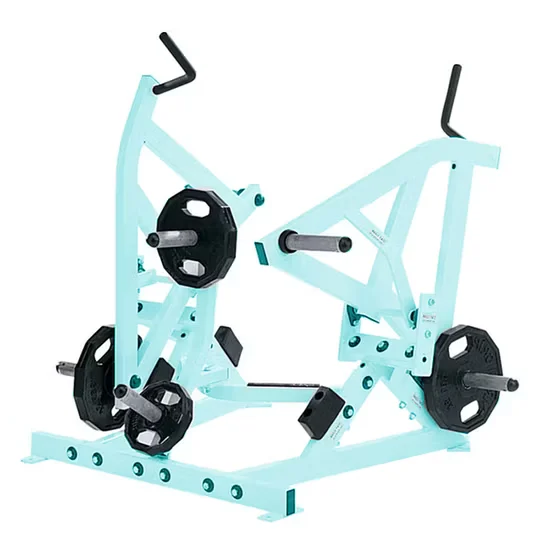
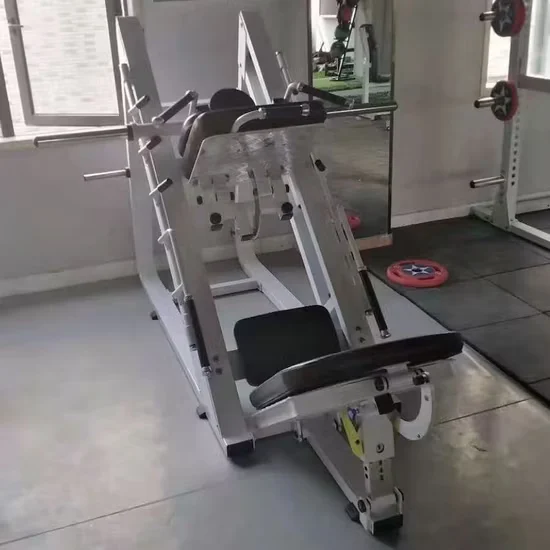
Commercial Plate Loaded Leg Pendulum Squat Machine, 50×100×3mm Steel Frame, 170kg Unit Weight — engineered with 3mm wall thickness for high-torque squat patterns, plate-loaded system enabling progressive overload without guide rod binding, and pendulum轨迹 reducing knee shear force. Robotic MIG continuous welding ensures structural integrity under repeated heavy loading. Every unit undergoes full load testing before shipment, backed by a 10-year frame warranty and free floor planning support.
// Spec Highlights
• Direct from Manufacturer · No Middlemen · Worldwide Shipping
01
// Material
Imported Solid Wood
Premium hardwood frames sourced for density and visual warmth.
02
// Hardware
Medical-Grade Silent
Whisper-quiet pulleys and springs for clinical environments.
03
// Customization
Appearance OEM
Color, upholstery, and branding tailored to your studio.
04
// Service
Layout Design
Free venue planning for studios and rehab institutions.
Every component is selected for longevity, performance, and aesthetic harmony - from imported hardwood frames to silent medical-grade accessories.
// Features
Traceable Steel Frame — Mill-certified 50×100×3mm rectangular tubing forms the primary load path on this plate loaded pendulum squat machine, eliminating ambiguity around frame specifications.
| Parameter | Value |
|---|---|
| Product Type | Plate Loaded Leg Pendulum Squat Machine |
| Frame Tube Size | 50×100×3mm |
| Steel Grade | Q235 / Q345 |
| Welding Type | Robotic MIG continuous weld |
| Loading Type | Plate loaded |
| Powder Coating | 200μm scratch-resistant |
| Product Dimensions | 1550×800×1500mm |
| Net Weight | 170kg |
| Color Options | Customized |
| Certification | ISO 9001, CE, RoHS |
| Facility Type | Typical Use |
|---|---|
| Commercial gym strength floor | High-volume lower body training stations for general membership |
| University strength and conditioning room | Heavy loading protocols for athletic development programs |
| Hotel fitness center | Durable leg training option within compact footprint constraints |
| CrossFit box functional zone | Supplementary strength work alongside Olympic lifting platforms |
| Rehabilitation and performance center | Controlled squat patterning with reduced axial spinal loading |
A 3mm wall thickness keeps the frame rigid when users load beyond 200kg, while thinner alternatives deflect under the same stress.
When a facility buyer reads "commercial grade" on a spec sheet without a verifiable tube dimension, the frame is often built from 2mm or thinner wall stock. Under repeated heavy loading cycles—common in any busy strength zone—these tubes develop permanent deformation at the stress concentration points near the pivot axis. The welds may hold, but the steel itself yields first. On this commercial plate loaded pendulum squat machine, the 50×100×3mm rectangular section provides a meaningfully higher resistance to bending before the welds ever reach their fatigue limit [NEED_CITE: structural tube bending resistance and wall thickness relationship in load-bearing gym equipment frames].
The pendulum squat pattern targets the quadriceps, glutes, and adductors through a fixed arc that removes the balance demands of a free-weight back squat. Within a strength floor layout, it sits naturally between a leg press and a hack squat, offering a movement profile that reduces lumbar compression while still allowing progressive overload. The fixed footplate and shoulder pad assembly accommodate users across a wide range of statures without manual adjustment between sets. For high-traffic commercial environments, the plate loaded pendulum squat machine offers rapid loading and unloading without the mechanical complexity of a selectorized stack.
Every loaded repetition generates a combination of static compression through the shoulder pads and eccentric drag across the pivot bearings at the bottom of the arc. In a busy gym running ten or more hours daily, the pivot bearings and frame junctions accumulate thousands of these cycles per week. Continuous robotic MIG welding at these junctions prevents the crack initiation that spot-welded connections develop after repeated thermal and mechanical stress [NEED_CITE: fatigue crack propagation in spot-welded versus continuous-welded structural joints]. The 200μm powder coating resists abrasion at contact points where plates are loaded and unloaded, and it tolerates the sweat and cleaning chemicals typical in commercial environments.
The 50×100×3mm rectangular hollow section determines how much the main frame resists bending under off-center loads—thicker wall stock increases the section modulus, meaning the tube deflects less before reaching its elastic limit. Robotic MIG welding produces continuous weld beads along every joint, eliminating the discontinuities that occur when manual spot welding leaves cold joints or incomplete fusion zones. The plate loaded design avoids the guide rod binding that occurs on selectorized machines when weight stacks are loaded unevenly or when cables stretch over time. A 200μm scratch-resistant powder coating applied over sandblasted steel prevents bare metal exposure at high-contact zones, which is where thin coatings typically fail first.
When manufacturers cut frame costs by stepping down from 3mm to 2mm wall thickness, the tube reaches its yield point sooner under heavy eccentric loading. Spot-welded joints on thin-wall frames create localized stress risers that crack under repeated impact, turning a structural failure into a liability question for the facility operator. Non-sealed bearings in the pivot assembly allow sweat and dust infiltration, which accelerates wear and produces play that requires service intervention. Low-density upholstery on shoulder pads compresses within months of commercial use, exposing the operator to frequent reupholstery costs or user complaints about pad comfort [NEED_CITE: upholstery density and compression set in commercial gym equipment pads].
The 50×100×3mm steel is sourced from certified mills with traceable coil documentation, so the frame specification is verifiable rather than claimed. Every unit goes through a full load test before shipment—not a sample-based protocol, but individual verification. The 200μm powder coating is applied after sandblasting to ensure adhesion across the entire frame surface. The compact 1550×800mm footprint allows facility planners to position this machine with the required clearance on each side for safe plate loading, and CAD layout support is available for integration into a full strength zone plan. OEM private labeling and color customization are supported for operators building a branded environment.
Provide your facility floor area and existing equipment list to receive a layout recommendation that accounts for the 1550×800mm footprint and required safety clearances. Specify expected daily user volume so the structural grade matches your operational intensity. Confirm the user demographic—competitive athletes versus general membership—to validate the loading range and pad configuration. State any branding requirements including frame color, logo placement, or custom upholstery to align with your facility identity.
Q: How do I verify the actual wall thickness of the frame tubing before purchase?
A: Request a wall thickness measurement report from the manufacturer that references the specific production batch. A reputable supplier will provide caliper measurements taken at multiple points on the 50×100mm rectangular tube, confirming the 3mm specification. Cross-reference this with the mill certificate for the steel coil used in that production run.
Q: What is the practical difference between plate loaded and selectorized for a pendulum squat?
A: Plate loaded configurations allow incremental weight additions using standard Olympic plates, which supports progressive overload protocols common in strength-focused facilities. Selectorized stacks offer faster weight changes between users but introduce guide rods and cables that require periodic maintenance. For high-frequency commercial environments prioritizing heavy loading, plate loaded systems have fewer wear components.
Q: How does pendulum squat biomechanics compare to a traditional hack squat?
A: The pendulum arc guides the user through a path that maintains a more upright torso position, reducing shear forces on the lumbar spine compared to the inclined back pad of a hack squat. The movement pattern also keeps knee travel aligned with natural joint mechanics, making it suitable for users with varying mobility levels across a commercial membership base.
Q: What clearance is needed around the machine for safe operation?
A: Plan for at least 600mm on the loading side for plate handling and user passage, with similar clearance behind the machine for the full range of pendulum travel. Consider additional floor space for plate storage racks nearby to keep the training area organized and reduce trip hazards during busy operational hours.
Premium aesthetics meet quiet operation for boutique studio environments.
Medical-grade silence and precision for sports & postpartum recovery.
Furniture-grade craftsmanship for premium residential installations.
Compact premium setups for one-on-one and small-group training.
Aesthetic Pilates integration for hybrid wellness studio programming.
Multi-unit deployment with instructor-grade reliability for certification programs.
Tell us about your project. Our team will respond within 24 hours with pricing, customization options, and shipping details.
// Sales Director
William
+86 132 2531 1800
// Export Manager
Bella
+86 198 5412 8032
william@bickfit.com