01 / Scenario
STUDIO
P
High-End Pilates Studios
Premium aesthetics meet quiet operation for boutique studio environments.
ISO
9001
CE
Certified
OEM
Available
10YR
Warranty
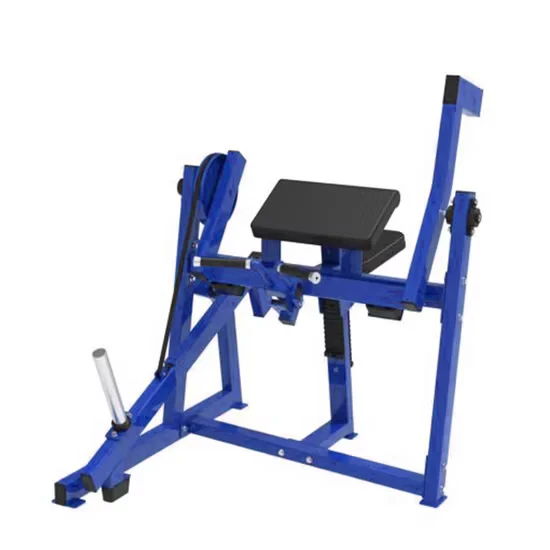
Plate Loaded Seated Biceps Machine, 1466×1292×1502mm, 93kg Net Weight — built with Q235 industrial steel frame and robotic MIG continuous welding to eliminate cold joints under cyclic loading. Sealed bearing pivot points deliver consistent resistance without cable or stack maintenance typical in high-traffic commercial environments. Every unit undergoes individual load testing before shipment, backed by a 10-year frame warranty and factory-direct floor planning support.
// Spec Highlights
• Direct from Manufacturer · No Middlemen · Worldwide Shipping
01
// Material
Imported Solid Wood
Premium hardwood frames sourced for density and visual warmth.
02
// Hardware
Medical-Grade Silent
Whisper-quiet pulleys and springs for clinical environments.
03
// Customization
Appearance OEM
Color, upholstery, and branding tailored to your studio.
04
// Service
Layout Design
Free venue planning for studios and rehab institutions.
Every component is selected for longevity, performance, and aesthetic harmony - from imported hardwood frames to silent medical-grade accessories.
// Features
Mill-Certified Frame Steel — every coil traceable through the production chain, eliminating the guesswork behind "commercial grade" tubing claims.
| Parameter | Value |
|---|---|
| Product Type | Plate Loaded Bicep Curl Machine |
| Loading Type | Plate Loaded |
| Exercise Part | Biceps |
| Frame Material | Q235 / Q345 Industrial Steel, 11-Gauge |
| Frame Tube Size | 3×3 Inch |
| Welding Type | Robotic MIG Continuous Weld |
| Bearing Type | Sealed Industrial Bearing |
| Powder Coating | 200μm Scratch-Resistant, Sandblast Pre-Treated |
| Upholstery | Standard or High-Density Options Available |
| Product Dimensions | 1466×1292×1502mm |
| Net Weight | 93kg |
| Certification | ISO 9001, CE |
| Origin | Dezhou, Shandong, China |
| HS Code | 9506911900 |
| Warranty | 10-Year Frame |
| Facility Type | Typical Use |
|---|---|
| Commercial Gym Strength Floor | Dedicated arm isolation station for high-volume member traffic |
| Hotel and Resort Fitness Center | Durable biceps training for diverse guest usage patterns |
| University Athletic Department | Team strength programming with plate loaded flexibility |
| CrossFit Box Functional Zone | Accessory arm work complementing compound barbell sessions |
| Rehabilitation and Performance Center | Controlled isolation movement for late-stage return-to-play protocols |
Continuous weld lines eliminate the cold joints that crack first under cyclic plate loading.
Most buyers see a clean powder coat and assume the weld underneath is sound. I have pulled machines off the floor within eight months because spot-welded pivot brackets developed hairline fractures — invisible under paint, catastrophic under repeated eccentric loading. A commercial plate loaded seated biceps curl machine takes concentrated lateral force every time a user unloads plates on one side, and that off-center stress travels directly into the frame joints [NEED_CITE: weld classification and fatigue performance in structural steel]. When those joints are spot-welded, the gaps between weld points become crack initiation zones that propagate silently until failure.
This commercial plate loaded seated biceps curl machine targets elbow flexion through a fixed converging arc, isolating the biceps brachii and brachialis without requiring the stabilizer demand of free-weight curls. On a strength floor, it sits naturally alongside triceps extension and shoulder press stations to form a complete upper-arm training cluster. The fixed seat and pad geometry accommodate users across a wide anthropometric range, from shorter-limbed athletes to taller lifters who typically struggle with reach on compact curl benches. Facilities running high member density benefit from the plate loaded format — no cables to snap, no weight stack pins to jam during peak hours.
Every rep on this station drives shear force through the pivot axis where the lever arm meets the main frame [NEED_CITE: EN 957 structural requirements for stationary training equipment]. In a facility operating ten hours daily, that pivot cycles thousands of times per week — sometimes with balanced plate loads, sometimes with a single plate on one horn creating torsional twist. The sealed industrial bearings at this junction prevent the micro-play that bushing-type joints develop when sweat and dust infiltrate the contact surface. Upholstery and grip contact points face their own wear cycle: vinyl compression under repeated seating, handle knurling degradation from chalk and friction, and powder coating abrasion where plates slide against the loading horns.
The 11-gauge frame steel paired with 3×3 inch tube cross-section determines how much the main upright deflects when a member loads heavy plates and pauses mid-rep — thinner-walled tubing will flex visibly, altering the resistance curve and loosening fastener preload over time. Robotic MIG continuous welding ensures the pivot bracket receives an uninterrupted weld bead, removing the unfused gaps inherent to spot welding that become fatigue crack origins under thousands of loading cycles. The sandblast pre-treatment before 200μm powder coating gives the finish mechanical adhesion to the steel surface, preventing the chip-and-rust cascade that starts at plate contact zones on machines finished with thinner single-pass coats. Sealed bearings at the pivot axis keep the lever arm tracking true without the periodic adjustment that open bushings demand in high-traffic environments.
Thin-walled frame tube on a plate loaded curl station shows its weakness the first time a strong user pauses with heavy plates — visible frame deflection that transfers to fastener fatigue and eventual joint looseness. Spot-welded lever arm brackets carry liability risk: a weld failure mid-set drops the loaded arm suddenly, and the gym operator absorbs the injury claim. Non-sealed pivot bushings require quarterly teardown and replacement in commercial settings, a maintenance cost that accumulates fast across a floor of multiple machines. Low-density upholstery foam compresses beyond recovery within months of daily use, leaving a flat seat pad that members notice immediately. Undersized powder coating chips at the plate loading horns under routine handling, exposing bare steel to sweat-driven corrosion that spreads under the remaining finish.
The 11-gauge steel specification on this biceps machine comes with mill certification traceable to the coil — you can verify what is actually in the frame tube, not just what the label claims. Robotic MIG continuous welding on the pivot bracket eliminates the cold joints that cause field failures in comparable plate loaded machines. Every unit undergoes individual load testing before shipment rather than sample-based batch inspection, so this specific machine has been proven under weight before it reaches your floor. The 200μm powder coating with sandblast pre-treatment protects the plate loading horns and seat mount contact zones where finish wear concentrates. A 10-year frame warranty backs the structural claims. Floor planning CAD support covers the footprint and safe user clearance around this station so it integrates cleanly into your strength zone layout without dead space or pinch points.
Provide your strength floor area and existing equipment list to receive 2D/3D layout planning that positions this biceps station with correct clearance spacing. Specify your expected daily user volume so the structural grade matches your traffic pattern. Confirm the anthropometric range of your member base to verify seat and pad geometry suitability. Communicate any custom finish, color, or logo requirements early in the specification process.
Q: How do I tell true commercial grade from light commercial in a plate loaded biceps machine?
A: Request mill-certified steel documentation traceable to the coil — genuine commercial frames specify gauge, tube dimension, and steel grade rather than vague "heavy-duty" claims. Check whether welding is continuous MIG or spot-welded by examining joint photos. Confirm whether load testing applies to every unit or only production samples. Light commercial machines typically omit these verifications and rely on marketing language instead of structural data.
Q: What frame gauge and tube size should a plate loaded curl machine have for heavy daily use?
A: An 11-gauge steel frame with a 3×3 inch tube cross-section provides the deflection resistance needed for repeated heavy plate loading in commercial environments. Thinner gauge or smaller tube sections will flex visibly under load, accelerating fastener fatigue and altering the resistance path. Always cross-reference the stated specification against a mill certificate rather than accepting a brochure claim alone.
Q: Is plate loaded or selectorized better suited for high-traffic commercial gym floors?
A: Plate loaded machines eliminate cable, pulley, and weight stack maintenance entirely — no guide rods to bind, no aircraft cables to fray, no selector pins to jam. This makes them particularly suited for facilities where maintenance windows are limited and daily use volume is high. Selectorized units offer convenience for quick weight changes but carry more mechanical wear points that require scheduled service intervals.
Q: How should I plan floor spacing around a plate loaded biceps station?
A: Account for the machine footprint plus safe passage on the loading side where members handle plates, plus clearance behind the seat for the lever arm travel path. Request CAD floor planning from the manufacturer that overlays this station alongside adjacent equipment to verify spacing before installation. Inadequate clearance creates pinch points and liability exposure in high-traffic strength zones.
Q: How often does upholstery need replacement on a daily-use commercial biceps machine?
A: Upholstery replacement cycles depend on daily user volume and foam density specification. Standard density foam compresses noticeably within months of continuous commercial use, while high-density options extend the service interval meaningfully. Specify vinyl with reinforced stitching at stress points, and confirm that replacement pads are available as aftermarket parts from the manufacturer rather than requiring full seat assembly replacement.
Premium aesthetics meet quiet operation for boutique studio environments.
Medical-grade silence and precision for sports & postpartum recovery.
Furniture-grade craftsmanship for premium residential installations.
Compact premium setups for one-on-one and small-group training.
Aesthetic Pilates integration for hybrid wellness studio programming.
Multi-unit deployment with instructor-grade reliability for certification programs.
Tell us about your project. Our team will respond within 24 hours with pricing, customization options, and shipping details.
// Sales Director
William
+86 132 2531 1800
// Export Manager
Bella
+86 198 5412 8032
william@bickfit.com