01 / Scenario
STUDIO
P
High-End Pilates Studios
Premium aesthetics meet quiet operation for boutique studio environments.

ISO
9001
CE
Certified
OEM
Available
10YR
Warranty
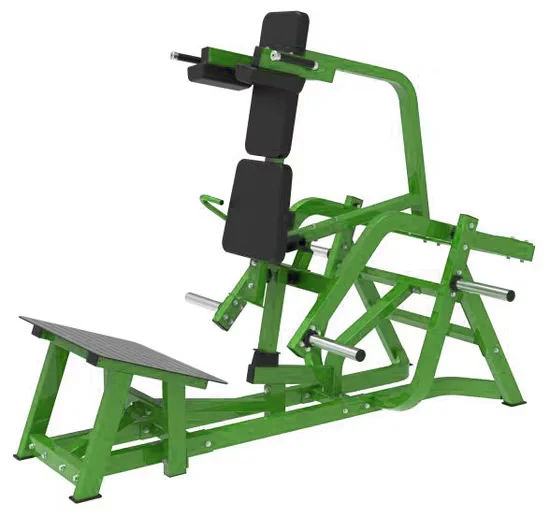
Plate Loaded Squat Lunge Machine, Plate Loaded, 1623×1691×872mm, 122kg — built with heavy-duty steel frame construction and continuous robotic MIG welding for structural integrity under repeated heavy loading in high-traffic commercial environments. ISO 9001 and CE certified, engineered for commercial gyms, hotels, and institutional athletic facilities. Every unit undergoes three-stage inspection with structural load testing before shipment, backed by a 10-year frame warranty and mill-certified steel traceability.
// Spec Highlights
• Direct from Manufacturer · No Middlemen · Worldwide Shipping
01
// Material
Imported Solid Wood
Premium hardwood frames sourced for density and visual warmth.
02
// Hardware
Medical-Grade Silent
Whisper-quiet pulleys and springs for clinical environments.
03
// Customization
Appearance OEM
Color, upholstery, and branding tailored to your studio.
04
// Service
Layout Design
Free venue planning for studios and rehab institutions.
Every component is selected for longevity, performance, and aesthetic harmony - from imported hardwood frames to silent medical-grade accessories.
// Features
10-Year Frame Backing — Every Plate Loaded Squat Lunge Machine carries a decade-long structural warranty, supported by mill-certified 11-gauge steel traceable to the source coil.
| Parameter | Value |
|---|---|
| Product Type | Plate Loaded Squat Lunge Machine |
| Loading Type | Plate loaded |
| Frame Material | Steel, mill-certified Q235 / Q345 |
| Frame Steel Gauge | 11-gauge |
| Frame Tube Size | 3×3 inch |
| Welding Type | Robotic MIG, continuous weld lines |
| Powder Coating | 200μm scratch-resistant, sandblasted substrate |
| Bearing Type | Sealed industrial bearings |
| Pulley System | Aircraft-cable with sealed pulleys |
| Upholstery | Standard or high-density options |
| Product Dimensions | 1623×1691×872mm |
| Net Weight | 122kg |
| Certification | ISO 9001, CE |
| Warranty | 10-year frame |
| Facility Type | Typical Use |
|---|---|
| Commercial gym strength floor | Primary squat and lunge station in the free-weight zone |
| Hotel and resort fitness center | Heavy-duty lower-body training for transient guests and locals |
| University strength and conditioning room | Athlete unilateral and bilateral leg development |
| CrossFit box functional zone | Supplementary strength work alongside barbell racks |
| Institutional athletic department | Structured leg-day programming for team sports |
Joint integrity is where most plate loaded machines quietly fail, not the tubing itself.
When a commercial plate loaded squat lunge machine sees hundreds of loaded cycles daily, the stress concentrates at every gusset and cross-member junction. We have pulled competitor units off gym floors where the frame tubes showed no deformation at all — but the spot-welded joints had developed hairline fractures within the first year of heavy rotation [NEED_CITE: weld classification and fatigue performance in structural steel]. The problem with spot welding is that it leaves cold joints between contact points, creating micro-gaps that propagate under repeated eccentric loading. A squat-lunge pattern is particularly punishing because the carriage travels through a deep arc, generating lateral torque at the pivot that spot welds were never designed to absorb. Our robotic MIG process lays a continuous bead along every structural node, eliminating the weak links between weld spots.
This plate loaded squat lunge machine targets the sagittal plane through a converging arc pattern, engaging quadriceps, glutes, and stabilizing hip musculature through the full range of a split-stance or bilateral press. In a strength zone layout, it complements a dedicated hip sled, leg press, and hack squat station by offering an iso-lateral movement option that free-weight racks cannot replicate safely at volume. The 1623×1691mm footprint fits standard commercial spacing grids, leaving room for plate storage and user clearance on both sides. It accommodates users from shorter statures through above-average heights because the pivot axis and foot-plate geometry allow a natural stride without requiring adjustment stops.
Every repetition through the squat-lunge arc places a combination of static axial load and dynamic eccentric force on the main pivot bearings and the lower frame cross-members. In a busy commercial environment, a single station may see hundreds of loaded sets per day, each one cycling the carriage through peak torque at the bottom of the range where leverage is least favorable [NEED_CITE: EN 957 structural requirements for stationary training equipment]. The continuous MIG welds at the pivot gussets handle this fatigue cycle without the propagation risk that spot-welded connections present. Sealed industrial bearings at the pivot axis resist sweat ingress and chalk dust, keeping the carriage path smooth across thousands of weekly repetitions. The 200μm powder coating over a sandblasted substrate holds up at the plate-loading horns and foot-plate contact zones, where bare-metal exposure would otherwise invite corrosion within months.
The 11-gauge steel specification refers to the wall thickness of the frame tubing — a gauge that resists visible flex under heavy plate loads where thinner tubing would show deflection during the eccentric phase. The 3×3 inch tube cross-section provides the moment of inertia needed to keep the main uprights from twisting when a user drives unevenly through one leg. Robotic MIG welding ensures that every structural junction receives a continuous penetration weld, which matters because the fatigue life of a frame is dictated by its weakest joint, not its strongest tube. Sealed bearings at the pivot eliminate the lateral play that develops in bushing-based systems when chalk dust and moisture infiltrate the contact surface. The sandblast-plus-powder process bonds the 200μm coating into the substrate profile rather than sitting on top of mill scale, which is why contact-point chipping stays minimal even after years of plate changes and shoe scuffs.
Thinner frame tubing may pass a showroom load test, but under months of commercial squat-lunge cycles it begins to show permanent deformation at the cross-members, shifting the carriage alignment and forcing premature bearing replacement. Spot-welded joints that hold during inspection can fracture under the lateral torque of an off-center lunge, creating a liability event on the gym floor [NEED_CITE: structural failure modes in commercial fitness equipment]. Non-sealed bushings develop play within the first year of high-traffic use, requiring maintenance labor that pulls the machine off the floor repeatedly. Low-density upholstery compresses permanently within months, splitting at the seams and requiring full pad replacements that most suppliers do not stock as spare parts. Thin powder coating chips at the plate horns and foot-plate edges, exposing bare steel to sweat and humidity until corrosion spreads under the adjacent coating.
The mill-certified 11-gauge Q235 and Q345 steel in this commercial plate loaded squat lunge machine is traceable back to the coil, so the gauge claim is verifiable rather than a generic "commercial grade" label. The robotic MIG continuous weld at every pivot gusset and cross-member junction eliminates the spot-weld fracture risk that shows up under eccentric lunge loading. Every unit is load-tested before crating — not sample-tested from a batch — so the specific machine arriving on your floor has been verified under stress. The 200μm industrial powder coating over sandblasted steel holds up at the high-contact plate horns and foot-plate zones. The 10-year frame warranty reflects what the structure is actually engineered to deliver. The 1623×1691mm footprint comes with 2D and 3D CAD layout support so you can plan safe clearance zones around the carriage travel arc before the equipment ships.
Provide your strength zone floor area and current equipment list to receive a 2D or 3D layout that positions this commercial plate loaded squat lunge machine with correct clearance distances from adjacent racks and plate storage. Specify your expected daily user volume so the structural grade and upholstery density can be matched to actual traffic. Share your member demographic height and weight range to confirm that the pivot geometry and foot-plate position suit the population using the station. Indicate any custom color, logo, or upholstery requirements early in the quoting process so powder coating and pad specifications are locked before production begins.
Q: How do you verify that the frame steel is genuinely 11-gauge and not a thinner commercial-grade substitute?
A: The steel used in this machine carries mill certification traceable to the originating coil, so the gauge and grade are documented rather than claimed. You can request the mill certificate before shipment to cross-reference the wall thickness and material specification. This is how industrial purchasers verify structural claims on any load-bearing equipment, and we provide the same documentation standard.
Q: What makes a plate loaded squat lunge design preferable to a selectorized version for commercial use?
A: Plate loaded machines eliminate the weight stack guide rods and cable-pulley systems that require periodic maintenance in selectorized designs. The direct plate-to-carriage connection has fewer moving parts and handles heavier total loads without stack binding. For facilities where members load beyond typical pin-select limits, plate loaded stations offer a higher ceiling with a simpler maintenance profile.
Q: What floor spacing and safety clearances are needed around this station?
A: The 1623×1691mm footprint defines the machine boundary, but you need additional clearance on both sides for plate loading and behind the unit for carriage travel at full range. We provide 2D and 3D CAD files that map the exact safe-use envelope so your floor layout avoids unsafe gaps between this station and adjacent racks or functional zones.
Q: What is the expected replacement cycle for upholstery and grip components under high-traffic conditions?
A: Upholstery lifespan depends on daily user volume, cleaning chemical exposure, and whether the standard or high-density pad option is selected. High-density foam resists compression set meaningfully longer under commercial traffic. Replacement pads and grip components are available as spare parts, so you can refresh contact surfaces without pulling the entire machine off the floor for extended periods.
Q: How does the load testing protocol work before shipment?
A: Every individual unit is loaded and cycled through its full range of motion before crating, rather than relying on sample-based testing from a production batch. This catches any weld inconsistency, bearing misalignment, or frame deviation on the specific machine headed to your facility. The test record travels with the shipment documentation for your quality file.
Premium aesthetics meet quiet operation for boutique studio environments.
Medical-grade silence and precision for sports & postpartum recovery.
Furniture-grade craftsmanship for premium residential installations.
Compact premium setups for one-on-one and small-group training.
Aesthetic Pilates integration for hybrid wellness studio programming.
Multi-unit deployment with instructor-grade reliability for certification programs.
Tell us about your project. Our team will respond within 24 hours with pricing, customization options, and shipping details.
// Sales Director
William
+86 132 2531 1800
// Export Manager
Bella
+86 198 5412 8032
william@bickfit.com