01 / Scenario
STUDIO
P
High-End Pilates Studios
Premium aesthetics meet quiet operation for boutique studio environments.

ISO
9001
CE
Certified
OEM
Available
10YR
Warranty
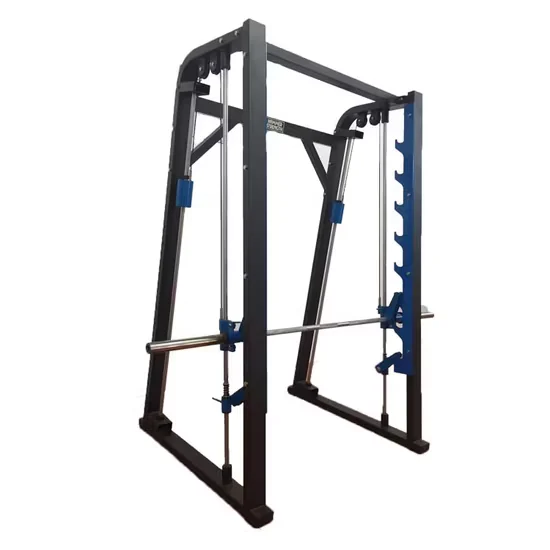
Plate Loaded Squat Rack, Steel Frame, 1830×1200×1876mm — engineered with industrial-grade steel tubing and continuous robotic MIG welding for fatigue-resistant joints under repeated heavy barbell loading. Plate-loaded configuration eliminates cable and pulley wear, minimizing long-term maintenance in high-traffic environments. Every unit undergoes individual load testing before shipment, backed by a 10-year frame warranty and full floor planning support.
// Spec Highlights
• Direct from Manufacturer · No Middlemen · Worldwide Shipping
01
// Material
Imported Solid Wood
Premium hardwood frames sourced for density and visual warmth.
02
// Hardware
Medical-Grade Silent
Whisper-quiet pulleys and springs for clinical environments.
03
// Customization
Appearance OEM
Color, upholstery, and branding tailored to your studio.
04
// Service
Layout Design
Free venue planning for studios and rehab institutions.
Every component is selected for longevity, performance, and aesthetic harmony - from imported hardwood frames to silent medical-grade accessories.
// Features
Mill-Certified Steel Traceability — Every tube used in this commercial plate loaded squat rack traces back to a verified steel coil origin, with documented grade and gauge.
| Parameter | Value |
|---|---|
| Product Type | Plate Loaded Squat Rack |
| Frame Material | Steel |
| Loading Type | Plate loaded |
| Product Dimensions | 1830×1200×1876mm |
| Net Weight | 98kg |
| Exercise Part | Leg & Waist |
| Main Frame Color | Available according to customer requirements |
| Cushion Color | Available according to customer requirements |
| OEM/ODM | Acceptable |
| Certification | ISO 9001, CE |
| Facility Type | Typical Use |
|---|---|
| Commercial gym strength floor | Primary squat station for heavy barbell training |
| University strength and conditioning room | Athlete lower-body strength development |
| Hotel and resort fitness center | Durable squat station for diverse guest use |
| CrossFit box functional zone | Heavy compound movement anchor point |
Frame thickness defines the line between structural confidence and progressive deformation.
A squat rack carrying a loaded barbell faces both static and dynamic stress. When tube walls are thin, the uprights flex under peak load, introducing lateral sway that forces the lifter to stabilize the bar against unintended movement. Over repeated cycles, this flex-fatigue concentrates at joint intersections. Spot welds, which only fuse at discrete points, become the first failure nodes — cracks propagate from the weld perimeter into the base metal. [NEED_CITE: weld classification and fatigue performance in structural steel] A continuous MIG weld distributes force along the entire joint line, fundamentally altering how stress travels through the frame. The 11-gauge steel in this commercial plate loaded squat rack establishes a deformation threshold well above typical peak loads encountered in high-traffic facilities.
The squat rack targets the posterior chain and quadriceps through a vertical loading plane, functioning as the foundational compound station in any strength zone. It complements selectorized leg press and hip sled machines by offering free-weight resistance that demands stabilizer engagement. Facilities with high member throughput benefit from its plate loaded simplicity — fewer moving parts mean fewer service interruptions. The frame height and upright spacing accommodate a wide range of user statures without requiring adjustment between sets. A well-positioned commercial plate loaded squat rack anchors the free-weight area and dictates traffic flow around it.
Every rep cycle introduces a sequence of load states: static hold at the top, eccentric deceleration during descent, and concentric acceleration on the return. The uprights absorb not only the barbell mass but also lateral forces generated when a lifter shifts balance. [NEED_CITE: EN 957 structural requirements for stationary training equipment] Weld intersections at the base plate and cross-member junctions experience repeated stress concentration. The powder coating at contact points — where plates rest against the frame and where J-hooks engage — faces abrasion combined with sweat-driven corrosion. Upholstery surfaces on any integrated back pad endure compression cycles that challenge foam recovery and vinyl seam integrity over thousands of daily repetitions.
The 1830×1200×1876mm footprint establishes how much floor area the station commands and dictates minimum clearance on all sides for safe loading and spotting. Steel gauge directly governs the upright’s resistance to bending moment — thicker walls push the deformation threshold higher before elastic limits are approached. Continuous robotic MIG welding eliminates the discrete stress risers inherent to spot welds, distributing load transfer across the full joint perimeter rather than at isolated fusion points. A 200μm powder coating, applied after sandblast pre-treatment, provides a measurable barrier against abrasion at plate contact zones and corrosion from accumulated moisture. [NEED_CITE: powder coating thickness and corrosion resistance in fitness equipment] The plate loaded mechanism itself removes cables, pulleys, and weight stack guide rods from the maintenance equation entirely.
A frame built with thinner-walled tubing may appear adequate during initial inspection, but progressive deformation under heavy eccentric loads eventually requires upright replacement. Spot-welded joints pass a visual factory check yet develop microfractures that propagate through high-frequency cycles, creating liability exposure for facility operators. Non-industrial powder coatings chip at plate contact zones within months, exposing bare steel to humidity and sweat-driven oxidation that compromises both appearance and structural surface integrity. [NEED_CITE: structural failure modes in welded fitness equipment frames] When non-standard fasteners or proprietary attachment points are used, sourcing replacement J-hooks or safety arms becomes a procurement challenge rather than a simple reorder.
The 11-gauge frame steel carries mill certification traceable to the originating coil, removing ambiguity about material grade. Robotic MIG welding produces continuous weld lines at every structural joint, verified through visual and dimensional inspection. Each unit undergoes load testing before crating — a unit-level protocol, not a sample-based assumption. The 200μm scratch-resistant powder coating is applied over sandblasted surfaces, ensuring adhesion that survives plate impacts and repeated cleaning. A 10-year frame warranty reflects confidence in these structural choices. Floor planning support includes CAD layouts that position this commercial plate loaded squat rack with verified safety clearances, preventing the unusable gaps or tight pinch points that emerge from equipment-first planning. OEM color and upholstery customization allow alignment with facility branding.
Provide your strength floor dimensions and existing equipment list to receive a 2D or 3D layout that positions each squat station with verified clearance zones. Specify projected daily user volume so the structural grade and configuration match your traffic pattern. Communicate target user demographics to confirm that the upright height and hook spacing cover the full range of body types your members represent. Detail any custom frame color, cushion color, or logo requirements early to align production scheduling with your project timeline.
Q: How do you distinguish a true commercial squat rack from a light commercial one?
A: Request the steel gauge specification with mill certification rather than accepting vague "commercial grade" labels. Inspect the welding method — continuous MIG welds indicate structural intent, while spot welds suggest cost-driven assembly. Verify whether load testing is performed on every unit or only on production samples. Frame weight and tube cross-section dimensions offer immediate physical indicators of structural capacity.
Q: What frame steel gauge is appropriate for heavy barbell squat loading?
A: An 11-gauge steel frame provides the wall thickness necessary to resist bending under peak barbell loads encountered in commercial environments. The tube cross-section, such as a 3×3 inch profile, works alongside gauge thickness to determine the overall deformation threshold. Thinner gauges may perform adequately under lighter loads but develop visible flex and progressive fatigue under sustained heavy use in high-traffic gym settings.
Q: Plate loaded versus selectorized — which is better for high-traffic gym floors?
A: Plate loaded stations have fewer moving parts — no cables, pulleys, or weight stack guide rods — which reduces service calls and part replacements under heavy daily use. Selectorized units offer convenience for quick weight changes but introduce mechanical complexity that requires scheduled maintenance. For dedicated strength zones where users load and unload plates routinely, plate loaded designs deliver structural simplicity and lower long-term operating costs.
Q: How much floor space should be allocated around a squat rack for safe operation?
A: The rack footprint itself measures 1830×1200mm, but functional space must extend well beyond that on all sides. Allow sufficient depth behind the rack for plate storage and loading, lateral clearance for spotters, and frontal space for the lifter’s bar path. A detailed CAD layout accounts for these operational zones and prevents unsafe compression of walkways between adjacent stations.
Q: What warranty coverage should a commercial squat rack include?
A: A frame warranty of ten years reflects the manufacturer’s confidence in steel gauge, welding integrity, and fatigue performance. Coverage should explicitly address structural frame failure under normal commercial use. Confirm whether replacement parts such as J-hooks, safety arms, and upholstery remain available and whether the warranty process requires unit return or is handled through documented on-site inspection.
Premium aesthetics meet quiet operation for boutique studio environments.
Medical-grade silence and precision for sports & postpartum recovery.
Furniture-grade craftsmanship for premium residential installations.
Compact premium setups for one-on-one and small-group training.
Aesthetic Pilates integration for hybrid wellness studio programming.
Multi-unit deployment with instructor-grade reliability for certification programs.
Tell us about your project. Our team will respond within 24 hours with pricing, customization options, and shipping details.
// Sales Director
William
+86 132 2531 1800
// Export Manager
Bella
+86 198 5412 8032
william@bickfit.com