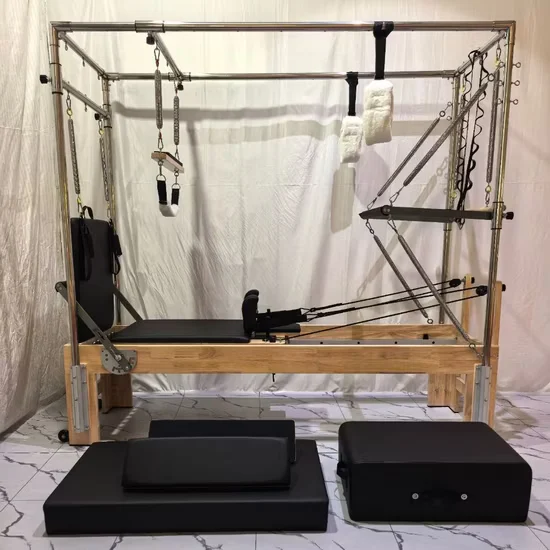
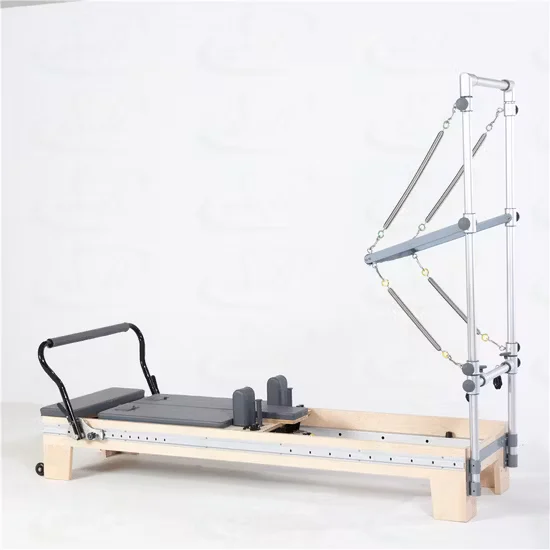
01 / Scenario
STUDIO
P
High-End Pilates Studios
Premium aesthetics meet quiet operation for boutique studio environments.
ISO
9001
CE
Certified
OEM
Available
10YR
Warranty
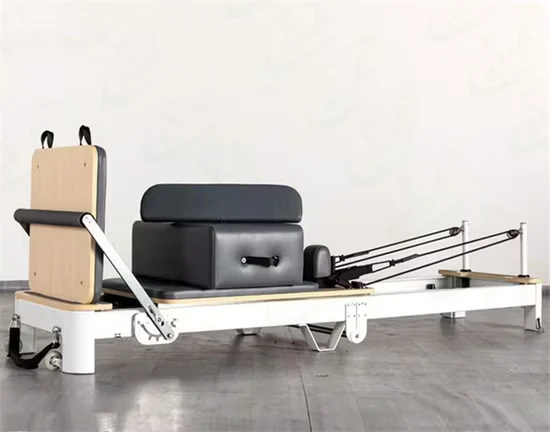
Commercial Folding Pilates Reformer, Aluminum Frame, 90kg Net Weight — engineered for boutique studios and rehabilitation centers requiring portable yet rigid equipment. The reinforced aluminum frame and sealed pulley system maintain carriage tracking accuracy under repeated lateral loading, while the full accessory kit (long box, jump board, platform) supports complete reformer curricula. Each unit undergoes carriage load testing and spring tension calibration before shipment, with customized logo options available for studio branding.
// Spec Highlights
• Direct from Manufacturer · No Middlemen · Worldwide Shipping
01
// Material
Imported Solid Wood
Premium hardwood frames sourced for density and visual warmth.
02
// Hardware
Medical-Grade Silent
Whisper-quiet pulleys and springs for clinical environments.
03
// Customization
Appearance OEM
Color, upholstery, and branding tailored to your studio.
04
// Service
Layout Design
Free venue planning for studios and rehab institutions.
Every component is selected for longevity, performance, and aesthetic harmony - from imported hardwood frames to silent medical-grade accessories.
// Features
Carriage Mass and Frame Rigidity — A 90 kg net weight anchors this folding Pilates reformer against lateral drift during loaded carriage travel, delivering the tracking stability that lightweight portable units cannot sustain under daily studio use.
| Parameter | Value |
|---|---|
| Product Type | Pilates Reformer |
| Model NO. | SRY-12A |
| Product Dimensions | 2570×730×270mm |
| Net Weight | 90 kg |
| Accessory Kit | Long Box / Jump Board / Platform |
| Color | White |
| Logo | Customized |
| Age Group | Adult |
| Gender | Unisex |
| Warranty | 3 Years |
| Facility Type | Typical Use |
|---|---|
| Boutique Pilates studio | Daily group reformer classes with fold-and-stow between sessions |
| Rehabilitation center | Adjustable resistance for post-injury mobility and core stabilization work |
| Home studio | Full reformer curriculum in limited floor space with portable storage |
| Personal training facility | One-on-one sessions requiring quick setup and accessory versatility |
Reinforced aluminum joints resist the lateral play that plagues lightweight portable reformers after months of loaded carriage cycles.
Many portable reformers marketed to studios use thin-gauge aluminum and simple latch mechanisms at the fold point. Within the first year of commercial use, these joints develop micro-play that translates into carriage wobble, uneven spring tension, and inconsistent resistance through the full range of travel [NEED_CITE: structural fatigue at fold mechanisms in portable fitness equipment]. A commercial folding pilates reformer must survive hundreds of deploy-and-fold cycles without the locking hardware loosening or the hinge bore elongating.
The SRY-12A addresses this with a 90 kg net weight that signals substantial material at the frame and fold joint. Heavier mass in an aluminum-frame reformer typically means thicker wall sections and reinforced hinge plates rather than hollow thin-wall tubing. The pin-lock or reinforced latch mechanism at the fold point maintains rigidity comparable to a fixed-frame unit when deployed, which is the critical distinction between a reformer that holds calibration and one that drifts.
This reformer supports the full sagittal-plane exercise library — footwork, leg circles, rowing, and long stretch series — with the accessory kit extending capability into frontal and transverse plane work via the long box and jump board. In a boutique studio layout, it pairs with a mat zone and a Wunda chair to cover the complete Pilates apparatus curriculum. The folding form factor suits studios running six or more classes daily where floor space must convert between group sessions and private appointments. It accommodates users across a broad height range given the 2570mm rail length.
Loaded carriage travel generates cyclic lateral forces at the wheel axles and the rail contact surfaces. Each repetition of footwork under full spring tension drives compression through the carriage frame and into the fold joint [NEED_CITE: cyclic loading effects on aluminum fitness equipment frames]. In a studio running eight classes daily, a single commercial folding pilates reformer endures thousands of carriage cycles per week, concentrating wear at the pulley housing, spring anchors, and carriage wheels. Sweat and cleaning agents accelerate corrosion at exposed steel hardware, making sealed pulley assemblies and corrosion-resistant spring housings essential for long-term tension consistency.
The 2570mm rail length provides full travel for tall users, but length alone does not guarantee smooth carriage glide. Rail straightness depends on frame rigidity — a thin aluminum extrusion will deflect slightly under off-center loading, causing the carriage wheels to bind at mid-travel. The 90 kg net weight indicates sufficient material cross-section to resist that deflection. Sealed carriage wheels reduce maintenance intervals compared to open bushings that accumulate chalk dust and lint from studio environments. Spring tension consistency across the full carriage travel depends on the pulley housing remaining square to the rail, which again traces back to frame rigidity at the anchor points.
Thin-wall aluminum tubes flex under loaded carriage travel, producing uneven resistance that users feel as a "dead zone" mid-stroke. Open-bushing carriage wheels accumulate studio dust rapidly, requiring frequent disassembly to restore smooth glide [NEED_CITE: maintenance intervals for open versus sealed bearing systems in studio equipment]. Fold mechanisms built with simple spring latches rather than positive pin locks develop joint play that compromises safety during jump board exercises. When replacement springs and carriage wheels are not standardized, a studio faces extended downtime waiting for proprietary parts rather than swapping consumables in minutes between classes.
The 90 kg net weight reflects material decisions that prioritize carriage stability over portability. The aluminum frame gauge and fold-joint reinforcement are specified for repeated commercial deployment cycles. A full accessory kit — long box, jump board, and platform — ships with the unit so studios can deliver a complete reformer curriculum without separate procurement. The three-year warranty covers structural and mechanical components under commercial use conditions. Customized logo placement allows studio branding on the frame. The standard wood case transport packaging protects the unit during shipping to international studio fit-out projects.
Provide your studio floor dimensions and class schedule density to receive a 2D or 3D layout showing reformer placement with safe clearance zones. Specify your target client height and weight range to confirm the rail length and spring configuration match your demographic. Indicate branding requirements for customized logo placement on the frame. Share your accessory needs to confirm the long box, jump board, and platform integrate with your existing apparatus inventory.
Q: How do you verify a folding reformer maintains rigidity compared to a fixed-frame model?
A: Request the fold mechanism fatigue test report showing cycle count before measurable joint play develops. Compare net weight as an indicator of material cross-section at the hinge point. Deploy the unit and apply lateral force to the carriage at mid-rail — any wobble indicates the fold joint is absorbing deflection that a fixed frame would resist. [NEED_CITE: testing protocols for fold mechanism rigidity in portable exercise equipment]
Q: What does 90 kg net weight indicate about stability during loaded exercises?
A: A heavier frame resists lateral drift when the carriage is loaded with a user performing off-center movements like side-lying leg work. The mass anchors the unit against the reactive forces generated during jump board plyometrics. Lighter reformers shift on smooth studio floors during vigorous use, requiring constant repositioning between exercises and disrupting class flow.
Q: What trade-offs exist between aluminum and steel frames in a commercial studio?
A: Aluminum offers corrosion resistance in high-humidity studio environments and lighter weight for repositioning between classes. Steel provides greater absolute rigidity at equivalent wall thickness but weighs substantially more and requires powder coating to prevent rust. For a folding design, aluminum’s weight advantage makes deployment practical while maintaining sufficient rigidity when the frame gauge is specified correctly.
Q: What maintenance schedule should a high-traffic studio follow for springs and pulleys?
A: Inspect spring tension consistency and visual condition monthly, replacing any spring showing permanent elongation or coating wear. Check pulley rotation and cable routing quarterly for signs of binding or fraying. Clean carriage wheels and rail surfaces weekly to remove chalk dust and skin oils that accelerate wear. Lubricate fold-joint hardware according to the manufacturer’s interval schedule.
Premium aesthetics meet quiet operation for boutique studio environments.
Medical-grade silence and precision for sports & postpartum recovery.
Furniture-grade craftsmanship for premium residential installations.
Compact premium setups for one-on-one and small-group training.
Aesthetic Pilates integration for hybrid wellness studio programming.
Multi-unit deployment with instructor-grade reliability for certification programs.
Tell us about your project. Our team will respond within 24 hours with pricing, customization options, and shipping details.
// Sales Director
William
+86 132 2531 1800
// Export Manager
Bella
+86 198 5412 8032
william@bickfit.com