01 / Scenario
STUDIO
P
High-End Pilates Studios
Premium aesthetics meet quiet operation for boutique studio environments.

ISO
9001
CE
Certified
OEM
Available
10YR
Warranty
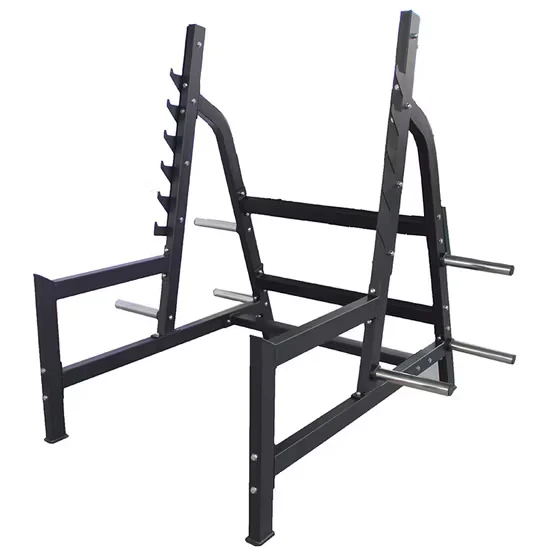
Commercial Power Rack & Pull Up Station, 1785×1365×2235mm, 165kg Net Weight — engineered with steel frame construction and integrated multi-grip pull-down stations for high-traffic commercial environments. Frame and cushion colors are customizable to match facility branding requirements. Each unit undergoes individual load testing before shipment, backed by a 10-year frame warranty and floor planning support for safe clearance spacing.
// Spec Highlights
• Direct from Manufacturer · No Middlemen · Worldwide Shipping
01
// Material
Imported Solid Wood
Premium hardwood frames sourced for density and visual warmth.
02
// Hardware
Medical-Grade Silent
Whisper-quiet pulleys and springs for clinical environments.
03
// Customization
Appearance OEM
Color, upholstery, and branding tailored to your studio.
04
// Service
Layout Design
Free venue planning for studios and rehab institutions.
Every component is selected for longevity, performance, and aesthetic harmony - from imported hardwood frames to silent medical-grade accessories.
// Features
Traceable Frame Steel — Every tube in this Commercial Power Rack & Pull Up Station is cut from Q235/Q345 mill-certified coil, with documentation traceable back to the original heat number.
| Parameter | Value |
|---|---|
| Product Type | Power Rack |
| Product Dimensions | 1785 × 1365 × 2235 mm |
| Net Weight | 165 kg |
| Frame Steel | 11-gauge, 3×3 inch tube |
| Steel Grade | Q235 and Q345 industrial steel, mill-certified |
| Welding Type | Robotic MIG, continuous weld lines |
| Load Capacity | Tested beyond 500 kg |
| Loading Type | Manual |
| Powder Coating | 200 μm scratch-resistant, sandblast pre-treated |
| Main Frame Color | Available in custom color options per facility branding |
| Cushion Color | Available in custom color options per facility branding |
| Assembly State | Unfolded |
| Certification | ISO 9001, CE |
| Warranty | 10-year frame warranty |
| Facility Type | Typical Use |
|---|---|
| Commercial gym strength floor | Primary squat, press, and pull-up station in free-weight zones |
| CrossFit box functional zone | High-repetition Olympic lifting and rig-integrated pull-up work |
| Hotel fitness center | Multi-function strength station for diverse guest use |
| University strength and conditioning room | Athlete testing and periodized strength training |
| Community fitness center | Durable shared-use station for unsupervised environments |
Structural rigidity at this footprint size depends on gauge thickness and weld continuity, not just overall weight.
Facility operators regularly encounter racks labeled "commercial grade" with no verifiable steel specification behind the claim. The frame tubing arrives with vague material descriptions, and spot-welded joints pass initial visual inspection only to develop hairline cracks within months of heavy barbell cycling. When a 200 kg loaded barbell is re-racked repeatedly, the impact concentrates at upright-to-base junctions where spot welds create localized stress risers. [NEED_CITE: weld classification and fatigue performance in structural steel] A continuous robotic MIG weld distributes that same force along the entire joint line, eliminating the weak-point failure pattern that plagues high-traffic free-weight areas. This commercial power rack with pull up station addresses those failure modes directly through 11-gauge steel and full-penetration weld seams at every structural connection.
This unit consolidates squat, press, rack pull, and multi-grip pull-up movements into a single 1785 × 1365 mm footprint, serving as the anchor station in free-weight areas. It pairs logically with dedicated bench press stations and plate-loaded leverage machines, covering the compound movement spectrum without duplicating floor space. The integrated pull-up station eliminates the need for a separate wall-mounted or ceiling-hung rig in facilities where ceiling height or structural mounting is limited. For commercial gyms running 300+ daily check-ins, the station accommodates users across a wide anthropometric range without manual adjustment between sets. The commercial power rack with pull up station fills the gap between minimalist half racks and full multi-station cable systems.
Every re-rack event sends a transient shock through the upright tubes that propagates downward to the base frame connections. In a busy commercial gym, a single rack may absorb hundreds of these micro-impacts daily, each one testing the fatigue limit of the weld bead at the junction. [NEED_CITE: EN 957 structural requirements for stationary training equipment] Eccentric loading during heavy squats introduces lateral shear that challenges the base footprint stability, particularly when the bar is set down off-center on the J-hooks. The pull-up station cross-member experiences its own cyclic tension as users perform kipping or strict repetitions, transferring oscillating forces into the upright welds. The 200 μm powder coating at these high-contact zones must resist chipping from barbell knurling abrasion and sweat corrosion simultaneously. Over thousands of loading cycles, the difference between continuous welds and interrupted spot welds becomes visible as progressive cracking at stress concentration points.
The 3×3 inch upright tube dimension paired with 11-gauge wall thickness creates a moment of inertia that resists bending under asymmetric barbell loads. When a lifter unracks unevenly, the off-center force generates torsional stress that thinner-walled tubing absorbs through visible deflection. Robotic MIG welding produces a consistent bead profile with full fusion at the root pass, avoiding the cold-joint inclusions that manual welding introduces during high-volume production runs. The Q235/Q345 steel grade specification provides documented yield characteristics that generic "commercial steel" claims cannot verify against mill test reports. Sandblast pre-treatment before the 200 μm powder application creates mechanical surface profile for coating adhesion, preventing the delamination that occurs when powder is applied over mill scale. [NEED_CITE: powder coating adhesion standards for steel fitness equipment surfaces] Each of these specifications interacts with the others — undersized tubing negates good welding, and poor surface preparation undermines adequate coating thickness.
Thinner-walled tubing may reduce unit cost initially but accelerates replacement cycles as frame deflection under load compromises J-hook alignment and safety catch positioning. Spot-welded joints that fail under warranty create liability exposure beyond simple equipment replacement, particularly when failure occurs during loaded use. Non-industrial powder coatings chip at barbell contact points within the first year, exposing bare steel to sweat corrosion that spreads beneath adjacent coating. [NEED_CITE: corrosion progression under damaged powder coating on steel structures] Facilities that purchase on unit price alone often discover that the total cost of ownership includes mid-life frame straightening, weld repair, and ultimately premature decommissioning. The commercial power rack with pull up station eliminates these downstream costs through specifications designed for decade-long service cycles.
The 11-gauge frame steel used in this unit carries mill certification traceable to the original coil, not just a supplier declaration. Robotic MIG welding cells produce continuous weld lines with consistent penetration depth across every unit in a production run, removing the operator-to-operator variability of manual welding. Every finished rack undergoes individual load testing before crating, rather than relying on sample-based batch inspection that misses unit-specific defects. The 200 μm powder coating thickness is verified per batch, providing scratch resistance that survives years of barbell contact and cleaning chemical exposure. A 10-year frame warranty backs the structural specifications with documented replacement terms. Floor planning support includes 2D-3D CAD layouts that account for this unit’s 1785 × 1365 mm footprint plus required safety clearances for barbell travel and spotter access, preventing the unusable gaps that result from sizing equipment without spatial coordination.
Provide your strength zone floor area and existing equipment list to receive a 2D-3D layout showing this commercial power rack with pull up station positioned with correct safety clearances. Specify your facility’s average daily traffic volume so structural grade recommendations match actual use intensity. Confirm your target user population’s anthropometric range to verify that the fixed dimensions accommodate your membership. State any custom frame color, logo application, or upholstery color requirements early in the specification process to align production lead time with your project schedule.
Q: How can I verify that a power rack is genuinely commercial grade rather than light-commercial?
A: Request mill test reports for the frame tubing showing steel grade and wall thickness. Inspect weld joints for continuous bead profiles rather than spot welds. Confirm that load testing is performed on every unit individually, not on batch samples. Check the warranty terms — genuine commercial equipment carries structural warranties measured in years, not months, and covers high-traffic use conditions without exclusions.
Q: What does steel gauge and tube dimension mean for long-term structural performance?
A: The gauge number defines wall thickness, while tube cross-section determines resistance to bending and torsion. Thicker walls in larger cross-section tubes resist deformation under eccentric loads, keeping J-hooks and safety catches aligned over thousands of loading cycles. Without documented gauge and dimension specifications, "commercial grade" remains an unverified marketing claim that provides no basis for comparing structural capacity between competing products.
Q: How should floor layout account for power rack spacing in a commercial facility?
A: Each rack requires clearance for full barbell travel beyond the upright footprint, spotter movement space, and safe loading zone for plate changes. Undersized spacing creates collision risk between adjacent stations and restricts emergency access. A proper layout uses the actual equipment dimensions plus operational envelopes rather than catalog footprint numbers alone, ensuring no unusable dead space or unsafe overlap between neighboring stations.
Q: What customization options exist for integrating a rack into a branded facility environment?
A: Frame color can be matched to facility branding palettes through custom powder coating in standard or specified RAL colors. Upholstery on any integrated bench or pad components is available in selected colorways and material grades. Logo application on frame surfaces is available for OEM or private-label projects. All customizations maintain the same structural specifications and coating thickness standards as standard production units.
Q: What warranty coverage applies to frame components under commercial use conditions?
A: The frame carries a 10-year warranty covering structural defects including weld failure and tube deformation under normal commercial loading. This warranty applies to high-traffic facility environments without usage hour restrictions. Wear items such as grip surfaces, upholstery, and cosmetic coating damage follow separate replacement schedules. Confirm specific warranty terms and parts availability when requesting your project quotation.
Premium aesthetics meet quiet operation for boutique studio environments.
Medical-grade silence and precision for sports & postpartum recovery.
Furniture-grade craftsmanship for premium residential installations.
Compact premium setups for one-on-one and small-group training.
Aesthetic Pilates integration for hybrid wellness studio programming.
Multi-unit deployment with instructor-grade reliability for certification programs.
Tell us about your project. Our team will respond within 24 hours with pricing, customization options, and shipping details.
// Sales Director
William
+86 132 2531 1800
// Export Manager
Bella
+86 198 5412 8032
william@bickfit.com