01 / Scenario
STUDIO
P
High-End Pilates Studios
Premium aesthetics meet quiet operation for boutique studio environments.

ISO
9001
CE
Certified
OEM
Available
10YR
Warranty
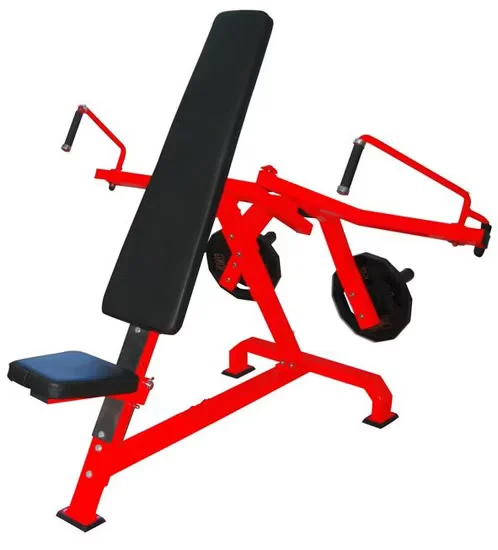
Seated Biceps Curl Machine, Selectorized Loading, 1466×1292×1502 mm — engineered with industrial steel frame construction and continuous robotic MIG welding to eliminate joint fatigue under repetitive commercial use. Integrated pin-select weight stack delivers smooth, consistent resistance through the full curl range with sealed bearings preventing play over time. Every unit undergoes individual load testing before shipment, backed by a 10-year frame warranty for high-traffic strength zones.
// Spec Highlights
• Direct from Manufacturer · No Middlemen · Worldwide Shipping
01
// Material
Imported Solid Wood
Premium hardwood frames sourced for density and visual warmth.
02
// Hardware
Medical-Grade Silent
Whisper-quiet pulleys and springs for clinical environments.
03
// Customization
Appearance OEM
Color, upholstery, and branding tailored to your studio.
04
// Service
Layout Design
Free venue planning for studios and rehab institutions.
Every component is selected for longevity, performance, and aesthetic harmony - from imported hardwood frames to silent medical-grade accessories.
// Features
Traceable Steel Integrity — Every tube in the selectorized seated bicep curl frame traces back to its original mill coil certificate, not a vague commercial-grade label.
| Parameter | Value |
|---|---|
| Product Type | Selectorized Bicep Curl Machine |
| Exercise Target | Biceps |
| Loading Type | Selectorized (integrated weight stack) |
| Frame Steel Gauge | 11-gauge |
| Frame Tube Size | 3×3 inch |
| Steel Grade | Q235 / Q345 industrial steel, mill-certified |
| Welding Type | Robotic MIG, continuous weld lines |
| Load Capacity | Tested beyond 500 kg |
| Weight Stack | Pin-select, up to 150 kg per station |
| Pulley System | Aircraft-cable with sealed bearings |
| Bearing Type | Sealed industrial bearings |
| Upholstery | Customizable color, high-density commercial grade |
| Powder Coating | 200 μm scratch-resistant, sandblast pre-treated |
| Product Dimensions | 1466 × 1292 × 1502 mm |
| Net Weight | 93 kg |
| Main Frame Color | Customizable per customer requirements |
| Certification | ISO 9001, CE |
| Warranty | 10-year frame warranty |
| OEM/ODM | Acceptable |
| Facility Type | Typical Use |
|---|---|
| Commercial gym strength floor | High-traffic bicep isolation station in the selectorized machine row |
| Hotel and resort fitness center | Durable, low-maintenance arm training option for transient users |
| University strength and conditioning room | Controlled bicep loading for athletic development programs |
| Professional fitness club | Complementary isolation work alongside plate-loaded compound stations |
| Community fitness center | Accessible, pin-select loading for members of all experience levels |
Continuous MIG welds eliminate the joint failures that plague spot-welded isolation machines under thousands of daily repetitions.
When a commercial selectorized seated bicep curl machine runs eight or more hours daily, the pivot joints and frame connections absorb repetitive cyclic loading that quickly reveals welding shortcuts. Spot-welded joints on lighter-gauge frames pass a visual inspection on delivery day but develop hairline cracks within months as the repeated curl motion drives stress into the same concentrated points. We have seen competitors’ machines pulled off the floor because a spot weld at the seat support bracket fractured under a full weight stack, leaving the facility with liability exposure and an unusable station [NEED_CITE: weld classification and fatigue performance in structural steel]. Our robotic MIG process lays continuous weld lines along every joint, distributing stress across the full seam rather than concentrating it at discrete contact points.
This machine occupies the bicep isolation slot in a commercial strength zone, targeting the biceps brachii through a seated, elbow-flexion movement path with the torso stabilized against the back pad. In a floor plan, it typically sits alongside tricep press-down and lateral raise selectorized stations to form a complete arm-training cluster. The seated configuration and pin-select loading make it suitable for facilities ranging from high-density commercial gyms to university weight rooms where users move quickly between stations. The seat and pad geometry accommodates a wide range of user heights, which matters in membership-based facilities where body proportions vary significantly. For a commercial selectorized seated bicep curl machine, the footprint and clearance spacing between adjacent units must allow full elbow extension without contacting neighboring frames.
A bicep curl machine experiences a specific loading profile: moderate weight applied thousands of times per day through a short, repetitive arc. Each repetition sends a cyclic bending moment through the pivot shaft and into the upright welds. Over weeks, this accumulates into fatigue stress at the exact locations where spot welds or thin-gauge tubing are most vulnerable. The sealed bearings at the pivot point must resist sweat infiltration and particulate contamination that accelerates wear in open bushing designs. Upholstery contact zones — the seat pan and the upper-arm pad — endure compression and friction cycles that flatten low-density foam within months, exposing users to discomfort and forcing facility managers into premature cushion replacement [NEED_CITE: EN 957 structural requirements for stationary training equipment]. The powder coating at adjustment pin insertion points faces repeated metal-on-metal contact that chips thin coatings and exposes bare steel to corrosion.
The 11-gauge steel frame provides the cross-sectional area needed to resist flex under the full 150 kg weight stack during peak contraction. When a user loads the stack and curls through the sticking point, off-center forces create torsional stress on the uprights — a tube wall that is too thin will visibly deflect, degrading the movement path over time. The robotic MIG welding process ensures every frame joint receives a continuous bead rather than intermittent tack welds, which directly extends fatigue life at the high-cycle pivot connections. Sealed industrial bearings at the pivot shaft prevent sweat and dust from penetrating the bearing race, maintaining smooth rotation without the play that develops in unsealed bushings within the first year of commercial operation. The aircraft-cable pulley system routes through pulleys sized to match the cable diameter, preventing the internal fraying that occurs when cables run over undersized wheels. The 200 μm powder coating, applied over a sandblasted surface, anchors mechanically to the steel and resists chipping at the adjustment points where metal pins contact the frame daily.
Thin-wall tubing on a bicep curl station does not collapse catastrophically — it bends incrementally, shifting the curl arc away from the intended path until users start complaining about elbow discomfort. Spot welds at the seat bracket fail without warning, creating a liability event when a loaded machine shifts under a seated user. Unsealed bearings develop radial play that makes the curl motion feel loose and gritty, prompting maintenance calls that compound across a floor of twenty selectorized machines. Low-density upholstery compresses flat within months of commercial use, and if the supplier has no replacement cushion program, the entire machine sits unusable until a custom pad is sourced. Insufficient powder coating at the weight stack guide channel leads to surface rust that increases friction and accelerates cable wear, turning a cosmetic issue into a mechanical one [NEED_CITE: corrosion impact on selectorized weight stack guide rod performance].
The 11-gauge steel frame is sourced with mill certificates traceable to the coil, so you can verify the exact grade and gauge of every tube in the structure. Robotic MIG welding produces continuous weld lines at every joint, eliminating the stress concentrations inherent in manual spot-welding. Each unit undergoes load testing before shipment — not a sample from the production batch, but the actual machine that goes into your facility. The 200 μm industrial powder coating is applied over sandblast preparation, providing adhesion and chip resistance at the adjustment and contact points that see daily abrasion. A 10-year frame warranty backs the structural integrity of the frame. For facility layout, we provide 2D and 3D CAD planning that accounts for the footprint of this machine plus the clearance spacing needed for safe user entry and full-range elbow extension. OEM customization covers frame color, cushion color, and branding options.
Share your strength floor dimensions and existing equipment list to receive a 2D or 3D layout that positions the selectorized seated bicep curl machine with correct clearance spacing. Specify your expected daily member traffic so we can confirm the structural grade matches your usage volume. Provide the height and weight range of your target user base to verify that the seat and pad geometry accommodates your membership. Outline any customization requirements — frame color, cushion color, logo placement, or OEM branding — for a complete specification sheet.
Q: How do you distinguish true commercial-grade selectorized bicep machines from light-commercial alternatives?
A: Request the exact steel gauge and tube dimensions with mill certificates, not just a "commercial grade" label. Verify the welding method — continuous robotic welds resist fatigue far better than spot welds under high-rep cyclic loading. Check whether the manufacturer load-tests every individual unit or only samples from a batch. True commercial machines also carry a multi-year frame warranty rather than a one-year limited guarantee.
Q: What maintenance intervals should we plan for the pivot bearings and pulley system?
A: Sealed industrial bearings at the pivot shaft typically require visual inspection every quarter to confirm smooth rotation without play. Aircraft-cable pulleys should be checked monthly for cable alignment and surface condition. The weight stack guide rods benefit from a monthly wipe-down to prevent sweat and dust buildup that causes binding. These intervals assume high-traffic commercial use exceeding eight hours daily.
Q: Can the frame and cushion colors be customized to match our facility branding?
A: Both the main frame color and the cushion color are customizable per customer requirements. This includes matching specific brand palettes for chain gym operators. OEM private label options are also available for distributors requiring custom branding on the frame plate and upholstery. Submit your color references during the specification phase for accurate matching.
Q: What footprint and spacing does this machine need within a selectorized station row?
A: The machine measures 1466 × 1292 × 1502 mm. In a selectorized row, plan for at least 600 mm of side clearance between units so users can enter, exit, and perform full-range curls without contacting adjacent frames. A detailed 2D or 3D CAD layout can be provided to position this station alongside complementary machines while maintaining safe traffic flow on the strength floor.
Premium aesthetics meet quiet operation for boutique studio environments.
Medical-grade silence and precision for sports & postpartum recovery.
Furniture-grade craftsmanship for premium residential installations.
Compact premium setups for one-on-one and small-group training.
Aesthetic Pilates integration for hybrid wellness studio programming.
Multi-unit deployment with instructor-grade reliability for certification programs.
Tell us about your project. Our team will respond within 24 hours with pricing, customization options, and shipping details.
// Sales Director
William
+86 132 2531 1800
// Export Manager
Bella
+86 198 5412 8032
william@bickfit.com