01 / Scenario
STUDIO
P
High-End Pilates Studios
Premium aesthetics meet quiet operation for boutique studio environments.

ISO
9001
CE
Certified
OEM
Available
10YR
Warranty
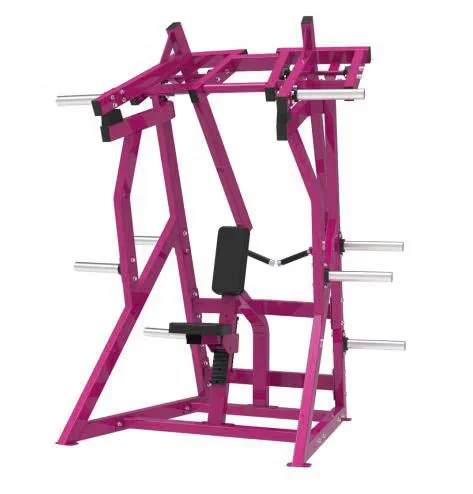
Selectorized Incline Chest Press, Pin-Select Stack, Sealed Bearings — built with 3×3 inch frame steel and robotic MIG continuous welding to eliminate spot-weld fatigue under repeated heavy loading. Aircraft-cable pulley system with precision guide rods prevents binding during off-center presses. Every unit undergoes per-unit load testing and three-stage QC inspection before shipment.
// Spec Highlights
• Direct from Manufacturer · No Middlemen · Worldwide Shipping
01
// Material
Imported Solid Wood
Premium hardwood frames sourced for density and visual warmth.
02
// Hardware
Medical-Grade Silent
Whisper-quiet pulleys and springs for clinical environments.
03
// Customization
Appearance OEM
Color, upholstery, and branding tailored to your studio.
04
// Service
Layout Design
Free venue planning for studios and rehab institutions.
Every component is selected for longevity, performance, and aesthetic harmony - from imported hardwood frames to silent medical-grade accessories.
// Features
Mill-Traceable Frame Steel — every 11-gauge tube in this commercial selectorized incline chest press links back to a certified Q235 coil, eliminating the guesswork that plagues vague "commercial grade" claims.
| Parameter | Value |
|---|---|
| Product Type | Selectorized Incline Chest Press |
| Frame Steel Gauge | 11-gauge |
| Frame Tube Size | 3×3 inch |
| Steel Grade | Q235 / Q345 industrial steel, mill-certified |
| Welding Type | Robotic MIG, continuous weld lines |
| Loading Type | Pin select |
| Bearing Type | Sealed industrial bearings |
| Pulley System | Aircraft-cable pulley system |
| Upholstery | Available in standard or high-density options |
| Powder Coating | Sandblast plus 200μm scratch-resistant finish |
| Product Dimensions | 1411×1286×1559mm |
| Certification | ISO 9001, CE |
| Warranty | 10-year frame warranty |
| OEM/ODM | Acceptable |
| Color Options | Main frame and cushion colors per customer requirements |
| Facility Type | Typical Use |
|---|---|
| Commercial gym strength floor | Primary incline pressing station in selectorized machine rows |
| Hotel and resort fitness center | Low-maintenance chest training for transient guest populations |
| University strength and conditioning room | Supervised pressing work for athletic development programs |
| Rehabilitation and performance center | Controlled-load upper-body pressing during late-stage return-to-play protocols |
Joint integrity determines whether a selectorized incline chest press survives its second year in a high-traffic facility or becomes a liability on the floor.
I learned this the hard way on a Middle East installation project. A batch of incline chest presses with spot-welded cam arms developed visible cracks under repeated heavy loading — the steel was fine, but the joints failed first. We pulled the entire run and re-welded. That recall shaped every sourcing decision I have made since. Spot welds pass a quick visual check at the factory, but under the cyclic eccentric loading of a commercial selectorized incline chest press, they concentrate stress at discrete points instead of distributing it along a continuous bead. After several thousand press cycles, micro-fractures propagate and the joint opens up. [NEED_CITE: weld classification and fatigue performance in structural steel]
The incline pressing path targets the clavicular head of the pectoralis major and the anterior deltoid through a converging arc. In a strength zone layout, this commercial selectorized incline chest press pairs naturally with a flat chest press and a pec deck to cover the full pressing plane. It fits facilities running moderate to high daily traffic where pin-select convenience keeps turnover fast between users. The seat and pad geometry accommodates a broad range of torso lengths without requiring multiple frame sizes.
Every rep on an incline chest press loads the cam arm pivot and the weight stack guide rods with a combination of static hold and eccentric deceleration. In an eight-hour operating window, a busy station can accumulate hundreds of cycles, each one pushing the continuous weld lines through tension-compression reversals. The sealed industrial bearings at the pivot points resist sweat and chalk ingress that would otherwise accelerate play development. Pulley cables endure repeated bending over sheaves, and the 200μm powder coating on the frame contact zones must withstand abrasive wiping with commercial disinfectants day after day. [NEED_CITE: EN 957 structural requirements for stationary training equipment]
The 11-gauge steel wall thickness sets the threshold at which the 3×3 inch tube begins to deflect under peak load — thicker walls keep the frame geometry stable, which keeps the movement path aligned with the intended arc. Robotic MIG continuous welding eliminates the intermittent weak points that spot welds introduce, distributing load across the full joint length. Sealed bearings prevent the radial play that bushing systems develop once particulate contamination breaks down the lubricant film. On the pulley side, aircraft-cable specification paired with correctly sized sheave diameters prevents premature strand fatigue. The sandblast pre-treatment before powder coating removes mill scale so the finish bonds directly to bare steel, reducing the chance of chip-induced corrosion at high-contact zones.
A thinner frame tube saves material cost on paper but deforms earlier under heavy stack loads, shifting the pressing arc away from the user’s natural joint path. Spot-welded joints that fail mid-cycle create not just a maintenance ticket but a safety incident and potential liability. Non-sealed bushings require scheduled teardowns and re-lubrication, adding labor hours that never appear in the purchase price. Low-density upholstery compresses past recovery within months, forcing pad replacements that take the station offline. Underspecified powder coating chips at the handle and seat contact areas, exposing bare steel to sweat-driven corrosion that spreads under the finish.
The 11-gauge Q235 and Q345 steel arrives with mill certificates traceable to the originating coil — no second-tier sourcing ambiguity. Robotic MIG welding lays continuous beads along every structural joint, removing the operator variability that manual spot welding introduces. Every unit undergoes load testing before it leaves the Ningjin production line, not a sample pulled from the batch. The 200μm scratch-resistant powder coating holds up against daily commercial cleaning chemistry. A 10-year frame warranty backs the structural claim. For floor planning, CAD layout support covers this station’s footprint and the safety clearance needed between adjacent pressing machines, ensuring usable traffic flow in a dense strength zone. OEM customization extends to frame color, cushion color, and private-label branding.
Share your floor area and existing machine list to receive a 2D or 3D CAD layout that positions this commercial selectorized incline chest press with correct safety spacing. Specify daily traffic volume so the structural grade matches your operational load. Confirm the body-size range of your user population to validate pad and adjustment fit. Note any custom frame color, logo, or cushion preferences for OEM production runs.
Q: How do I separate genuine commercial-grade chest presses from light commercial units?
A: Request the frame steel gauge and tube dimensions with a mill certificate, not a generic "commercial grade" label. Check whether welding is continuous MIG or intermittent spot weld. Verify that load testing is performed per unit rather than on a sampling basis. Confirm bearing type — sealed industrial bearings outlast bushing systems significantly in high-traffic environments. [NEED_CITE: EN 957 classification of stationary training equipment usage classes]
Q: Why does frame gauge matter for a selectorized incline chest press?
A: The tube wall thickness and cross-section determine how much the frame resists deflection when the full weight stack is engaged. An 11-gauge 3×3 inch section maintains geometric stability under repeated heavy loading, keeping the cam arm pivot aligned and preventing the pressing arc from drifting away from the intended biomechanical path over years of use.
Q: What spacing do I need between this press and adjacent machines?
A: Allow clearance on each side for user entry, weight stack access, and safe passage of other gym members. A CAD floor plan factors in the 1411×1286mm footprint plus operational clearance zones. Tight spacing creates pinch points and unsafe traffic flow, while excessive gaps waste usable floor area in a commercial strength zone.
Q: How does upholstery density affect long-term operating cost?
A: Low-density foam compresses past its recovery threshold within months of daily use, requiring pad replacement and taking the station offline. High-density upholstery maintains its profile far longer, reducing replacement frequency and downtime. Confirm that replacement pads are available as spare parts from the manufacturer to avoid extended out-of-service periods.
Premium aesthetics meet quiet operation for boutique studio environments.
Medical-grade silence and precision for sports & postpartum recovery.
Furniture-grade craftsmanship for premium residential installations.
Compact premium setups for one-on-one and small-group training.
Aesthetic Pilates integration for hybrid wellness studio programming.
Multi-unit deployment with instructor-grade reliability for certification programs.
Tell us about your project. Our team will respond within 24 hours with pricing, customization options, and shipping details.
// Sales Director
William
+86 132 2531 1800
// Export Manager
Bella
+86 198 5412 8032
william@bickfit.com