01 / Scenario
STUDIO
P
High-End Pilates Studios
Premium aesthetics meet quiet operation for boutique studio environments.

ISO
9001
CE
Certified
OEM
Available
10YR
Warranty
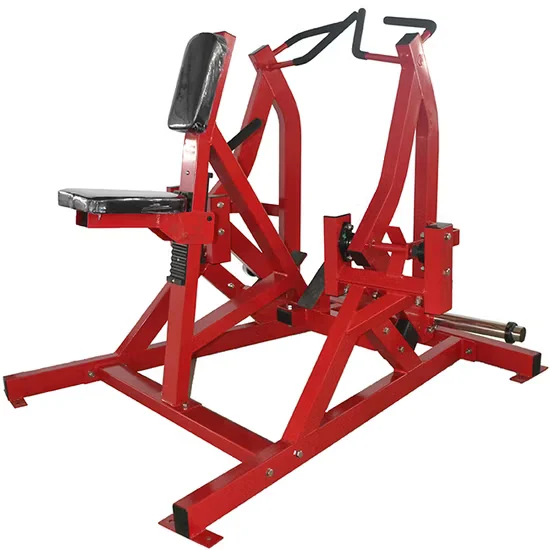
Commercial Squat Rack, 3×3 Inch Steel Frame, 1830×1200×1876mm — engineered with industrial-grade tubing and continuous robotic MIG welding to eliminate joint fatigue under repeated heavy barbell loads. The 98kg net weight and stable footprint ensure structural rigidity during max-load squats, presses, and pulls. Every unit undergoes individual load testing before shipment, backed by a 10-year frame warranty and free floor planning support for safe clearance layout.
// Spec Highlights
• Direct from Manufacturer · No Middlemen · Worldwide Shipping
01
// Material
Imported Solid Wood
Premium hardwood frames sourced for density and visual warmth.
02
// Hardware
Medical-Grade Silent
Whisper-quiet pulleys and springs for clinical environments.
03
// Customization
Appearance OEM
Color, upholstery, and branding tailored to your studio.
04
// Service
Layout Design
Free venue planning for studios and rehab institutions.
Every component is selected for longevity, performance, and aesthetic harmony - from imported hardwood frames to silent medical-grade accessories.
// Features
11-Gauge Frame Traceability — Steel tube gauge and grade are mill-certified and traceable to the original coil, ensuring structural consistency across every commercial squat rack steel power cage unit produced.
| Parameter | Value |
|---|---|
| Product Type | Commercial Squat Rack |
| Frame Steel Gauge | 11-gauge |
| Frame Tube Size | 3×3 inch |
| Steel Grade | Q235 / Q345 industrial steel, mill-certified |
| Welding Type | Robotic MIG continuous weld |
| Product Dimensions | 1830×1200×1876mm |
| Net Weight | 98kg |
| Exercise Part | Leg, Waist, Arm |
| Age Group | Adult |
| Gender | Unisex |
| Powder Coating | 200μm scratch-resistant industrial finish |
| OEM/ODM | Available |
| Transport Package | Plywood case |
| Certification | ISO 9001:2015, CE |
| Warranty | 10-year frame warranty |
| Facility Type | Typical Use |
|---|---|
| Commercial gym strength floor | Primary barbell squat and overhead press station for high-traffic peak hours |
| University strength and conditioning room | Multi-user rotational training during team sessions |
| Hotel fitness center | Compact footprint strength station for limited-space wellness floors |
| Community fitness center | Shared free-weight zone for general member use |
Frame tube gauge and wall thickness determine whether a commercial squat rack steel power cage holds geometry under repeated max-load squats or gradually deforms at the J-cup and crossmember joints.
Many suppliers label equipment "commercial grade" without disclosing actual steel gauge or tube dimensions. Under dynamic loading from heavy barbell racks and missed lifts, thin-wall frames develop lateral flex at the uprights, J-cup mounting points elongate, and crossmembers twist out of plane. Over months of high-frequency use, this structural creep becomes visible — uneven J-cup heights, barbell roll-off risk, and bolt holes that no longer align. [NEED_CITE: structural steel tube specifications and load-bearing capacity in fitness equipment]
This commercial squat rack steel power cage occupies the foundational plane of vertical loading in any strength zone. It supports primary sagittal-plane movements — back squats, front squats, overhead presses, and rack pulls — while accommodating accessory work such as pin presses and barbell rows when paired with adjustable cambered or safety bars. In a typical commercial strength floor layout, it pairs directly with plate-loaded leg presses and hamstring curl stations to create a complete lower-body training circuit. The 1830×1200mm footprint and 1876mm upright height provide adequate overhead clearance for athletes up to approximately 195cm, with J-cup and safety strap positioning covering a functional range for users between 155cm and 190cm.
A commercial squat rack steel power cage experiences three distinct loading categories: static compression from loaded barbells resting on J-cups, impact loading from missed lifts and barbell re-racking, and eccentric torsional stress when lifters descend unevenly or rack off-center. In high-traffic facilities operating 12+ hours daily, each upright undergoes hundreds of load-unload cycles per week. The critical fatigue zones are the upright-to-base weld joints, the J-cup mounting hole patterns, and the crossmember connection points where moment forces concentrate. Continuous robotic MIG welding distributes stress along the full joint length rather than concentrating it at discrete spot-weld locations, reducing the probability of crack initiation under cyclic loading. [NEED_CITE: weld classification and fatigue performance in structural steel joints] The 200μm powder coating must resist chipping at barbell contact points and safety strap interfaces, where repeated metal-to-metal impact would expose bare steel to sweat-induced corrosion in humid gym environments.
The 11-gauge, 3×3 inch frame tube specification defines the section modulus — the geometric property that determines resistance to bending under load. Thinner walls or smaller cross-sections reduce this modulus, meaning the frame deflects more under identical barbell weights. For a commercial squat rack steel power cage, this deflection threshold must remain well below perceptible levels even at 300kg+ barbell loads. Robotic MIG continuous welding creates a uniform weld bead along the entire joint, eliminating the cold-joint and incomplete-fusion defects common in manual spot-welded frames. These defects act as stress concentrators where cracks propagate under cyclic loading. The sealed industrial bearing specification at adjustable components prevents sweat and chalk dust infiltration that would otherwise accelerate wear in open bushing designs. [NEED_CITE: powder coating thickness and adhesion standards for fitness equipment] Pre-treatment surface preparation before the 200μm powder application ensures coating adhesion that resists chipping at high-contact zones — J-cup faces, safety strap mounting points, and base plate edges where bumper plates repeatedly strike.
Substituting 11-gauge tubing with lighter 14-gauge alternatives reduces material cost per unit but introduces measurable frame deflection under loads above 150kg. Over months of commercial use, this deflection becomes permanent — uprights lean, crossmembers bow, and J-cup holes elongate beyond safe retention. Spot-welded joints that pass visual inspection at the factory develop subsurface cracks under repetitive impact loading, creating sudden failure risk without visible warning. Non-sealed bearings develop play within months in high-traffic environments, creating adjustable component wobble that accelerates wear and requires full replacement rather than simple bearing swaps. Thin powder coatings chip at contact points within weeks, exposing bare steel to corrosion that spreads beneath adjacent coating, eventually requiring complete frame refinishing or unit replacement. [NEED_CITE: corrosion mechanisms and coating failure in indoor fitness environments]
Every commercial squat rack steel power cage ships with mill-certified steel documentation traceable to the original coil lot, providing verifiable proof of 11-gauge frame steel and Q235/Q345 grade compliance. Robotic MIG continuous welding eliminates spot-weld variability, with weld quality verified through three-stage inspection including load testing on every individual unit before shipment — not sample-based audit. The 200μm industrial powder coating provides scratch and impact resistance rated for continuous commercial use, backed by a 10-year frame warranty covering structural integrity. Facility planners receive 2D-3D CAD layout support to position this commercial squat rack steel power cage with proper clearance — minimum 900mm rear access for barbell loading, 1200mm lateral spacing between adjacent units, and overhead clearance verification for ceiling-mounted lighting or HVAC. OEM customization includes facility-matched color coordination and logo placement on upright faces.
Provide your strength zone floor area and current equipment inventory to receive a 2D-3D CAD layout showing optimal commercial squat rack steel power cage positioning with clearance verification. Specify average daily user volume to confirm structural grade matches facility traffic intensity. Indicate target user height range to verify J-cup and safety strap adjustment coverage. Note any facility branding requirements for frame color or upright logo placement during OEM configuration.
Q: How can I verify the frame steel gauge matches commercial-grade claims?
A: Request mill certification documentation that traces the steel coil lot to the specific tube batch used in production. True commercial specifications include verifiable gauge measurements and steel grade designation — not generic "commercial grade" labels without supporting documentation.
Q: What floor space and clearance does this squat rack require for safe operation?
A: The 1830×1200mm footprint requires minimum 900mm rear clearance for barbell plate loading and unloading, plus 1200mm lateral spacing between adjacent units to prevent barbell interference. Overhead clearance should accommodate the 1876mm upright height plus additional space for barbell path during overhead movements.
Q: Can this squat rack be customized to match our facility branding?
A: OEM configuration supports custom powder coating colors matched to your facility palette and logo placement on upright faces. Contact the technical team with your branding specifications and facility layout to coordinate custom production requirements.
Q: What maintenance intervals should we follow for high-traffic commercial use?
A: Quarterly inspect J-cup mounting points and safety strap interfaces for wear or deformation. Annually check all structural bolt connections for proper torque. Clean powder coating with pH-neutral solutions and replace worn contact-point components such as J-cup liners and safety strap pads as needed based on usage intensity.
Premium aesthetics meet quiet operation for boutique studio environments.
Medical-grade silence and precision for sports & postpartum recovery.
Furniture-grade craftsmanship for premium residential installations.
Compact premium setups for one-on-one and small-group training.
Aesthetic Pilates integration for hybrid wellness studio programming.
Multi-unit deployment with instructor-grade reliability for certification programs.
Tell us about your project. Our team will respond within 24 hours with pricing, customization options, and shipping details.
// Sales Director
William
+86 132 2531 1800
// Export Manager
Bella
+86 198 5412 8032
william@bickfit.com