
01 / Scenario
STUDIO
P
High-End Pilates Studios
Premium aesthetics meet quiet operation for boutique studio environments.
ISO
9001
CE
Certified
OEM
Available
10YR
Warranty
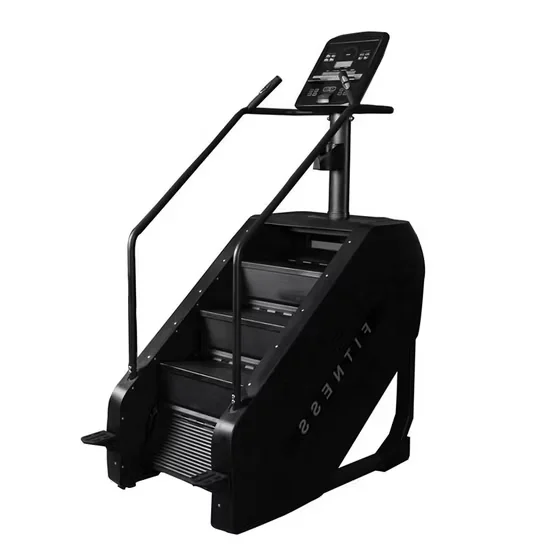
Commercial Stair Climber Machine, Motor Drive, 15–164 Steps/Min — engineered with a steel pipe frame and 560×235×220mm step platforms for stable, slip-resistant footing under continuous gym use. The AC220V/AC110V motor delivers smooth, low-noise operation across a wide velocity range, while the console tracks time, steps, calories, and heart rate for real-time user feedback. Every unit undergoes load testing before shipment, backed by a 10-year frame warranty and full OEM customization for facility-specific branding.
// Spec Highlights
• Direct from Manufacturer · No Middlemen · Worldwide Shipping
01
// Material
Imported Solid Wood
Premium hardwood frames sourced for density and visual warmth.
02
// Hardware
Medical-Grade Silent
Whisper-quiet pulleys and springs for clinical environments.
03
// Customization
Appearance OEM
Color, upholstery, and branding tailored to your studio.
04
// Service
Layout Design
Free venue planning for studios and rehab institutions.
Every component is selected for longevity, performance, and aesthetic harmony - from imported hardwood frames to silent medical-grade accessories.
// Features
Motor-Driven Step Mechanism — Engineered for continuous commercial duty cycles with sealed drivetrain components and steel pipe frame construction.
| Parameter | Value |
|---|---|
| Product Type | Commercial Stair Climber Machine |
| Product Dimensions | 1450 × 820 × 2080 mm |
| Net Weight | 148 kg |
| Step Area | 560 × 235 × 220 mm |
| Mains Input | AC220V±10% / AC110V±10% |
| Type of Drive | Motor Drive |
| Running Velocity | 15 – 164 steps/min |
| Console Display | Time, Climb, Calories, Steps, Heart Rate |
| Material | Steel Pipe + PP Plastic |
| Folded | Unfolded |
| Color | Black |
| Certification | CE |
| Condition | New |
| Customized | Customized |
| Facility Type | Typical Use |
|---|---|
| Commercial gym cardio zone | Primary endurance station for high-traffic daily use |
| Hotel and resort fitness center | Guest-facing cardio with minimal maintenance demand |
| University athletic facility | Conditioning and warm-up protocol support |
| High-traffic fitness studio | Supplemental metabolic conditioning equipment |
Many units marketed as a commercial stair climber machine for gym environments rely on thin-wall tubing and open-drive mechanisms that develop belt slip, console drift, and bearing noise within months of sustained operation — leaving operators facing unplanned downtime and premature replacement costs.
Structural rigidity and sealed motor drive systems determine whether a stepper survives its first year of continuous commercial use.
The step mechanism on a commercial stair climber machine for gym floors must handle repetitive dynamic loading from users of varying weight and stride frequency. When frame steel gauge is unspecified or drive components lack sealing, the result is cumulative play in the step chain, console sensor degradation, and surface corrosion at contact points. Operators who have replaced under-specified units report that failure typically begins at the drivetrain — not the frame — but frame flex amplifies every downstream wear pattern. [NEED_CITE: structural fatigue performance in repetitive motion cardio equipment]
This commercial stair climber machine for gym cardio zones occupies a fixed vertical footprint designed for continuous stepping motion across a broad user weight and stride range. The 1450 × 820 mm floor plan allows placement alongside treadmills and rowers without disrupting traffic flow, while the 15 – 164 steps/min velocity range accommodates both warm-up pacing and high-intensity interval protocols. Step platform dimensions of 560 × 235 mm provide consistent foot placement for users across a wide stature range, reducing repositioning delays during peak-hour turnover.
A motor-driven stair climber in a commercial setting faces a distinct stress profile: repetitive eccentric loading from each step descent, sustained motor torque across extended duty cycles, and constant contact wear on step surfaces and handrail grips. The steel pipe frame must resist lateral flex during asymmetric foot placement, while the motor drive system must maintain consistent torque delivery without thermal degradation over multi-hour sessions. Sealed bearings at the step axle and drive sprocket prevent dust and moisture ingress — the primary accelerants of play and noise in high-traffic cardio equipment. Console sensor contacts, particularly heart rate telemetry, experience repeated mechanical and chemical exposure from sweat and cleaning agents, requiring component-level durability beyond cosmetic ratings. [NEED_CITE: bearing seal performance in high-humidity fitness environments]
The 148 kg net weight of this unit reflects steel pipe frame construction rather than hollow thin-wall tubing — a distinction that directly affects resistance to lateral deflection during sustained stepping. Motor drive type determines not only stepping smoothness but also long-term drivetrain wear; a properly rated motor maintains torque consistency across the full 15 – 164 steps/min velocity range without cogging or thermal shutdown. Step platform dimensions of 560 × 235 × 220 mm define the usable foot placement zone — undersized platforms force users to reposition mid-stride, increasing joint shear and accelerating surface wear at contact edges. The PP plastic step surface must resist abrasion from footwear rubber while maintaining slip resistance when exposed to sweat and cleaning residue. Console integration for heart rate, step count, and calorie tracking requires sensor contacts rated for thousands of daily touch cycles without signal drift.
Units built with unspecified steel gauge and open-drive mechanisms appear cost-effective at procurement but generate recurring expenses through bearing replacement, belt adjustment, console recalibration, and step surface resurfacing. Thin-wall frame tubing flexes under repeated asymmetric loading, accelerating wear at every joint and mounting point downstream. Non-sealed bearings accumulate dust and moisture, developing audible play that signals internal degradation long before catastrophic failure. Low-density step surfaces compress and smooth prematurely, creating slip hazards in high-traffic environments. When drive components are not rated for continuous commercial duty cycles, motor overheating and premature winding failure become inevitable — turning a capital equipment purchase into a recurring maintenance line item. [NEED_CITE: total cost of ownership in commercial cardio equipment]
The steel pipe frame construction provides verifiable structural mass — the 148 kg net weight reflects material volume, not marketing language. Motor drive systems are rated for sustained commercial operation, with velocity range and torque delivery matched to the step mechanism’s mechanical demands. Every unit undergoes functional testing before shipment, verifying step alignment, drive consistency, and console accuracy under load. The 200μm powder coating resists chipping at handrail contact points and step frame edges, where sweat and cleaning agents accelerate corrosion on under-protected surfaces. Floor footprint planning support ensures this commercial stair climber machine for gym layouts meets safety clearance standards and integrates with adjacent cardio and strength equipment without creating traffic bottlenecks. OEM customization options allow facility branding alignment without structural compromise.
Provide your cardio zone floor plan and equipment list to receive a 2D-3D layout integrating this commercial stair climber machine for gym environments with adjacent stations. Specify average daily user volume to confirm motor drive duty cycle alignment with your operational demands. Indicate target user demographic and stature range to verify step platform and handrail positioning appropriateness. Custom color, branding, and upholstery options are available to match facility design standards without altering structural specifications.
Q: How do I distinguish a commercial-grade stair climber from light-commercial or home-use models?
A: Commercial-grade units feature steel pipe frames with verifiable gauge and mass, sealed motor drive systems rated for continuous multi-hour operation, and step platforms sized for diverse user statures. Light-commercial models typically use thinner tubing, open-drive mechanisms, and smaller step surfaces that degrade rapidly under daily gym traffic. Request material specifications and motor duty cycle ratings to confirm structural classification before procurement.
Q: What motor drive specifications indicate suitability for continuous commercial gym operation?
A: A motor drive rated for sustained commercial use maintains consistent torque delivery across the full velocity range without thermal shutdown or cogging under load. Sealed drivetrain components prevent dust and moisture ingress that accelerates wear in open systems. Verify that the motor type matches the step mechanism’s mechanical demands and that the velocity range accommodates both low-intensity warm-up and high-intensity interval protocols without strain.
Q: How do step platform dimensions and velocity range affect user experience in high-traffic facilities?
A: Step platforms of 560 × 235 mm provide sufficient foot placement area for users across a wide stature range, reducing mid-stride repositioning that slows throughput during peak hours. A velocity range of 15 – 164 steps/min accommodates diverse fitness levels and protocol types without mechanical strain. Undersized platforms force users to adjust foot placement repeatedly, increasing joint stress and accelerating surface wear at contact edges.
Q: What maintenance intervals are recommended for motor drive and step components in commercial environments?
A: Motor drive and step chain systems should be inspected at 500-hour intervals for tension, wear, and alignment under continuous commercial use. Console sensor contacts require quarterly inspection for signal consistency. Step surfaces and handrail grips need regular cleaning with non-abrasive agents to preserve slip resistance. Frame fasteners should be retorqued at six-month intervals to maintain structural rigidity under repetitive dynamic loading.
Q: How should I plan cardio zone layout to accommodate stair climber footprint and user flow?
A: The 1450 × 820 mm footprint requires minimum 600 mm rear clearance for motor ventilation and service access, plus adequate lateral spacing for user entry and exit without disrupting adjacent equipment traffic. Position the unit to allow clear sightlines from the cardio zone entrance, and ensure floor substrate is level to prevent frame stress from substrate irregularities. Integrate placement with treadmills and rowers to create logical workout flow patterns.
Premium aesthetics meet quiet operation for boutique studio environments.
Medical-grade silence and precision for sports & postpartum recovery.
Furniture-grade craftsmanship for premium residential installations.
Compact premium setups for one-on-one and small-group training.
Aesthetic Pilates integration for hybrid wellness studio programming.
Multi-unit deployment with instructor-grade reliability for certification programs.
Tell us about your project. Our team will respond within 24 hours with pricing, customization options, and shipping details.
// Sales Director
William
+86 132 2531 1800
// Export Manager
Bella
+86 198 5412 8032
william@bickfit.com


