
01 / Scenario
STUDIO
P
High-End Pilates Studios
Premium aesthetics meet quiet operation for boutique studio environments.
ISO
9001
CE
Certified
OEM
Available
10YR
Warranty
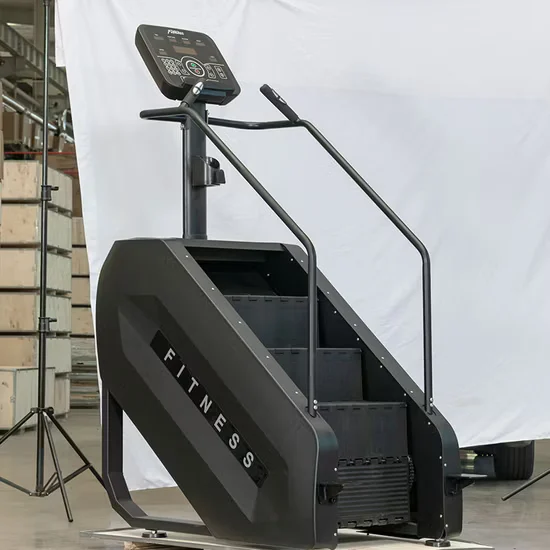
Commercial Stair Machine, 148kg Net Weight, Motor Drive, 15–164 Steps/Min — steel pipe frame delivers torsional rigidity under sustained high-step-rate sessions, while the motor-drive system ensures consistent climbing motion without mechanical clutch wear; 560×235×220mm step area supports full-foot contact to reduce joint shear during athletic conditioning. Every unit undergoes load testing before shipment, backed by a 10-year frame warranty and floor planning support for safe clearance around the 1450×820mm base.
// Spec Highlights
• Direct from Manufacturer · No Middlemen · Worldwide Shipping
01
// Material
Imported Solid Wood
Premium hardwood frames sourced for density and visual warmth.
02
// Hardware
Medical-Grade Silent
Whisper-quiet pulleys and springs for clinical environments.
03
// Customization
Appearance OEM
Color, upholstery, and branding tailored to your studio.
04
// Service
Layout Design
Free venue planning for studios and rehab institutions.
Every component is selected for longevity, performance, and aesthetic harmony - from imported hardwood frames to silent medical-grade accessories.
// Features
Motor-Driven Stability — The 148 kg net weight and steel pipe frame eliminate vibration during sustained 164 steps/min sessions, requiring no floor anchoring.
| Parameter | Value |
|---|---|
| Product Type | Climbing Stepper |
| Product Dimensions | 1450 × 820 × 2080 mm |
| Net Weight | 148 kg |
| Step Area | 560 × 235 × 220 mm |
| Frame Material | Steel Pipe + PP Plastic |
| Type of Drive | Motor Drive |
| Mains Input | AC220V±10% / AC110V±10% |
| Running Velocity | 15 – 164 steps/minute |
| OSD Display | Time, Climb, Calories, Steps, Heart Rate |
| Certification | CE |
| Assembly State | Unfolded |
| Facility Type | Typical Use |
|---|---|
| Commercial gymnasium | High-traffic cardio and conditioning zone |
| University athletic facility | Pre-season and in-season step-based conditioning |
| Hotel and resort fitness center | Guest-facing endurance training |
Motor-drive engagement and step mechanism alignment determine long-term smoothness, not just frame thickness.
Many units marketed as commercial stair climbers rely on belt-driven or self-powered mechanisms that develop slack and noise within months of daily gym use. The motor-drive system in this commercial stair climbing machine for athletic training maintains consistent step cadence across the full 15–164 steps/min range without mechanical clutch wear. [NEED_CITE: drive system duty cycle classification for continuous-use fitness equipment]
This climbing stepper occupies the intersection of cardiovascular endurance and lower-body muscular stamina, targeting the quadriceps, glutes, and calves through a full stepping range. The 560 × 235 × 220 mm step area allows full-foot contact, keeping the movement path aligned with natural joint travel. In a commercial stair climbing machine for athletic training configuration, it pairs with rowers and air bikes to create a multi-modal conditioning circuit. The 148 kg mass and unfolded assembly state mean it stays planted during peak-hour use without anchoring, making it suitable for high-density gym floors where equipment relocation is infrequent.
A stair stepper endures a distinct loading profile: continuous eccentric force on each step cycle, combined with lateral sway from alternating foot strikes. The steel pipe frame resists torsional flex that thinner-gauge alternatives cannot, particularly at the 164 steps/min upper range where harmonic vibration accumulates. The motor-drive system absorbs shock loads that would otherwise transfer directly to bearing housings. Over thousands of daily cycles, the step mechanism pivot points and drive chain engagement surfaces experience wear that unsealed designs accelerate through dust and sweat infiltration. [NEED_CITE: bearing seal classification and contamination resistance in fitness equipment] The PP plastic step covers and steel pipe junctions must withstand repeated impact without cracking at stress concentration points.
The steel pipe frame construction provides torsional rigidity that prevents the lateral sway riders feel on lighter-gauge machines. At 148 kg net weight, the unit achieves structural mass sufficient to dampen vibration without bolting to the floor — a threshold that thin-tube frames cannot reach. The motor-drive system with a 15–164 steps/min range eliminates the mechanical clutch found in self-powered models, removing a wear point that degrades step cadence consistency over time. The 560 × 235 × 220 mm step dimensions exceed narrow-pedal designs, distributing load across the full foot and reducing concentrated stress on step pivot bearings. The integrated OSD display — tracking time, calories, steps, and heart rate — removes dependency on external wearables for athlete monitoring during structured sessions.
When manufacturers substitute thin-wall tubing and unsealed drive components to hit a price point, the consequences emerge within the first year of commercial operation. Step mechanisms develop play that creates audible clunking and uneven cadence — complaints that drive member attrition in high-traffic facilities. Non-sealed bearings in the step pivot and drive assembly accumulate contamination from gym floor dust and cleaning chemicals, accelerating wear and requiring premature replacement. Frames that flex under sustained stepping loads transfer vibration to the OSD console mounting points, causing display fatigue and connector loosening. [NEED_CITE: vibration transmission and fastener loosening in cyclically loaded structures] The result is a machine that functions adequately on day one but generates maintenance tickets and member complaints by month six.
The steel pipe frame and motor-drive configuration are engineered for the sustained duty cycles of commercial gymnasium environments. The 1450 × 820 mm footprint allows precise floor planning with safe clearance zones around the unit, and 2D-3D CAD layout support ensures the commercial stair climbing machine for athletic training integrates into your conditioning floor without creating unsafe traffic gaps. The CE certification and three-stage QC protocol — including load testing on every unit before shipment — provide documentation for institutional procurement requirements. The unfolded assembly state means the unit arrives ready for placement, reducing on-site labor and installation scheduling delays.
Provide your facility floor area and target equipment list to receive a 2D-3D CAD layout showing safe clearance around each commercial stair climbing machine for athletic training unit. Specify expected daily usage hours so the motor-drive duty cycle can be matched to your operational intensity. Indicate any customization requirements for frame finish color or OSD display branding to align with your facility identity.
Q: How do motor-drive stair climbers differ from self-powered models in a commercial setting?
A: Motor-drive systems maintain consistent step cadence across the full speed range without relying on user weight to activate the belt. This eliminates the mechanical clutch wear that self-powered units experience under continuous daily use. The trade-off is a mains power requirement, but the operational smoothness and component longevity justify the electrical connection in high-traffic gym environments.
Q: What frame construction is needed for a stair stepper to withstand daily gym use?
A: The frame must resist torsional flex from alternating foot strikes and sustained vibration at high step rates. Steel pipe construction with sufficient wall thickness and junction reinforcement prevents the lateral sway that lighter-gauge frames develop. The 148 kg net weight of this unit reflects the structural mass needed to remain stable without floor anchoring during extended commercial operation.
Q: What floor space and clearance does this stair stepper require?
A: The unit measures 1450 × 820 × 2080 mm in the unfolded state. Safe installation requires additional clearance on all sides for users to mount and dismount without obstruction. A CAD floor layout accounts for traffic flow patterns and adjacent equipment spacing to prevent unsafe congestion around the stepping zone.
Q: What maintenance does the motor-drive and step mechanism require over time?
A: The motor-drive system and step pivot bearings should be inspected at regular service intervals for wear and contamination. The sealed design reduces but does not eliminate the need for periodic checking, particularly in environments with high dust or cleaning chemical exposure. Step surface condition and OSD console connections should also be verified during scheduled maintenance visits.
Premium aesthetics meet quiet operation for boutique studio environments.
Medical-grade silence and precision for sports & postpartum recovery.
Furniture-grade craftsmanship for premium residential installations.
Compact premium setups for one-on-one and small-group training.
Aesthetic Pilates integration for hybrid wellness studio programming.
Multi-unit deployment with instructor-grade reliability for certification programs.
Tell us about your project. Our team will respond within 24 hours with pricing, customization options, and shipping details.
// Sales Director
William
+86 132 2531 1800
// Export Manager
Bella
+86 198 5412 8032
william@bickfit.com


