01 / Scenario
STUDIO
P
High-End Pilates Studios
Premium aesthetics meet quiet operation for boutique studio environments.
ISO
9001
CE
Certified
OEM
Available
10YR
Warranty
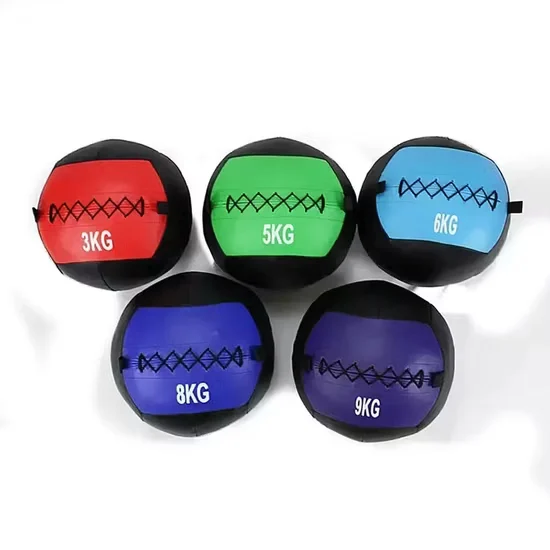
Commercial Weighted Medicine Ball, 30×30×30 cm, Customizable Color and Logo — reinforced outer shell construction with balanced internal fill distribution resists deformation under repeated high-impact slams and rotational throws. Dimensional consistency across weight increments ensures uniform handling and predictable bounce behavior for multi-user facility environments. Every unit undergoes three-stage QC inspection with load testing before shipment, backed by a 10-year frame warranty and direct manufacturer support.
// Spec Highlights
• Direct from Manufacturer · No Middlemen · Worldwide Shipping
01
// Material
Imported Solid Wood
Premium hardwood frames sourced for density and visual warmth.
02
// Hardware
Medical-Grade Silent
Whisper-quiet pulleys and springs for clinical environments.
03
// Customization
Appearance OEM
Color, upholstery, and branding tailored to your studio.
04
// Service
Layout Design
Free venue planning for studios and rehab institutions.
Every component is selected for longevity, performance, and aesthetic harmony - from imported hardwood frames to silent medical-grade accessories.
// Features
Seam Bonding Engineered for Repeated Slam Impact — Reinforced shell construction with consistent wall thickness and balanced internal fill distribution resist splitting and deformation through thousands of high-impact repetitions in commercial training environments.
| Parameter | Value |
|---|---|
| Product Type | Medicine Ball |
| Product Dimensions | 30×30×30 cm |
| Color Options | Customized Color |
| Logo | Customized Logo |
| MOQ | 50 PCS |
| Production Capacity | 10,000 / Year |
| Certification | ISO 9001:2015, CE, SGS |
| Facility Type | Typical Use |
|---|---|
| Commercial Gym Functional Training Zones | Rotational throws, partner passes, slam drills for full-body power development |
| CrossFit Box Conditioning Areas | High-rep slam circuits, wall ball targets, loaded carry variations |
| Athletic Performance Centers | Sport-specific rotational power training, reactive catch drills |
| Hotel and Resort Fitness Centers | Versatile conditioning tool for diverse guest fitness levels |
| University Strength and Conditioning Rooms | Team training circuits, supervised partner exercises |
Most commercial medicine balls fail at the seam line within months of daily use because manufacturers prioritize shell material thickness while neglecting the bonding method that holds two halves together under repeated impact loading. Seam integrity determines service life more than rubber compound hardness.
When a commercial weighted medicine ball hits a hard surface repeatedly, the impact force concentrates at the equatorial joint where two shell halves meet. If the bonding agent lacks flexibility or the contact surface area is insufficient, micro-cracks propagate with each slam cycle until the seam opens completely — regardless of how thick the surrounding rubber is [NEED_CITE: adhesive bond fatigue under cyclic impact loading in elastomer assemblies]. Facility owners then face replacement costs and potential injury liability from equipment that fails mid-exercise.
The commercial weighted medicine ball occupies the high-velocity, multi-planar movement category that bridges pure strength work and athletic conditioning. It serves rotational power development across transverse and frontal planes, complementing sagittal-dominant equipment like cable columns and plate-loaded machines. This tool suits facilities running high-density functional zones where multiple users cycle through slam stations, wall ball targets, and partner toss drills within the same hour. The uniform 30 cm diameter across weight increments ensures predictable handling when athletes grab different loads during circuit rotations.
Commercial environments subject medicine balls to impact forces fundamentally different from controlled throws on rubber flooring. Slam drills on concrete or thin rubber mats generate sharp deceleration spikes that travel through the shell and concentrate at the seam — the structural weak point in any two-piece construction. Internal fill material must resist compaction and migration over thousands of cycles; uneven density distribution causes the ball to develop a heavy side that alters flight path and catch timing during partner drills.
The outer surface endures abrasive contact with sweaty hands, chalk residue, and floor debris while maintaining grip texture that prevents slippage during overhead catches. Surface abrasion resistance directly affects longevity in high-rep environments where the same ball may see 200+ contacts per session [NEED_CITE: surface wear mechanisms in high-durometer elastomers under abrasive contact]. Coating degradation exposes underlying material to further breakdown, particularly at contact points where the ball meets the floor repeatedly.
Shell wall thickness and material durometer work together to determine impact resistance — a thicker wall absorbs more energy before reaching deformation limits, while appropriate hardness prevents excessive bounce that compromises catch control. The 30×30×30 cm dimension standardization across the product line means athletes develop consistent motor patterns regardless of load selection, eliminating the recalibration that occurs when diameter changes with weight.
Internal fill composition affects both weight distribution and bounce behavior. Sand-filled constructions provide dead-bounce characteristics suited for slam work where rebound would create safety hazards, while rubber-compound fills maintain some elasticity for wall ball applications. The fill must remain homogeneous throughout the shell volume; density variations as small as 5% create measurable imbalance during rotational throws [NEED_CITE: mass distribution effects on rotational dynamics in spherical projectiles].
Dimensional consistency at 30 cm diameter ensures that grip spacing and catch timing remain predictable across the entire weight range. This uniformity matters in commercial settings where multiple users share equipment and where coaches program circuits requiring rapid load changes between stations.
Manufacturers who reduce wall thickness to cut material costs create balls that deform permanently after limited slam cycles, developing flat spots that alter bounce behavior and create uneven wear patterns. Thin shells also transmit more impact force to the internal fill, accelerating compaction and density migration that destroys rotational balance.
Seam bonding methods using contact cement rather than vulcanization or structural adhesive create joints that separate under repeated impact — a failure mode that appears suddenly during use rather than showing gradual wear. Once a seam opens, the ball becomes unusable and potentially dangerous if fill material escapes during a throw. Facilities then face premature replacement cycles and the operational disruption of removing damaged equipment from the training floor [NEED_CITE: joint design principles for impact-resistant elastomer assemblies].
Every commercial weighted medicine ball undergoes weight tolerance verification to ensure each unit holds within ±2-3% of stated load — critical for programming accuracy in athletic performance settings where progressive overload depends on precise resistance increments. The customizable color and logo options allow facilities to maintain brand consistency across their functional training zones while color-coding different weight increments for rapid visual identification during group sessions.
The 50-piece minimum order quantity accommodates both single-location gym buildouts and multi-site chain deployments requiring standardized equipment packages. Production capacity of 10,000 units annually ensures lead time reliability for facilities expanding functional zones or replacing worn equipment across multiple stations simultaneously. OEM private label capability supports distributor partners building their own branded functional training equipment lines.
Provide your functional training zone dimensions and current equipment inventory to receive 2D-3D layout planning that optimizes traffic flow between slam stations, partner drill areas, and storage configurations. Specify your average daily user count and peak-hour density to ensure equipment quantities match usage intensity without creating bottlenecks at popular stations. Indicate your target user demographic’s strength levels to confirm appropriate weight increment ranges for your programming model. Detail any color-matching requirements or logo placement preferences for brand integration across your facility’s equipment package.
Q: How do commercial-grade medicine balls differ from light-commercial or home-use versions structurally?
A: Commercial-grade construction uses thicker shell walls and reinforced seam bonding designed for thousands of high-impact repetitions on hard surfaces. Light-commercial versions reduce material thickness and use simpler bonding methods suited for occasional use on padded flooring. The internal fill in commercial balls maintains density distribution under repeated loading, while lighter versions develop compaction and imbalance faster. Commercial units also hold tighter weight tolerances for programming accuracy in athletic settings.
Q: What construction methods prevent seam splitting under repeated slam impact?
A: Structural adhesive bonding with adequate contact surface area creates joints that flex with the shell during impact rather than separating. Vulcanization processes that chemically bond the two shell halves provide superior fatigue resistance compared to contact cement alone. The bonding method must accommodate the shell’s natural deformation under load while maintaining joint integrity through thousands of compression cycles. Proper surface preparation before bonding ensures maximum adhesive penetration and long-term joint strength.
Q: How does internal fill type affect weight distribution and rotational balance?
A: Homogeneous fill materials like granulated rubber maintain consistent density throughout the shell volume, ensuring balanced weight distribution for predictable flight paths during throws. Sand fills provide dead-bounce characteristics but can migrate over time if not properly contained, creating imbalance. The fill must resist compaction under repeated impact to maintain original weight distribution. Density variations beyond minimal thresholds cause the ball to develop preferred orientations during rotational movements.
Q: What weight progressions work best for multi-user commercial facilities?
A: Facilities should stock increments covering beginner to advanced users, typically ranging from light loads for rehabilitation and technique work through heavy options for athletic power development. Color-coding each weight increment enables rapid visual identification during circuit training where users rotate through stations quickly. Maintaining multiple balls at popular weights prevents bottlenecks during peak hours. The uniform 30 cm diameter across all weights ensures consistent handling feel regardless of load selection.
Q: What customization options are available for color and logo placement?
A: Shell color can be matched to facility branding or used to code different weight increments for visual organization. Logo application methods include molding, printing, or embossing depending on quantity requirements and desired durability. Custom colors require minimum order quantities to justify compound mixing and mold setup. Lead times account for color matching verification and production scheduling within the annual capacity framework.
Premium aesthetics meet quiet operation for boutique studio environments.
Medical-grade silence and precision for sports & postpartum recovery.
Furniture-grade craftsmanship for premium residential installations.
Compact premium setups for one-on-one and small-group training.
Aesthetic Pilates integration for hybrid wellness studio programming.
Multi-unit deployment with instructor-grade reliability for certification programs.
Tell us about your project. Our team will respond within 24 hours with pricing, customization options, and shipping details.
// Sales Director
William
+86 132 2531 1800
// Export Manager
Bella
+86 198 5412 8032
william@bickfit.com