01 / Scenario
STUDIO
P
High-End Pilates Studios
Premium aesthetics meet quiet operation for boutique studio environments.
ISO
9001
CE
Certified
OEM
Available
10YR
Warranty
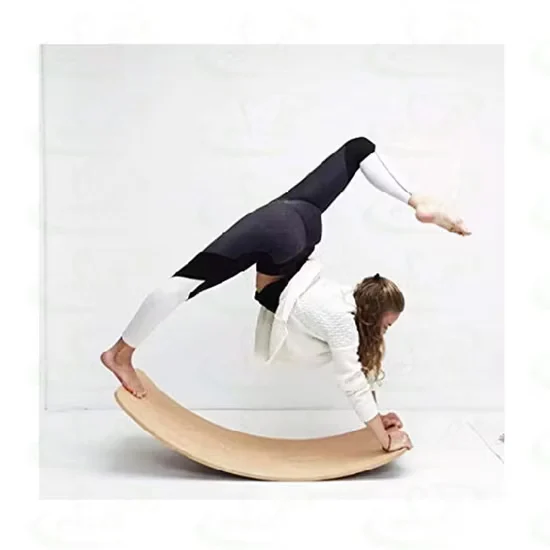
Wooden Balance Board, 1030×300×15mm, Solid Wood Construction — engineered with 15mm board thickness to resist flex and delamination under repeated dynamic balance movements in high-traffic studio environments; surface finish and edge treatment ensure grip durability and splinter prevention during daily commercial use. Custom branding, color matching, and logo integration available without compromising structural integrity. Every unit undergoes load testing and surface inspection before shipment to meet commercial facility standards.
// Spec Highlights
• Direct from Manufacturer · No Middlemen · Worldwide Shipping
01
// Material
Imported Solid Wood
Premium hardwood frames sourced for density and visual warmth.
02
// Hardware
Medical-Grade Silent
Whisper-quiet pulleys and springs for clinical environments.
03
// Customization
Appearance OEM
Color, upholstery, and branding tailored to your studio.
04
// Service
Layout Design
Free venue planning for studios and rehab institutions.
Every component is selected for longevity, performance, and aesthetic harmony - from imported hardwood frames to silent medical-grade accessories.
// Features
Solid Wood Load-Bearing Core — 15mm solid timber thickness maintains flex resistance through thousands of daily studio repetitions without delamination.
| Parameter | Value |
|---|---|
| Product Type | Balance Board |
| Material | Solid Wood |
| Product Dimensions | 1030×300×15mm |
| Weight | 5 kg |
| Color Options | Solid color finishes available |
| Customization | Custom color and logo branding available |
| Target User | Adult, Unisex |
| Classification | Pilates Equipment |
| Facility Type | Typical Use |
|---|---|
| Commercial Pilates studio | Core stabilization sequences and reformer-transition drills |
| Yoga and functional training facility | Balance progression work and proprioception development |
| Rehabilitation and wellness center | Lower-limb recovery and postural re-education |
| Hotel fitness center | Compact accessory station for guest self-directed use |
| University athletic department | Prehab and activation stations in strength and conditioning rooms |
A delaminated board underfoot is a liability event, not a wear issue.
Most balance accessories marketed to commercial studios are laminated plywood with thin veneer faces. Under daily class rotation — where a single board may see repeated dynamic loading across back-to-back sessions — the adhesive layers between plies begin to separate. The board flexes, then splits along the grain, and the facility quietly pulls it from the floor. [NEED_CITE: structural performance of laminated versus solid wood under cyclic loading]
The wooden balance board addressed here is constructed from solid timber at 15mm thickness. There are no glue lines running through the cross-section to fail. When a commercial Pilates studio schedules balance work across multiple classes daily, the board must absorb shifting loads from different user weights and movement patterns without progressive structural degradation.
This commercial wooden balance board occupies a narrow footprint and serves as a station accessory rather than a primary apparatus. In a Pilates or functional training zone, it pairs with reformers, mats, and suspension anchors — filling the gap between floor work and unstable-surface progressions. Its length allows bilateral stance work and full-body plank variations. The profile suits high-density studio layouts where floor space is shared among multiple class configurations, and its weight keeps it anchored during use without requiring permanent mounting.
The load profile on a balance board in commercial service is irregular: eccentric shifts as users step on and off, impact when a board tips and contacts the floor edge, and sustained static pressure during held positions. Over hundreds of sessions, these forces concentrate at the board’s midspan and endpoints. The 15mm solid wood construction distributes stress through continuous grain rather than across adhesive boundaries, reducing the likelihood of crack propagation. Surface finish must resist sweat absorption and cleaning chemicals without degrading the wood grain beneath [NEED_CITE: wood finish durability in high-humidity fitness environments]. Edge treatment prevents splintering where the board contacts flooring repeatedly.
Board thickness at 15mm establishes the stiffness-to-weight ratio that determines how much the board flexes under a standing adult. Thinner boards deflect visibly and create an unstable feel that reads as a quality problem to experienced users. The 1030mm length provides sufficient surface area for two-footed stances and kneeling positions, while the 300mm width keeps the platform challenging enough to require active balance engagement. Solid wood species selection influences both density and grain pattern — harder species resist denting from dropped weights or stacked storage. Surface coating must seal the grain without creating a slick finish that compromises barefoot grip in studio conditions.
Thin laminated boards may pass initial procurement review at a lower unit cost, but their service life in daily studio rotation is measured in months rather than years. Delamination renders the board a safety concern that must be removed immediately. Boards without proper edge sealing splinter along contact points, creating injury risk and liability exposure. Non-customizable surfaces force facilities into generic branding that undermines studio identity. Replacement cycles compound: each reorder carries procurement overhead, shipping cost, and the downtime of missing equipment on the floor [NEED_CITE: total cost of ownership for high-turnover studio accessories].
Wood sourcing requires species and grade documentation traceable to the supplier, not generic "solid wood" claims. Each production run undergoes dimensional verification to ensure the 15mm thickness holds across the full board length — a warped or undersized board creates unpredictable balance behavior. Surface finishing follows sandblasting and coating protocols consistent with industrial equipment standards, not consumer-grade staining. For facilities planning functional zones, CAD-supported layout integration ensures the board station is positioned with adequate clearance from adjacent apparatus and walls. OEM customization allows color matching and logo integration so the board reinforces facility branding without requiring third-party aftermarket finishing.
Provide your studio floor plan and class schedule density to confirm the board quantity and placement aligns with your programming rotation. Specify target user population and any size-range considerations to validate that the 1030×300mm dimensions accommodate your typical clientele. Submit branding requirements including logo artwork and color codes early in the procurement cycle to align production lead times with your opening or renovation schedule.
Q: How can I tell a commercial-grade wooden balance board from a consumer one?
A: Consumer boards typically use laminated plywood under 12mm thick with decorative veneer. Commercial boards use solid timber at 15mm or greater, with edge sealing and industrial-grade surface finishes rated for sweat and cleaner exposure. Request material certification and load test documentation before purchasing.
Q: What wood thickness is suitable for daily studio use?
A: Fifteen millimeters of solid timber provides adequate stiffness for repeated standing and dynamic movements by adult users without excessive flex. Thinner boards deflect under load and feel unstable, while excessively thick boards become too heavy for class setup and storage rotation.
Q: Can I order custom dimensions for facility-specific programming?
A: Custom length, width, and thickness are available to match specific exercise protocols or studio layout constraints. Submit dimensional requirements and intended movement patterns during the specification phase so engineering can confirm structural integrity at the modified proportions.
Q: What maintenance does a wooden balance board require in a humid studio?
A: Wipe the surface with a pH-neutral cleaner after each class to remove sweat residue that degrades the finish over time. Inspect edges monthly for splintering and reapply protective coating annually. Store boards vertically in ventilated racks rather than stacking them flat, which traps moisture between surfaces.
Q: What is the process for custom branding and color matching?
A: Provide logo artwork in vector format along with Pantone or RAL color references. A pre-production sample is manufactured for approval before the full order enters finishing. Allow additional lead time beyond standard production for the sample review cycle and any color adjustments required.
Premium aesthetics meet quiet operation for boutique studio environments.
Medical-grade silence and precision for sports & postpartum recovery.
Furniture-grade craftsmanship for premium residential installations.
Compact premium setups for one-on-one and small-group training.
Aesthetic Pilates integration for hybrid wellness studio programming.
Multi-unit deployment with instructor-grade reliability for certification programs.
Tell us about your project. Our team will respond within 24 hours with pricing, customization options, and shipping details.
// Sales Director
William
+86 132 2531 1800
// Export Manager
Bella
+86 198 5412 8032
william@bickfit.com