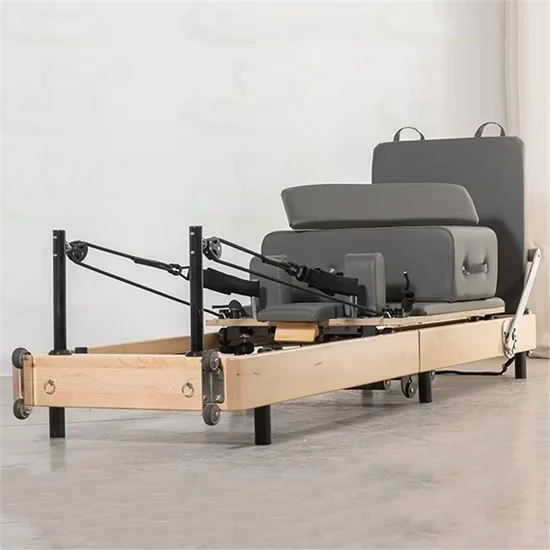
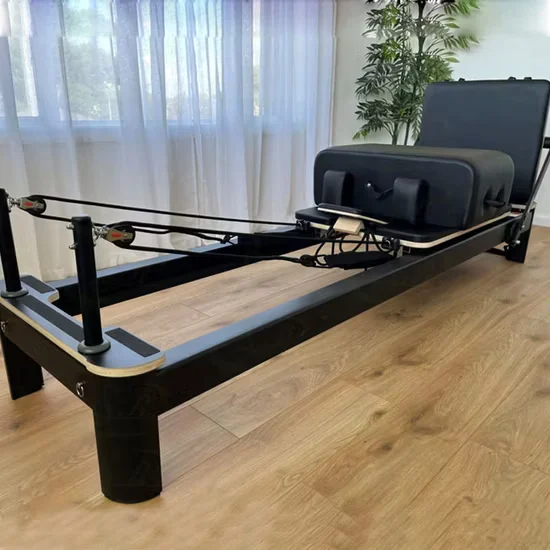
01 / Scenario
STUDIO
P
High-End Pilates Studios
Premium aesthetics meet quiet operation for boutique studio environments.

ISO
9001
CE
Certified
OEM
Available
10YR
Warranty
Commercial Pilates Ladder Barrel, Solid Oak Timber Frame, 1100×770×980mm — engineered with solid hardwood construction and reinforced ladder rung joinery for stable, creak-free performance under repetitive studio loading. Available in customizable dimensions and branding options to match your facility's interior specification. Every unit undergoes 32-point inspection and 100% load testing before dispatch.
// Spec Highlights
• Direct from Manufacturer · No Middlemen · Worldwide Shipping
01
// Material
Imported Solid Wood
Premium hardwood frames sourced for density and visual warmth.
02
// Hardware
Medical-Grade Silent
Whisper-quiet pulleys and springs for clinical environments.
03
// Customization
Appearance OEM
Color, upholstery, and branding tailored to your studio.
04
// Service
Layout Design
Free venue planning for studios and rehab institutions.
Every component is selected for longevity, performance, and aesthetic harmony - from imported hardwood frames to silent medical-grade accessories.
// Features
Solid Oak Frame Integrity — Every timber component is verified for species, grain orientation, and joinery construction before leaving the production floor.
| Parameter | Value |
|---|---|
| Product Type | Pilates Ladder Barrel |
| Frame Material | Solid Timber (Oak) |
| Product Dimensions | 1100×770×980mm |
| Net Weight | 50kg |
| Surface Finish | Options available: oil, lacquer, or polyurethane |
| Color | Solid color options available |
| Customization | Custom dimensions and branding available |
| Logo | Customized logo placement allowed |
| Warranty | 3 Years |
| Production Capacity | 800 Pieces/Month |
| Facility Type | Typical Use |
|---|---|
| Commercial Pilates studio | Spinal articulation, flexibility, and core conditioning sequences |
| Yoga and movement studio | Deep stretch progressions and postural alignment drills |
| Rehabilitation and conditioning center | Guided spinal mobilization under practitioner supervision |
| Boutique fitness facility | Group reformer-adjacent mat work and flexibility modules |
| Hotel wellness gym | Low-impact flexibility station for diverse guest demographics |
The failure point is almost never the wood itself — it is the adhesive bond between a thin veneer and a composite core.
Many Pilates barrel manufacturers quote "solid wood" in marketing materials while shipping laminated veneer over MDF or particleboard. Under daily studio use, sweat exposure and humidity cycling cause the veneer layer to separate from the substrate within months. The barrel surface bubbles, the rungs develop lateral play, and the entire unit becomes unsafe for loaded spinal extension work [NEED_CITE: EN 957 structural requirements for stationary training equipment]. When we build a commercial pilates ladder barrel wooden oak unit, we start from solid timber stock — no veneer, no composite core, no hidden MDF.
The ladder barrel occupies a distinct role on the studio floor: it supports spinal flexion, extension, and lateral bending patterns that reformers and cadillacs cannot replicate in isolation. It pairs naturally with reformer stations for sequential flexibility programming and sits well in dedicated mat-work zones where floor clearance is limited. For studios running high-frequency class schedules, the commercial pilates ladder barrel wooden oak configuration handles repeated mounting and dismounting without rung loosening or barrel surface degradation. The 1100×770mm footprint keeps it compact enough for multi-unit placement while accommodating users across a broad height range.
A ladder barrel endures an unusual stress profile compared to most studio apparatus. The barrel curve carries concentrated point loads at the apex during spinal extension holds, while the ladder rungs experience cyclical shear stress as users grip, pull, and release during repetitive sequences [NEED_CITE: structural load classification for Pilates studio equipment]. Solid oak handles these load patterns through its interlocked grain structure, which resists splitting along the rung insertion points. The critical fatigue zone sits at the junction where the barrel curve meets the ladder uprights — a transition that demands either deep mortise-and-tenon joinery or through-bolted mechanical fasteners. Surface finish degradation under sweat and cleaning chemicals accelerates wear at the hand-contact zones on rungs and barrel edges.
Timber species determines long-term dimensional stability in a climate-controlled studio or a humid coastal wellness center. Oak offers tight grain and high density that resist warping across seasonal humidity swings. Grain orientation in the barrel curve must follow the arc rather than running straight — cross-grain laminations in the curve layers prevent the barrel from flattening under sustained body weight. Rung joint construction separates commercial-grade barrels from decorative ones: mortise-and-tenon joints distribute shear load across a broad glue surface, while dowel-only or screw-only connections develop play and creak within the first year of daily use. Surface finish selection — oil, lacquer, or polyurethane — dictates the maintenance cycle, with oil finishes requiring periodic reapplication but offering superior tactile grip, and polyurethane delivering a harder barrier against sweat penetration.
Substituting solid oak with rubberwood or low-density plantation timber reduces raw material cost but introduces rung flex and surface denting under normal studio loads. Veneer-over-MDF construction appears identical in product photography but fails structurally when moisture penetrates an edge chip, causing the substrate to swell and the veneer to lift. Screw-only rung attachment avoids the labor cost of mortise cutting but transfers all shear force into threaded fasteners that strip their pilot holes under cyclical loading [NEED_CITE: joint fastener fatigue in wooden fitness apparatus]. Thin lacquer coatings — applied at minimal thickness to save finishing time — crack at the barrel curve apex where wood movement is greatest, exposing bare timber to sweat and accelerating localized rot.
Solid oak stock is sourced with documented species and grade verification — no composite fillers and no veneer substitutions. Each barrel curve is constructed from multiple solid timber laminations with grain oriented to follow the arc, preventing flattening and maintaining the intended spinal support radius. Mortise-and-tenon joinery at every rung connection distributes load across broad wood-to-wood contact surfaces rather than concentrating stress into mechanical fasteners. Every finished unit undergoes load testing to confirm rung rigidity and barrel structural integrity before packaging. Custom logo placement — available through laser engraving or brand plate mounting — integrates studio branding without compromising the timber surface. Two-dimensional and three-dimensional floor planning CAD files are available for studio fit-out projects to verify spacing and traffic flow around each barrel station.
Provide your studio floor dimensions and existing equipment list to receive a two-dimensional or three-dimensional layout that positions each barrel with correct safety clearances. Specify your average daily class throughput so we can confirm the finish type and joint construction match your usage intensity. Share your user demographic — height range and body weight distribution — to verify the barrel curvature and ladder rung spacing accommodate your client base. Detail any custom branding requirements, including logo format and preferred placement method, to confirm lead time alignment with your fit-out schedule.
Q: How can I verify that a Pilates barrel uses solid timber rather than veneer over composite?
A: Examine the end grain on the barrel curve edge and rung cross-sections. Solid timber shows continuous grain rings extending through the full thickness, while veneer reveals a thin decorative layer bonded over a uniform composite substrate. Request a material origin document specifying wood species and grade. Drilling a small pilot hole in an inconspicuous area will also expose any hidden MDF or particleboard core beneath the surface.
Q: Which wood species and joint methods indicate genuine commercial durability for studio equipment?
A: Oak, beech, and birch deliver the density and interlocked grain structure needed for repetitive loading without surface denting or rung flex. Mortise-and-tenon joinery at rung connections provides the broadest glue surface and best resistance to shear fatigue. Dowel joints rank second but require precise alignment during assembly. Screw-only rung attachment is a reliable indicator of cost-reduced construction not suited for daily commercial use.
Q: What maintenance does a solid oak Pilates barrel require in a humid studio environment?
A: Oil-finished barrels need reapplication at hand-contact and sweat-exposure zones every few months depending on usage volume. Polyurethane and lacquer finishes require less frequent maintenance but should be inspected for surface cracking at the barrel curve apex. Keep humidity within the range specified by the timber supplier to prevent seasonal expansion and contraction. Wipe all surfaces with a pH-neutral cleaner after each use to prevent salt crystallization in the grain.
Q: How do I specify custom dimensions and branding for a multi-unit studio fit-out project?
A: Provide your studio floor plan with desired placement zones so we can confirm dimensional adjustments maintain the intended barrel curvature and rung spacing ratios. Logo customization is available through laser engraving directly into the timber or through a mounted brand plate. Custom sizing affects the lamination count in the barrel curve and the rung length, both of which require structural recalculation to preserve load capacity.
Premium aesthetics meet quiet operation for boutique studio environments.
Medical-grade silence and precision for sports & postpartum recovery.
Furniture-grade craftsmanship for premium residential installations.
Compact premium setups for one-on-one and small-group training.
Aesthetic Pilates integration for hybrid wellness studio programming.
Multi-unit deployment with instructor-grade reliability for certification programs.
Tell us about your project. Our team will respond within 24 hours with pricing, customization options, and shipping details.
// Sales Director
William
+86 132 2531 1800
// Export Manager
Bella
+86 198 5412 8032
william@bickfit.com